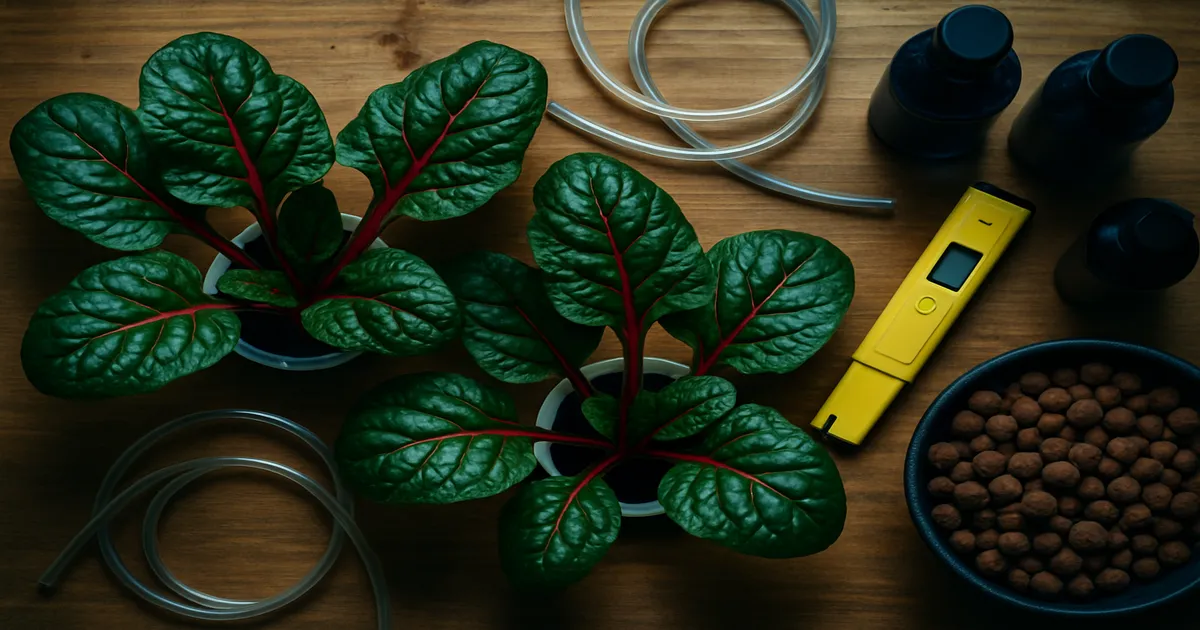
Quick Answer: Swiss chard when to grow outdoors comes down to two windows — sow 2–4 weeks before your last spring frost, or 8–10 weeks before your first fall frost, targeting soil temperatures of 50–75°F (10–24°C). Hydroponic and indoor growers can skip the calendar entirely and produce chard year-round. Expect baby leaves in 25–35 days and full-size harvest at 50–60 days from transplant.
Swiss chard is one of those rare crops that rewards you whether you’re timing a spring garden bed or running a hydroponic system in January. Understanding swiss chard when to grow really splits into two conversations: working with outdoor seasons and frost dates, or sidestepping all of that with controlled indoor production. This guide covers both — including system selection, nutrients, lighting, and the best varieties to grow.
When to Grow Swiss Chard Outdoors: Key Planting Windows
Swiss chard is a cool-to-warm season crop that handles light frost but struggles in prolonged heat. Here’s the short version:
- Spring: Direct sow or transplant 2–4 weeks before your last expected frost date. Soil only needs to reach 50°F (10°C) to germinate.
- Fall: Count back 8–10 weeks from your first expected fall frost — this gives you a full harvest before hard freezes arrive.
- Summer: Possible, but growth slows above 90°F (32°C) and bolt risk climbs.
- Winter: Hardy to around 25°F (-4°C) with row cover; zones 6–10 can overwinter successfully.
Outdoor Growing Calendar by Season
Spring — Chard is one of the few leafy greens you can get in the ground before winter fully releases its grip. Seeds germinate reliably at 50°F (10°C) and up, and young seedlings tolerate a light frost. Getting transplants in 2–4 weeks before your last frost date lets you harvest before summer heat arrives.
Fall — Fall is arguably the better season for chard. Cooling temperatures concentrate sugars in the leaves and reduce pest pressure. Sow 8–10 weeks before your first expected fall frost so plants reach full size before cold sets in. A simple row cover or low tunnel extends your harvest several weeks past the first frost.
Summer — Swiss chard tolerates heat better than spinach, but above 90°F (32°C) growth slows noticeably and bolting becomes a real risk. Choose a heat-tolerant variety like Five Color Silverbeet, provide afternoon shade, and water consistently. Heavy mulching around the root zone helps keep soil temperatures manageable.
Winter — Established plants survive down to about 25°F (-4°C), especially with row cover protection. In zones 8–10, chard produces through winter with minimal protection. Zones 6–7 can overwinter plants under a low tunnel or cold frame, harvesting whenever temperatures climb above freezing.
USDA Zone Planting Guide
| Zone | Spring Sow | Fall Sow | Winter Growing |
|---|---|---|---|
| 3–4 | Late April – May | July | Not viable outdoors |
| 5–6 | Late March – April | August | Cold frame only |
| 7–8 | March | September | Row cover sufficient |
| 9–10 | Feb – March | October | Year-round possible |
Swiss Chard When to Grow Indoors: Hydroponic Systems
Controlled environments eliminate seasonal constraints entirely. With stable temperatures, consistent light, and a reliable nutrient solution, you can start a new crop any month of the year.
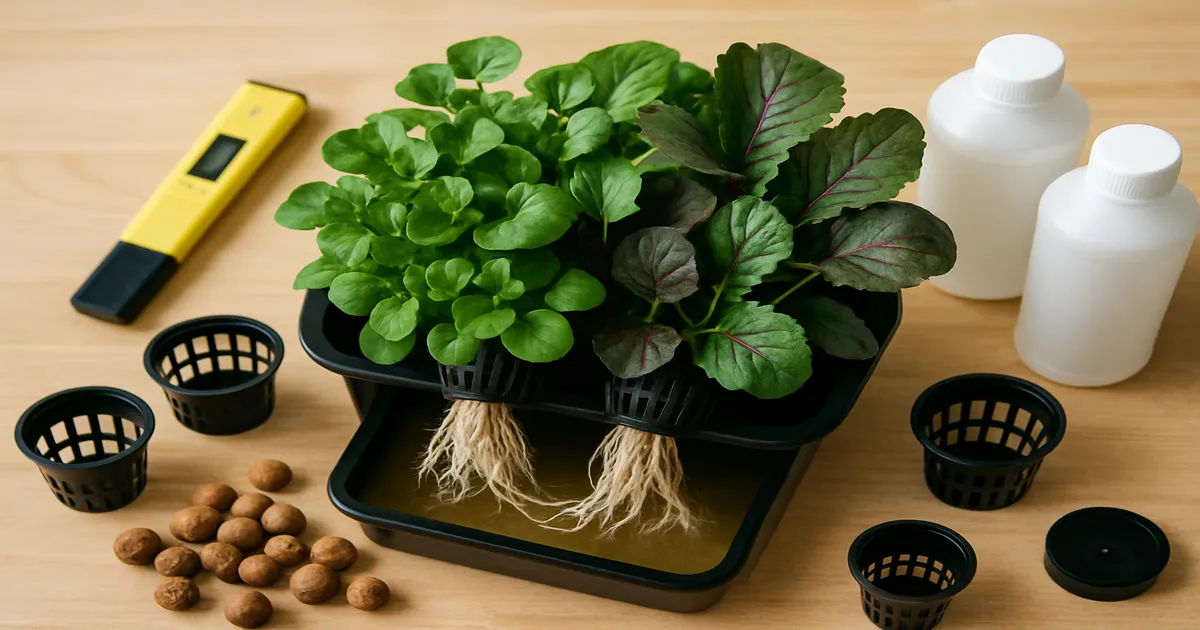
Deep Water Culture (DWC) suspends roots in a continuously oxygenated nutrient solution. It’s one of the fastest methods for chard and easy to build yourself. Root access to oxygen and nutrients around the clock drives noticeably quicker growth than soil. A basic DWC bucket kit (General Hydroponics WaterFarm) gets beginners up and running quickly.
Nutrient Film Technique (NFT) runs a thin film of nutrient solution continuously through shallow channels past the roots. It scales well, uses water efficiently, and suits continuous harvest schedules — making it popular for small commercial operations growing chard for restaurants or markets.
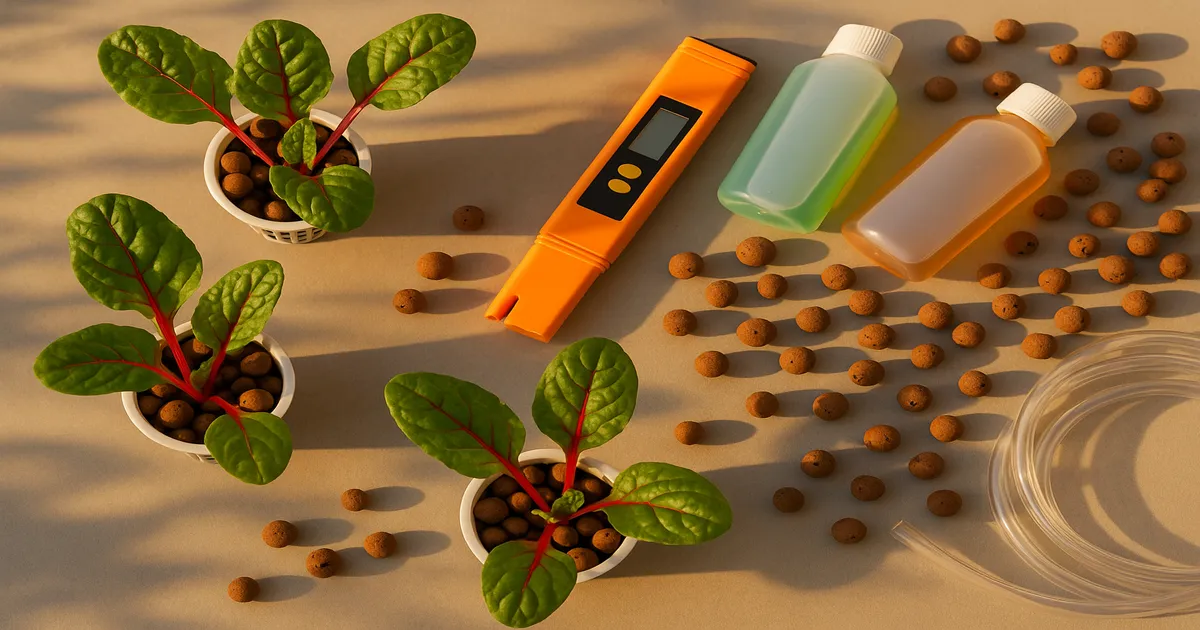
Kratky Method is passive DWC — no pump, no electricity, just a container of nutrient solution with an air gap that grows as roots drink it down. Ideal for beginners or anyone who wants a low-maintenance single-harvest grow. Growth is slightly slower than active DWC, but results are reliable.
Ebb and Flow, Wicking, and Vertical Towers — Ebb and flow suits chard’s moderate water needs well; periodic flooding followed by full drainage keeps roots healthy. Wicking systems are the lowest-cost option and work fine for smaller plants. Vertical tower gardens are excellent for space efficiency — Swiss chard’s upright growth habit fits tower pockets well.
Aquaponics — Chard is consistently listed among the best crops for aquaponic media beds. Its tolerance of variable nutrient levels and fluctuating pH makes it more forgiving than many greens when fish loads shift or the system cycles through adjustments.
Nutrient Requirements for Swiss Chard
Macronutrients and PPM Targets
Swiss chard is a leafy crop with high nitrogen and potassium demands. Target an N:P:K ratio of 3:1:3 to 4:1:4 in your reservoir:
- Nitrogen (N): 150–200 ppm
- Phosphorus (P): 40–60 ppm
- Potassium (K): 150–200 ppm
Calcium, Magnesium, and Key Micronutrients
Calcium is critical for cell wall integrity. Deficiency shows up as tip burn — brown, crispy leaf margins — one of the most common problems in hydroponic chard. Target 100–150 ppm calcium. Magnesium should sit at 30–50 ppm; deficiency causes interveinal chlorosis (yellowing between the veins on older leaves).
Iron is the most commonly deficient micronutrient, especially when pH drifts above 6.5. Use chelated iron (Fe-EDTA or Fe-DTPA) at 2–4 ppm. Other key micronutrients: manganese 0.5–1.0 ppm, boron 0.3–0.5 ppm, zinc 0.3–0.5 ppm, copper 0.05–0.1 ppm.
EC and PPM Targets by Growth Stage
| Growth Stage | PPM | EC |
|---|---|---|
| Seedling (0–2 weeks) | 350–560 | 0.7–1.1 |
| Early Vegetative (2–4 weeks) | 560–840 | 1.1–1.7 |
| Full Vegetative (4+ weeks) | 840–1,260 | 1.7–2.5 |
| Mature/Harvest | 1,050–1,400 | 2.1–2.8 |
Keep EC below 2,800 µS/cm (approximately 1,400 ppm on a 0.5 conversion factor) — above that threshold, tip burn and reduced leaf quality become likely.
Nutrient Solution Recipes
General Hydroponics Flora Series (per gallon of RO water):
- FloraGro: 1.5 tsp | FloraBloom: 1 tsp | FloraMicro: 1 tsp
- Target: 900–1,100 ppm (1.8–2.2 EC), pH 6.0–6.2
Masterblend 4-18-38 (per 5 gallons):
- Masterblend 4-18-38: 12 g | Calcium Nitrate (15.5-0-0): 12 g | Magnesium Sulfate: 6 g
- Target: 800–1,000 ppm (1.6–2.0 EC)
General Hydroponics Maxibloom (simplest single-part option):
- 7 g per gallon of water
- Target: 900–1,000 ppm (1.8–2.0 EC), pH 5.8–6.2
pH and EC Management
Ideal pH Ranges
- Soil: 6.0–7.0, optimal around 6.5
- Hydroponics: 5.8–6.4, optimal at 6.0–6.2
Even a small drift to pH 7.0 in a hydroponic system can trigger iron deficiency symptoms within days. A reliable digital pH meter is non-negotiable — the Apera PH20 and Bluelab pH Pen are both excellent choices. Calibrate weekly using pH 4.0 and 7.0 buffer solutions. For EC, the Bluelab Truncheon is reliable and durable.
Check reservoir pH and EC daily during active growth. For soil or media beds, check runoff weekly or after every 2–3 waterings.
Adjusting pH
- pH Up: Potassium hydroxide (KOH) solution — add 0.5–1 mL at a time per 5 gallons, stir, then retest.
- pH Down: Phosphoric acid is standard; citric acid works as a more accessible organic alternative.
- Never adjust more than 0.5 pH units per day — large swings stress roots.
Common pH and EC Problems
| Problem | Likely Cause | Fix |
|---|---|---|
| pH drifts up overnight | CO₂ fluctuation or algae | Increase aeration; eliminate light leaks |
| pH crashes rapidly | Root rot or bacterial activity | Full reservoir change; sterilize system |
| EC rises despite no added nutrients | Plants drinking water faster than nutrients | Top off with plain pH-adjusted water |
| EC drops rapidly | Heavy plant feeding | Add nutrient concentrate |
| pH swings >0.5 in 24 hours | Low buffer capacity (RO water) | Add CalMag to increase buffering |
Larger reservoirs (10+ gallons per plant) buffer swings far more effectively than small containers. Keep water temperature at 65–72°F (18–22°C) — warmer water holds less dissolved oxygen and encourages the microbial activity that destabilizes pH. Do a full reservoir change every 7–14 days to prevent salt buildup.
Lighting for Indoor Swiss Chard
PPFD and DLI Targets
| Growth Stage | PPFD (µmol/m²/s) | DLI (mol/m²/day) |
|---|---|---|
| Seedling | 100–200 | 8–12 |
| Early Vegetative | 200–400 | 12–17 |
| Full Vegetative/Harvest | 400–600 | 17–25 |
A DLI of 17–22 mol/m²/day is the sweet spot for quality leaf production. Pushing beyond 800 PPFD without CO₂ supplementation delivers diminishing returns. Run lights 14–16 hours on / 8–10 hours off — the 16/8 schedule keeps plants in vegetative mode reliably. Avoid 24-hour continuous light; chard needs a dark period for respiration and cellular repair.
Preventing Bolting
Swiss chard bolts in response to a combination of long days and heat — not either factor alone. Keep temperatures below 75°F (24°C) and photoperiods at or under 16 hours and you’ll avoid premature bolting in most cases. If the central growing point elongates and leaves get smaller, harvest immediately — quality drops fast once bolting begins.
Recommended LED Grow Lights
Budget/Home Grower:
- Spider Farmer SF-1000 — ~$110, 100W, covers ~2×2 ft
- Mars Hydro TS-1000 — ~$120, 150W, covers ~2×3 ft
Mid-Range:
- Spider Farmer SE-3000 — ~$320, 300W, covers ~3×4 ft
- Mars Hydro FC-E3000 — ~$300, 300W, bar-style for even canopy coverage
Commercial:
- Gavita Pro 1700e LED — ~$950, covers ~4×4 ft
Keep LED panels 18–24 inches above the canopy and adjust based on the manufacturer’s PPFD charts.
Best Swiss Chard Varieties
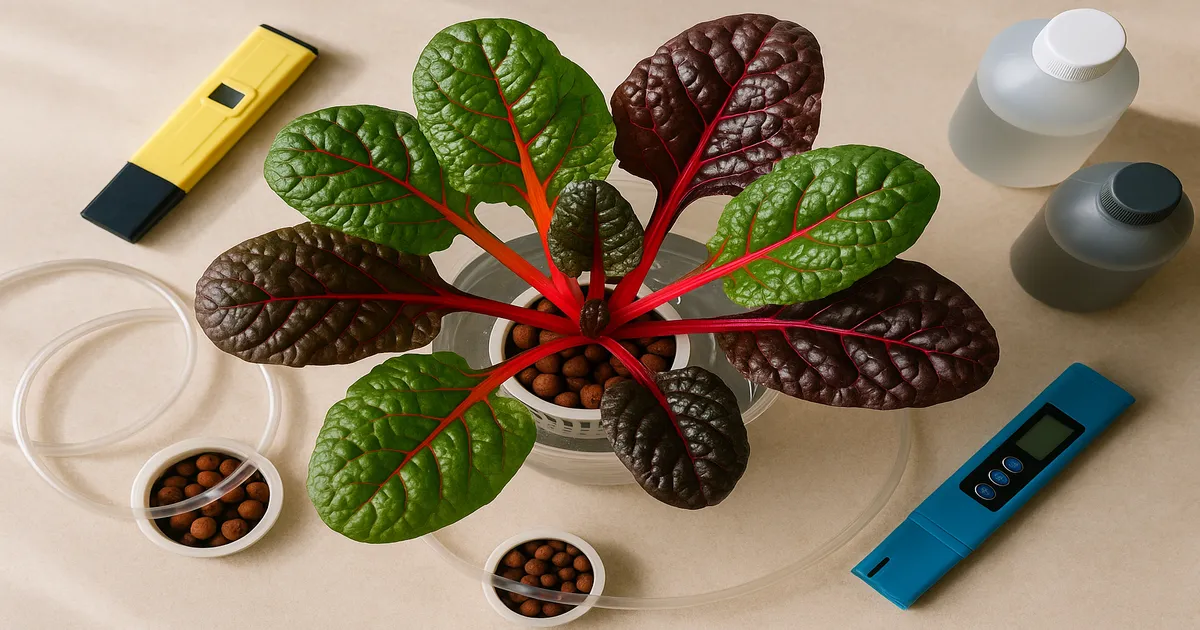
Bright Lights is the most popular variety by a wide margin — stems in red, yellow, orange, pink, white, and purple, maturing in 55–60 days. It performs excellently in DWC and NFT systems and is the go-to for farmers markets. Five Color Silverbeet, an Australian variety, adds a slight edge in heat tolerance for warmer conditions.
Fordhook Giant is the workhorse heirloom — large crinkled dark-green leaves, white stems, vigorous hydroponic growth, and excellent yield per plant at 50–60 days. Less showy than Bright Lights but produces more biomass. Lucullus is another reliable white-stem heirloom with tender leaves and good flavor, well-suited to cut-and-come-again harvesting.
For market growers, Bright Lights wins on visual appeal. For raw yield in DWC or NFT, Fordhook Giant is hard to beat. Heat-stressed summer growers should lean toward Five Color Silverbeet. Beginners can’t go wrong with any of these — chard is forgiving across the board.
Harvesting and Troubleshooting
Cut-and-Come-Again Harvesting
Always harvest the outer leaves first, leaving the central growing point (the crown) completely intact. This keeps the plant in active production for weeks or even months. Use clean scissors or a sharp knife and cut stems at the base — don’t tear. Baby leaves (6–8 inches) are ready at 25–35 days; full-size outer leaves at 50–60 days. Once a plant bolts, flavor turns bitter quickly, so harvest aggressively at the first sign of a flower stalk.
Common Problems and Fixes
| Problem | Cause | Fix |
|---|---|---|
| Tip burn | Calcium deficiency or low airflow | Raise Ca to 120–150 ppm; add circulation fan |
| Yellowing older leaves | Magnesium or nitrogen deficiency | Check Mg (target 40 ppm); raise N slightly |
| Pale new growth | Iron deficiency (pH too high) | Lower pH to 6.0–6.2; switch to chelated iron |
| Leggy, stretched growth | Insufficient light | Raise PPFD to 400–600 µmol/m²/s |
| Bolting | Heat or excessive photoperiod | Lower temp below 75°F; reduce to 14–16 hr light |
Frequently Asked Questions
How long does Swiss chard take to grow hydroponically? Baby leaves are ready in 25–35 days from transplant. Full-size outer leaves are harvestable at 50–60 days. With cut-and-come-again harvesting, a single plant can produce for 3–4 months before quality declines.
What is the best temperature for growing Swiss chard? The ideal range is 60–75°F (15–24°C) for active growth. Germination occurs as low as 50°F (10°C). Above 85°F (29°C) growth slows; above 90°F (32°C) bolt risk increases significantly. Keep hydroponic reservoir water at 65–72°F (18–22°C).
Can Swiss chard grow in low light? Chard tolerates lower light than many crops, but quality suffers below a DLI of 12 mol/m²/day. At that level, plants become leggy and yields drop. Aim for at least 200–400 PPFD during vegetative growth for reliable production.
Does Swiss chard need a lot of nutrients? It’s a moderately heavy feeder, especially for nitrogen and potassium. Run EC at 1.7–2.5 for full vegetative growth. It’s more forgiving of nutrient fluctuations than lettuce, but calcium and iron deficiencies are common and worth monitoring closely.
How do I prevent Swiss chard from bolting indoors? Keep temperatures below 75°F (24°C) and limit photoperiod to 14–16 hours. Bolting is triggered by the combination of heat and long days — controlling both keeps plants productive. If you see the center stalk elongating, harvest all usable leaves immediately.