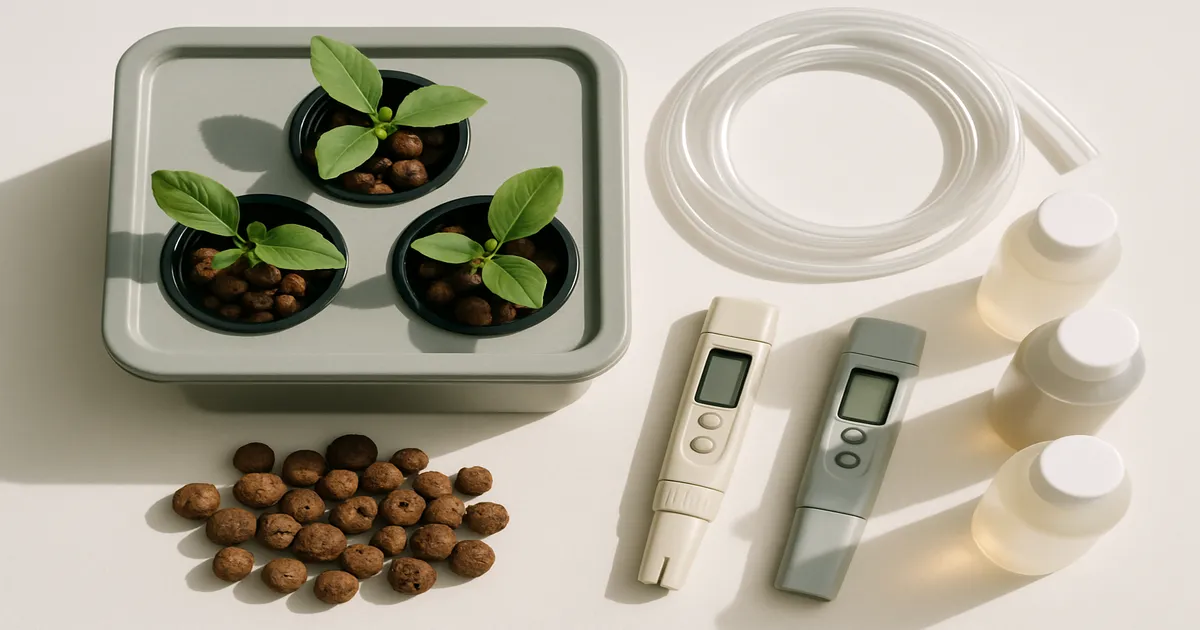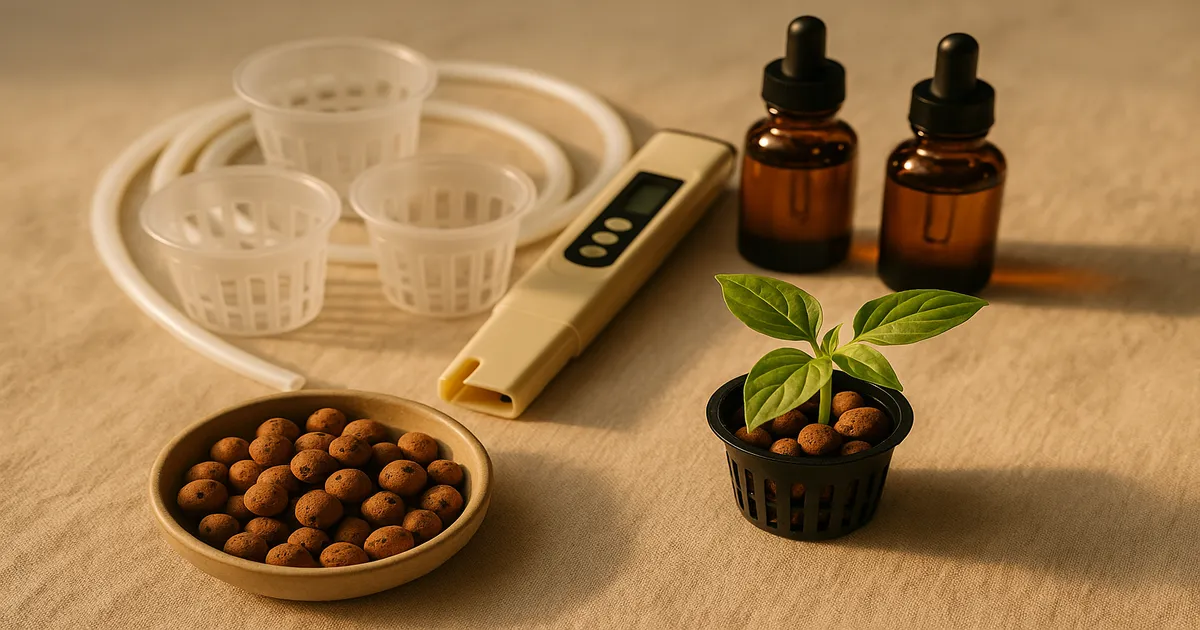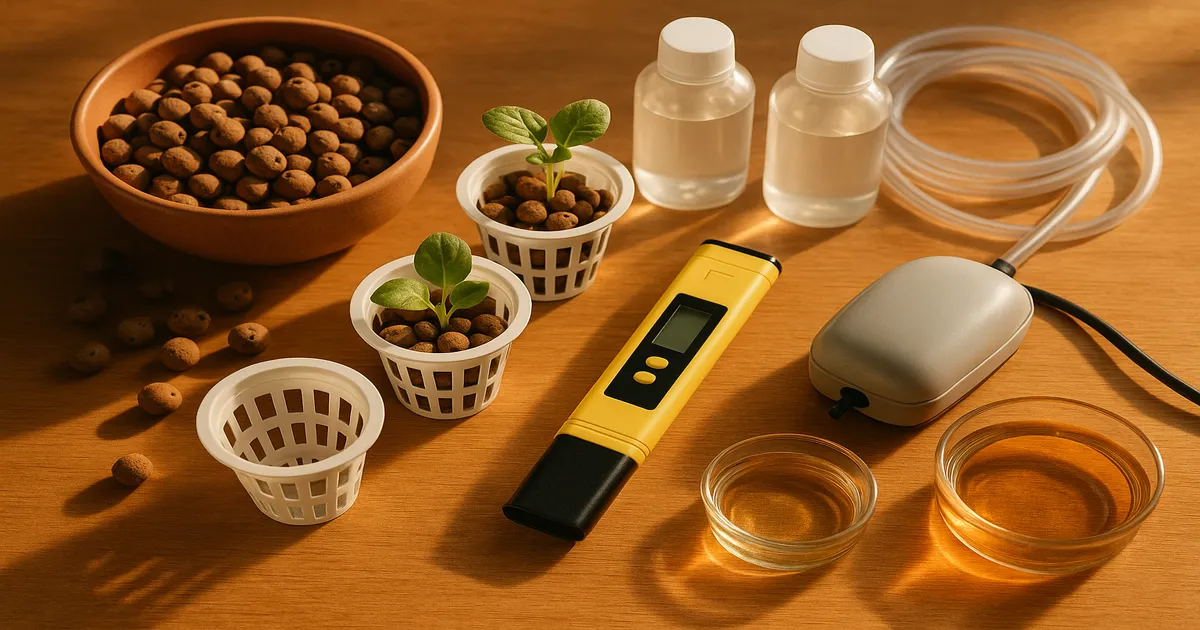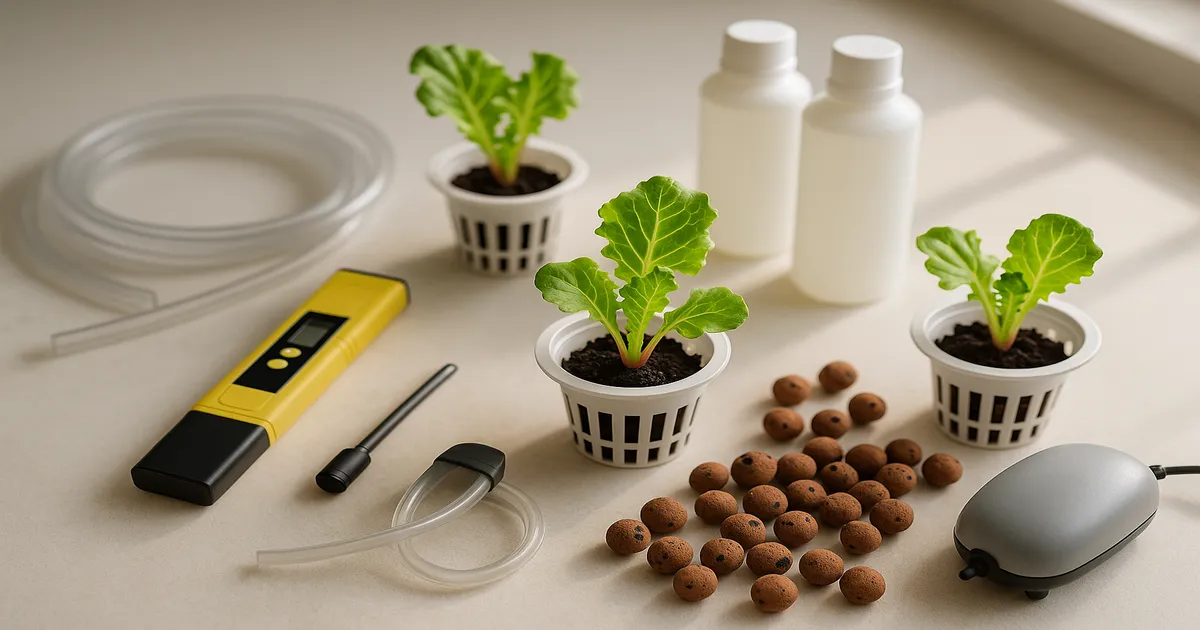
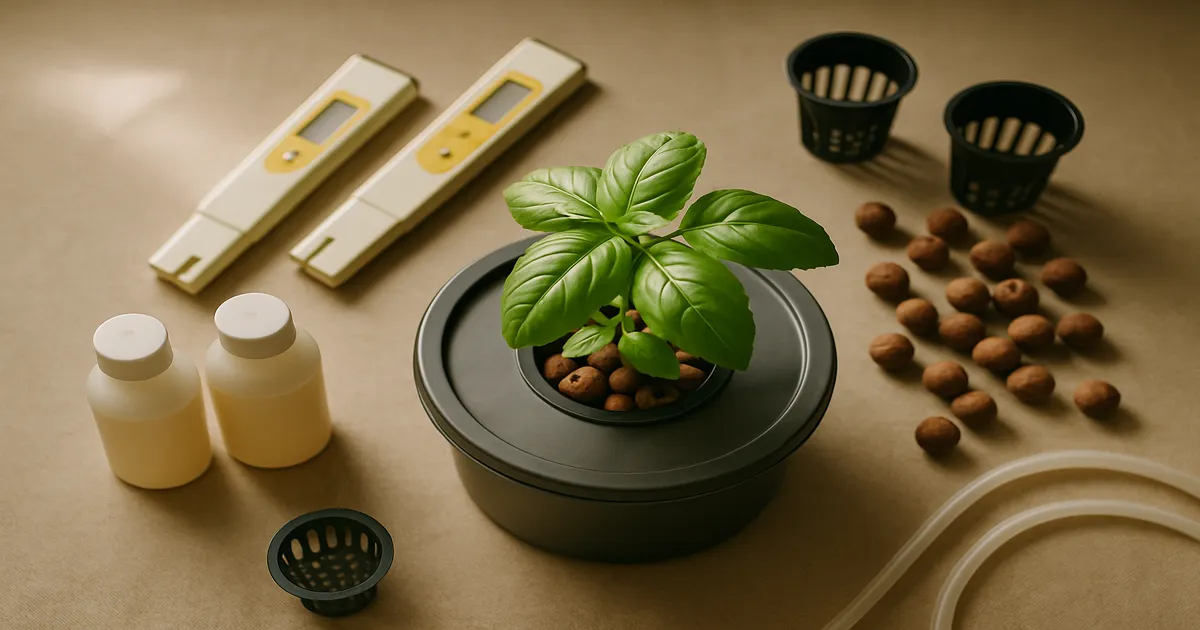
Quick Answer: For beginners, Deep Water Culture (DWC) or the passive Kratky method are the top recommended hydroponic systems — both are inexpensive, simple, and forgiving. Start with lettuce or herbs, grab a pH meter and EC meter, and pick up a pre-mixed nutrient solution. The biggest mindset shift is learning to manage pH and EC instead of watering by feel, but modern tools make that easier than ever.
If you’re wondering what is recommended for beginners in hydroponics right now, the honest answer is: it’s never been easier to start. Pre-mixed nutrients, plug-and-play LED lights, and a thriving online community have dramatically lowered the barrier to entry. A basic setup can be running in an afternoon, and you’ll see faster growth than soil within the first week.
Best Hydroponic Systems Recommended for Beginners
Deep Water Culture (DWC): The #1 Beginner Choice
DWC is the most recommended starting point for good reason — it’s cheap, simple, and fast. Plants sit in net pots suspended over a reservoir of oxygenated nutrient solution, with roots dangling directly into the water. An air pump and air stone keep oxygen levels up.
A basic single-bucket DWC setup costs $30–$60 and requires almost no plumbing. Lettuce, basil, spinach, and kale all thrive in it. You’ll notice measurably faster growth within the first week compared to soil. A reliable air pump — keeps dissolved oxygen high and root rot at bay.
Kratky Method: Zero Electricity, Maximum Simplicity
The Kratky method is passive DWC — no pump, no timer, no electricity for the reservoir. Fill a container with nutrient solution, suspend your plant above it, and as the plant drinks, an air gap forms naturally to oxygenate the roots.
It’s ideal for herbs and lettuce on a sunny windowsill or under a basic grow light. The main limitation is scalability: it doesn’t suit large, long-season plants like tomatoes, which drink faster than the passive air gap can keep up with.
All-in-One Smart Gardens: The Absolute Easiest Starting Point
If you want the shortest possible learning curve, a countertop smart garden is the answer. (AeroGarden Harvest) These units come with built-in LEDs, automated light timers, and guided nutrient dosing — you essentially add water and pods. Cost runs $80–$250, but you’re paying for a nearly foolproof experience. Great for kitchen herbs, cherry tomatoes, and small lettuces.
NFT, Ebb & Flow, and Wick Systems: When to Consider Them
Nutrient Film Technique (NFT) runs a thin film of nutrient solution continuously over plant roots in sloped channels. It’s efficient with water and nutrients, but a clog or power outage can stress plants quickly since roots have no reservoir to fall back on. Worth considering after one successful DWC or Kratky grow.
Ebb and flow periodically floods a grow tray with nutrient solution, then drains it back to a reservoir. It’s versatile and works with many media types — popular for tomatoes and peppers — but it has more components to dial in than DWC.
Wick systems are the simplest of all: a passive wick draws solution from a reservoir to the growing medium. They work fine for herbs and microgreens but can’t deliver enough water for thirsty plants, which limits their usefulness as you scale up.
System Comparison at a Glance
| System | Electricity Needed | Cost Range | Best Plants | Difficulty |
|---|---|---|---|---|
| DWC | Yes (air pump) | $30–$80 | Lettuce, herbs, greens | ⭐ Easy |
| Kratky | No | $5–$30 | Lettuce, herbs | ⭐ Easy |
| Smart Garden | Yes (built-in) | $80–$250 | Herbs, lettuce, tomatoes | ⭐ Easiest |
| NFT | Yes (pump) | $80–$200 | Lettuce, strawberries | ⭐⭐ Moderate |
| Ebb & Flow | Yes (pump + timer) | $100–$300 | Tomatoes, peppers, herbs | ⭐⭐ Moderate |
| Wick | No | $5–$20 | Herbs, microgreens | ⭐ Easy (limited) |
Choosing the Right Growing Medium
Growing media in hydroponics don’t feed your plants — that’s the nutrient solution’s job. Media exist purely to anchor roots and support the plant structurally.
Clay pebbles (Hydroton) are the most popular choice for DWC and ebb-and-flow systems. They’re pH-neutral, allow excellent airflow around roots, and can be washed and reused indefinitely. Rinse them thoroughly before first use — the dust coating can affect pH.
Rockwool cubes are the gold standard for germinating seeds and rooting cuttings. They hold moisture well while retaining enough air space to prevent damping off. Pre-soak cubes in pH 5.5 water for an hour before use — fresh rockwool is naturally alkaline and will skew your pH if you skip this step.
Coco coir looks and feels similar to soil, which makes it a comfortable transition for new growers. It retains moisture and air simultaneously and pairs well with ebb-and-flow systems. Note that coco can bind calcium and magnesium, so supplementing with Cal-Mag is often necessary.
Perlite is cheap, widely available, and works well mixed with coco coir or on its own in wick and ebb-and-flow systems. It drains fast — great for preventing overwatering, but it requires more frequent irrigation in active systems.
One universal tip: Address your tap water quality from day one. High chlorine can be off-gassed by letting water sit uncovered for 24 hours, but chloramine (used in many municipal supplies) requires a campden tablet or activated carbon filter to neutralize.
Hydroponic Nutrients: What Beginners Actually Need
Why Soil Fertilisers Don’t Work in Hydro
Standard soil fertilizers are designed to interact with soil microbes and organic matter to release nutrients slowly. In hydroponics, there’s no soil biology — nutrients must be immediately water-soluble and precisely balanced. Using a soil fertilizer in your reservoir will cause nutrient imbalances and can clog systems.
Macronutrients and Key Secondary Nutrients
The three primary macronutrients — nitrogen (N), phosphorus (P), and potassium (K) — drive growth, root development, and overall plant health. Secondary nutrients matter just as much in practice: calcium (Ca) at 150–200 PPM prevents tip burn in lettuce and blossom end rot in tomatoes, while magnesium (Mg) at 30–50 PPM is the central atom in chlorophyll — deficiency shows up as yellowing between leaf veins (interveinal chlorosis). Most quality base nutrient formulas cover micronutrients (iron, zinc, manganese) automatically, so beginners don’t need to supplement them separately.
EC and PPM Targets by Growth Stage
| Growth Stage | PPM | EC |
|---|---|---|
| Seedling / Clone | 100–400 PPM | 0.2–0.8 EC |
| Early Vegetative | 400–800 PPM | 0.8–1.6 EC |
| Full Vegetative | 800–1,200 PPM | 1.6–2.4 EC |
| Flowering / Fruiting | 1,200–1,600 PPM | 2.4–3.2 EC |
| Late Flower / Flush | 0–400 PPM | 0.0–0.8 EC |
Always start at the lower end of each range. Underfeeding is easy to correct; nutrient burn from overfeeding takes days to recover from.
Recommended Beginner Nutrient Products
General Hydroponics Flora Series (Grow, Micro, Bloom) is the industry standard and a great first choice. A simple beginner ratio for vegetative growth is 3 mL Micro + 2 mL Grow + 1 mL Bloom per gallon, shifting to 1 mL Micro + 1 mL Grow + 3 mL Bloom for flowering.
For the simplest possible experience, Dyna-Gro Foliage Pro is a single-bottle all-in-one formula that works exceptionally well for leafy greens and herbs. For tomatoes and peppers, the Masterblend 4-18-38 DIY recipe (2.4 g Masterblend + 2.4 g Calcium Nitrate + 1.2 g Epsom Salt per gallon) produces around 800–1,000 PPM (1.6–2.0 EC) and is very cost-effective at scale.
Reservoir Temperature
Keep your reservoir between 65–72°F (18–22°C). Above 75°F (24°C), dissolved oxygen drops sharply and root rot becomes a serious risk. Below 60°F (15°C), nutrient uptake slows noticeably. A simple aquarium thermometer is enough to monitor this — an aquarium chiller is worth considering in warm environments.
pH and EC Management: The Most Important Beginner Skill
Why pH Is the #1 Factor Beginners Get Wrong
pH controls which nutrients are chemically available for root absorption. A perfectly mixed nutrient solution at pH 7.5 will still produce deficiency symptoms because the nutrients are locked out at that level. Most beginner failures — yellowing leaves, stunted growth, tip burn — trace back to unmanaged pH drift, not bad nutrients.
Target pH 5.8–6.2 as your sweet spot, with an acceptable range of 5.5–6.5. Slight daily fluctuations within that range are normal and even beneficial, since different nutrients are most available at slightly different pH levels.
Meters vs. Strips
A digital pH meter is non-negotiable for any recirculating system. The Apera PH20 and Bluelab pH Pen are both reliable options in the $30–$60 range. Calibrate weekly with pH 4.0 and 7.0 buffer solutions. pH test strips are acceptable as a backup for Kratky grows but aren’t accurate enough (±0.2–0.5 pH) for regular management.
For EC, the HM Digital COM-80 or Bluelab Truncheon are solid choices in the $15–$60 range. Check both pH and EC every 1–2 days.
Adjusting pH Safely
- pH too low: Add pH Up (potassium hydroxide) in 1 mL increments per gallon, stir, wait 15 minutes, retest
- pH too high: Add pH Down (phosphoric acid) using the same incremental approach
- Never dump a large amount of either solution at once — you’ll overshoot and spend hours chasing your pH in circles
Common pH and EC Fluctuations
| Problem | Likely Cause | Solution |
|---|---|---|
| pH rises daily | Plants consuming nutrients, leaving water | Top off with pH-adjusted plain water |
| pH drops sharply | Microbial activity, root rot, algae | Check roots, clean reservoir |
| EC rises over time | Water evaporating faster than plant uptake | Top off with plain water only |
| EC drops quickly | Plants feeding heavily | Add fresh nutrient solution |
| pH won’t stabilize | High tap water alkalinity | Switch to RO or filtered water |
Grow Lights for Beginners
Key Light Metrics Explained Simply
PAR is the 400–700 nm spectrum plants use for photosynthesis. PPFD measures the intensity of that light at the canopy in µmol/m²/s. DLI is the total PAR light a plant receives over a full day (PPFD × hours × 0.0036). You don’t need to memorize the math — use the targets below as your guide.
Modern full-spectrum white LEDs are the clear recommendation for beginners. They mimic natural sunlight, work for every plant type, and are far more efficient than the old purple/blurple LEDs. If you see blurple lights cheap online, skip them.
PPFD and Photoperiod Targets by Plant Type
| Plant Type | PPFD Target | DLI Target | Photoperiod |
|---|---|---|---|
| Microgreens | 100–200 µmol/m²/s | 6–12 mol/m²/day | 16–18 hrs |
| Leafy greens / Herbs | 150–250 µmol/m²/s | 12–17 mol/m²/day | 16–18 hrs |
| Fruiting vegetables | 400–600 µmol/m²/s | 20–30 mol/m²/day | 18 hrs (veg) / 12 hrs (fruit) |
| Cannabis (where legal) | 600–900 µmol/m²/s | 25–40 mol/m²/day | 18/6 or 12/12 |
Recommended LED Fixtures
Budget ($30–$100):
- Mars Hydro TS 1000 — solid full-spectrum coverage for a 2×2 to 3×3 ft space
- Spider Farmer SF-1000 — Samsung LM301B diodes, excellent efficiency for the price
Mid-range ($100–$300):
- Spider Farmer SF-2000 — dimmable, efficient, ideal for herbs and vegetables up to a 4×4 ft footprint
- AC Infinity IONBOARD S33 — app-controlled, quiet, excellent build quality
Light Distance Guidelines
| Plant Stage | Distance from Canopy |
|---|---|
| Seedling | 24–30 inches (61–76 cm) |
| Vegetative | 18–24 inches (46–61 cm) |
| Flowering / Fruiting | 12–18 inches (30–46 cm) |
If plants are stretching toward the light, move it closer. If leaves are bleaching or curling, raise it. Always use a timer — inconsistent photoperiods reduce yields more than most beginners expect.
Best Plants for Beginner Hydroponic Growers
Tier 1 — Easiest: Lettuce, Herbs, and Leafy Greens
These plants have low nutrient demands, tolerate minor pH fluctuations, and grow fast enough that you’ll see results — and mistakes — quickly.
- Lettuce (Buttercrunch, Romaine) — ready to harvest in 30–45 days, thrives in DWC and Kratky
- Basil — fast-growing, aromatic, loves 16–18 hours of light
- Mint — almost impossible to kill hydroponically
- Spinach and kale — slightly slower than lettuce but still very beginner-friendly
- Microgreens — harvestable in 7–14 days with minimal equipment
Tier 2 — Intermediate: Tomatoes, Peppers, and Strawberries
These plants are absolutely doable, but they need higher PPFD (400–600 µmol/m²/s), longer grow times, and physical support structures. Cherry tomatoes are the most forgiving of the group. Expect 60–90+ days from transplant to harvest and more active pH and EC management as plants size up.
Plants to Avoid as a First-Time Grower
Skip root vegetables (carrots, potatoes) and large fruiting trees for your first grow. Root vegetables need deep, opaque media that doesn’t suit most beginner systems. Master the basics first, then expand.
Matching Plants to Your System
| Plant | Recommended System |
|---|---|
| Lettuce | DWC, Kratky, NFT |
| Herbs | DWC, Kratky, Wick, Smart Garden |
| Spinach / Kale | DWC, Kratky |
| Cherry Tomatoes | DWC, Ebb & Flow |
| Peppers | Ebb & Flow, DWC |
| Strawberries | NFT, Ebb & Flow |
| Microgreens | Wick, shallow tray |
Troubleshooting Common Beginner Problems
Nutrient Deficiency vs. pH Lockout
Before you add more nutrients to fix a deficiency, always check and correct your pH first. The vast majority of “deficiency” symptoms in beginners are actually pH lockout — the nutrients are present but chemically unavailable. Correct pH, wait 48 hours, and reassess before adding anything to your reservoir.
Root Rot: Prevention and Early Treatment
Root rot (caused by Pythium and related pathogens) is the most common DWC problem. Healthy roots are white and firm; infected roots turn brown, slimy, and smell foul. Prevention is straightforward: keep reservoir temperature below 72°F, block all light from the reservoir to prevent algae, and maintain strong aeration. If you catch it early, beneficial bacteria products like Hydroguard (Bacillus amyloliquefaciens) can help restore root health.
Algae Growth
Algae needs light and nutrients to grow. If you’re seeing green slime on your reservoir walls or net pot collars, you have a light leak. Cover all surfaces with opaque material — black-and-white poly film works well — and do a reservoir clean with a dilute hydrogen peroxide solution (3 mL of 3% H₂O₂ per gallon) before refilling.
Frequently Asked Questions
Q: What is recommended for beginners who have no experience at all? Start with a Kratky lettuce grow. You need a mason jar or opaque container, net pots, clay pebbles, a pre-mixed nutrient solution, a pH meter, and a basic LED grow light. Total cost is under $50, and you’ll have harvestable lettuce in 30–45 days.
Q: How often should I change my reservoir water? For DWC, do a full reservoir change every 7–14 days. Between changes, top off with plain pH-adjusted water when levels drop. This prevents nutrient salt buildup and keeps your solution fresh.
Q: Do I need RO water to start? No — most tap water works fine, especially for leafy greens. If your tap water is above 150 PPM (0.3 EC) or has a high pH that’s hard to stabilize, consider a basic carbon filter or RO unit. Always let chlorinated tap water sit uncovered for 24 hours, or use a campden tablet to neutralize chloramine.
Q: Can I grow tomatoes as a beginner? Yes, but start with cherry tomato varieties (Sungold, Sweet Million) rather than large beefsteak types. They’re more forgiving of minor nutrient and pH swings, and they fruit faster. Use DWC or ebb-and-flow, provide at least 400 µmol/m²/s of PPFD, and plan for 8–12 weeks from transplant to first harvest.
Q: How do I know if my plants are getting enough light? The most reliable sign of insufficient light is etiolation — stems stretching long and thin toward the light source. Leaves may also be pale green rather than deep green. If you want to measure precisely, a PAR meter or smartphone app (like Photone) can give you a PPFD reading at canopy level to compare against the targets in the table above.