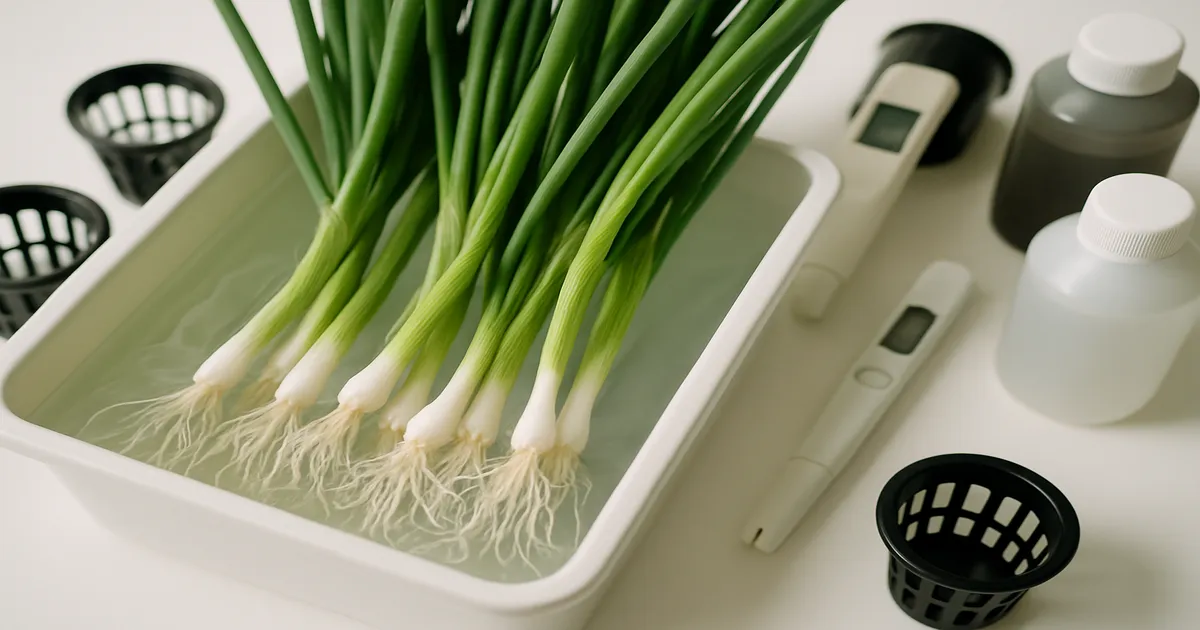
Quick Answer: Yes, you can grow green onions in water — and it’s one of the easiest things you can grow at home. The simplest approach takes store-bought scallion roots and places them in a glass of water for harvest-ready greens in 7–14 days. For bigger, ongoing yields, a basic hydroponic setup grows full plants from seed in 45–65 days with minimal effort.
Green onions are the gateway crop for anyone curious about growing food in water. Whether you want to stretch a bunch of scallions from the grocery store or set up a proper hydroponic system, the process is forgiving, fast, and surprisingly rewarding. This guide covers everything — from dropping roots in a jar to dialing in pH and nutrients for a continuous harvest.
Can You Grow Green Onions in Water? Two Methods Compared
Jar Regrowth vs. Full Hydroponic at a Glance
| Jar Regrowth | Full Hydroponic | |
|---|---|---|
| Difficulty | ⭐ Beginner | ⭐⭐–⭐⭐⭐ Easy–Intermediate |
| Starting material | Store-bought scallions | Seeds or transplants |
| Time to harvest | 7–14 days | 45–65 days from seed |
| Nutrients needed | No (initially) | Yes |
| Equipment cost | ~$0 | $20–$200+ |
| Cut-and-come-again | 2–4 cycles | 3–5+ harvests |
The jar method works because the basal plate — the white root disc at the bottom of a scallion — holds meristematic tissue that regenerates new shoots using energy stored in the bulb. No nutrients, no pump, no fuss. Full hydroponic cultivation takes longer but produces far more food and can run year-round indoors.
How Long Does It Take?
With the regrowth method, you’ll see visible growth within 24–48 hours and harvestable greens in about a week. Full hydroponic grows from seed take 45–65 days total: roughly 5–10 days to germinate, 2–3 weeks in the seedling stage, then another 3–5 weeks to harvest size. Either way, green onions are among the fastest-producing crops you can grow hydroponically.
Choosing the Right Growing Method
The Jar Regrowth Method: Simplest Way to Grow Green Onions in Water
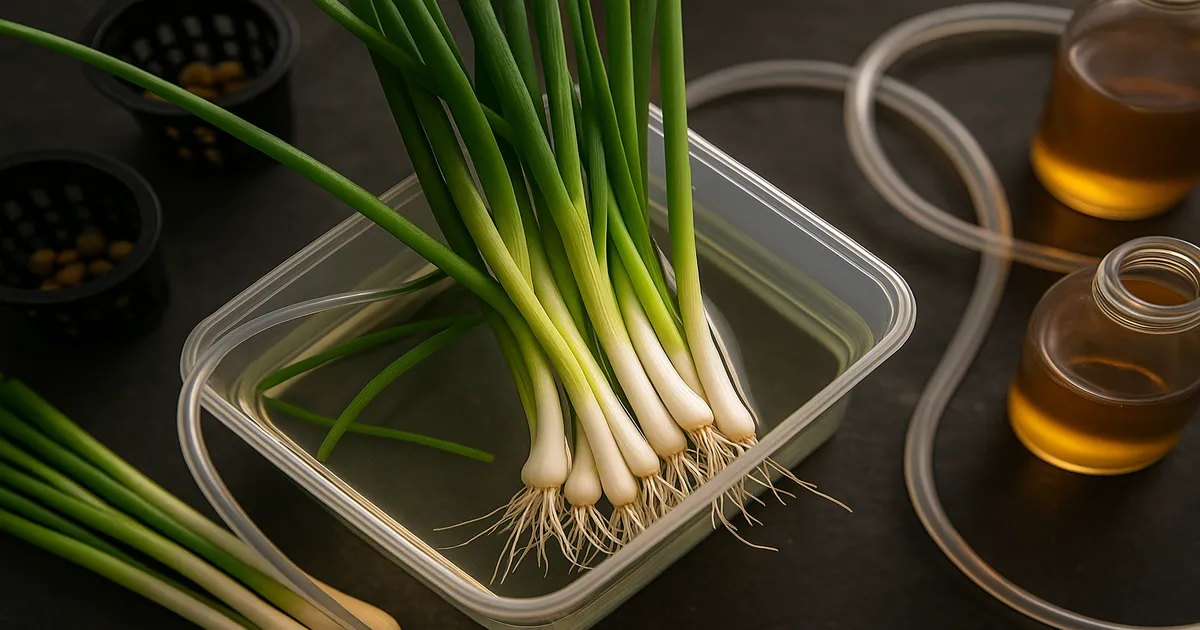
This is the “no excuses” approach. You need a glass, water, and the root ends of a store-bought bunch. It’s perfect for anyone who wants fresh greens on the kitchen counter without buying any equipment.
- Skill level: Complete beginner
- Yield: 1–3 oz per bunch per cycle, 2–4 cycles before productivity drops
- Pros: Zero cost, zero setup, results in days
- Cons: Productivity fades after a few cycles; not suitable for growing full plants from scratch
Kratky Method: Passive Hydroponics for Beginners
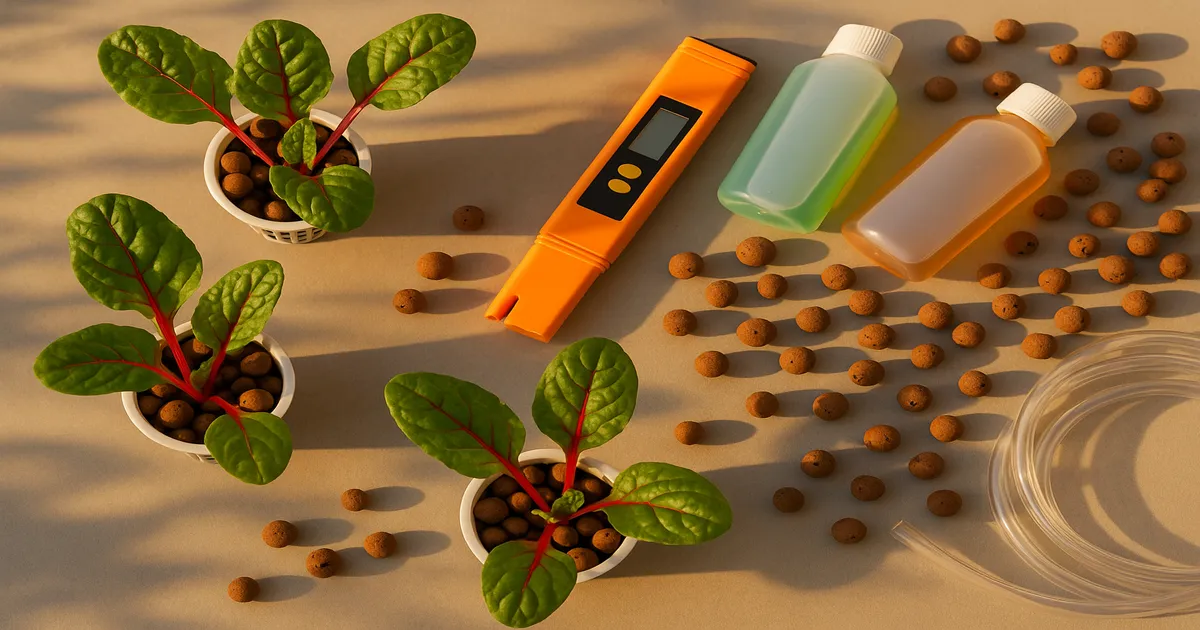
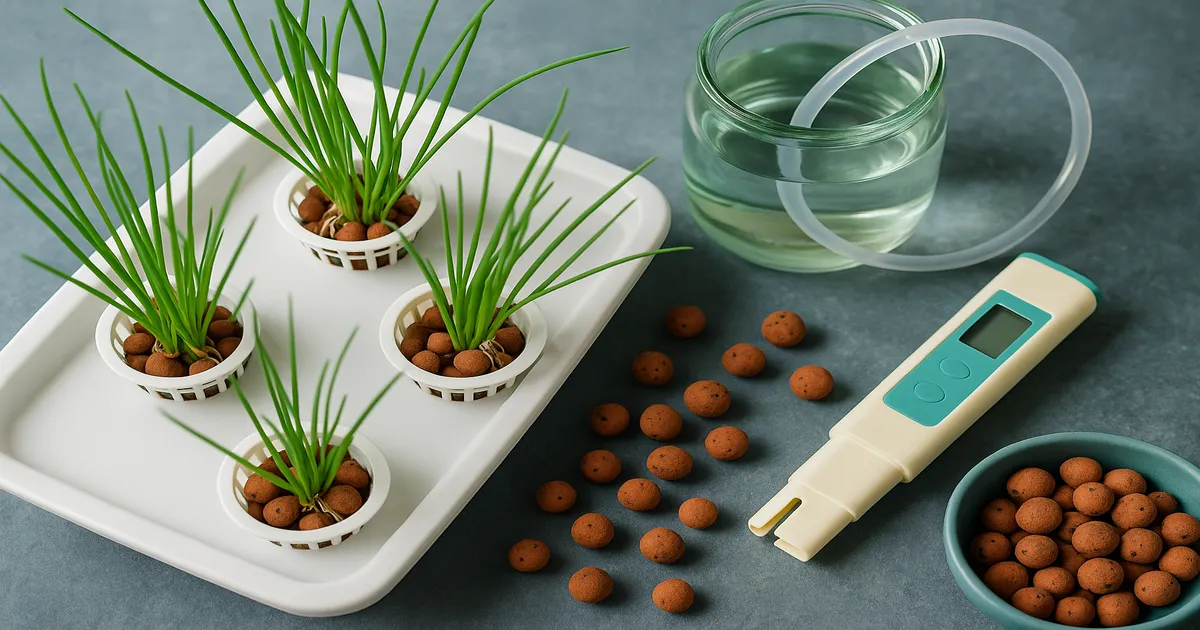
The Kratky method is a passive, no-pump hydroponic system where plants sit in net pots above a reservoir of nutrient solution. As plants drink, an air gap forms naturally and oxygenates the roots. It’s the logical next step after the jar method — still low-maintenance, but capable of growing full plants from seed.
- Skill level: Easy (⭐⭐)
- Equipment: Opaque container, net pots, growing medium, nutrient solution, pH meter
- Pros: No electricity needed, low maintenance, scalable
- Cons: Less oxygen delivery than active DWC; requires checking pH and EC every 2–3 days
Deep Water Culture (DWC): Best for Multiple Full Harvests
DWC suspends plant roots directly in an aerated nutrient solution using an air pump and airstone. More dissolved oxygen means faster growth and better resistance to root rot. If you want a steady, high-yielding green onion setup, DWC is the sweet spot between simplicity and performance.
- Skill level: Intermediate (⭐⭐⭐)
- Yield: 1–2 lbs per 4 sq ft per harvest cycle
- Pros: Excellent yields, cut-and-come-again potential, scalable
- Cons: Requires an air pump and more frequent monitoring
NFT and Other Systems
Nutrient Film Technique (NFT) runs a thin stream of nutrient solution through sloped channels — efficient and popular for commercial green onion production, but it requires more infrastructure than most home growers need. Ebb and flow systems add unnecessary complexity for a crop this simple. For most home growers, Kratky or DWC is all they’ll ever need.
Step-by-Step Setup: Growing Green Onions in Water
Equipment Checklist
For jar regrowth:
- Glass or jar (4–6 inches tall)
- Filtered or 24-hour aged tap water
- Store-bought scallion bunch with intact roots
For Kratky or DWC:
- Opaque container (1–5 gallon)
- 2-inch net pots
- Growing medium (hydroton clay pebbles or rockwool cubes)
- pH meter (Apera PH20)
- EC/TDS meter (Apera EC20)
- Hydroponic nutrient solution (General Hydroponics Flora Series)
- Air pump and airstone (DWC only)
- pH Up and pH Down solutions
How to Regrow Green Onions from Store-Bought Scraps
- Cut green onions 1–2 inches above the roots, leaving the white base and root disc intact.
- Place roots-down in a clean glass with about 1 inch of water — enough to cover the roots without submerging the entire white section.
- Set the glass in a bright spot. A south-facing window is ideal.
- Change the water every 2–3 days to prevent bacterial buildup.
- Harvest when greens reach 4–6 inches. Cut again, leaving the roots in place for the next cycle.
- After 7–10 days, add a dilute nutrient boost (see Option 3 in the nutrients section below) to extend productivity once the bulb’s stored energy runs out.
Setting Up a Kratky or DWC System from Seed
- Fill your container with filtered water and mix nutrient solution to 350–560 PPM (0.7–1.1 EC) for seedlings.
- Adjust pH to 6.0–6.5 after mixing nutrients — nutrients shift pH significantly, so adjusting beforehand is wasted effort.
- Place net pots filled with rinsed clay pebbles or pre-soaked rockwool into the lid openings.
- Sow seeds directly into rockwool cubes, or transplant 3–4 week old seedlings into net pots.
- For DWC, run the air pump continuously. For Kratky, leave the reservoir undisturbed and let the air gap form naturally as plants drink.
- Monitor pH and EC every 2–3 days for Kratky, daily for DWC.
- Top off with plain pH-adjusted water as levels drop. Do a full reservoir change every 7–14 days.
Water Quality: Why It Matters
Chlorine and fluoride in municipal tap water can inhibit root development, especially during early regrowth. For the jar method, fill your container the night before and leave it uncovered — this off-gasses most chlorine within 24 hours. For hydroponic systems, a basic carbon filter or reverse osmosis setup gives you a clean baseline to build your nutrient solution on.
Best Green Onion Varieties for Water Growing
| Variety | Days to Harvest | Flavor | Best For |
|---|---|---|---|
| Evergreen Hardy White | 60–65 days | Mild, classic | All hydroponic systems |
| Tokyo Long White | 60–70 days | Mild, long shanks | NFT, DWC |
| He Shi Ko | 65 days | Strong, traditional | DWC, cold environments |
| Parade | 60 days | Very mild | Beginners, all systems |
| White Lisbon | 60 days | Mild, reliable | All systems |
| Store-bought scallions | 7–14 days (regrowth) | Varies | Jar regrowth method |
When buying scallions for regrowth, look for bunches with roots at least 1 inch long that are white, firm, and undamaged. Avoid bunches where the root base looks dried out or slimy. Organic scallions often perform slightly better since they’re less likely to have been treated with growth inhibitors.
Nutrient Requirements for Hydroponic Green Onions
Do You Need Nutrients to Grow Green Onions in Water?
For the jar regrowth method — not at first. The bulb’s stored energy powers the initial flush of growth. After 7–10 days, that energy depletes, and a dilute nutrient solution will extend productivity and improve leaf quality noticeably.
For full hydroponic grows from seed or transplant, nutrients are non-negotiable.
pH and EC Targets by Growth Stage
| Stage | PPM | EC | pH |
|---|---|---|---|
| Seedling | 350–560 | 0.7–1.1 | 6.0–6.5 |
| Vegetative | 560–840 | 1.1–1.7 | 6.0–6.5 |
| Mature/pre-harvest | 840–1,120 | 1.7–2.2 | 6.0–6.5 |
Three Nutrient Recipes for Every Budget
Option 1 — General Hydroponics Flora Series (Beginner-Friendly)
- FloraGro: 5 mL/gallon
- FloraMicro: 2.5 mL/gallon
- FloraBloom: 1 mL/gallon
- Target: 700–900 PPM (1.4–1.8 EC), pH 6.0–6.3
Option 2 — Masterblend 4-18-38 (Cost-Effective)
- Masterblend 4-18-38: 2.4 g/gallon
- Calcium Nitrate (15.5-0-0): 2.4 g/gallon
- Magnesium Sulfate (Epsom Salt): 1.2 g/gallon
- Target: 700–800 PPM (1.4–1.6 EC)
Option 3 — Minimal Regrowth Boost (Ultra-Simple)
- ¼ tsp general-purpose liquid fertilizer (e.g., 24-8-16 formula) per gallon of water
- Target: 200–350 PPM (0.4–0.7 EC)
- Best for extending jar regrowth past the first week
What Nutrients Matter Most
Green onions are leafy crops, so nitrogen drives everything — chlorophyll production, cell division, and that lush green color. Aim for an N-P-K ratio of roughly 3:1:2 throughout the growth cycle. Don’t shift toward high phosphorus or potassium the way you would with a fruiting plant.
Sulfur also deserves attention. It’s the building block of allicin precursors — the compounds responsible for that classic onion flavor. Keep sulfur in the 50–80 PPM range. Epsom salt (magnesium sulfate) in your nutrient mix covers both sulfur and magnesium in one ingredient.
pH and EC Management
Monitoring Tools and Frequency
A reliable pH pen and EC meter are the two most important tools in any hydroponic setup. The Apera PC60 combo meter handles both in one device, which is convenient for hobbyists. Calibrate your pH meter weekly using pH 4.0 and 7.0 buffer solutions — an uncalibrated meter is worse than no meter because it gives you false confidence.
Check pH and EC daily for active DWC systems, every 2–3 days for passive Kratky setups.
Adjusting pH
Use pH Down (phosphoric acid) to lower pH and pH Up (potassium hydroxide) to raise it. Add in small increments — 0.5–1 mL per gallon at a time — and never move pH more than 0.5 units per adjustment. White vinegar works as a temporary pH Down in a pinch, but it’s not stable enough for serious growing. Skip baking soda for pH Up entirely — it’s unpredictable in a nutrient solution.
Managing EC Drift
When your reservoir level drops, top it off with plain pH-adjusted water, not more nutrient solution. Plants drink water faster than they consume nutrients, so EC naturally rises between changes. If EC is climbing, dilute with plain water. If EC is falling, your plants are hungry — add fresh nutrient solution.
Do a full reservoir change every 7–14 days to flush accumulated salts and reset pH stability.
Optimal Water Temperature
Keep your nutrient solution between 65–72°F (18–22°C). Above 75°F (24°C), dissolved oxygen drops and Pythium (root rot) becomes a real threat. Below 60°F (16°C), nutrient uptake slows and growth stalls. In warm climates, a small reservoir chiller keeps temperatures in range. In cold basements, a submersible aquarium heater does the job.
Lighting for Indoor Green Onion Water Gardens
Can Green Onions Grow on a Windowsill?
Yes — a south-facing window with 4–6 hours of direct sun is enough for basic jar regrowth. But “enough” and “optimal” aren’t the same thing. Windowsill plants tend to grow slower and lean toward the light. A simple grow light produces noticeably faster, more upright greens.
Light Intensity and Spectrum
Green onions are shade-tolerant compared to fruiting crops. They thrive at 150–300 µmol/m²/s PPFD — well within the range of affordable LED panels. Full-spectrum LEDs with a blue-dominant balance work best. Blue light (450–470 nm) keeps growth compact and upright; red light (620–680 nm) drives photosynthesis efficiency. Avoid exceeding 500 µmol/m²/s — it can cause tip burn without any growth benefit.
Photoperiod
Run lights for 14–16 hours per day. Green onions are long-day plants, so extended light promotes vigorous vegetative growth. Don’t push past 16 hours with mature plants — it can trigger bolting, which ruins leaf quality and flavor. A simple outlet timer handles this automatically.
Recommended Grow Lights by Setup Size
| Setup Size | Fixture Type | Estimated Cost | Examples |
|---|---|---|---|
| Windowsill | Natural light | $0 | — |
| 1–4 sq ft | Small LED panel or strip | $15–$50 | Mars Hydro TS600, Spider Farmer SF-300 |
| 4–16 sq ft | Full-spectrum LED panel | $80–$200 | Spider Farmer SF-2000, Mars Hydro TSW2000 |
| Shelf/vertical | T5 or LED bar lights | $30–$100 | Sunblaster T5, Barrina LED strips |
Frequently Asked Questions
Can you grow green onions in water indefinitely? Not quite. The jar regrowth method runs for 2–4 cycles before the basal plate exhausts its energy and root vigor declines. At that point, start fresh with new scallion roots or switch to a full hydroponic setup, which can sustain cut-and-come-again harvests for several months with proper nutrient management.
Do green onions grown in water taste the same as soil-grown ones? Very close. Hydroponic green onions tend to be slightly milder because sulfur uptake can be lower than in sulfur-rich soils. You can compensate by keeping sulfur in the 50–80 PPM range in your nutrient solution — Epsom salt is an easy way to do this.
Why are my green onions turning yellow in water? Yellowing usually signals nitrogen deficiency, insufficient light, or water that’s gone stagnant. Change the water every 2–3 days, move the glass to a brighter spot, and add a dilute nutrient solution after the first week. In a hydroponic system, check that your pH is within 6.0–6.5 so nitrogen remains available to the plant.
Can you grow green onions in water without any special equipment? Absolutely. All you need is a glass, tap water left to sit overnight, and the root ends of a grocery store scallion bunch. No meters, no pumps, no nutrients required for the first week or two.
How do I prevent slime and bad smells in my water? Change the water every 2–3 days and keep the container out of direct heat. Rinse the roots gently when you change the water. Using an opaque container (or wrapping a clear glass in foil) blocks light from reaching the water, which significantly reduces algae and bacterial growth.