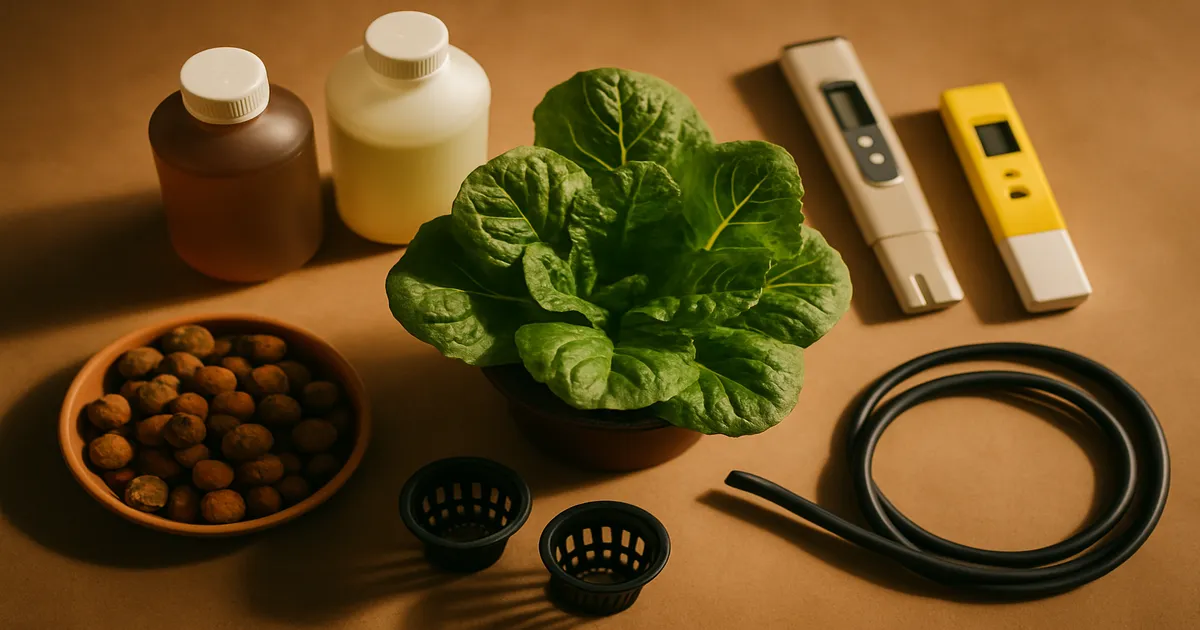
Quick Answer: The best hydroponic nutrients for most growers are Jack’s Nutrients 321 (best value dry formula), General Hydroponics Flora Series (most versatile liquid option), and Advanced Nutrients pH Perfect (easiest for beginners). The “best” choice ultimately depends on your system type, growth stage, water source, and budget — this guide breaks down everything you need to choose confidently.
Figuring out what is the best hydroponic nutrient solution for your setup can feel overwhelming when you’re staring at dozens of bottles and bags at the grow store. The good news: the fundamentals are straightforward once you understand what plants actually need and why. Let’s dig in.
What Are the Best Hydroponic Nutrients? Top Picks by Use Case
Top Picks at a Glance
| Use Case | Top Pick |
|---|---|
| Beginner | Advanced Nutrients pH Perfect |
| Best Value / DIY | Jack’s Nutrients 321 |
| Commercial / CEA | Masterblend 4-18-38 or Athena Pro Line |
| Organic-Leaning | Botanicare Pure Blend Pro |
| Single-Part Simplicity | Megacrop by Greenleaf |
What Makes a Nutrient Solution “The Best”?
No single formula wins for every grower. The best hydroponic nutrient solution is the one that delivers all 17 essential plant nutrients in the right ratios for your specific system, growth stage, and water source — while staying within your budget and skill level. A commercial tomato operation and a hobbyist DWC lettuce setup have completely different needs.
Understanding Hydroponic Nutrients: The Basics
Why Hydroponics Requires Complete Nutrient Management
In soil, organic matter, microbes, and mineral weathering work together to supply and buffer plant nutrition. Hydroponics has none of that safety net. You are the soil. Every element your plant needs must come from your reservoir — in the right concentration, at the right pH, at the right time.
The 17 Essential Plant Nutrients
Plants need 17 elements to complete their life cycle. Carbon, hydrogen, and oxygen come from air and water. The remaining 14 must come from your nutrient solution.
Primary Macronutrients (N-P-K):
- Nitrogen (N): Drives vegetative growth, chlorophyll production, and protein synthesis. Typical target: 150–250 PPM
- Phosphorus (P): Powers root development, ATP energy transfer, and flowering. Typical target: 30–80 PPM
- Potassium (K): Regulates stomata, water uptake, and fruit quality. Typical target: 150–300 PPM
Secondary Macronutrients:
- Calcium (Ca): Builds cell walls; deficiency causes tip burn and blossom end rot. Target: 100–200 PPM
- Magnesium (Mg): The central atom in every chlorophyll molecule. Target: 25–75 PPM
- Sulfur (S): Essential for amino acid synthesis. Target: 50–100 PPM
Key Micronutrients: Iron (1–5 PPM), manganese (0.5–1.0 PPM), zinc, copper, boron, and molybdenum are needed in tiny amounts — but a deficiency in any one of them will stall growth just as surely as running out of nitrogen.
Think of macronutrients as the bulk of a plant’s diet and micronutrients as vitamins. Iron is the most commonly deficient micronutrient in hydroponics — it locks out above pH 7.0 — so pH management and micronutrient delivery are inseparable topics.
Liquid vs. Dry vs. Multi-Part Formulas
Liquid concentrates (like GH Flora Series) are convenient, pre-chelated, and easy to measure. The downside: they’re heavier to ship and cost more per gallon of finished solution — typically $0.20–$0.50/gallon.
Dry/powder formulas (Jack’s, Masterblend, Megacrop) are far more economical — sometimes $0.02–$0.05 per gallon — and have a nearly indefinite shelf life when stored in a cool, dry place.
Multi-part systems exist because certain nutrients precipitate (form insoluble solids) when concentrated together. Calcium and sulfate can’t share a concentrated bottle, for example. Two-part and three-part formulas keep incompatible compounds separate until they’re diluted in your reservoir.
NPK Ratios and Feeding Schedules by Growth Stage
Seedling and Clone Stage
Start seedlings and clones at 100–350 PPM (0.2–0.7 EC). Their root systems can’t handle full-strength nutrients. Overfeeding at this stage causes more harm than underfeeding.
Vegetative Stage
Ramp up to 400–900 PPM (0.8–1.8 EC) as plants establish. Use a nitrogen-forward ratio — roughly 3:1:2 (N:P:K) — to fuel leaf and stem development.
Transition and Pre-Flower
As plants shift toward flowering, pull nitrogen back and push phosphorus up. A 1:3:2 (N:P:K) ratio signals the transition. This is when most growers switch from a “grow” formula to a “bloom” formula.
Bloom and Fruiting Stage
Peak flowering and fruiting demand 1,000–1,400 PPM (2.0–2.8 EC) with a 1:3:4 (N:P:K) ratio. Potassium supports fruit density and sugar content; phosphorus drives flower development. Cut nitrogen back gradually — dropping it too fast causes premature leaf yellowing.
Ripening and Flush
In the final one to two weeks, drop back to 600–900 PPM (1.2–1.8 EC). In the last week before harvest, flush to near-zero (0–100 PPM / 0.0–0.2 EC) to allow plants to metabolize stored nutrients. Note: the value of flushing is debated in commercial horticulture research, but it remains common practice among hobby growers.
EC and PPM Targets by Stage
| Growth Stage | PPM (500 scale) | EC |
|---|---|---|
| Seedling / Clone | 100–350 | 0.2–0.7 |
| Early Vegetative | 400–600 | 0.8–1.2 |
| Late Vegetative | 600–900 | 1.2–1.8 |
| Early Flowering | 800–1,100 | 1.6–2.2 |
| Peak Flowering/Fruiting | 1,000–1,400 | 2.0–2.8 |
| Late Flowering/Ripening | 600–900 | 1.2–1.8 |
| Flush | 0–100 | 0.0–0.2 |
A note on PPM scales: North American meters (e.g., Hanna) typically use the 500 scale; European meters (e.g., Truncheon) use the 700 scale — the same solution reads roughly 40% higher on the 700 scale. EC is universal, so use it as your primary reference.
Best Hydroponic Nutrient Brands Compared
General Hydroponics Flora Series
The Flora Series (FloraMicro, FloraGro, FloraBloom) is the most documented, most widely used nutrient system in the world. It’s a three-part liquid that gives you precise control at every growth stage, with feeding charts available for almost every crop. Cost runs $0.20–$0.50 per gallon of finished solution — reasonable for hobbyists, but it adds up at commercial scale.
Jack’s Nutrients 321
Jack’s 321 (Part A + Calcium Nitrate + Epsom Salt) is arguably the best value in professional hydroponics. At $0.02–$0.05 per gallon, it’s what many commercial greenhouses rely on — and it produces clean, reliable results across almost every crop and system type. The only learning curve is mixing order: always dissolve Part A fully before adding Calcium Nitrate, and add Epsom Salt last. Adding them out of sequence can cause precipitation.
Advanced Nutrients pH Perfect
The pH Perfect line uses a proprietary buffering system that automatically stabilizes pH in the 5.5–6.5 range, removing the most common beginner headache. It costs more than most options ($0.40–$0.80/gallon), but if pH management feels intimidating, the premium buys real peace of mind while you’re learning. Note that the pH-buffering effect works best with RO or soft tap water; hard water can overwhelm the buffer.
Masterblend 4-18-38
Masterblend is the go-to formula in professional greenhouse tomato and pepper production worldwide. Used as a three-part system (Masterblend + Calcium Nitrate + Epsom Salt, mixed in that order), it delivers exceptional results at commercial scale. Less beginner-friendly than some options, but the economics are hard to argue with at $0.03–$0.06 per gallon.
Athena Pro Line
Athena has earned a strong reputation in controlled environment agriculture for its clean, precise dry formulas. It’s particularly popular in commercial cannabis and leafy greens operations that want professional-grade consistency. Cost runs $0.05–$0.10 per gallon — a middle ground between Jack’s and premium liquids.
Megacrop by Greenleaf
Megacrop is a single-part dry formula with an impressive micronutrient profile — mix one powder and you’re done. It’s ideal for growers who want simplicity without sacrificing quality. The trade-off is less flexibility for stage-specific adjustments compared to multi-part systems. Cost: $0.04–$0.08 per gallon.
Canna Aqua/Coco
Canna’s Aqua and Coco lines are premium two-part liquids formulated specifically for recirculating systems and coco coir, respectively. They’re well-buffered, pH-stable, and widely respected — but at $0.30–$0.60 per gallon, they’re harder to justify for hobby growers.
Botanicare Pure Blend Pro
Pure Blend Pro uses ocean-derived and plant-based inputs for growers who prefer a more natural approach. Organic-based nutrients can be harder to manage — pH tends to drift more, and some inputs can foul reservoirs faster. Best suited for media-based systems like coco or rockwool rather than true water-culture systems.
Brand Comparison Table
| Brand | Format | Best For | Cost/Gallon |
|---|---|---|---|
| GH Flora Series | 3-part liquid | All systems, all crops | $0.20–$0.50 |
| Jack’s 321 | Dry powder | All-purpose, best value | $0.02–$0.05 |
| Advanced Nutrients pH Perfect | 3-part liquid | Beginners, DWC | $0.40–$0.80 |
| Masterblend 4-18-38 | Dry powder | Commercial, tomatoes | $0.03–$0.06 |
| Athena Pro Line | Dry powder | Commercial CEA | $0.05–$0.10 |
| Megacrop | Dry powder | Simple single-part | $0.04–$0.08 |
| Canna Aqua/Coco | 2-part liquid | Coco, recirculating | $0.30–$0.60 |
| Botanicare Pure Blend Pro | Organic liquid | Organic-leaning, media | $0.25–$0.50 |
Choosing the Right Nutrients for Your Hydroponic System
DWC
Deep Water Culture is highly responsive — changes in EC and pH show up in plant behavior within hours. Use well-chelated formulas, monitor EC daily, and keep pH in the 5.5–6.2 range. RO water is ideal; if you use tap water, test for chloramine first.
NFT
Nutrient Film Technique runs a very thin stream of solution over roots, which means a small reservoir volume and fast fluctuations in EC and pH. Use a well-buffered formula, keep reservoir volume as large as practical, and check levels at least twice daily. Target pH 5.8–6.3.
Ebb and Flow
Roots alternate between saturation and air exposure, so nutrients need to be well-balanced and fully soluble. A full-spectrum formula like GH Flora Series or Jack’s 321 works well. Target pH 5.8–6.5.
Aeroponics
Aeroponic roots are misted directly — any precipitate or organic matter can clog nozzles and stress roots quickly. Stick to fully soluble, mineral-based formulas. RO water is essentially mandatory. Target pH 5.5–6.0 and keep EC on the lower end (1.0–2.0) to reduce precipitation risk. (iSpring RCC7AK Reverse Osmosis System)
Kratky (Passive DWC)
Because Kratky has no pump and minimal intervention, your initial mix needs to be dialed in precisely. Target 500–700 PPM (1.0–1.4 EC) for leafy greens; 800–1,000 PPM for fruiting crops. Starting right matters more here than in active systems.
Drip Systems
Recirculating drip systems accumulate salts over time — monitor runoff EC and do full reservoir changes every 10–14 days. Run-to-waste systems are more forgiving but use more nutrients. Target runoff EC no more than 0.5–1.0 EC above your input solution; higher than that signals salt buildup in the medium.
Wick Systems
Wick systems deliver nutrients slowly via capillary action. Keep concentrations light — 400–600 PPM (0.8–1.2 EC) maximum — and stick to simple one-part formulas. Heavy feeders like tomatoes and peppers will outpace what a wick can deliver.
pH and EC Management: The Foundation of Nutrient Success
Why pH Controls Nutrient Availability
A perfect nutrient formula becomes useless if pH is out of range. Iron, manganese, and zinc lock out above pH 7.0. Calcium and magnesium become less available below pH 5.5. The sweet spot for most hydroponic systems is pH 5.8–6.2.
Optimal pH Ranges by System
| System | Optimal pH Range |
|---|---|
| DWC | 5.5–6.2 |
| NFT | 5.8–6.3 |
| Ebb & Flow | 5.8–6.5 |
| Aeroponics | 5.5–6.0 |
| Coco Coir | 5.8–6.2 |
| General Hydroponic | 5.5–6.5 |
How to Measure and Adjust pH
Use a calibrated digital pH meter — test strips are too imprecise for serious growing. The Bluelab pH Pen, Apera PC60, and Milwaukee MW102 are all reliable choices. Calibrate weekly with pH 4.0 and 7.0 buffer solutions, and store the probe in KCl storage solution (never plain water).
To adjust pH:
- Mix nutrients fully before measuring
- Add pH Down (phosphoric acid) or pH Up (potassium hydroxide) in 0.5–1 mL increments per 5 gallons
- Stir thoroughly, wait 5 minutes, re-measure
- Target pH 5.8 as your setpoint — natural drift toward 6.2 is fine before correction
Common pH Drift Patterns and Fixes
| Pattern | Likely Cause | Fix |
|---|---|---|
| pH rising steadily | Plants consuming acidic ions; algae | Dose pH Down; eliminate light leaks |
| pH dropping rapidly | CO₂ buildup; ammonium uptake | Dose pH Up; increase aeration |
| Wild pH swings | Low reservoir volume; poor buffering | Increase reservoir size; add cal-mag |
| pH crashing overnight | Bacterial bloom or root rot | Sterilize reservoir; treat with H₂O₂ |
Water Source Guide
RO and distilled water are blank slates — ideal for precision mixing, but they require cal-mag supplementation (100–150 PPM / 0.2–0.3 EC) before adding base nutrients.
Soft tap water works well if you treat for chloramine (activated carbon filtration or ascorbic acid — chloramine won’t off-gas like chlorine will).
Hard tap water (0.4–0.8 EC baseline) means you need to reduce your nutrient dose accordingly. You may already have sufficient calcium and magnesium, so test before supplementing.
Well water is the wildcard — always test for iron, sulfur, and sodium before using it in a hydroponic system. High iron or sodium can cause serious lockout issues.
Frequently Asked Questions
Q: What is the best hydroponic nutrient solution for beginners? Advanced Nutrients pH Perfect is the easiest starting point because its buffering technology keeps pH stable automatically. Jack’s 321 is a close second — it’s slightly more hands-on but far cheaper and used by professionals worldwide.
Q: Can I use regular fertilizer for hydroponics? Not reliably. Most soil fertilizers lack the full micronutrient profile hydroponics requires, and many contain slow-release coatings that don’t dissolve properly in water. Use a formula specifically designed for hydroponic systems.
Q: How often should I change my reservoir? Every 7–14 days for most systems. As plants feed selectively, nutrient ratios drift out of balance. A full reservoir change resets the solution and prevents salt buildup. In run-to-waste systems, you don’t recirculate, so this is less of a concern.
Q: What’s the difference between PPM and EC? EC (electrical conductivity) measures dissolved salts in millisiemens per centimeter (mS/cm). PPM is a conversion of EC, but the conversion factor varies by meter brand — 500 scale (Hanna) or 700 scale (Truncheon). The same solution reads about 40% higher on the 700 scale. Always record EC to avoid confusion.
Q: Do I need a separate bloom nutrient, or can I use one formula for the whole grow? Single-part formulas like Megacrop are designed for the full cycle and work well for most crops. Multi-part systems give you more control to shift ratios between vegetative and flowering stages — which matters most for heavy-fruiting crops like tomatoes, peppers, and cannabis. For leafy greens and herbs, a single formula is usually sufficient.