Quick Answer: Your pH keeps rising in hydroponics because your Philodendron Pink Princess is actively absorbing nitrate and other negatively charged ions, releasing hydroxyl (OH⁻) ions into the solution as a byproduct — this is normal plant biology, not a malfunction. EC drops at the same time because those nutrients are genuinely being consumed. The problem isn’t the drift itself; it’s letting pH climb above 6.8, where iron, manganese, and zinc lock out and deficiencies appear even when your EC reads fine.
If you’ve been puzzling over why pH keeps rising in hydro even though EC is dropping with your Philodendron Pink Princess, you’re not alone — and you’re not doing anything wrong. This is one of the most common and most misunderstood dynamics in hydroponic growing, and it happens with almost every healthy, actively feeding plant. Understanding why it happens is the first step to managing it without constantly chasing your numbers.
Quick-reference targets:
- Target pH: 5.8–6.2 (DWC/NFT/RDWC) | 6.0–6.5 (LECA/semi-hydro)
- Acceptable range: 5.5–6.5
- Danger threshold: Above 6.8 — micronutrient lockout begins
The Ion-Exchange Science Behind Rising pH in Hydro
How Root Cells Maintain Electrical Neutrality
Every time a plant root absorbs a nutrient ion, it has to maintain electrical balance across its membrane. When a negatively charged anion like nitrate (NO₃⁻) enters the root, an OH⁻ ion exits into the solution. More OH⁻ in the water means higher pH. It’s that simple, and it happens continuously as long as the plant is feeding.
The opposite is also true: when a positively charged cation like ammonium (NH₄⁺) is absorbed, the root releases an H⁺ ion instead, which lowers pH. This is why the ratio of anions to cations in your nutrient formula directly controls the direction of pH drift.
Why Nitrate-Dominant Formulas Always Push pH Upward
Most commercial hydroponic nutrient formulas are nitrate-dominant because nitrate is the safest, most stable form of nitrogen for most plants. Nitrate is an anion, so the default behavior of nearly every hydroponic system is slow, steady upward pH drift — it’s baked into the chemistry.
When you look at the label on General Hydroponics Flora Series or Masterblend 4-18-38, the majority of nitrogen is in nitrate form. This is deliberate — nitrate is stable in solution, easy for plants to metabolize, and doesn’t cause the root toxicity issues that high ammonium levels can. The trade-off is predictable upward pH drift.
If your formula contained more ammonium than nitrate, pH would drift downward instead. Neither direction is inherently bad; the goal is keeping drift slow enough to manage.
The Role of CO₂ Depletion During the Light Period
There’s a second mechanism at work during your light cycle. Photosynthesis pulls dissolved CO₂ out of the reservoir water. Normally, dissolved CO₂ forms carbonic acid (H₂CO₃), which acts as a mild pH buffer. Remove that CO₂ and you remove the buffer — pH rises further.
This creates a diurnal pattern: pH climbs during the light period as the plant feeds and photosynthesizes, then stabilizes or nudges back down slightly in the dark when respiration releases CO₂ back into solution. Over several days without correction, the net result is a slow creep upward.
Why Philodendron Pink Princess Makes pH Drift Worse
PPP’s Vigorous Root System and Rapid Anion Demand
Philodendron Pink Princess is a hybrid of Philodendron erubescens, and it grows with real ambition. Its root system is active and dense, with a strong preference for nitrate-based nitrogen — exactly the kind of feeding that drives anion uptake and OH⁻ release. A healthy PPP in DWC will move your pH noticeably within 12–24 hours of a correction. That’s not a problem; it’s confirmation the plant is thriving.
How Variegation Affects Nutrient Consumption
The pink and white variegated sectors of PPP contain significantly less chlorophyll than the green areas, which means they contribute less to photosynthesis. To compensate, the green sectors work harder — driving higher overall photosynthetic activity and, consequently, higher nutrient demand. More feeding means faster anion uptake and faster pH rise. This is one reason why heavily variegated specimens can be trickier to dial in than their all-green counterparts.
DWC vs. LECA vs. Coco: pH Stability Compared
The system you’re growing in dramatically affects how fast pH drifts.
| System | pH Rise Risk | Why |
|---|---|---|
| DWC / RDWC | Very High | Direct root-to-solution contact, no substrate buffering |
| NFT | High | Thin film, rapid ion exchange |
| Kratky | High | Stagnant solution between top-offs |
| Ebb & Flow | Moderate | Substrate provides some buffering |
| Coco Coir | Moderate | Slight cation exchange capacity |
| LECA / Semi-hydro | Low–Moderate | Inert medium, minimal buffering |
DWC is the most popular system for PPP in hydro communities, and it’s also the one where pH management demands the most attention. If you’re growing in LECA, you’ll have a more forgiving experience — but you still need to monitor.
Ideal pH and EC Targets for Philodendron Pink Princess
Target pH Range by System Type
- DWC, NFT, RDWC: pH 5.8–6.2
- LECA, semi-hydro: pH 6.0–6.5
- Never let pH exceed 6.8 — this is where real problems start
EC and PPM Ranges by Growth Stage
| Growth Stage | PPM (500 scale) | EC |
|---|---|---|
| Propagation / Rooting | 200–400 PPM | 0.4–0.8 |
| Juvenile / Establishing | 400–700 PPM | 0.8–1.4 |
| Active vegetative growth | 700–1,000 PPM | 1.4–2.0 |
| Mature / Peak growth | 900–1,200 PPM | 1.8–2.4 |
| Maintenance / Slow season | 500–700 PPM | 1.0–1.4 |
PPP is not a heavy feeder compared to fruiting crops. Start conservative and increase based on plant response. Tip burn and root discoloration are the most common signs of overfeeding.
What Happens to Nutrients When pH Drifts Too High
Above pH 6.8, iron, manganese, and zinc begin to precipitate out of solution. They’re still present in your water chemically, but they’ve converted into forms the plant can’t absorb. Your EC meter will read perfectly normal because those ions are still dissolved — the plant just can’t access them. This is why you can have “good” EC numbers and still see deficiency symptoms on new growth.
The Bicarbonate Problem: Why Tap Water Fights Your pH Adjustments
If you’re using tap water and your pH keeps bouncing back up shortly after you dose pH-down, bicarbonates are almost certainly the culprit. Tap water with more than 100 PPM alkalinity contains bicarbonate ions (HCO₃⁻) that actively resist your pH adjustments. You dose down, the bicarbonates push it back up — it feels like a losing battle because it is.
The fix is straightforward: switch to reverse osmosis (RO) water with a source PPM below 50, ideally below 20. RO water gives you a blank slate with no competing chemistry.
Nutrient Formulas and Feeding Strategies for PPP in Hydro
Macronutrient Priorities: Nitrogen, Calcium, and Potassium
Three macronutrients matter most for PPP in hydro:
- Nitrogen: Nitrate-dominant, but include a small ammonium fraction — an 80:20 NO₃:NH₄ ratio works well
- Calcium: Maintain 150–200 PPM; PPP is calcium-sensitive and prone to tip burn when Ca uptake is disrupted by pH swings
- Potassium: High demand; aim for a K:N ratio of roughly 1:1 to 1.2:1
Magnesium should sit at 40–60 PPM. Keep phosphorus moderate — excess phosphorus competes with zinc and iron uptake, which compounds pH-related lockout issues.
Micronutrients Most at Risk From pH Drift
| Micronutrient | Target PPM | pH Sensitivity |
|---|---|---|
| Iron (Fe) | 2–5 PPM | Precipitates above pH 6.5; use chelated Fe-EDTA or Fe-DTPA |
| Manganese (Mn) | 0.5–1.0 PPM | Precipitates above pH 6.5 |
| Zinc (Zn) | 0.1–0.3 PPM | Competes with excess phosphorus |
| Copper (Cu) | 0.05–0.1 PPM | Toxicity risk if overdosed |
| Boron (B) | 0.3–0.5 PPM | Important for new growth |
| Molybdenum (Mo) | 0.05–0.1 PPM | Required for nitrogen metabolism |
Recommended Nutrient Recipes
Beginner: GH Flora Series
- Vegetative stage: 3 mL/gal Micro + 2 mL/gal Grow + 1 mL/gal Bloom
- Target: 700–900 PPM (1.4–1.8 EC) at pH 5.8–6.2
- Add CaliMagic at 2–3 mL/gal if using RO water
Intermediate: Masterblend 4-18-38 System Per gallon of RO water, add in this order:
- 2.4 g Calcium Nitrate (15.5-0-0) — add first to prevent precipitation
- 2.4 g Masterblend 4-18-38
- 1.2 g Magnesium Sulfate (Epsom salt)
This yields approximately 800–1,000 PPM (1.6–2.0 EC). Always add calcium nitrate before the Masterblend — reversing the order causes precipitation.
Adjusting the NH₄⁺:NO₃⁻ Ratio to Slow pH Rise
One of the most effective long-term strategies is increasing the ammonium fraction of your nitrogen to 15–25% of total N. When roots absorb NH₄⁺, they release H⁺ instead of OH⁻, which counteracts the upward pH push from nitrate uptake. You can do this by adding a small amount of ammonium sulfate to your reservoir, or by choosing a formula that already includes ammonium in its nitrogen profile.
Don’t exceed 30% ammonium of total nitrogen. Aroids are sensitive to ammonium toxicity — symptoms include leaf curl, stunted growth, and root browning. The goal is a gentle counterbalance, not a reversal.
How to Monitor pH and EC Accurately
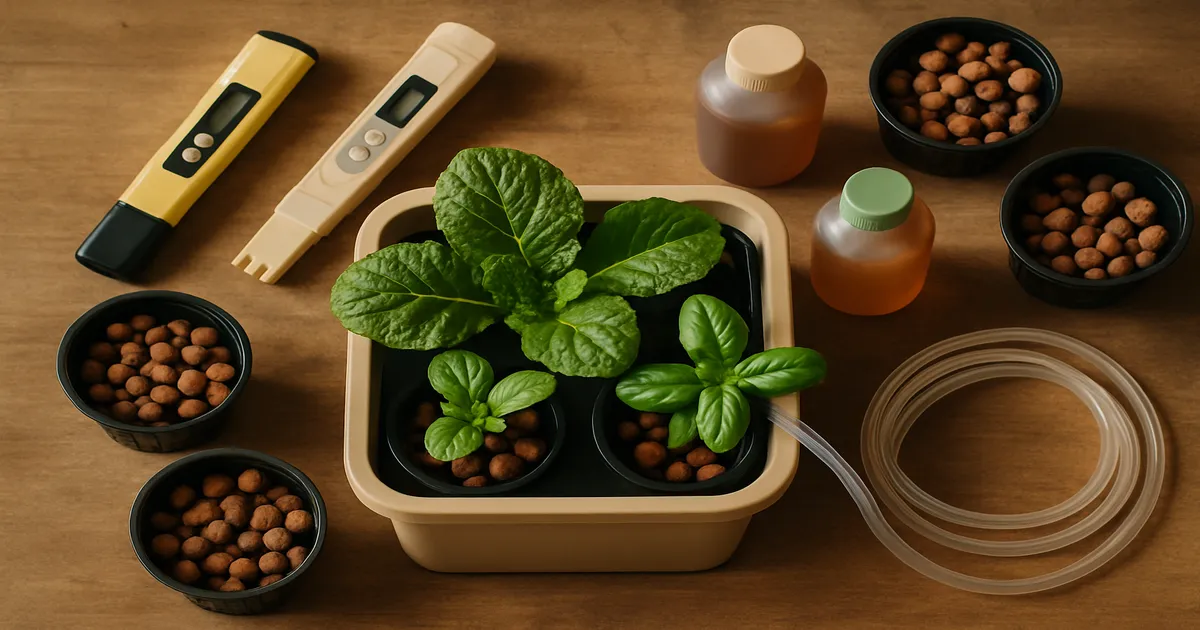
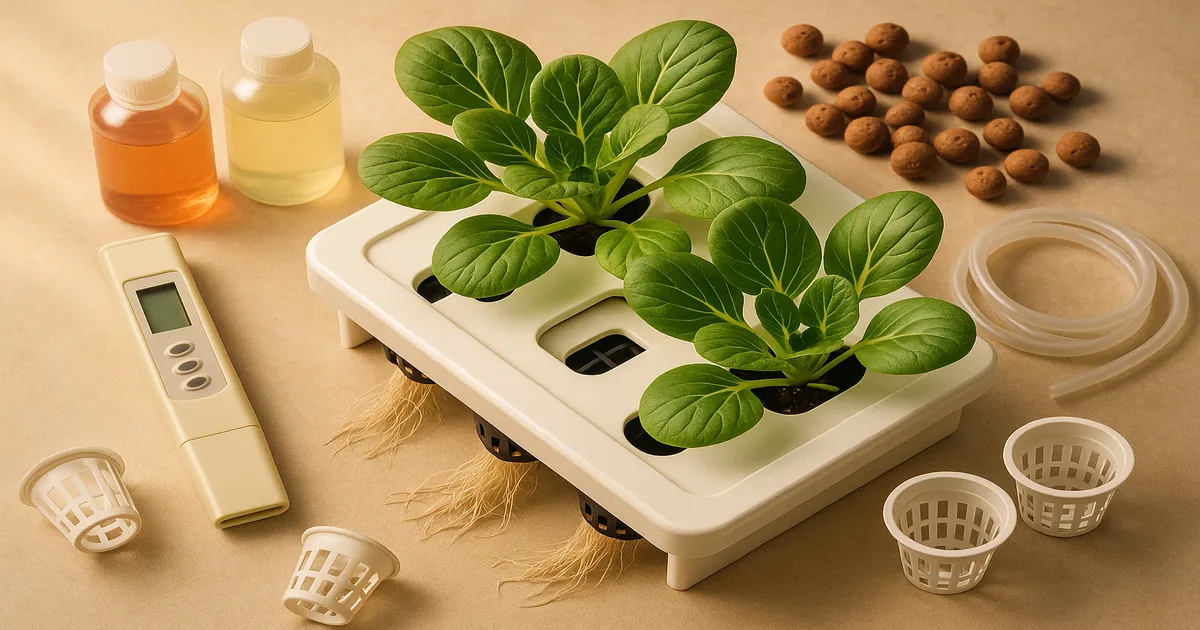
Best pH Meters for Hydroponic Aroids
Two meters consistently earn their keep:
- Apera PC60 or pH20 — excellent accuracy at ±0.01 pH, solid build quality, good value
- Bluelab pH Pen — the hobbyist industry standard, ±0.1 pH, highly reliable
For growers running DWC or RDWC, the Bluelab Guardian Monitor provides in-line continuous monitoring with alarms — it will alert you before pH climbs to a damaging level overnight.
Calibrate with two-point calibration using pH 4.0 and pH 7.0 buffer solutions at least once a week. Store the probe in proper storage solution, not distilled water — distilled water leaches the electrolyte from the probe and shortens its life significantly.
EC and TDS Meters: Understanding the 500 vs. 700 Scale
There are two common PPM scales, and confusing them is a frequent source of frustration:
- 500 scale (NaCl): EC × 500 = PPM — common in the US
- 700 scale (KCl/Hanna): EC × 700 = PPM — used by Hanna instruments and some European meters
The PPM values in this article use the 500 scale. When in doubt, report EC directly — it’s universal. Reliable options include the Apera EC20 and the Bluelab Truncheon, both straightforward and durable.
Calibration and Probe Maintenance Essentials
- Calibrate your pH meter weekly with fresh pH 4.0 and 7.0 buffer solutions
- Store the pH probe in storage solution between uses — never in distilled or RO water
- Rinse the probe with distilled water before and after each measurement
- Log your readings; a single reading tells you where you are, but a week of data tells you where you’re heading
Step-by-Step pH and EC Correction Techniques
How to Lower pH Safely Without Overcorrecting
Phosphoric acid-based pH-down is the standard choice — stable, widely available, and the small phosphate contribution is negligible at normal doses.
Dosing protocol:
- Add 0.5–1 mL of pH-down per 5 gallons of reservoir water
- Allow circulation to mix thoroughly
- Wait 15–30 minutes, then retest
- Repeat in small increments until you reach pH 5.8
Target pH 5.8 deliberately — not 6.0 or 6.2. This gives you headroom for the inevitable upward drift back toward 6.2–6.5 before your next check. Overshooting to pH 5.0 is harder to correct and more stressful to roots than a conservative undershoot.
When and How to Do a Partial Reservoir Change
When pH has climbed above 6.5 and EC has dropped below your target range, chasing pH with acid alone is the wrong move. The nutrients are depleted, and you’re essentially acidifying an empty solution. A partial reservoir change is the right call.
Protocol:
- Remove 25–50% of reservoir volume
- Replace with fresh, pH-adjusted nutrient solution at your target EC
- Recheck pH and EC after 30–60 minutes of circulation
This resets both parameters simultaneously and gives the plant a fresh nutrient supply.
Reservoir Size, Temperature, and Volume Management
Larger reservoirs drift more slowly — simple dilution chemistry. A 20-gallon reservoir for one PPP will be far more stable than a 3-gallon bucket.
- Minimum reservoir size: 5 gallons for a single plant; 10+ gallons for a mature specimen
- Target temperature: 65–72°F (18–22°C)
- Above 75°F (24°C): dissolved oxygen drops, root pathogens thrive, and pH instability increases
Top off with pH-adjusted RO water daily to compensate for evapotranspiration. Never top off with unadjusted tap water.
Advanced Strategy: Stabilising Drift With NH₄⁺ and RO Water
The most stable long-term setup combines several elements:
- RO source water — eliminates bicarbonate bounce-back
- Adjusted NH₄:NO₃ ratio — 15–25% ammonium to counteract upward drift
- Larger reservoir volume — slows the rate of change
- GH pH Stabilizer at low doses for mild buffering without adding bicarbonate
None of these eliminate the need for monitoring, but together they can turn a daily correction into a twice-weekly one.
Troubleshooting: Diagnosing pH-Related Deficiencies in PPP
Visual Symptoms of Iron, Manganese, and Zinc Lockout
High-pH micronutrient lockout has a characteristic look in PPP:
- Iron (Fe) deficiency: Interveinal chlorosis on new growth — leaves emerge yellow-green with veins staying green
- Manganese (Mn) deficiency: Similar interveinal chlorosis, often slightly more mottled; affects newer leaves first
- Zinc (Zn) deficiency: Small, distorted new leaves; shortened internodes; sometimes accompanied by chlorosis
The critical detail: these symptoms appear on new growth first, because the plant can’t access fresh micronutrients from the locked-out solution. Older leaves often look fine, which is a useful diagnostic clue.
Distinguishing pH Lockout From True Nutrient Deficiency
| Scenario | EC | pH | Likely Cause |
|---|---|---|---|
| Chlorosis on new leaves | Normal or high | Above 6.5 | pH-induced lockout |
| Chlorosis on new leaves | Low | In range | True deficiency — top up nutrients |
| Chlorosis on old leaves | Low | Any | Magnesium or nitrogen deficiency |
| Tip burn on new leaves | Any | Unstable | Calcium uptake disruption |
| Yellowing across all leaves | Low | Any | General nutrient depletion |
FAQ: Why Does My pH Keep Rising in Hydro? (Philodendron Pink Princess)
Q: Is it normal for pH to rise every day in DWC? Yes. Daily upward pH drift in DWC is a sign your plant is actively feeding. A rise of 0.2–0.5 pH units per day is typical for a healthy, growing PPP. Drift faster than that suggests your reservoir is too small or your ammonium fraction is too low.
Q: Why does EC drop at the same time pH rises? Both changes have the same cause: the plant is consuming nutrients. As it absorbs nitrate and other anions, EC falls (fewer dissolved ions) and pH rises (more OH⁻ released). Seeing both happen together is confirmation of healthy feeding — not a problem.
Q: Can I use pH-up to fix a low pH instead of doing a reservoir change? Yes, but use it sparingly. Most pH-up products use potassium hydroxide (KOH) or potassium carbonate (K₂CO₃). Repeated use adds potassium to your reservoir, which can throw off your K:N ratio over time. For significant corrections, a partial reservoir change is cleaner.
Q: How often should I check pH and EC for Philodendron Pink Princess in hydro? Check daily during the first few weeks while you’re learning your plant’s feeding rate. Once you understand how fast your specific setup drifts, every 2–3 days is usually sufficient — provided your reservoir is at least 10 gallons and you’re using RO water.
Q: My pH keeps rising even after I correct it — is something wrong with my meter? Probably not. Rapid bounce-back after correction is almost always caused by bicarbonates in tap water, or by a reservoir that’s too small relative to plant size. Switch to RO water and increase reservoir volume before suspecting meter failure. That said, recalibrate your meter with fresh buffer solutions to rule it out.