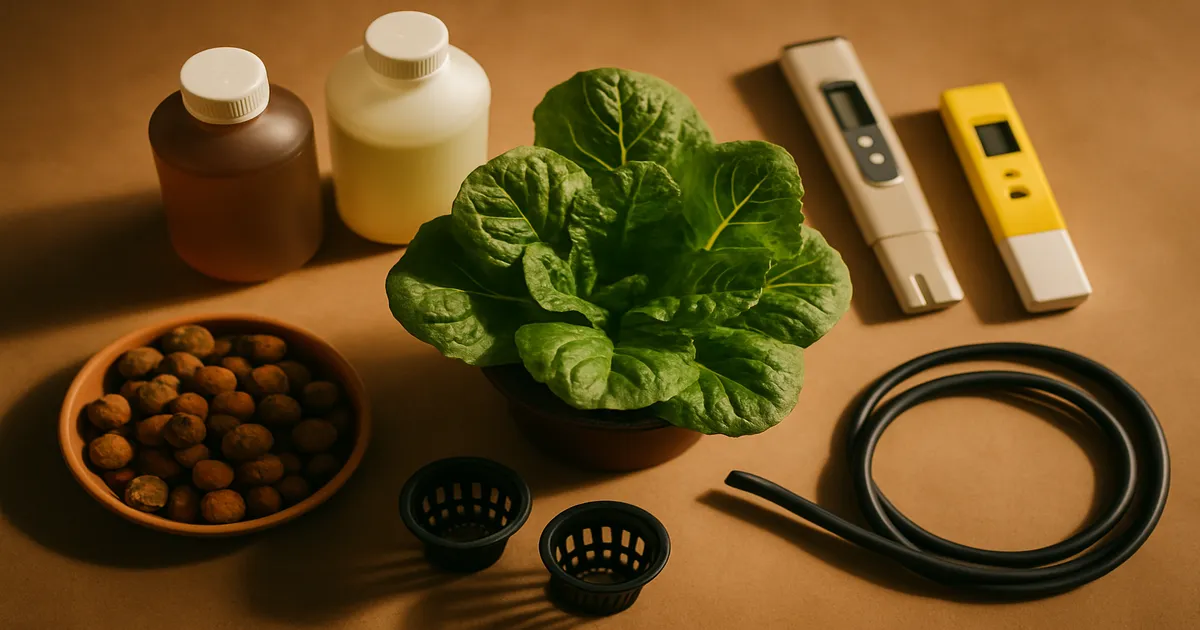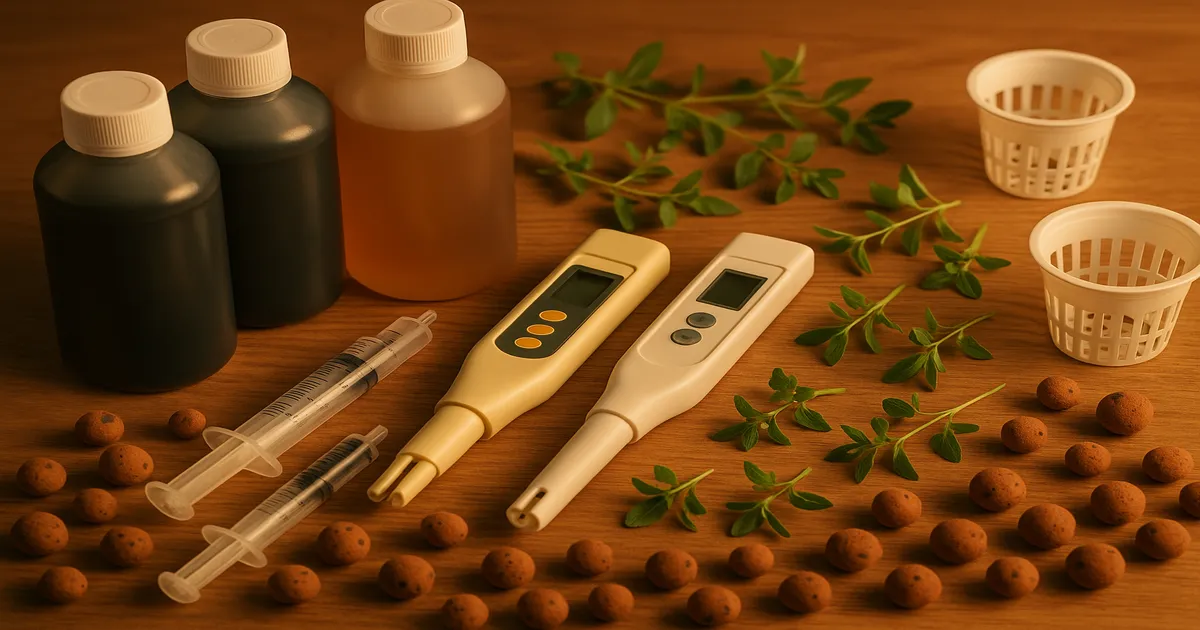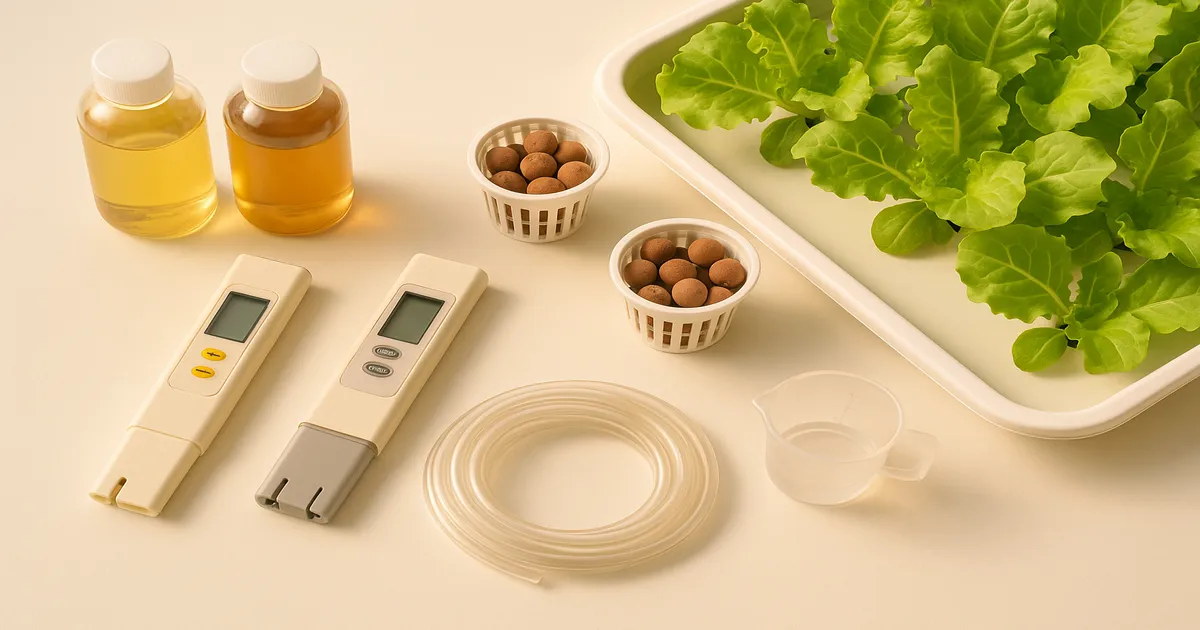
Quick Answer: To calculate nutrients for hydroponics, measure your source water EC, subtract it from your target EC for the current growth stage, then use the manufacturer’s dilution rate to convert that difference into milliliters of concentrate per gallon. Multiply by your reservoir volume and you’re done. Because hydroponic systems have zero buffering capacity, getting this right matters — mistakes show up as plant stress within 24–72 hours.
Knowing how to calculate nutrients for hydroponics is the single most important skill you’ll develop as a grower. It’s not complicated once you understand the logic, but it does require precision. Soil forgives sloppy feeding. Hydroponics does not. This guide walks you through the exact formula, real-world examples, and the most common mistakes that trip up beginners and intermediate growers alike.
How to Calculate Hydroponic Nutrients: The Core Formula
The Equation Everything Else Builds On
Nutrient EC to add = Target EC − Source water EC
Convert that EC difference into a volume of concentrate using your nutrient label’s dilution rate, then multiply by your reservoir size. That’s the whole calculation.
Four Numbers You Need Before You Mix Anything
- Target EC/PPM for your plant’s current growth stage
- Source water EC measured fresh from the tap or storage tank
- Reservoir volume in gallons or liters
- Nutrient concentrate dilution rate from the label (e.g., “5 mL per gallon raises EC by 0.2”)
Have these ready before you open a single bottle.
Understanding EC, PPM, and Why They Matter
What EC Actually Measures
Electrical conductivity (EC) measures how well a solution conducts electricity, which rises with dissolved ion concentration. More minerals mean higher EC. It’s expressed in millisiemens per centimeter (mS/cm), though most growers just say “EC.”
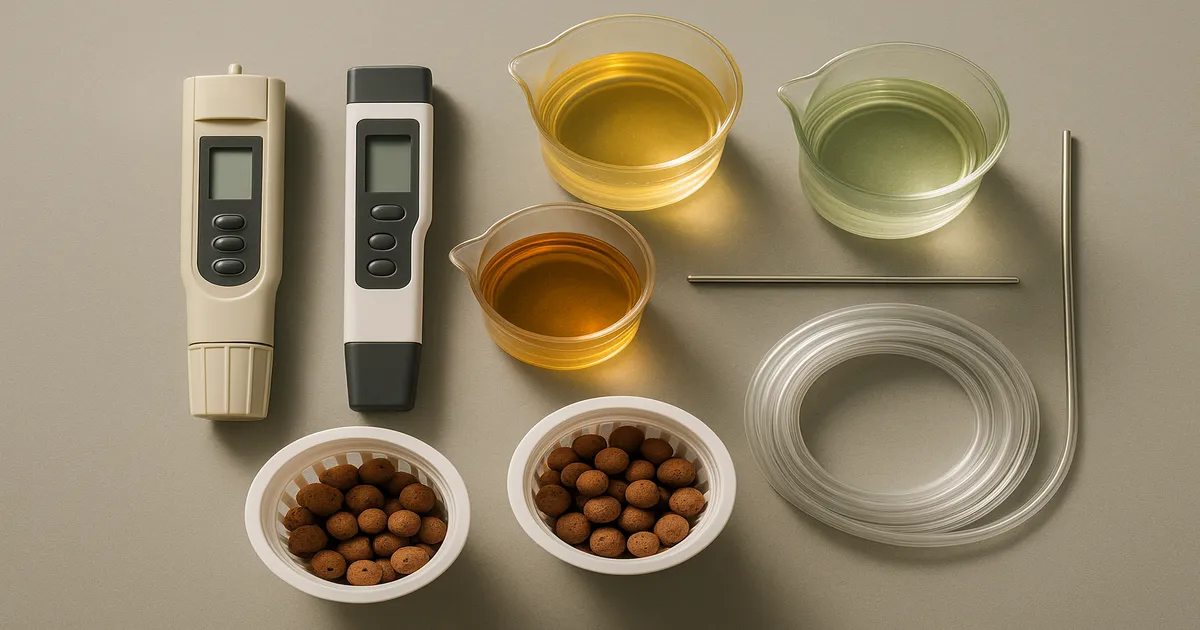
A quality EC pen gives you a reading in seconds. The Bluelab Truncheon is a popular choice for its durability, and the HM Digital COM-100 is a solid budget option. Calibrate monthly using a 1413 µS/cm standard solution.
PPM vs. EC: Which Scale Are You On?
PPM is derived from EC, but two conversion scales are in common use:
- 500 scale (Hanna-compatible meters): 1.0 EC = 500 PPM
- 700 scale (Truncheon/European meters): 1.0 EC = 700 PPM
The 500 scale dominates in North America. Always confirm your meter’s scale before comparing readings with another grower. All PPM figures in this article use the 500 scale, with EC in parentheses.
Why Source Water EC Changes Everything
EC meters measure all dissolved ions — not just the ones you added. Tap water reading 0.4 EC (200 PPM) already contains minerals that count toward your total. They may or may not be plant-available, but your meter can’t distinguish them from your nutrients.
Always measure source water EC first and subtract it from your target. Skipping this step means you’re overfeeding without knowing it.
EC and PPM Targets by Growth Stage
| Growth Stage | PPM (500 scale) | EC | Notes |
|---|---|---|---|
| Seedling / Clone | 100–400 PPM | 0.2–0.8 EC | Start very low |
| Early Vegetative | 400–800 PPM | 0.8–1.6 EC | Ramp up gradually |
| Late Vegetative | 800–1,200 PPM | 1.6–2.4 EC | Full nutrient demand |
| Early Flower / Fruit | 1,000–1,400 PPM | 2.0–2.8 EC | Peak demand |
| Late Flower / Ripening | 600–1,000 PPM | 1.2–2.0 EC | Reduce N, raise K |
| Flush (final week) | 0–400 PPM | 0.0–0.8 EC | Plain or lightly buffered water |
Start at the lower end of each range and ramp up gradually. Roots stressed by high salinity early on never fully recover their uptake efficiency.
The 17 Essential Nutrients and Their Target Ranges
Plants need 17 essential nutrients. Carbon, hydrogen, and oxygen come from air and water. The remaining 14 come from your nutrient solution — and in hydroponics, you’re responsible for every single one.
Primary Macronutrients: N, P, and K
- Nitrogen (N): 150–250 PPM in veg; drives leafy growth, chlorophyll production, and protein synthesis
- Phosphorus (P): 50–80 PPM; critical for root development, ATP energy transfer, and flowering
- Potassium (K): 150–250 PPM in veg, higher in flower; regulates stomata, enzymes, and sugar transport
Secondary Macronutrients: Ca, Mg, and S
- Calcium (Ca): 150–200 PPM; builds cell walls and prevents tip burn; the most commonly deficient element in soft-water regions
- Magnesium (Mg): 50–75 PPM; sits at the center of every chlorophyll molecule — deficiency causes interveinal yellowing that growers often misdiagnose as iron deficiency
- Sulfur (S): 50–80 PPM; usually adequately supplied by sulfate-based salts in most nutrient lines
Micronutrients: Small Doses, Critical Roles
| Nutrient | Target Range | Key Role |
|---|---|---|
| Iron (Fe) | 2–5 PPM | Chlorophyll synthesis; most commonly deficient micronutrient in hydro |
| Manganese (Mn) | 0.5–1.0 PPM | Photosynthesis, enzyme activation |
| Zinc (Zn) | 0.05–0.5 PPM | Hormone production, enzyme function |
| Boron (B) | 0.3–1.0 PPM | Cell division; narrow toxicity window |
| Copper (Cu) | 0.05–0.2 PPM | Enzyme systems, photosynthesis |
| Molybdenum (Mo) | 0.01–0.05 PPM | Nitrogen metabolism |
| Chlorine (Cl) | Trace | Osmotic regulation; usually present in tap water |
| Nickel (Ni) | 0.01–0.05 PPM | Urease enzyme function |
Iron deserves special attention. Use chelated forms — EDTA, DTPA, or EDDHA — because they stay bioavailable across a wider pH range than inorganic iron salts.
N:P:K Ratios for Vegetative vs. Flowering Stages
- Vegetative: ~3:1:2 (e.g., 210N : 70P : 140K PPM)
- Flowering/fruiting: ~1:2:3 (drop nitrogen, push phosphorus and potassium)
- Leafy greens and herbs: ~3:1:3 (sustained nitrogen, elevated potassium for flavor and structure)
These ratios trace back to Hoagland’s Solution (1938) — the gold-standard academic formula still used as a benchmark today. Full-strength Hoagland’s runs approximately 1,000–1,100 PPM (2.0–2.2 EC). Half-strength (500–550 PPM / 1.0–1.1 EC) suits seedlings and sensitive crops well.
Liebig’s Law of the Minimum applies here: growth is limited by whichever nutrient is scarcest, not by the average of all nutrients. One missing element will hold back an otherwise perfect solution.
Step-by-Step Nutrient Calculation for Hydroponics
Here’s a worked example: tap water at 0.3 EC (150 PPM), a 20-gallon reservoir, plants in late vegetative stage.
Step 1 — Measure source water EC. Fill a clean container and measure immediately. Our example: 0.3 EC (150 PPM).
Step 2 — Set your target EC. Late vegetative plants need 1.6–2.4 EC. We’ll target 1.8 EC (900 PPM) — solid but not aggressive.
Step 3 — Calculate the EC your nutrients must contribute. 1.8 − 0.3 = 1.5 EC
Step 4 — Convert EC to volume of concentrate. If the label says “5 mL per gallon raises EC by 0.2”: 1.5 ÷ 0.2 = 7.5 doses × 5 mL = 37.5 mL per gallon
Step 5 — Scale to reservoir size. 37.5 mL × 20 gallons = 750 mL of concentrate total
Mix into your reservoir, stir thoroughly, then measure EC again to confirm. The math scales linearly — a 5-gallon home system and a 500-gallon commercial reservoir use the exact same formula.
Nutrient Calculations by Hydroponic System Type
DWC and Kratky: Roots sit directly in the solution, so EC and pH can shift fast — especially in smaller reservoirs. Check daily. Kratky systems require a precise initial calculation because there’s no recirculation to dilute mistakes.
NFT and Aeroponics: Both deliver nutrients with exceptional efficiency. Target the lower end of each range: 800–900 PPM (1.6–1.8 EC) for veg, 600–900 PPM (1.2–1.8 EC) for aeroponics. Overfeeding is easy and damaging in these systems.
Ebb and Flow: Plants consume water and nutrients at different rates between flood cycles, and evaporation concentrates the reservoir. Check EC before each flood and keep a log — patterns emerge quickly.
Drip Systems: Salt buildup in the root zone is the primary risk. Target 10–20% run-off per irrigation event to flush accumulated salts. In drain-to-waste setups, mix fresh solution each time.
Wick Systems: Salts concentrate at the wick tip as water evaporates. Keep concentrations at 400–600 PPM (0.8–1.2 EC) and flush regularly to prevent crust buildup.
Mixing Nutrients from Raw Salts
Bottled nutrients are convenient but expensive. Mixing from raw salts can cut costs by up to 80% and gives you precise control over every element — useful when correcting a specific deficiency without disrupting your entire formula.
Essential Raw Salts
- Calcium nitrate [Ca(NO₃)₂]: Primary Ca source and part of your N
- Potassium nitrate [KNO₃]: K and additional N
- Monopotassium phosphate [KH₂PO₄]: P and additional K
- Magnesium sulfate [MgSO₄·7H₂O] (Epsom salt): Mg and S
- Micronutrient blend: Iron chelate (EDTA or DTPA), Mn, Zn, B, Cu, Mo
Mixing Order to Prevent Precipitation
Calcium and phosphate form an insoluble precipitate if combined directly. So does calcium and sulfate at high concentrations. Always follow this sequence:
- Start with full reservoir volume of water
- Add and fully dissolve calcium nitrate
- Add and fully dissolve magnesium sulfate
- Add potassium nitrate
- Add monopotassium phosphate
- Add micronutrient blend
- Adjust pH last
HydroBuddy is a free, open-source desktop application that inputs your target PPM values for each element and outputs exact gram-per-liter quantities for any salt combination. It’s based on Hoagland’s chemistry and is the most grower-trusted free calculator available. Use it to generate your recipe, then verify with your EC meter after mixing.
pH and EC Management for Accurate Nutrient Delivery
A perfectly calculated nutrient solution still fails if pH drifts out of range. Certain elements become unavailable to roots outside their absorption window — no matter how much you’ve added.
Optimal pH Ranges by System
- DWC, NFT, aeroponics: 5.5–6.0
- Media-based systems (coco, rockwool, perlite): 5.8–6.2
- Kratky / passive systems: 5.8–6.3
Adjusting pH Without Disrupting Nutrient Balance
Always add nutrients first, then adjust pH. Nutrients shift pH significantly on their own — adjusting beforehand means adjusting twice.
- pH Down: Phosphoric acid (H₃PO₄) is standard and contributes a small amount of phosphorus
- pH Up: Potassium hydroxide (KOH) is preferred; it contributes potassium, so account for this in your K calculations if you’re using large amounts
Target pH 5.8 when adjusting. The solution will naturally drift toward 6.2–6.5 over 24–48 hours, cycling through the full nutrient availability window. This “pH drift” is beneficial — don’t try to eliminate it entirely.
For reliable readings, a combo meter like the Apera PC60 handles both pH and EC in one unit. If you prefer dedicated instruments, the Bluelab pH Pen is excellent for pH-only monitoring. Calibrate pH meters weekly using pH 4.0 and 7.0 buffer solutions.
Reading EC Drift to Guide Top-Offs
When reservoir level drops between changes:
- EC rising? Plants are drinking more water than nutrients. Top off with plain, pH-adjusted water.
- EC falling? Plants are consuming nutrients faster than water. Top off with half- or full-strength solution depending on how far EC has dropped.
Change your full reservoir every 7–14 days in most recirculating systems — every 5–7 days in hot weather or with fast-growing plants.
Troubleshooting Common Nutrient Calculation Mistakes
EC spike from evaporation: Water evaporates; salts stay behind. EC climbs and plants experience salt stress. Top off with plain, pH-adjusted water — never full-strength nutrient solution.
EC crash during peak growth: Fast-growing plants in early flower can strip nutrients faster than expected. If EC drops more than 0.3–0.5 units between checks, top off with half- or full-strength solution.
pH creep and pH crash: Upward pH drift in DWC is normal — photosynthesis consumes CO₂, which raises pH. A small dose of pH Down and increased airstone output usually stabilizes it. pH crash below 5.0 is more serious, often caused by microbial activity. Add pH Up in small increments; if pH drops below 4.5, do a full reservoir change.
Nutrient lockout: Your EC is perfect, your ratios are correct, but plants still look deficient. Nine times out of ten, pH is out of range. Nutrients physically cannot enter roots when pH blocks their absorption sites. Fix pH first before adding more nutrients.
Symptom Quick-Reference
| Symptom | Likely Cause |
|---|---|
| Yellowing older leaves | Nitrogen deficiency |
| Purple stems | Phosphorus deficiency |
| Brown leaf edges | Potassium or calcium deficiency |
| Interveinal chlorosis (young leaves) | Iron deficiency |
| Interveinal chlorosis (older leaves) | Magnesium deficiency |
| Wilting despite adequate water | EC too high (salt stress) |
In hydroponics, these symptoms appear fast. Check EC and pH within 24 hours of spotting anything unusual.
Frequently Asked Questions
What PPM should my hydroponic nutrient solution be?
It depends on growth stage. Seedlings and clones do best at 100–400 PPM (0.2–0.8 EC). Vegetative plants thrive at 400–1,200 PPM (0.8–2.4 EC), ramping up as plants mature. Flowering and fruiting plants peak at 1,000–1,400 PPM (2.0–2.8 EC), then taper off toward harvest. Always start at the lower end of each range.
How do I calculate how much nutrient solution to add to my reservoir?
Measure your source water EC, subtract it from your target EC for the current growth stage, then use your nutrient label’s dilution rate to convert that EC difference into milliliters per gallon. Multiply by your total reservoir volume. Example: target 1.8 EC, source water 0.3 EC, difference is 1.5 EC. If 5 mL per gallon raises EC by 0.2, you need 37.5 mL per gallon — or 750 mL for a 20-gallon reservoir.
How often should I change my hydroponic reservoir?
Every 7–14 days for most recirculating systems. In hot conditions or with fast-growing plants, aim for every 5–7 days. Drain-to-waste systems skip reservoir management entirely — mix fresh solution for each irrigation and target 10–20% run-off to prevent salt buildup.
Why are my plants showing deficiency symptoms even though my EC is correct?
Almost certainly a pH problem. When pH drifts outside the optimal range, nutrients become chemically unavailable at the root surface regardless of how much is in the solution. Check pH first. If it’s in range, look at whether you’re using chelated iron and whether your calcium and magnesium levels are adequate for your water source.
Can I use the same nutrient calculation formula for all hydroponic systems?
Yes — the core formula (Target EC − Source EC = EC to add) applies to every system. What changes is the target EC. NFT and aeroponic systems run more efficiently, so target the lower end of each stage range. Wick systems need even lower concentrations (400–600 PPM) due to salt concentration at the wick tip. DWC and ebb-and-flow can handle the full recommended range.