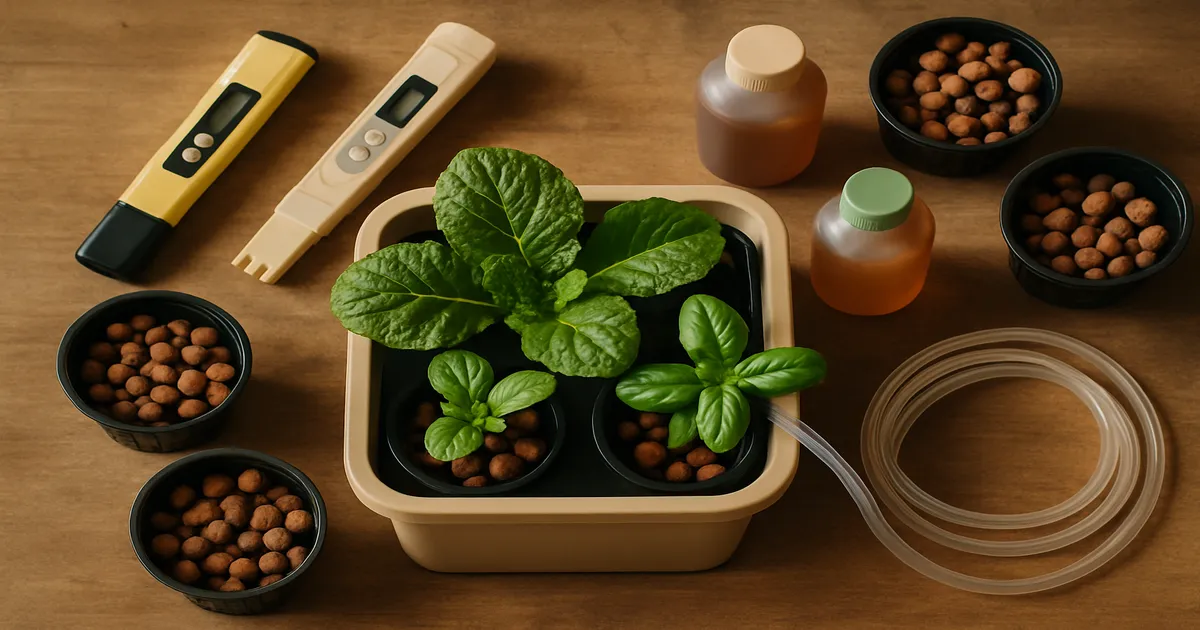
Quick Answer: You don’t need to adjust pH every day — but you should check it every day. The professional standard is to monitor daily and only adjust when pH drifts outside your acceptable range (below 5.5 or above 6.8). How often that happens depends on your system type, reservoir size, and what you’re growing.
If you’ve ever asked “do I need to adjust pH every day?” you’re not alone — it’s one of the most common questions new hydroponic growers have. The honest answer is that daily monitoring is non-negotiable, but daily adjustment is often unnecessary and can actually create more instability than it solves. Understanding that difference is what separates growers who constantly chase numbers from those who spend their time actually growing.
Do You Need to Adjust pH Every Day in Hydroponics?
Monitor Daily, Adjust Only When Needed
Check your pH every day. Adjust it only when it drifts outside your acceptable tolerance band. That’s the approach used by experienced commercial growers and hobbyists alike. It works because hydroponic pH doesn’t stay perfectly static — nor should it.
What “Within Range” Actually Means
The optimal pH range for most hydroponic crops is 5.5–6.5, with a sweet spot of 5.8–6.2. Your intervention threshold should be roughly 5.5 on the low end and 6.5–6.8 on the high end depending on your crop. If you’re sitting at 6.4 today, there’s no need to touch it.
Allowing pH to drift naturally within a narrow band — say, 5.8 to 6.3 — is actually a feature, not a flaw. Different nutrients are most bioavailable at slightly different pH levels, so that gentle drift gives plants access to a broader spectrum of minerals across the grow cycle. Growers call this intentional pH drift, and it’s a legitimate strategy used in commercial production.
Why Does pH Drift in Hydroponic Systems?
Plant Nutrient Uptake and Ion Exchange
Plants don’t absorb all nutrients equally. When they take up positively charged ions (cations like potassium K⁺, calcium Ca²⁺, and magnesium Mg²⁺), they release hydrogen ions (H⁺) into the solution, which lowers pH. When they absorb negatively charged ions (anions like nitrate NO₃⁻ and phosphate H₂PO₄⁻), they release hydroxide or bicarbonate ions, which raises pH. This ion exchange is constant and unavoidable — it’s just plants doing what plants do.
CO₂, Root Respiration, and Microbial Activity
Root respiration produces CO₂, which dissolves into your nutrient solution and forms carbonic acid, nudging pH downward. Microbial populations in the root zone — both beneficial and potentially harmful — also produce acids and bases as metabolic byproducts. In a thriving root environment, this biological activity adds a small, unpredictable push to your pH in one direction or another every single day.
Evaporation, Transpiration, and Source Water Alkalinity
As plants drink and water evaporates, the nutrient solution becomes more concentrated. This shifts the ionic balance and can swing pH in either direction. If you’re using tap water with high alkalinity (carbonate hardness above 150 ppm), you’ll fight a persistent upward creep as those carbonates buffer against your pH-Down adjustments. It’s one of the most common reasons growers find themselves re-adjusting downward every day.
How Often Should You Adjust pH? A System-by-System Guide
Systems That Often Need Daily Adjustment (DWC, NFT, Aeroponics)
Recirculating systems are the most demanding. In Deep Water Culture, Nutrient Film Technique, and aeroponics, the same solution is continuously cycled and exposed to roots — so every nutrient uptake event, every microbial interaction, and every temperature change affects the whole reservoir immediately. With a heavy plant load, pH can shift by 0.5–1.0 points within 24 hours. Daily checks and frequent adjustments are simply part of the routine.
Aeroponics is especially sensitive. The fine mist droplets and high oxygen exposure can cause pH to swing rapidly, sometimes requiring checks twice a day during peak growth.
Systems That Can Go 2–3 Days Between Adjustments (Ebb & Flow, Drip, Kratky)
These systems tend to be more forgiving. Ebb and flow and drip systems deliver solution in discrete feeding cycles rather than continuously, which smooths the rate of pH change. Kratky (passive DWC) has no active circulation, so drift is slower — though it still needs attention every couple of days as plants grow larger and uptake increases.
Systems With the Most Stable pH (Wicking, Large Reservoirs)
Wicking systems are the most pH-stable of all. In a large reservoir (20+ gallons) with a light plant load, you might only need to adjust once or twice a week. Volume itself acts as a buffer — a 0.5-point swing in a 5-gallon reservoir is a much bigger deal than the same swing in a 30-gallon system.
Recirculating vs. Run-to-Waste: Why It Matters
In a recirculating system, the same solution cycles repeatedly, concentrating over time and amplifying any pH imbalance. In a run-to-waste drip setup, fresh nutrient solution is delivered each cycle and the old solution drains away — so you’re constantly starting closer to your target pH. If you’re struggling with constant pH chasing, switching to run-to-waste (or simply increasing reservoir volume) can dramatically reduce how often you need to intervene.
Factors That Make pH Adjustment More or Less Frequent
Factors that increase adjustment frequency:
- Small reservoir volume (under 5 gallons)
- High plant-to-water ratio — many plants, small reservoir
- Fast-growing, heavy-feeding crops like tomatoes or cannabis
- Late flowering or fruiting stage, when nutrient demand peaks
- Tap water with high alkalinity (>150 ppm carbonate hardness)
- Reservoir temperatures above 72°F (22°C), which accelerate microbial activity
Factors that reduce adjustment frequency:
- Large reservoir volume (20+ gallons)
- RO or soft water as your source (low alkalinity = less pH creep)
- Run-to-waste feeding system
- Slow-growing crops like lettuce or herbs
- Stable, cool reservoir temperatures (65–72°F / 18–22°C)
- Silica or humic acids added as natural pH buffers
A reservoir that was stable for weeks can suddenly start swinging once your tomatoes hit late flowering. Heavy-feeding fruiting crops at peak production can shift pH by a full point in 12 hours. Leafy greens in a spacious reservoir might barely budge over two days. Knowing your crop’s growth stage helps you anticipate drift rather than just react to it.
Nutrient Availability and Why pH Range Matters
The pH–Nutrient Availability Chart Explained
pH physically controls whether nutrients are dissolved and accessible or precipitated out of solution. Outside the optimal range, nutrients can be sitting right there in your reservoir and your plant still can’t absorb them. This is called nutrient lockout, and it’s responsible for a large percentage of the deficiency symptoms growers mistakenly blame on their nutrients.
Macronutrients Most Affected by pH Swings
Phosphorus is the most sensitive macro — it precipitates rapidly above pH 7.0, forming insoluble calcium phosphate that’s completely unavailable to plants. Calcium becomes deficient below pH 5.5, which is why tip burn in lettuce is so often a pH problem rather than a calcium dosing problem. Nitrogen (as nitrate) is broadly available across the hydroponic pH range, but ammonium-heavy formulas can drive pH down fast and should be used carefully.
Micronutrients and the Risk of Lockout at High pH
Iron is the one to watch most closely. Its availability drops sharply above pH 6.5, which is why interveinal yellowing on new growth is one of the most common symptoms in systems where pH creeps upward unchecked. Chelated iron forms like Fe-EDTA extend availability to slightly higher pH, but staying under 6.5–6.8 is still the safe target. Molybdenum is the interesting exception — it’s actually more available at higher pH, so a brief drift toward 6.5 isn’t all bad.
Optimal pH Ranges by Crop Type
| Crop | Optimal pH Range |
|---|---|
| Lettuce, spinach, kale | 5.5–6.5 |
| Basil, cilantro, mint | 5.5–6.5 |
| Tomatoes, peppers, cucumbers | 5.8–6.5 |
| Strawberries | 5.5–6.0 |
| Cannabis / hemp | 5.8–6.2 |
| Microgreens | 5.5–6.5 |
| Radish, beets | 6.0–6.5 |
How to Monitor and Adjust pH Correctly
Choosing the Right pH Meter
Test drops and strips cost $5–15 and give a rough read, but their accuracy (±0.2–0.5) isn’t sufficient for sensitive crops or precise adjustments. A quality digital pen meter is the minimum for serious growing. The Apera PH20 and Bluelab pH Pen are both excellent options in the $50–80 range, offering ±0.01–0.02 accuracy and reliable repeatability.
How to Calibrate Your pH Meter
Calibrate at least once a week using two-point calibration with pH 4.0 and pH 7.0 buffer solutions. This two-point method is far more accurate than single-point calibration and takes less than five minutes. Always store your probe in electrode storage solution — not distilled water, which damages the membrane over time and causes readings to drift.
pH Down vs. pH Up: Which Products to Use
For pH Down, phosphoric acid is the standard choice — it’s food-grade, stable in solution, and contributes a small amount of phosphorus. Citric acid is an organic alternative, but it biodegrades quickly and isn’t suitable for recirculating systems.
For pH Up, potassium hydroxide (KOH) is preferred because it also contributes potassium. Avoid sodium hydroxide for long-term use — sodium accumulates in recirculating systems and causes toxicity over time.
Step-by-Step pH Adjustment
- Test your reservoir pH and note the reading.
- If adjustment is needed, dilute your pH adjuster first — mix 1 mL into a cup of reservoir water before adding to the system.
- Add the diluted solution slowly, a few drops at a time.
- Stir thoroughly and wait 30–60 seconds.
- Retest. Repeat if needed.
- Log the date, starting pH, amount added, and final pH.
Never add pH Up and pH Down in rapid succession. If you overshoot, wait 30 minutes and retest before adding more — the solution needs time to equilibrate.
Tracking pH Alongside EC
pH and EC tell a richer story together than either does alone:
- Rising EC + rising pH: Plants drinking water but not nutrients — dilute with pH-adjusted water.
- Falling EC + rising pH: Anion-dominant uptake (common in vegetative stage); consider adjusting nutrient ratios.
- Rising EC + falling pH: Heavy cation uptake; may need to rebalance your formula.
- Falling EC + stable pH: Healthy, balanced uptake — top off with fresh nutrient solution.
Logging both values daily turns your reservoir into a diagnostic tool.
How to Stabilize pH and Reduce How Often You Need to Adjust
Switch to RO water. If you’re fighting constant upward pH creep, your tap water’s alkalinity is likely the culprit. Reverse osmosis water starts at near-zero alkalinity, giving you a clean mineral baseline. You’ll need to add a cal-mag supplement to compensate for stripped minerals, but the payoff in pH stability is significant.
Use silica and humic acids. Potassium silicate raises pH slightly while adding beneficial silicon that strengthens cell walls. Humic and fulvic acids (1–2 mL/gallon) act as natural chelators and mild pH buffers, helping the solution resist sudden swings.
Control reservoir temperature. Keep your reservoir between 65–72°F (18–22°C). Warmer water accelerates microbial activity, driving faster and less predictable pH swings. It also reduces dissolved oxygen, which stresses roots and invites pathogens.
Top off and change reservoir water on schedule. When reservoir level drops from transpiration, top it off with water pre-adjusted to pH 5.8–6.0 — not plain tap water. Do a 25–50% partial reservoir change every 7–10 days to reset ionic balance and prevent salt buildup. A full change every 14–21 days in recirculating systems keeps nutrient ratios in check.
Consider automated pH dosing. If you’re running a large DWC or NFT system and spending significant time chasing pH daily, an automated dosing controller is worth considering. Systems like the Bluelab Pro Controller use peristaltic pumps to automatically dispense pH Up or Down as needed. Home-friendly options start around $300–500. It’s not necessary for most hobby growers, but if pH management is eating your time, automation pays for itself quickly.
Troubleshooting Common pH Problems
pH Keeps Crashing Downward
A persistent downward crash almost always points to one of three causes: too much ammonium nitrogen in your nutrient formula (ammonium uptake releases H⁺ ions aggressively), a microbial bloom from warm water or organic matter in the reservoir, or decomposing root material feeding acid-producing bacteria. Check your water temperature, inspect roots for brown slimy patches, and consider switching to a nitrate-dominant nutrient formula.
pH Keeps Rising Despite Adjustments
Persistent upward creep is usually the signature of high-alkalinity tap water — carbonates keep fighting your pH Down. It can also indicate that your plants are in a vegetative, anion-dominant feeding phase where they’re releasing hydroxide ions faster than your adjustments can compensate. Switching to RO water and topping off with pre-adjusted solution are the most effective long-term fixes.
pH Swings Wildly Every Few Hours
Rapid, unpredictable swings almost always signal either a small reservoir with too many plants or a pH meter that needs recalibration. Before panicking, calibrate your meter with fresh buffer solutions. If readings are genuinely accurate, increase reservoir volume, reduce plant load, or add a pH buffer like humic acids.
Nutrient Deficiency Symptoms Caused by pH Imbalance
| Symptom | Likely pH Cause |
|---|---|
| Interveinal yellowing on new leaves | Iron lockout — pH too high (>6.5) |
| Tip burn on lettuce / leafy greens | Calcium deficiency — pH too low (<5.5) |
| Purple stems, dark leaf undersides | Phosphorus lockout — pH too high (>7.0) |
| Yellowing older leaves | Magnesium deficiency — pH below 5.5 or above 7.0 |
If you see any of these symptoms, check pH before adding more of any nutrient. Nine times out of ten, it’s a pH problem masquerading as a dosing problem.
Frequently Asked Questions
Do I need to adjust pH every day in hydroponics?
No — but you do need to check it every day. Adjust only when pH drifts outside your target range (5.5–6.8 for most crops). Over-adjusting when pH is already acceptable causes unnecessary swings and wastes pH solution.
What happens if I don’t adjust pH in my hydroponic system?
Without pH management, your solution will drift outside the range where nutrients remain bioavailable, and plants will show deficiency symptoms even if nutrients are present. Prolonged exposure above pH 7.0 or below pH 5.0 causes root damage, stunted growth, and eventually plant death. The longer you wait, the harder recovery becomes.
How much can pH fluctuate before it becomes a problem?
A natural drift of ±0.3–0.5 points within your target range is normal and even beneficial. Swings beyond that — especially outside the 5.5–6.8 window — start causing measurable nutrient availability problems. The key is the direction and duration of the swing: a brief dip to 5.4 is far less damaging than sitting at 7.2 for three days.
Why does my hydroponic pH keep rising even after I adjust it?
The most common reason is high tap water alkalinity. Carbonates and bicarbonates in your source water act as a buffer, continuously pushing pH back up. Other causes include plants in a vegetative, anion-dominant feeding phase (releasing OH⁻ ions), or a nutrient formula that’s light on acidic components. Switching to RO water and topping off with pre-adjusted solution are the most reliable long-term fixes.
Can I use pH adjustment to fix nutrient deficiencies?
Correcting pH is often the first step in fixing a deficiency — but it’s not always the only step. If pH has been out of range for several days, nutrients may have precipitated out of solution entirely. In that case, a partial or full reservoir change with fresh, properly pH-adjusted nutrient solution will recover plants faster than simply correcting pH alone.