Quick Answer: Hydroponics grows plants in nutrient-rich water, aeroponics mists roots suspended in air, and aquaponics combines fish farming with plant growing in a closed-loop ecosystem. All three are faster and more water-efficient than soil. Beginners should start with hydroponics, experienced growers chasing maximum yields should consider aeroponics, and sustainability-focused growers will find aquaponics most rewarding.
Choosing between aeroponics vs hydroponics vs aquaponics comes down to your goals, budget, and how much complexity you’re willing to manage. Each system delivers nutrients to plants in a fundamentally different way — and each carries real trade-offs worth understanding before you spend a dollar.
Aeroponics vs Hydroponics vs Aquaponics: At a Glance
What Is Each System in One Sentence?
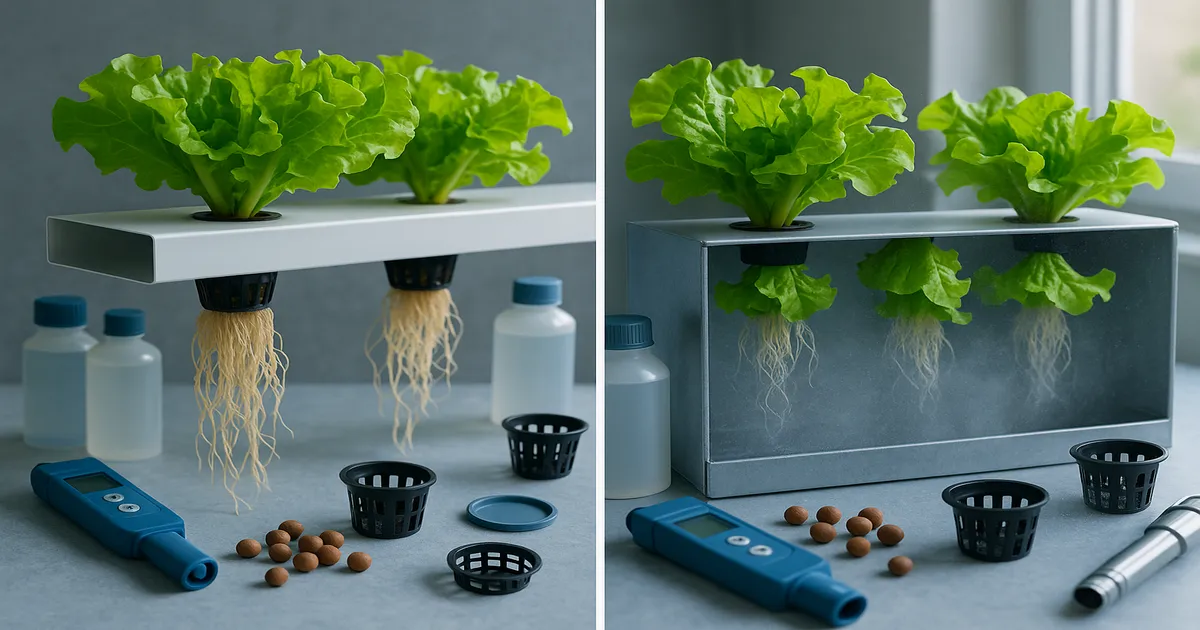
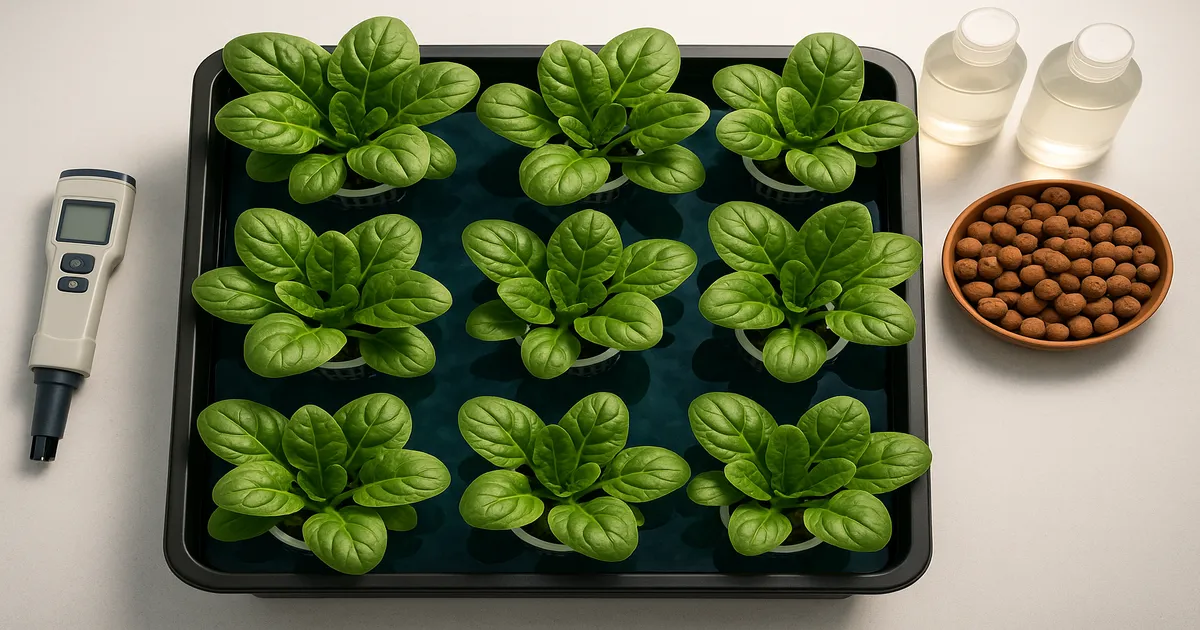
- Hydroponics: Plants grow with roots in — or regularly flooded by — a precisely formulated mineral nutrient solution, supported by an inert medium or suspended directly.
- Aeroponics: Plant roots hang in a dark air chamber and are periodically misted with nutrient solution, maximizing oxygen exposure.
- Aquaponics: Fish and plants grow together in a recirculating ecosystem — fish waste feeds the plants, and the plants filter the water for the fish.
Side-by-Side Comparison Table
| Feature | Hydroponics | Aeroponics | Aquaponics |
|---|---|---|---|
| Growing medium | Optional (inert) | None/minimal | Gravel, clay pebbles |
| Nutrient source | Synthetic mineral salts | Synthetic mineral salts | Fish waste (organic) |
| Water usage | Moderate | Lowest (up to 95% less than soil) | Low–moderate |
| Oxygen to roots | Good (varies by system) | Excellent (near 100%) | Good |
| Growth speed | Fast | Fastest | Moderate |
| System complexity | Low–Medium | Medium–High | High |
| Startup cost | Low–High | Medium–Very High | Medium–High |
| Organic certification | Difficult/debated | Difficult/debated | Possible (USDA NOP) |
| Best for | Leafy greens, herbs, fruiting crops | Leafy greens, herbs, root crops | Leafy greens, herbs + fish protein |
| Difficulty | Beginner | Intermediate–Advanced | Advanced |
Which System Should You Choose?
Start with hydroponics if you’re new. Resources are plentiful, startup costs are low, and the learning curve is manageable. Move to aeroponics once you’re comfortable with nutrient management and want to push growth speeds further. Choose aquaponics if you want a living ecosystem that produces both vegetables and fish — and you’re prepared for the added biological complexity.
How Each System Works
Hydroponics: Delivering Nutrients Directly to Roots
Hydroponics bypasses soil entirely, delivering dissolved mineral nutrients straight to the root zone. Water culture experiments date to the 1600s, but commercial development took off in the 1930s and 1940s with William Gericke at UC Davis. Today it runs everything from countertop herb gardens to multi-acre commercial greenhouses.
System subtypes:
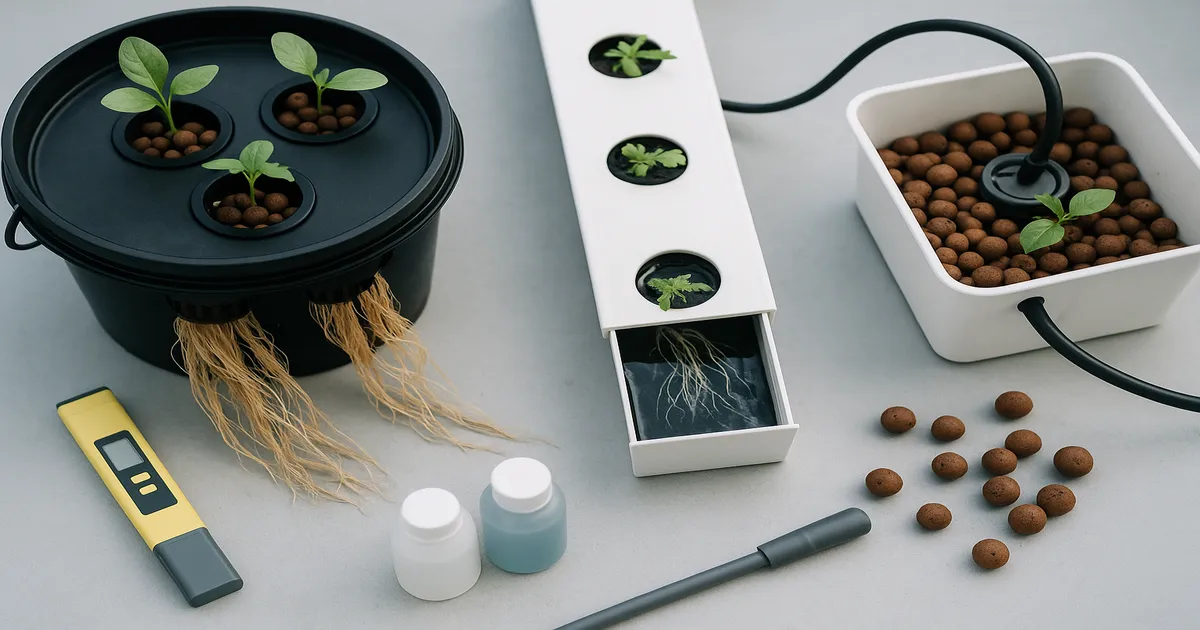
- Deep Water Culture (DWC): Roots dangle in an oxygenated nutrient solution. Simple, fast, and the most beginner-friendly active system.
- Nutrient Film Technique (NFT): A thin film of solution flows continuously over roots in sloped channels. Efficient and scalable, but roots dry out quickly if the pump fails.
- Ebb & Flow (Flood & Drain): A grow tray floods on a timer, then drains. Versatile and forgiving across many media types.
- Drip Systems: Emitters drip solution onto the growing medium. Common in commercial fruiting crop production; can be recirculating or run-to-waste.
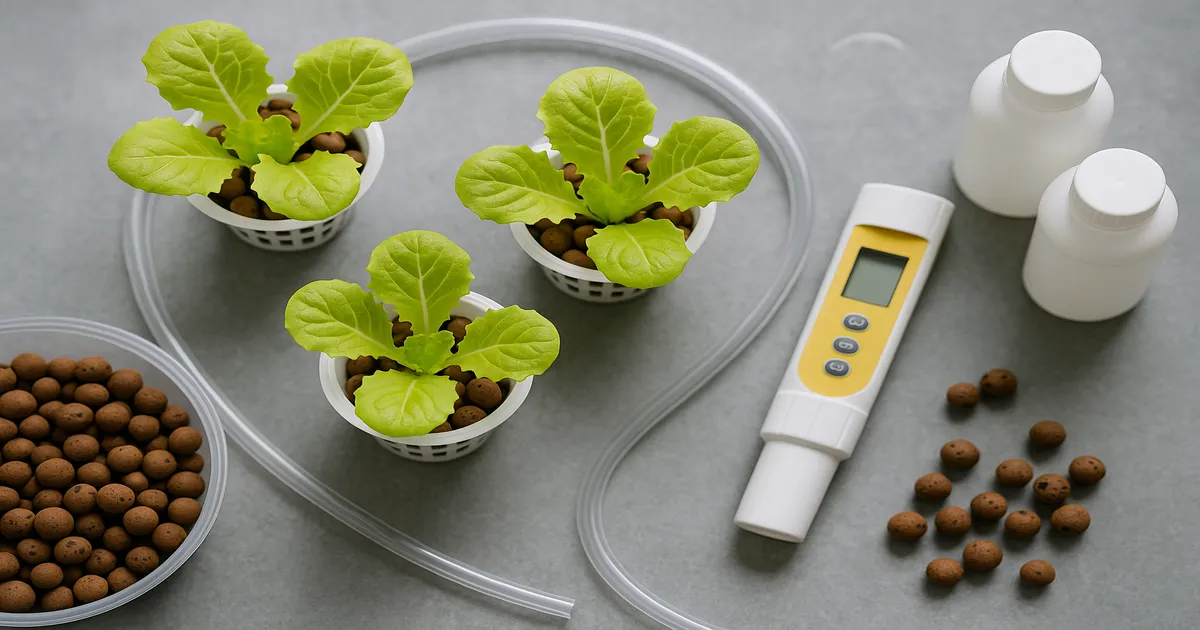
- Kratky Method: Passive DWC with no pump — an air gap between the water surface and the net pot delivers oxygen. Near-zero cost, ideal for lettuce and herbs.
- Wick Systems: Capillary action draws solution to roots through a wick. Lowest tech, lowest yield — best for small herbs.
Aeroponics: Misting Roots Suspended in Air
In an aeroponic system, plant roots hang freely in a sealed, dark chamber. Nozzles fire nutrient mist at timed intervals — typically every 30 seconds to a few minutes. Because roots are never submerged, oxygen availability approaches 100%, compared to roughly 8–10 mg/L dissolved oxygen in a DWC reservoir. NASA pioneered this approach in the 1990s for space-based food production; commercial operators like AeroFarms later scaled it for vertical farming.
Low-pressure vs high-pressure aeroponics: The key difference is droplet size. Low-pressure aeroponics (LPA) uses standard pond pumps producing 50–100+ micron droplets — accessible and affordable, but not quite “true” aeroponics. High-pressure aeroponics (HPA) runs pumps at 100+ PSI to produce ultra-fine 5–50 micron droplets that coat roots completely, driving faster nutrient uptake. HPA delivers the best growth speeds but costs significantly more and requires inline filtration (100–200 micron) to prevent nozzle clogging. Fogponics uses ultrasonic foggers for sub-5-micron particles — interesting in theory, but prone to clogging and unproven at scale.
Aquaponics: The Closed-Loop Fish-Plant Ecosystem
Aquaponics is ancient in concept — Aztec chinampas and Asian rice-fish farming are early examples — but modern aquaponics was developed scientifically by Dr. James Rakocy at the University of the Virgin Islands during the 1980s and 1990s. The system runs on the nitrogen cycle: fish produce ammonia-rich waste, Nitrosomonas bacteria convert ammonia to nitrite, and Nitrobacter bacteria convert nitrite to nitrate, which plants absorb as fertilizer. The plants clean the water, which recirculates back to the fish.
System subtypes:
- Media Bed (Flood & Drain): The most hobbyist-friendly option. Gravel or clay pebbles host the bacterial biofilm and provide mechanical filtration.
- Raft DWC Aquaponics: Plants float on foam boards over channels of fish water. Common in commercial operations and well-researched via the UVI model.
- NFT Aquaponics: Fish water flows through NFT channels, but a separate biofilter is required since the channels don’t hold enough media to support adequate bacteria.
- Vertical Aquaponics: Tower or stacked configurations save space but require careful flow management.
Growth Speed, Yields, and Best Crops
All three systems outpace soil — typically 30–50% faster for hydroponics, up to 50%+ for HPA aeroponics, and 20–30% for aquaponics. The gains come from consistent nutrient availability, optimized root oxygen, and the ability to control environmental conditions year-round indoors.
Hydroponics excels with leafy greens, herbs, tomatoes, peppers, cucumbers, and strawberries. Lettuce can go from seed to harvest in 30–45 days — roughly twice as fast as in soil.
Aeroponics is the fastest system overall. Leafy greens and herbs thrive, but aeroponics truly shines with root crops — carrots, radishes, and potatoes develop unobstructed in open air. Cannabis cultivators also favor HPA for its combination of speed and yield density.
Aquaponics grows leafy greens, herbs, and tomatoes well, though at a more moderate pace. Its unique advantage is dual output: the same system produces plant food and fish protein. Tilapia is the most common commercial choice for its hardiness and fast growth. Trout, catfish, perch, and even crayfish or shrimp work in appropriate climates.
Startup Costs and Ongoing Maintenance
Cost Breakdown by System
Hydroponics has the widest cost range. A Kratky jar setup costs under $30. A commercial NFT greenhouse can run into hundreds of thousands. For most home growers, a solid DWC or ebb-and-flow system lands in the $100–$500 range.
Aeroponics LPA systems can be DIY-built for a few hundred dollars, but genuine HPA setups — with high-pressure pumps, stainless or polypropylene misting nozzles, and proper filtration — start around $500 and climb quickly for larger chambers.
Aquaponics basic backyard media-bed setups run $500–$2,000; commercial raft systems scale into the tens of thousands. Beyond cost, aquaponics carries the highest ongoing complexity: you’re managing fish health, cycling a biofilter (which takes 4–6 weeks), and testing water for ammonia, nitrite, and nitrate regularly. The global aquaponics market reached approximately $1.1 billion in 2022 — real commercial viability, but also real operational demands.
Weekly Maintenance at a Glance
Hydroponics: Check and adjust pH and EC daily. Top off the reservoir with plain pH-adjusted water between changes. Do a full reservoir change every 7–14 days and clean the system between crops.
Aeroponics: Daily pH and EC checks. Inspect and flush nozzles weekly (or more often). Change the reservoir every 7–10 days and monitor misting intervals closely — roots dry out fast if a timer fails.
Aquaponics: Test pH, ammonia, nitrite, and nitrate 2–3 times per week. Feed fish daily and remove uneaten food promptly. Monitor fish behavior for stress. Periodically clean mechanical filters, but never sterilize biological media.
Nutrient Management Across All Three Systems
Hydroponics Nutrients
Hydroponic nutrients are precisely formulated mineral salts that dissolve completely in water. Seedlings start at 200–400 PPM (0.4–0.8 EC). Vegetative leafy greens run 560–840 PPM (1.1–1.7 EC). Fruiting crops in flower push 1,050–1,750 PPM (2.1–3.5 EC). Target pH 5.5–6.5, adjusted within that window by crop.
A popular DIY recipe is the Masterblend 4-18-38 formula: 2.4 g Masterblend + 2.4 g calcium nitrate + 1.2 g Epsom salt per gallon yields roughly 800–900 PPM (1.6–1.8 EC). The General Hydroponics Flora Series (3-part) and Jack’s Nutrients 5-12-26 are also widely trusted.
Secondary nutrients matter as much as N-P-K. Target calcium at 100–200 mg/L, magnesium at 25–75 mg/L, and sulfur at 50–100 mg/L. Iron is the most commonly deficient micronutrient — always use a chelated form (Fe-EDTA or Fe-DTPA) at 1–5 mg/L.
Aeroponics Nutrients
Because aeroponics delivers near-100% root oxygen, nutrient uptake efficiency is higher — so you typically run EC 10–20% lower than equivalent DWC or NFT targets. Vegetative plants do well at 600–1,000 PPM (1.2–2.0 EC); fruiting stages at 900–1,400 PPM (1.8–2.8 EC). Seedlings are especially sensitive — keep them at 100–300 PPM (0.2–0.6 EC) initially.
Calcium and magnesium supplementation is critical since misting can cause localized salt buildup. Adding silica at 50–100 mg/L strengthens cell walls and improves pest resistance. Most importantly: filter your nutrient solution through a 100–200 micron inline filter before it reaches your nozzles.
Aquaponics Nutrients
Aquaponics operates at a much lower EC than the other two systems — typically 200–500 PPM (0.4–1.0 EC) — because fish waste produces a dilute, organic nutrient stream rather than concentrated mineral salts. This is usually sufficient for leafy greens but can limit fruiting crops without supplementation.
Iron is almost always deficient. Supplement with chelated iron (Fe-EDTA) at 2–4 mg/L — it’s fish-safe and won’t disrupt the nitrogen cycle. Potassium is also frequently limiting; potassium sulfate is an approved option. Keep ammonia below 1 mg/L and nitrite below 1 mg/L to protect fish; nitrate can safely run 5–150 mg/L for plant nutrition.
pH and EC Management in Aeroponics, Hydroponics, and Aquaponics
Optimal pH Ranges
- Hydroponics: pH 5.5–6.5. Leafy greens and herbs prefer 5.5–6.0; fruiting crops like tomatoes and peppers do best at 5.8–6.3.
- Aeroponics: pH 5.5–6.0, with 5.8 as the universal sweet spot. The enhanced uptake efficiency at lower pH pairs well with the system’s oxygenation advantage.
- Aquaponics: pH 6.8–7.2 — a deliberate compromise between what fish, bacteria, and plants each prefer.
The aquaponics pH window is the trickiest to manage. Plants want 5.5–6.5. Nitrifying bacteria are most active at 7.0–8.0. Tilapia tolerate 6.5–8.5; trout are more sensitive at 6.5–7.5. The 6.8–7.2 range threads the needle — plants get adequate nutrient availability, bacteria stay active, and fish remain healthy. Drifting below 6.8 stresses your biofilter; drifting above 7.2 locks out iron and manganese for plants.
Measuring pH and EC
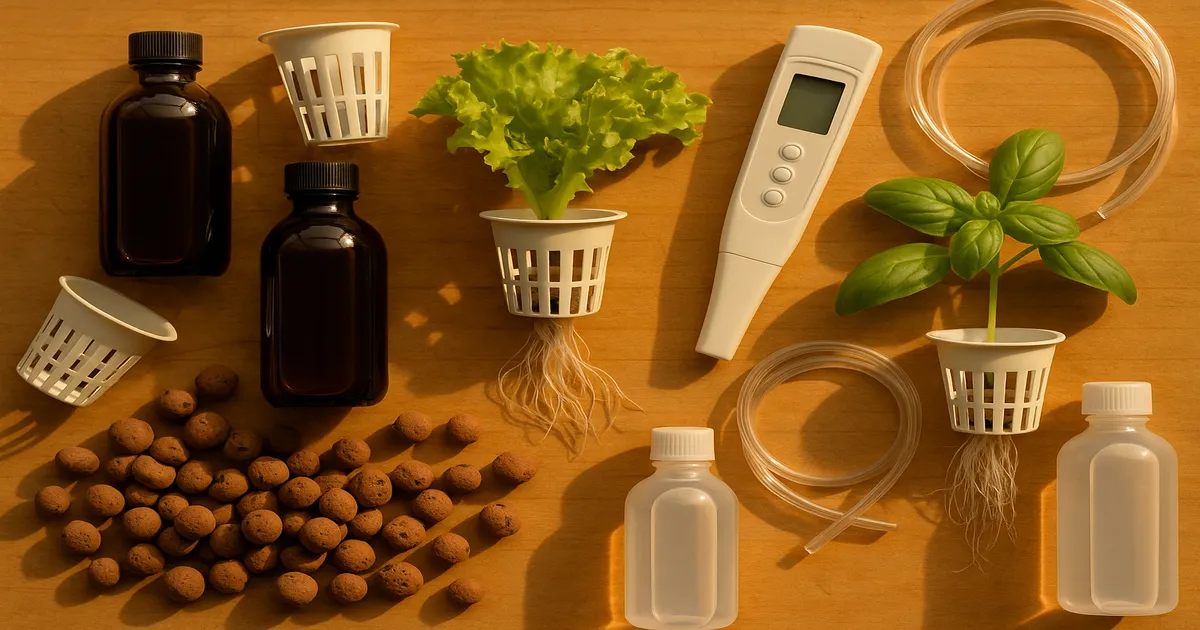
For pH, the Apera PH20 is a reliable entry-level meter. The Bluelab pH Pen is a step up in durability and build quality. For continuous monitoring, the Bluelab Guardian Monitor reads pH, EC, and temperature simultaneously — worth the investment for larger systems. For EC, the HM Digital TDS-3 gets the job done at under $20; the Bluelab Truncheon is the gold standard for reliability.
Calibrate your pH meter with pH 4.0 and 7.0 buffer solutions at least once a week for active systems. A drifting meter will quietly wreck a crop before you notice anything is wrong.
Adjusting pH Up and Down
Raising pH:
- Potassium hydroxide (KOH): The most common pH Up; also adds potassium — a bonus in hydro.
- Potassium bicarbonate: Gentler and more stable; good for minor adjustments.
- Calcium carbonate or dolomite lime: Slow-acting but fish-safe; the right choice for aquaponics.
Lowering pH:
- Phosphoric acid: Standard pH Down for hydroponics; adds phosphorus, so use carefully to avoid excess.
- Citric acid: An organic option, but less stable and can feed microbial growth.
- CO₂ injection: The cleanest method — lowers pH naturally and boosts photosynthesis simultaneously; common in commercial greenhouses.
Always add pH adjusters in small increments — 0.5–1 mL per 10 gallons — then wait 15–30 minutes before retesting.
Frequently Asked Questions
Can you convert a hydroponic system to aquaponics? Yes, but it requires significant changes. You’ll need to add a fish tank, plumb it into your existing grow beds, and cycle a biofilter before adding fish — a process that takes 4–6 weeks. Media-bed systems convert most easily; NFT systems need a separate biofilter added to the loop.
Is aeroponics better than hydroponics for home growers? Not usually. HPA delivers faster growth, but the added cost, maintenance, and risk of nozzle failure make it a poor fit for most beginners. Home growers typically get better results — and fewer headaches — starting with DWC or NFT hydroponics and moving to aeroponics once they understand nutrient management.
Which system uses the least water? Aeroponics, by a significant margin. HPA systems can use up to 95% less water than soil and meaningfully less than recirculating hydroponics, because only a fine mist is delivered rather than a continuous flow or reservoir.
Do I need a license to raise fish in an aquaponics system? It depends on your location and species. In most U.S. states, small-scale backyard aquaponics for personal use requires no license. Commercial operations and certain species (particularly game fish) may require permits. Check with your state’s department of agriculture or fish and wildlife agency before starting.
Can aquaponics be certified organic? Hydroponic and aeroponic systems face ongoing debate over USDA organic certification — the core objection is that soil biology is absent. Aquaponics has a stronger case because it relies on biological nutrient cycling rather than synthetic salts, and some aquaponics operations have received USDA NOP certification. Rules vary by certifier, so verify directly with your chosen certifying agency.