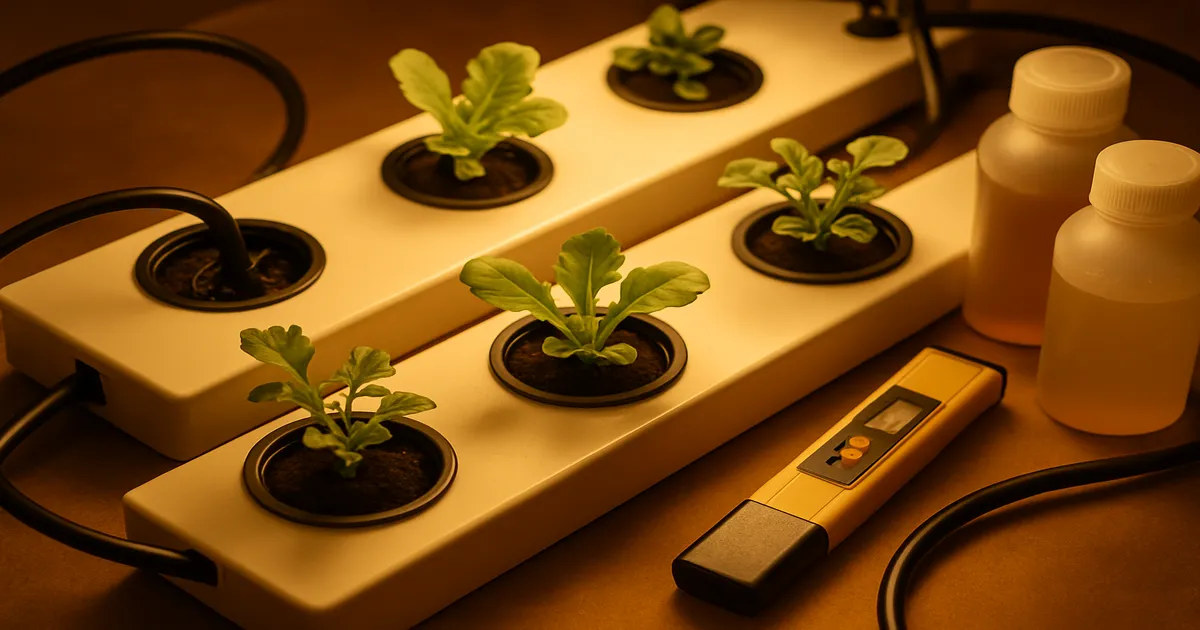
Quick Answer: An NFT (Nutrient Film Technique) hydroponic system works by pumping a thin, continuous 1–3mm film of nutrient solution along slightly angled growing channels, where it flows across plant roots before draining back to a reservoir to be recirculated. The upper root mass hangs in humid air inside the channel, giving plants simultaneous access to water, nutrients, and oxygen. Developed by Dr. Allen Cooper in England during the 1960s–70s, NFT is today the dominant system in commercial lettuce and herb production worldwide.
How Does a NFT Hydroponic System Work? Origins and Core Principles
Dr. Allen Cooper and the Birth of NFT
Dr. Allen Cooper developed the Nutrient Film Technique at the Glasshouse Crops Research Institute in England during the 1960s and 1970s. His insight was elegantly simple: instead of flooding roots periodically or submerging them fully, let a very thin stream of nutrient solution trickle continuously past them. That thin film — just 1–3mm deep — proved to be a sweet spot between hydration and aeration. The system spread quickly from the UK to the Netherlands, Japan, and North America, where it remains the backbone of commercial leafy green production.
Why a Film and Not a Flood: The Oxygen Advantage
The depth of the nutrient film is the whole game. Because only the bottom portion of the root mat touches the flowing solution, the upper roots are suspended in warm, humid air inside the channel. This gives NFT a semi-aeroponic quality that fully submerged systems like Deep Water Culture (DWC) simply can’t match — roots get oxygen directly from the air, not just dissolved oxygen from the water.
This simultaneous access to nutrients, water, and atmospheric oxygen is why NFT plants often grow faster and with less disease pressure than flood-based systems, provided everything is dialed in correctly.
NFT vs. DWC, Ebb and Flow, and Aeroponics
- vs. DWC: DWC suspends roots in aerated nutrient solution 24/7. NFT exposes the upper root mass to air, giving it a meaningful oxygen advantage — but NFT is far more vulnerable to pump failure.
- vs. Ebb and Flow: Flood-and-drain systems periodically saturate the root zone, then drain. NFT is continuous and recirculating, which means more consistent nutrient delivery but zero tolerance for flow interruption.
- vs. Aeroponics: True aeroponics mists roots with nutrient solution and delivers maximum oxygen. NFT is simpler and more forgiving to build and operate, making it the practical middle ground for most growers.
How an NFT Hydroponic System Works: Step-by-Step Flow Breakdown
The Six-Stage Nutrient Cycle: From Pump to Reservoir and Back
Here is exactly how the nutrient solution moves through an NFT system:
- A submersible pump in the reservoir pushes nutrient solution up through supply tubing.
- The solution enters the elevated inlet end of each growing channel at a controlled flow rate.
- A thin 1–3mm film flows along the channel floor, bathing the lower root mat.
- The upper root mass is exposed to humid air inside the channel, enabling direct oxygen uptake.
- Excess solution exits the lower drain end of the channel and returns to the reservoir via gravity.
- The pump runs continuously (or on a timer for some crops), keeping the cycle going around the clock.
Think of it as a slow, shallow river flowing under your plants — shallow enough that the roots can breathe above it.
Channel Slope, Length, and Width: Getting the Geometry Right
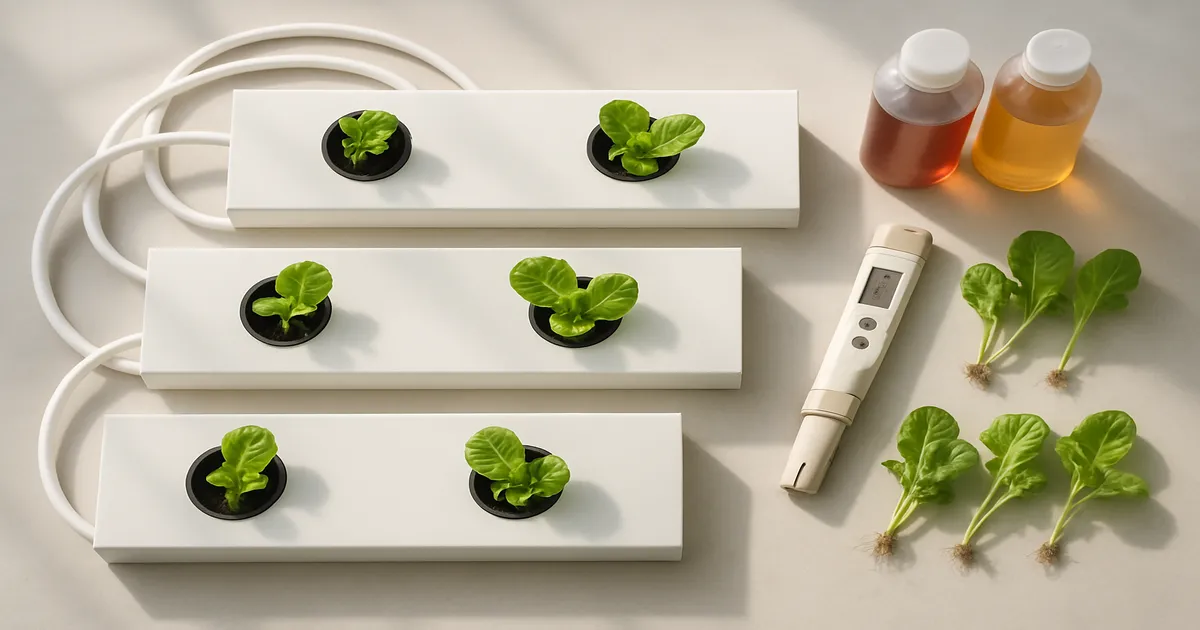
Slope is one of the most critical variables in NFT. The industry standard is a 1:30 to 1:40 gradient — roughly a 1-inch drop for every 30–40 inches of channel length. Too shallow and solution pools around roots, cutting off oxygen. Too steep and the film races through before roots can absorb what they need.
Channel length matters too. Commercial systems typically run 33–40 feet (10–12m) per channel. Home systems are usually 4–10 feet (1.2–3m), which is much more forgiving. For width, 2–4 inches suits lettuce and herbs, while fruiting crops need 4–6 inch channels to accommodate larger root systems. Flat-bottomed channels — made from extruded PVC or food-grade HDPE — are preferred over round pipe because they distribute the film more evenly across the channel floor.
Flow Rate: How Much Nutrient Solution Per Channel?
The sweet spot is 1–2 liters per minute per channel. Below that, you risk dry spots where roots at the far end of the channel aren’t getting enough solution. Above that, you’re essentially flooding rather than filming. A simple way to verify your flow rate: hold a container under the channel outlet for 60 seconds and measure what you collect. A quality submersible pump with an adjustable flow valve makes dialing this in straightforward.
NFT System Variants at a Glance
| Variant | Description | Best Use |
|---|---|---|
| Standard NFT | Flat-bottomed horizontal channels | Lettuce, herbs, general use |
| A-Frame NFT | Channels on angled frames, both sides used | Space-efficient indoor/greenhouse |
| Vertical NFT | Stacked or spiral channel configurations | Strawberries, herbs, small footprints |
| Wide-Channel NFT | Broader 4–6 inch channels | Fruiting crops, larger plants |
| Modular NFT | Pre-built, stackable commercial units | Commercial scale, easy expansion |
NFT Nutrient Solution: What to Feed Your Plants and When
Macronutrients: N-P-K Ratios for Leafy Greens vs. Fruiting Crops
Nitrogen drives leafy, vegetative growth. For lettuce, spinach, and herbs, use a higher N ratio — a 3:1:2 N-P-K profile works well. For fruiting crops like tomatoes and peppers, dial nitrogen back during flowering; too much N at that stage pushes vegetative growth at the expense of fruit set.
Keep phosphorus in the 30–50 PPM range for root development and energy transfer, and potassium at 150–300 PPM for water regulation and fruit quality. In NFT specifically, use calcium nitrate as your primary nitrogen source. Ammonium nitrogen should stay below 10% of total N — higher levels cause root toxicity in recirculating systems.
Calcium and Magnesium: The Most Overlooked NFT Nutrients
Target 150–200 PPM calcium and 30–75 PPM magnesium. Calcium deficiency is the leading cause of tip burn in lettuce and blossom end rot in tomatoes — two of the most common NFT headaches. Magnesium is the central atom in chlorophyll; let it drop and you’ll see interveinal yellowing on older leaves.
Growers on soft water are especially at risk for both deficiencies. The Masterblend DIY recipe below addresses this directly through its calcium nitrate and Epsom salt components.
Micronutrient Targets
| Micronutrient | Target Range | Common Source |
|---|---|---|
| Iron (Fe) | 2–5 PPM | Chelated Fe-EDTA or Fe-DTPA |
| Manganese (Mn) | 0.5–1.0 PPM | Manganese sulfate |
| Zinc (Zn) | 0.05–0.3 PPM | Zinc sulfate |
| Boron (B) | 0.3–0.5 PPM | Boric acid |
| Copper (Cu) | 0.05–0.1 PPM | Copper sulfate |
| Molybdenum (Mo) | 0.01–0.05 PPM | Sodium molybdate |
Use chelated iron (Fe-EDTA or Fe-DTPA) rather than non-chelated forms — chelated iron stays available across a much wider pH range.
Recommended Nutrient Products for NFT
Masterblend DIY Recipe (cost-effective and widely used): per 5 gallons of water, combine:
- 12g Masterblend 4-18-38
- 12g Calcium Nitrate (15.5-0-0)
- 6g Epsom Salt (magnesium sulfate)
This yields roughly 700–900 PPM (1.4–1.8 EC). Adjust quantities up or down to hit your target EC.
Commercial 2-Part/3-Part: General Hydroponics Flora Series and the Athena Blended Line are both reliable. Start at 75% of the manufacturer’s recommended strength for NFT — recirculating systems concentrate nutrients faster than drain-to-waste setups.
Single-Part Options: Products like General Hydroponics MaxiGro dissolve directly into water with minimal measuring. Less precise, but perfectly adequate for beginners growing leafy greens.
Reservoir Management
Between full changes, top off with plain pH-adjusted water — not full-strength nutrient solution. Plants drink more water than nutrients in warm conditions, so reservoir concentration naturally rises between changes.
- Full reservoir change: Every 7–14 days for actively growing crops; every 5–7 days in warm weather or high-density setups
- Minimum reservoir volume: 2.5 gallons (9.5L) per plant
- Water temperature: 65–72°F (18–22°C) — warmer water holds less dissolved oxygen and invites pathogens
- Container: Food-grade, opaque reservoirs block light and prevent algae
pH and EC Management in NFT Systems
Optimal pH Range by Crop
For leafy greens, aim for pH 5.8–6.2. Fruiting crops prefer pH 6.0–6.5. Outside the range of 5.5–6.5, nutrient lockout becomes a real problem — plants can sit in a perfectly formulated solution and still starve because the chemistry prevents uptake.
Correction note: The previous version listed leafy green pH as 5.8–6.0, which is slightly narrow. A target of 5.8–6.2 gives a more practical working range while keeping iron and calcium available.
EC and PPM Targets by Crop Stage
| Growth Stage | PPM | EC |
|---|---|---|
| Seedling / transplant | 400–600 PPM | 0.8–1.2 EC |
| Vegetative — leafy greens | 600–900 PPM | 1.2–1.8 EC |
| Vegetative — fruiting crops | 800–1,200 PPM | 1.6–2.4 EC |
| Flowering / fruiting | 1,200–1,800 PPM | 2.4–3.6 EC |
| Late fruiting / ripening | 1,400–2,000 PPM | 2.8–4.0 EC |
Always increase EC gradually — no more than 0.2–0.3 EC per adjustment. Sudden spikes cause osmotic stress and can set plants back significantly.
Testing and Monitoring pH and EC
A quality pH pen and EC meter are non-negotiable. The Apera PH20 and Bluelab pH Pen are both reliable; calibrate with pH 4.0 and 7.0 buffer solutions at least weekly. For EC, the Apera EC20 is a solid, affordable option. Test at minimum once daily — twice in hot weather or dense plantings.
For continuous monitoring, the Bluelab Guardian Monitor reads pH and EC in-line with alarms for out-of-range readings. It’s worth the investment once you’re running more than a few channels.
Adjusting pH: Step-by-Step
- Test current pH and note the reservoir volume.
- Add pH adjuster in small increments — 0.5–1ml per 10 gallons.
- Run the pump for 10–15 minutes to circulate fully.
- Retest and repeat if needed.
- Log every adjustment — trends reveal problems before they become crises.
To raise pH, use potassium hydroxide (KOH) or potassium bicarbonate — the latter is gentler and less caustic. To lower pH, phosphoric acid is the standard choice; it contributes phosphorus to the solution, so factor that into your nutrient calculations.
Troubleshooting pH and EC Swings
| Problem | Likely Cause | Fix |
|---|---|---|
| pH rises steadily | Nutrient uptake, bicarbonate buffering in hard water | Regular pH Down dosing; consider RO filtration |
| pH drops rapidly | Microbial activity, CO₂ buildup, ammonium uptake | Check for root rot; reduce ammonium-N sources |
| pH swings >0.5 in 24hrs | Small reservoir, high plant density, temperature spike | Increase reservoir size; cool the water |
| EC rises, pH drops | Evaporation concentrating the solution | Top off with plain pH-adjusted water only |
| EC drops steadily | Plants consuming nutrients normally | Top off with dilute nutrient solution |
If your source water is above 200 PPM (0.4 EC), baseline minerals will affect both pH stability and nutrient ratios. Reverse osmosis filtration gives you a clean starting point and much more predictable results.
Lighting Your NFT System
Spectrum, PPFD, and DLI Targets by Crop
Full-spectrum light (380–780nm) covers everything your plants need from seedling to harvest. Blue light (400–500nm) keeps leafy greens compact and vegetative. Red light (600–700nm) drives photosynthesis most efficiently and is essential for flowering. For vegetative crops, a red-to-blue ratio of roughly 4:1 to 5:1 is the target.
| Crop | PPFD Target | DLI Target |
|---|---|---|
| Lettuce, spinach | 150–250 µmol/m²/s | 12–17 mol/m²/day |
| Herbs (basil, cilantro, mint) | 200–400 µmol/m²/s | 15–20 mol/m²/day |
| Strawberries | 300–500 µmol/m²/s | 17–25 mol/m²/day |
| Tomatoes, peppers, cucumbers | 400–800 µmol/m²/s | 20–30 mol/m²/day |
DLI = PPFD × photoperiod hours × 0.0036. Use this formula to check whether your light intensity and hours combine to hit the daily target for your crop.
Photoperiod Schedules
- Lettuce and leafy greens: 16–18 hours — 18 hours maximizes growth rate
- Basil and cilantro: 16–18 hours — basil bolts under 24-hour light, so always maintain a dark period
- Mint and chives: 14–16 hours
- Strawberries: 12–16 hours (day-neutral varieties perform best)
- Tomatoes — vegetative: 18 hours; reduce to 12–14 hours to trigger flowering
Recommended LED Grow Lights for NFT
Hobbyist scale (2–4 ft channels):
- Spider Farmer SF-2000 (~200W): Samsung LM301B diodes, excellent spectrum for a 2×4 ft footprint
- Mars Hydro TS-1000 (~150W): Budget-friendly and well-suited for lettuce and herb NFT
- HLG 100 V2 Rspec (~100W): Premium efficiency for small herb gardens
Mid-scale (4–8 ft channels):
- Spider Farmer SE-5000 (~500W): Commercial-grade diodes with uniform coverage
- HLG 650R (~650W): Top-tier efficiency at 2.9 µmol/J, well-suited for fruiting NFT crops
Commercial/greenhouse:
- Fluence SPYDR 2i : Designed for horizontal canopy crops — a natural fit for NFT lettuce operations
- Gavita Pro 1700e LED : Industry standard in commercial greenhouse NFT
For vertical or multi-tier NFT, LED strip lights or T5 fixtures between tiers work well — target 150–200 µmol/m²/s per tier.
Best Plants for NFT Hydroponics
Why Leafy Greens and Herbs Dominate NFT
Lettuce, spinach, kale, basil, mint, and cilantro are the bread and butter of NFT for good reason. They grow fast, have shallow root systems that suit the thin film environment, and reach harvest in 3–6 weeks under good conditions. Their low nutrient demand also means the recirculating solution stays balanced longer between changes.
Fruiting crops — tomatoes, peppers, cucumbers, and strawberries — can absolutely be grown in NFT, but they require wider channels (4–6 inches), stronger structural support for the plant canopy, and more attentive EC and calcium management. They are not the ideal starting point for a first NFT build.
Crops to avoid in NFT: Large root vegetables (carrots, beets, radishes) and plants with aggressive, fibrous root systems (sweet potatoes, squash) will clog channels and disrupt film flow. Stick to crops with compact, fibrous roots.
Frequently Asked Questions About NFT Hydroponics
Q: What happens if the pump fails in an NFT system? Roots dry out within 30–60 minutes in warm conditions because there is no growing medium to hold moisture. A backup pump or a timer-based alert is essential. This is NFT’s single biggest vulnerability compared to systems like DWC or ebb and flow.
Q: Do I need a growing medium in NFT channels? No growing medium goes inside the channel itself — that would obstruct the film. Plants are started in small net pots filled with a lightweight medium (rockwool, hydroton, or coco coir) that supports the stem at the channel opening. The roots grow down through the net pot and into the channel on their own.
Q: How long does it take to grow lettuce in an NFT system? Under good conditions — 16–18 hours of light at 150–250 µmol/m²/s, pH 5.8–6.2, and EC 0.8–1.6 — most loose-leaf lettuce varieties reach harvest size in 25–35 days from transplant. Head lettuce varieties take 45–60 days.
Q: Can I run NFT channels outdoors? Yes, but with caveats. Outdoor NFT requires shading the channels and reservoir to prevent algae growth and overheating. Water temperature above 75°F (24°C) significantly reduces dissolved oxygen and increases pathogen pressure. In hot climates, a reservoir chiller or deep-shade setup is often necessary.
Q: How is NFT different from a standard hydroponic system? “Hydroponic system” is a broad term covering many methods. What makes NFT distinct is the continuous, gravity-fed thin film — no flooding, no misting, no static submersion. That specific flow dynamic is what gives NFT its oxygen advantage and its sensitivity to interruption. Understanding how a NFT hydroponic system works means understanding that the film depth and slope are doing most of the work.