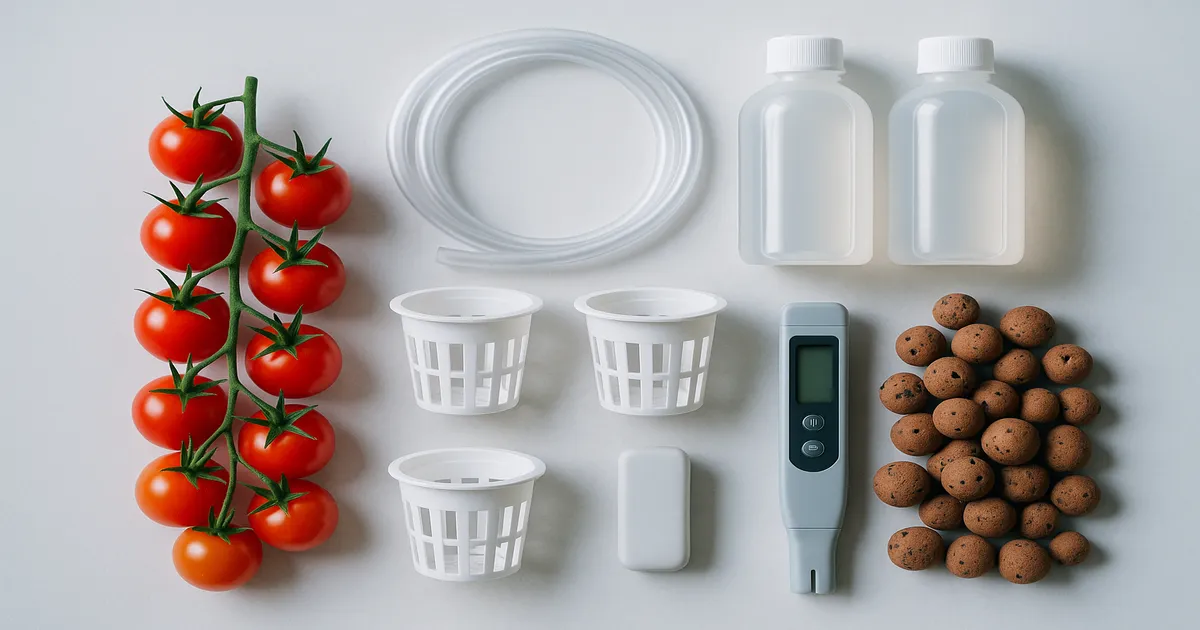
Quick Answer: To grow more cherry tomatoes, focus on five core levers: system choice, nutrients, lighting, pruning, and variety selection. Soil-grown plants typically yield 4–8 lbs per season, while optimized hydroponic systems can push 15–30+ lbs per plant. Get these fundamentals right and your harvest will multiply fast.
If you want to know how to grow more cherry tomatoes, you’re asking two questions at once: how do I get more fruit from each plant, and how do I scale up efficiently? The good news is that cherry tomatoes are one of the most responsive crops to careful management. Small improvements in light, nutrition, or pruning pay off in pounds of fruit — not just a handful more.
How to Grow More Cherry Tomatoes: Choose the Right System First
Your growing system sets the ceiling on what’s possible. No amount of premium nutrients will overcome a poorly chosen setup.
Deep Water Culture (DWC): Best for Beginners Going Hydroponic
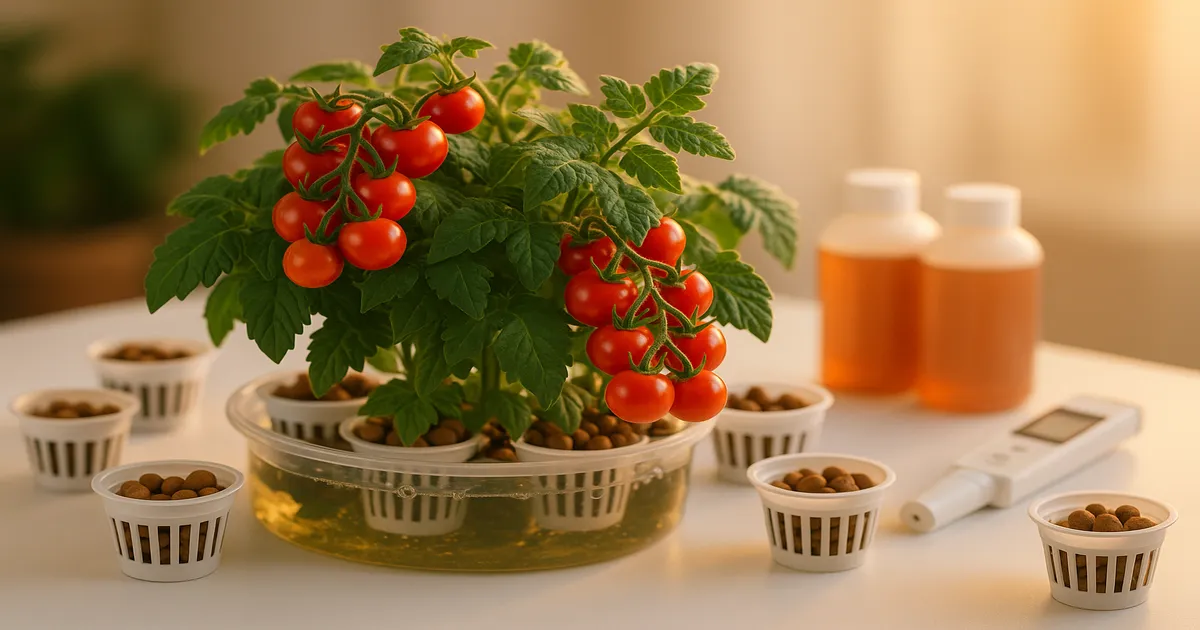
In DWC, plant roots hang in an oxygenated nutrient solution inside a reservoir. It’s the most beginner-friendly hydroponic entry point — fewer components, fast growth, and yields of 12–20 lbs per plant are realistic. The main risk is reservoir temperature. Keep it at 65–72°F (18–22°C), because warmer water holds less dissolved oxygen and creates ideal conditions for Pythium root rot. A quality air pump is essential here; the Vivosun 317 GPH Air Pump is a reliable, quiet option for single- or dual-bucket setups.
Dutch Bucket (Bato Bucket): The Commercial Standard for Tomatoes
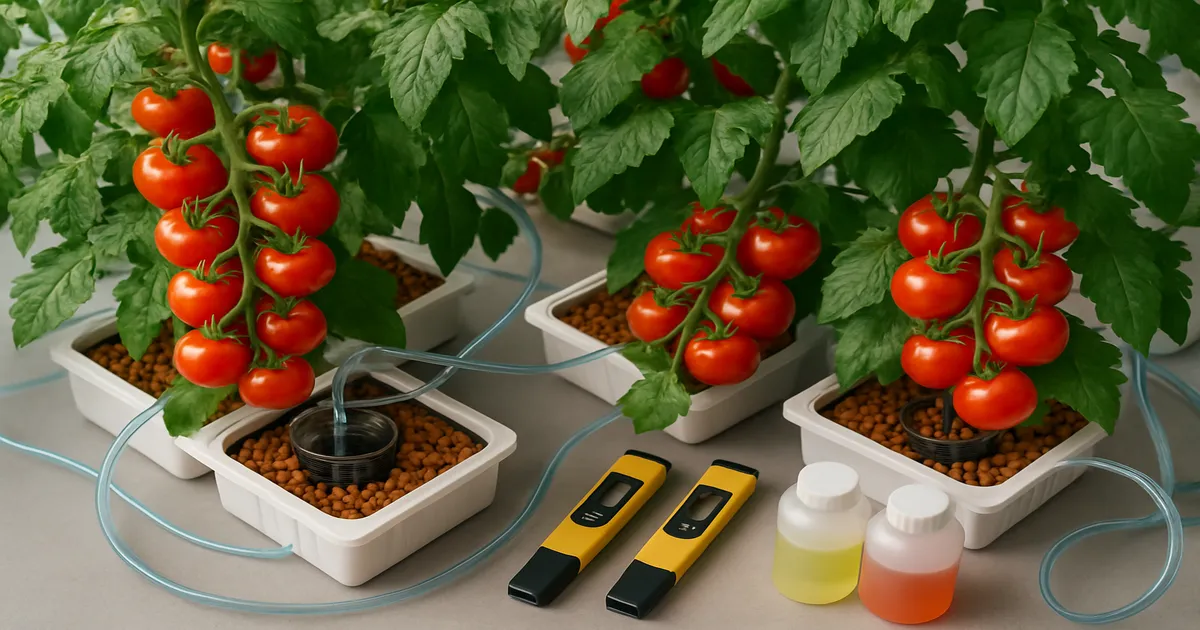
This is the system commercial greenhouse growers trust for a reason. Each plant sits in its own bucket filled with perlite or coco coir, fed by a recirculating or drain-to-waste drip line. It’s highly scalable, easy to troubleshoot per-plant, and handles indeterminate cherry tomatoes better than almost any other system. If you’re serious about long-season yield, Dutch Bucket is the answer.
Nutrient Film Technique (NFT): Space-Efficient and Scalable
A thin film of nutrient solution flows continuously over bare roots in sloped channels. NFT uses less water than DWC and works well for commercial production where space is tight. It’s less forgiving of pump failures — roots dry out within minutes — so it suits growers who can monitor their systems regularly.
Kratky Method: Passive Growing on a Budget
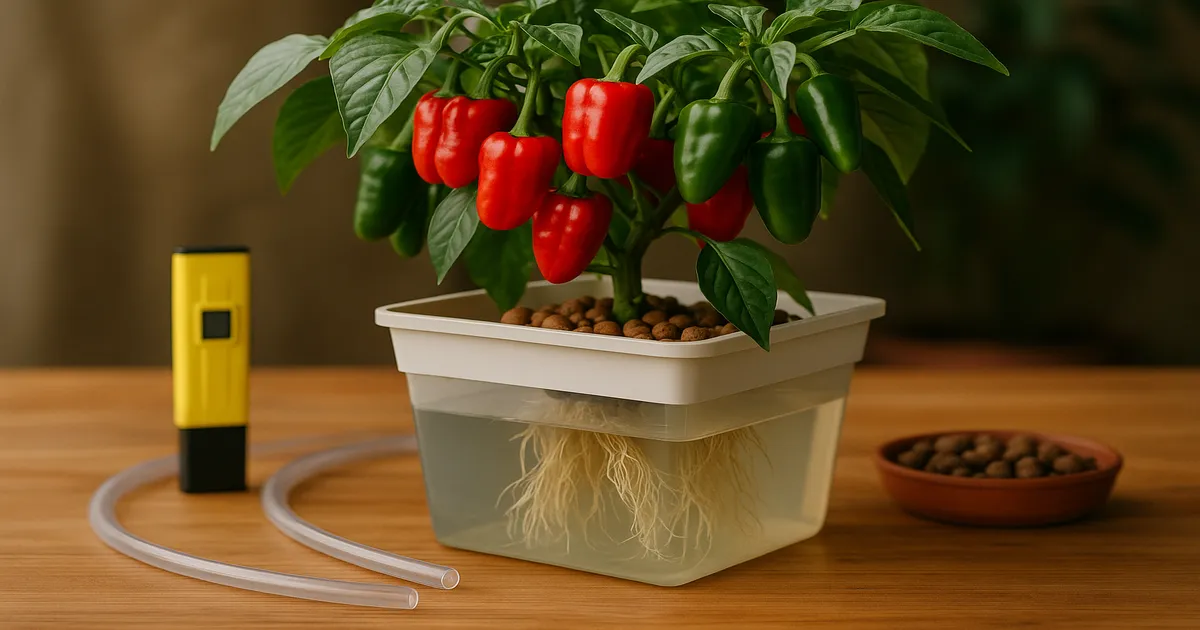
No pump, no electricity, no moving parts. The Kratky method is passive DWC where the plant consumes the reservoir as it grows, leaving an air gap for roots. It works well for cherry tomatoes on a small scale and is the lowest-cost hydroponic option available.
Soil and Container Growing: Accessible, with a Real Yield Ceiling
Soil is forgiving and low-cost, but the yield ceiling is real. A well-amended container — at least 5 gallons, ideally 7–10 gallons for indeterminate varieties — with consistent fertilization will produce 4–8 lbs per plant. It’s the right choice when budget or simplicity is the priority.
Vertical Tower Gardens: Space-Saving for Compact Indoor Grows
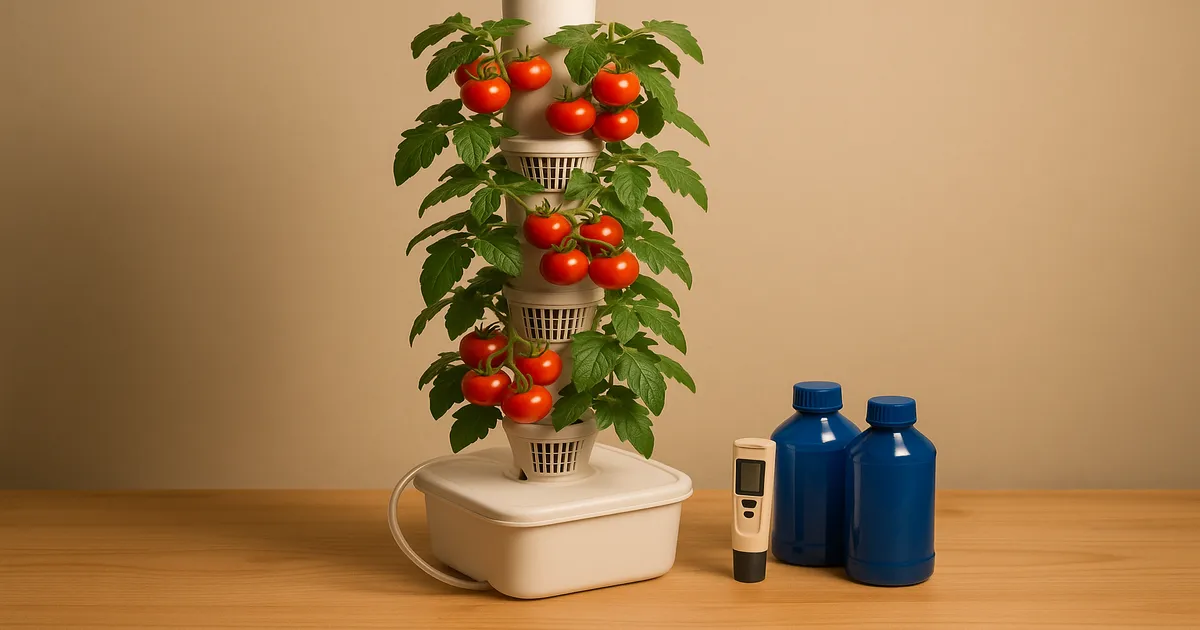
Tower systems pack multiple plants into a small footprint. Yield per plant runs slightly lower than Dutch Bucket or DWC, but yield per square foot can be excellent for compact indoor spaces.
Best Cherry Tomato Varieties for High Yields
Genetics matter more than most growers realize. Choosing the wrong variety is an easy way to leave pounds of fruit on the table.
Top Varieties for Hydroponic Systems
- Sungold F1 — Orange, intensely sweet, high-Brix fruit. One of the most popular greenhouse varieties in the world. Expect 15–25 lbs per plant under optimized hydroponic conditions.
- Sakura F1 — The commercial crack-resistant standard. Excellent shelf life, uniform fruit, and yields of 20–30 lbs per plant in optimized systems.
- Sweet Million F1 — Red cherry with strong VFN disease resistance. Prolific, beginner-friendly, and reliable across systems.
- Supersweet 100 F1 — Classic long-truss red cherry with consistently high yields and a great flavor profile.
Best Varieties for Soil and Container Growing
Sweet Million F1 and Supersweet 100 F1 both perform well in soil because of their disease resistance and adaptability. Sungold F1 also does beautifully in containers — just give it a large pot and consistent water.
Determinate vs. Indeterminate: Why It Matters
Indeterminate varieties keep growing and fruiting until you stop them — that’s what you want for long-season production. Determinate varieties set all their fruit at once and stop, which is useful for canning but not for maximizing continuous yield. All four varieties listed above are indeterminate.
Disease Resistance Traits to Look For
VFN ratings on seed packets indicate resistance to Verticillium wilt, Fusarium wilt, and nematodes. These diseases can devastate a crop mid-season and wipe out months of work. Prioritize VFN-rated varieties, especially in soil systems where pathogen pressure is higher.
Nutrient Strategy: Feeding Cherry Tomatoes for Maximum Fruit
EC and PPM Targets by Growth Stage
| Growth Stage | PPM (500 scale) | EC (mS/cm) |
|---|---|---|
| Seedling (0–2 weeks) | 400–600 | 0.8–1.2 |
| Vegetative (2–5 weeks) | 800–1,200 | 1.6–2.4 |
| Early Flowering | 1,200–1,600 | 2.4–3.2 |
| Fruiting/Production | 1,600–2,400 | 3.2–4.8 |
| Late Season/Stress Ripening | 2,000–2,800 | 4.0–5.6 |
Always start at the lower end of each range and increase gradually. Jumping to high EC too fast causes nutrient burn and stunts growth. Note: the late-season upper limit has been adjusted to 2,800 PPM / 5.6 EC — pushing beyond this in recirculating systems risks sodium and chloride accumulation that outweighs any ripening benefit.
Macronutrients: N-P-K Ratios from Seedling to Fruiting
During vegetative growth, nitrogen drives leaf and stem development — keep it high. Once flowering begins, shift toward potassium. During heavy fruit production, aim for a K:N ratio of approximately 2:1, with potassium at 200–300 PPM. Phosphorus stays relatively stable at 50–100 PPM throughout, with a slight bump at flower initiation.
Calcium and Magnesium: Preventing Blossom End Rot
Calcium deficiency is the direct cause of blossom end rot (BER) — that brown rot on the bottom of developing fruit. Target 150–200 PPM calcium and keep watering consistent, because calcium uptake is driven by transpiration. Magnesium (50–75 PPM) is the central atom in chlorophyll; deficiency shows as interveinal yellowing on older leaves first.
Micronutrients That Directly Impact Fruit Set
Boron is the micronutrient most growers overlook, and it directly affects yield. Target 0.3–0.5 PPM boron — deficiency reduces pollen viability and causes poor fruit set even when pollination looks fine. Chelated iron (2–5 PPM) prevents the interveinal chlorosis on new growth that signals iron lockout at high pH.
Beginner Nutrient Recipe: 3-Part Liquid Formula
The General Hydroponics Flora Series is the most beginner-friendly starting point. Per gallon of RO or distilled water:
- Vegetative: FloraGro 2.5 mL + FloraBloom 2.5 mL + FloraMicro 2.5 mL
- Fruiting: FloraGro 1 mL + FloraBloom 5 mL + FloraMicro 2.5 mL
- Add a CalMag supplement at 3–5 mL/gal throughout, especially with RO water
Target 1,200–1,600 PPM (2.4–3.2 EC) during active fruiting.
Advanced Nutrient Recipe: Dry Salt Mixing Guide
Per 100 gallons, mixed as two separate concentrates:
- Part A: Calcium Nitrate 200 g + Iron Chelate (13%) 10 g
- Part B: Potassium Nitrate 100 g + Monopotassium Phosphate 50 g + Magnesium Sulfate (Epsom Salt) 100 g + micronutrient blend per spec
Critical safety note: Always dissolve Part A and Part B separately into water before combining in the reservoir. Adding them together undiluted causes calcium-sulfate precipitation that permanently locks out nutrients.
Soil and Container Fertilizer Strategy
Start with a slow-release balanced fertilizer (10-10-10 or 14-14-14) incorporated at planting. Switch to a tomato-specific formula like 5-10-10 or 8-32-16 at first flower set. Foliar-spray dilute Epsom salt (1 tbsp per gallon) every two weeks to prevent magnesium deficiency, and top-dress with worm castings monthly for micronutrient support.
pH Management: Keeping Your Plants in the Sweet Spot
Ideal pH Ranges for Soil vs. Hydroponics
- Soil: pH 6.0–6.8 (optimum 6.2–6.5)
- Hydroponics: pH 5.8–6.3 (optimum 5.8–6.0)
Even a half-point deviation locks out calcium, magnesium, or iron — the nutrients most critical to yield and fruit quality.
How to Monitor pH and EC Accurately
A reliable digital pH meter is non-negotiable for hydroponic growing. The Apera PC60 reads both pH and EC in one unit and is a strong value for home growers. Calibrate with pH 4.0 and 7.0 buffer solutions every 1–2 weeks. For dedicated EC measurement, the Bluelab Truncheon is the industry workhorse — no calibration required. Check pH and EC daily in DWC and NFT systems, every 2–3 days in Dutch Bucket, and weekly in soil.
Raising and Lowering pH Safely
- Too low (acidic): Add pH Up (potassium hydroxide) in 1–2 mL increments per 10 gallons, stir, wait 15 minutes, retest.
- Too high (alkaline): Add pH Down (phosphoric acid) the same way. Phosphoric acid is preferred in hydroponics because it contributes a trace of phosphorus.
Troubleshooting pH Drift, EC Spikes, and Nutrient Lockout
| Problem | Likely Cause | Fix |
|---|---|---|
| pH drifting up | Nitrate uptake, algae, CO₂ off-gassing | Add pH Down; light-proof reservoir; top off with pH 5.5–5.8 water |
| pH crash | Root rot, microbial activity | Partial reservoir change; check root health |
| EC rising | Plants drinking water faster than nutrients | Top off with plain pH-adjusted water only |
| EC falling | Rapid nutrient uptake | Add fresh nutrient solution; increase concentration slightly |
Change the full reservoir every 7–14 days in recirculating systems. Adding a silica supplement buffers pH naturally and strengthens plant cell walls against stress — it’s one of the more underrated additives for tomatoes.
Lighting Cherry Tomatoes for Maximum Yield Indoors
PPFD and DLI Targets by Growth Stage
| Growth Stage | PPFD (µmol/m²/s) | DLI (mol/m²/day) |
|---|---|---|
| Seedling | 200–400 | 8–12 |
| Vegetative | 400–600 | 15–20 |
| Flowering | 600–900 | 20–30 |
| Heavy Fruiting | 800–1,200+ | 25–40 |
Light Spectrum and Photoperiod
Blue light (400–500 nm) drives compact vegetative growth and strong stems. Red light (600–700 nm) is the primary driver of photosynthesis and fruit production. Far-red (700–750 nm) triggers the Emerson Enhancement Effect — when paired with red light, it boosts photosynthetic efficiency and accelerates flowering. Full-spectrum white LEDs covering 400–700 nm handle all of this in one fixture.
Cherry tomatoes are day-neutral, meaning they flower based on maturity rather than day length. Run 18/6 (light/dark) during vegetative growth and 16–18 hours during fruiting. Avoid 24-hour light cycles — dark periods matter for respiration and recovery.
Best LED Grow Lights for Cherry Tomatoes
Budget (under $200):
- Spider Farmer SF-2000 — Samsung LM301B diodes; covers 2×4 ft; excellent efficiency for the price
Mid-Range ($200–$600):
- HLG 350R — top-tier efficiency from Horticulture Lighting Group; 3×3 ft at high PPFD; a strong choice for serious home growers
Commercial ($600+):
- Gavita Pro 1700e LED — the greenhouse industry standard at 1,700 µmol/s output
Keep fixtures 12–24 inches above the canopy — exact distance depends on wattage, so check manufacturer specs. Use a PAR meter to verify actual light levels at canopy height rather than guessing.
Supplemental Interlighting for Tall Indeterminate Plants
For indeterminate cherry tomatoes growing 6–10 feet tall, hanging supplemental LED strips within the canopy delivers light directly to lower fruiting trusses that the overhead fixture can’t reach. Interlighting consistently produces 20–30% yield gains in commercial greenhouse trials and is one of the highest-ROI lighting upgrades for serious growers.
How to Grow More Cherry Tomatoes Through Pruning and Training
Why Pruning Suckers Is the Single Biggest Yield Lever
Suckers are the lateral shoots that emerge from the crotch between the main stem and a branch. Left alone, they become full secondary stems that compete for energy. Removing them — especially below the first flower truss — redirects that energy directly into fruit production. This single practice probably does more for yield than any other technique available to the average grower.
Remove suckers when they’re small (under 2 inches) by pinching them off with your fingers. Larger suckers should be cut with clean, sterilized scissors to avoid tearing the stem.
Single-Stem Cordon vs. Two-Stem Training
The single-stem cordon method — one main stem, all suckers removed — is the commercial and hydroponic standard. It maximizes light penetration, simplifies trellising, and makes nutrient management predictable. Some growers allow two stems by letting one sucker below the first truss develop, which increases yield per plant at the cost of more space and complexity.
Trellising and Support Systems
- Florida Weave: Stake posts every 4–5 feet along a row; weave twine between stakes and plants as they grow. The standard for outdoor and high-tunnel production.
- Vertical string systems: Anchor a string to an overhead wire above each plant and loosely loop it around the main stem as it grows upward. This is the go-to method for greenhouse and indoor grows.
Manual Pollination for Indoor Growers
Without wind and insects, indoor plants need your help. Vibrate open flowers daily using an electric toothbrush held against the flower stem — not the petals — for 2–3 seconds. Do this in the middle of the light cycle when flowers are most receptive. Gently shaking the trellis string works in a pinch.
Leaf Pruning for Airflow and Disease Prevention
Remove lower leaves as the plant grows — anything below the lowest active fruiting truss can go. This improves airflow, reduces humidity at the base of the plant, and cuts disease pressure significantly. Don’t remove more than 20–25% of the foliage at one time; the plant needs leaves to photosynthesize.
Troubleshooting Common Cherry Tomato Yield Problems
Blossom End Rot
BER is a calcium deficiency problem, but inconsistent watering is usually the trigger. Calcium moves through the plant via transpiration, so irregular wet-dry cycles interrupt delivery to developing fruit. Keep watering consistent, maintain calcium at 150–200 PPM, and verify that pH isn’t locking out calcium uptake. In hydroponics, BER often signals a pH problem rather than a true calcium shortage.
Fruit Cracking and Split Tomatoes
Cracking happens when fruit expands too fast after a sudden influx of water following drought stress. Potassium imbalance can also contribute. Keep irrigation consistent and maintain K at 200–300 PPM during fruiting. Crack-resistant varieties like Sakura F1 are worth choosing if this is a recurring problem.
Poor Fruit Set Despite Healthy Plants
If flowers are dropping or setting poorly, check three things: temperature, pollination, and boron. Tomatoes drop flowers when daytime temperatures exceed 85°F (29°C) or night temperatures fall below 55°F (13°C). Indoor growers should also confirm they’re pollinating daily and that boron is present at 0.3–0.5 PPM.
Yellowing Leaves Mid-Season
Lower leaf yellowing is normal as the plant ages. Yellowing that moves upward, shows interveinal patterns, or appears on new growth signals a nutrient problem. Interveinal yellowing on old leaves = magnesium deficiency. Interveinal yellowing on new leaves = iron deficiency, almost always caused by pH above 6.5 in hydroponics. Adjust pH first before adding more nutrients.
Frequently Asked Questions
How many cherry tomatoes can one plant produce? In soil, a well-managed indeterminate plant yields 4–8 lbs per season. In an optimized hydroponic system — DWC or Dutch Bucket with proper lighting and nutrients — the same variety can produce 15–30 lbs or more over a long growing season.
How often should I water cherry tomatoes in hydroponics? In DWC and NFT, roots are in constant contact with solution, so “watering” isn’t a separate task — you’re managing reservoir levels and EC daily. In Dutch Bucket, run 4–8 drip cycles per day during fruiting, adjusting based on plant size, temperature, and light intensity. In soil, water when the top inch of the medium is dry.
What is the best pH for growing cherry tomatoes hydroponically? Keep pH between 5.8 and 6.3, with 5.8–6.0 being the sweet spot for most nutrient availability. Check daily in recirculating systems and correct in small increments to avoid swings.
Do cherry tomatoes need to be pruned to produce more fruit? Yes — for indeterminate varieties, removing suckers is one of the highest-impact things you can do. It redirects energy from vegetative growth into fruit production and keeps the plant manageable. Determinate varieties need little to no pruning.
Can I grow cherry tomatoes indoors year-round? Absolutely. With a quality LED grow light delivering 800–1,200 µmol/m²/s at canopy height, a hydroponic system, and consistent temperature control (65–80°F / 18–27°C), cherry tomatoes will produce continuously indoors regardless of season.