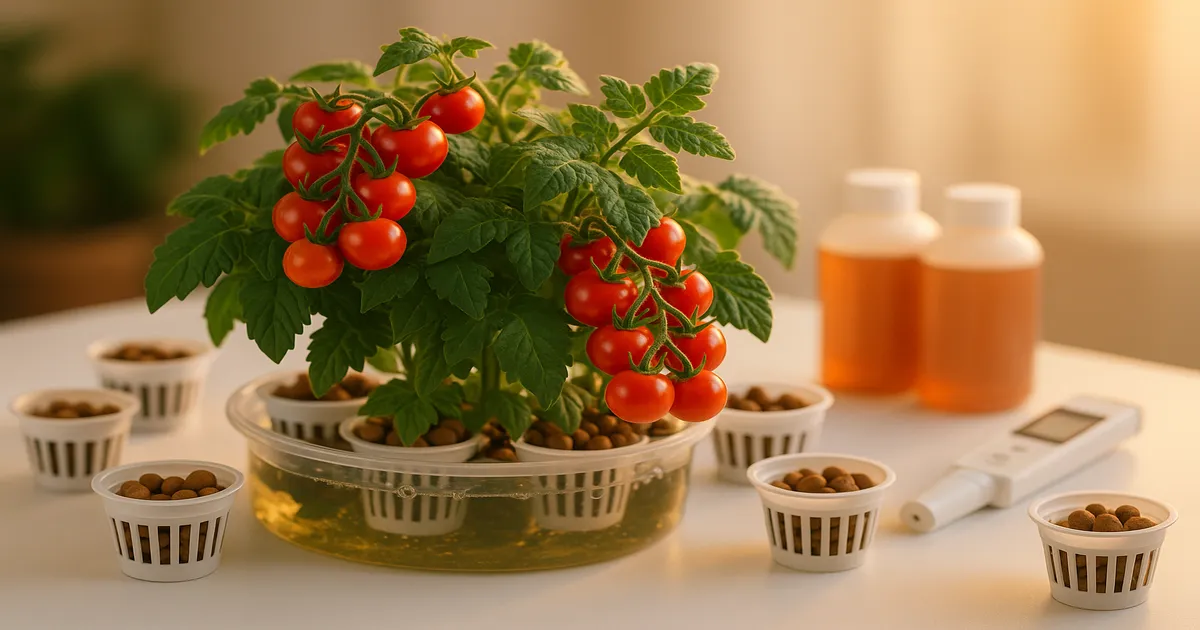
Quick Answer: Growing cherry tomatoes in water means using hydroponics — a soilless system where roots sit in nutrient-rich water instead of soil. With the right setup, you can harvest 5–10+ lbs per plant, grow year-round indoors, and see fruit 30–50% faster than in a garden bed. This guide covers everything from choosing a system to troubleshooting common problems.
If you’ve ever wondered how to grow cherry tomatoes in water, you’re really asking about hydroponics. You’re not just dunking a plant in a glass of tap water — you’re building a managed growing environment where roots access oxygen, water, and nutrients at the same time. Done right, it’s one of the most productive things you can grow at home.
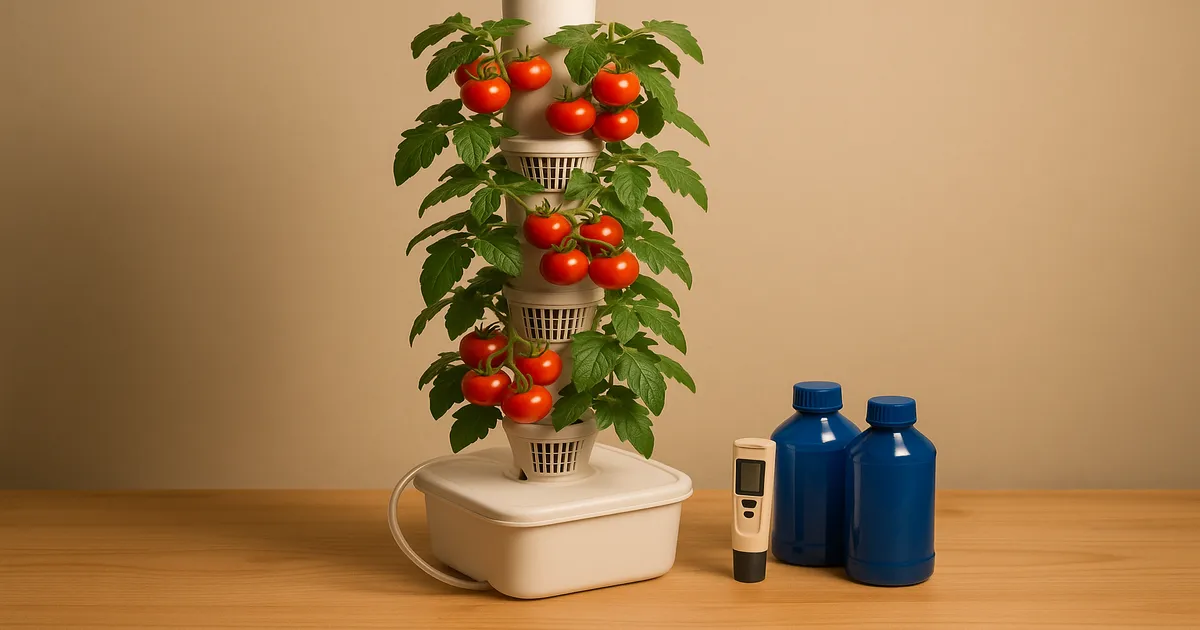
How to Grow Cherry Tomatoes in Water: System Overview
What Does Growing in Water Actually Mean?
Hydroponics replaces soil with a nutrient solution that delivers everything the plant needs directly to the roots. Depending on the system, roots may hang in oxygenated water, sit in a growing medium like clay pebbles, or receive a constant thin film of solution. No soil. No guessing what’s in the ground.
Why Cherry Tomatoes Work So Well
Cherry tomatoes are forgiving, fast-fruiting, and compact enough for most indoor setups. A single well-managed plant can yield 5–10+ lbs over a season. Hydroponics also uses up to 90% less water than soil growing, and you can run it year-round regardless of outdoor conditions.
Key Numbers to Know Before You Start
Keep these parameters in mind throughout this guide:
- pH: 5.8–6.3 (sweet spot: 6.0)
- EC by stage: 0.8–4.0 EC (400–2,000 PPM) depending on growth stage
- Light: 16 hours on / 8 hours off
- Reservoir temp: 65–72°F (18–22°C)
- Air temp: 65–85°F (18–29°C)
Choosing the Right System for Growing Cherry Tomatoes in Water
Deep Water Culture (DWC): Best for Beginners
In DWC, plant roots hang directly into a reservoir of oxygenated, nutrient-rich water. An air pump and airstone keep the solution oxygenated so roots don’t drown. It’s simple, inexpensive, and gives cherry tomatoes constant access to everything they need. Most beginners start here — and for good reason.
A reliable air pump makes a real difference in root health. Look for one rated for at least twice your reservoir volume to ensure adequate dissolved oxygen.
The Kratky Method: Passive Growing, No Pump Required
Kratky is a passive variation of DWC with no pump needed. You fill the reservoir once, and as the plant drinks, an air gap naturally forms above the waterline — giving roots access to both water and oxygen. It works for cherry tomatoes, but larger plants have higher oxygen and nutrient demands. Top off carefully and monitor EC closely as the plant matures.
Nutrient Film Technique (NFT): For Intermediate Growers
NFT runs a thin, continuous film of nutrient solution over the roots through sloped channels. It’s efficient and scalable, but the thin film means there’s almost no buffer if your pump fails — roots can dry out within hours. Better suited to growers who already have some experience managing hydroponic systems.
Dutch Bucket (Bato Bucket): Best for Vining Varieties
Dutch buckets are individual containers filled with a growing medium like perlite or hydroton, connected to a drip line and a shared drain. They’re the top choice for indeterminate cherry tomato varieties that grow tall and keep producing all season. Each bucket can be managed somewhat independently, and the medium provides excellent root support.
Ebb & Flow and Drip Systems: Scalable Home Setups
Ebb and flow systems flood a grow tray on a timer, then drain completely. Drip systems deliver nutrient solution directly to each plant’s root zone. Both scale well for multiple plants, but they involve more components — timers, pumps, trays — and more potential failure points.
Which System Should You Choose?
For most home growers, DWC or Dutch Bucket is the right call. DWC wins for simplicity with one or two plants. Dutch Bucket wins when you want to grow tall, vining indeterminate varieties at scale. Either way, stick with indeterminate cherry tomato varieties for continuous harvests throughout the season.
Setting Up Your System Step by Step
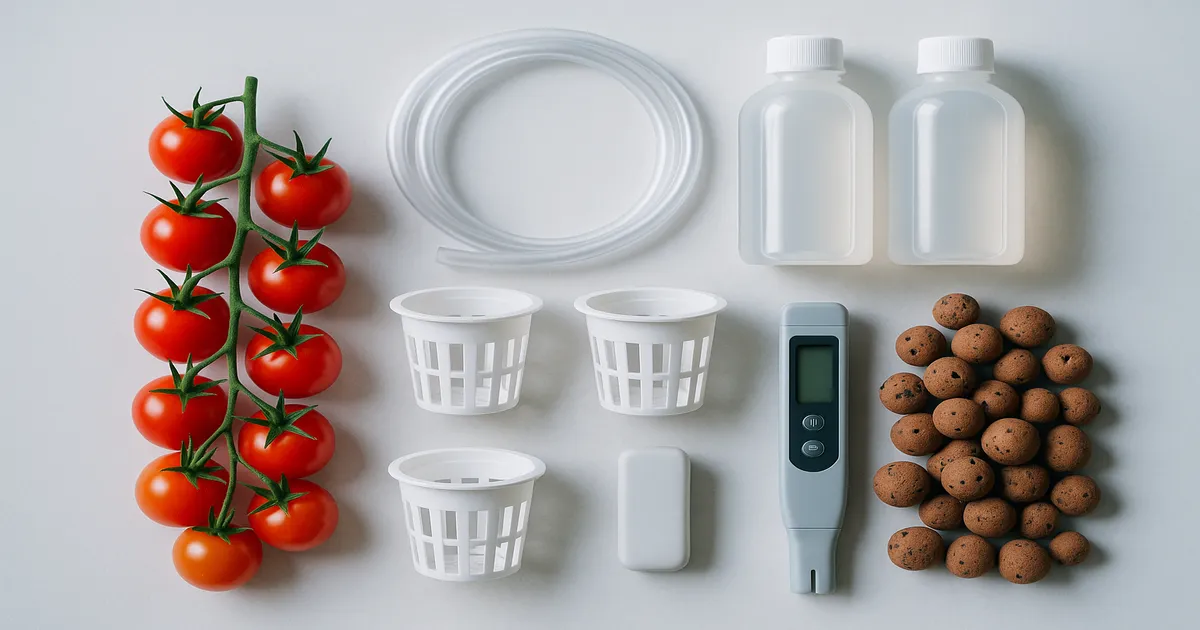
Equipment You Will Need
- Food-grade reservoir (5–20 gallon depending on plant count)
- Net pots (2–3 inch for DWC) (Bootstrap Farmer 3-Inch Net Cups)
- Growing medium: hydroton clay pebbles or rockwool cubes
- Air pump and airstone with tubing (for DWC)
- pH meter and EC/TDS meter
- pH Up and pH Down solutions
- Hydroponic nutrients (see next section)
- LED grow light sized for your space
Choosing the Right Cherry Tomato Variety
Go with an indeterminate variety for continuous production. Good options include Sungold, Sweet Million, Black Cherry, and Juliet. Determinate varieties stop growing and fruit all at once — fine for outdoor gardens, but not ideal when you want months of indoor harvests.
Starting from Seed vs. Transplanting Seedlings
Starting from seed gives you more control and a wider variety selection. Germinate seeds in rockwool cubes or rapid rooters — keep them moist and warm (75–80°F / 24–27°C) until the tap root emerges from the bottom, usually within 5–7 days. Then move the cube into your net pot and start with a dilute nutrient solution (400–600 PPM / 0.8–1.2 EC).
Transplanting nursery seedlings is faster but limits variety choice and risks introducing pests.
Building Your Reservoir and Net Pot Setup
- Cut holes in the reservoir lid sized to fit your net pots snugly.
- Fill net pots with rinsed hydroton or place your germinated rockwool cube inside.
- Connect the airstone to the air pump via tubing and place it at the bottom of the reservoir.
- Fill the reservoir so the water level just touches the bottom of the net pot — roots will grow down into the solution.
- Cover any exposed reservoir surface to block light and prevent algae.
Mixing Your First Nutrient Solution
Using the Masterblend 4-18-38 formula per gallon of water:
- Add 2.4g Calcium Nitrate and stir until dissolved.
- Add 2.4g Masterblend 4-18-38 and stir.
- Add 1.2g Magnesium Sulfate (Epsom salt) and stir.
- Check EC (target: 700–900 PPM / 1.4–1.8 EC for seedlings/early veg).
- Adjust pH to 5.8–6.3 using pH Up or pH Down.
Always add nutrients before adjusting pH — adding pH adjuster first throws off your readings.
Nutrient Requirements for Hydroponic Cherry Tomatoes
NPK Ratios at Each Growth Stage
During vegetative growth, cherry tomatoes need higher nitrogen to build leaves and stems — aim for roughly a 3-1-2 NPK ratio. Once flowering begins, shift to lower nitrogen and higher potassium (closer to 1-1-3). Potassium drives fruit size, sugar content, and disease resistance, and demand spikes sharply at fruit set.
Calcium and Magnesium: The Most Critical Secondary Nutrients
Calcium is the single most important secondary nutrient for tomatoes. Deficiency causes Blossom End Rot — the dark, sunken patch on the bottom of fruit that ruins an otherwise healthy harvest. Target 150–200 PPM calcium in your solution, using calcium nitrate as the primary source.
Magnesium (target: 50–75 PPM) is the central atom in chlorophyll. Without enough of it, leaves develop interveinal chlorosis — the tissue between veins turns yellow while veins stay green. Epsom salt at 1–2 tsp per gallon corrects or prevents deficiency.
Micronutrients That Matter Most
| Micronutrient | Target PPM | Key Role |
|---|---|---|
| Iron (Fe) | 2–5 ppm | Chlorophyll synthesis |
| Boron (B) | 0.3–0.5 ppm | Pollen viability, fruit set |
| Manganese (Mn) | 0.5–1 ppm | Photosynthesis |
| Zinc (Zn) | 0.05–0.3 ppm | Growth hormones |
Iron and boron are the two most commonly deficient. Always use chelated iron (Fe-EDTA or Fe-DTPA) — standard iron sulfate becomes unavailable above pH 6.5. Boron deficiency causes hollow fruit and poor pollination, so don’t skip it.
Beginner Nutrient Option: General Hydroponics Flora Series
The Flora Series three-part system is widely available and beginner-friendly:
- Seedling: FloraGro 2 tsp + FloraMicro 1 tsp + FloraBloom 1 tsp per gallon
- Vegetative: FloraGro 3 tsp + FloraMicro 2 tsp + FloraBloom 1 tsp per gallon
- Fruiting: FloraGro 1 tsp + FloraMicro 2 tsp + FloraBloom 3 tsp per gallon
DIY Option: The Masterblend 4-18-38 Formula (Fruiting Stage)
Scale the Masterblend recipe up for peak fruiting:
- Masterblend 4-18-38: 4.8g per gallon
- Calcium Nitrate: 4.8g per gallon
- Magnesium Sulfate: 2.4g per gallon
This produces approximately 1,400–1,600 PPM (2.8–3.2 EC) — right in the sweet spot for heavy fruiting.
EC and PPM Targets by Growth Stage
| Stage | PPM | EC |
|---|---|---|
| Seedling | 400–600 | 0.8–1.2 |
| Early Vegetative | 800–1,000 | 1.6–2.0 |
| Late Veg / Pre-Flower | 1,000–1,400 | 2.0–2.8 |
| Flowering | 1,200–1,600 | 2.4–3.2 |
| Fruiting / Ripening | 1,400–2,000 | 2.8–4.0 |
Increase EC gradually — no more than 200–300 PPM (0.4–0.6 EC) per week. Jumping EC too fast stresses roots and causes tip burn.
Managing pH and EC
Why pH Range Matters So Much
pH 5.8–6.3 is the window where all macro and micronutrients are simultaneously available to the plant. Outside this range — even if your nutrient concentrations are perfect — the plant physically cannot absorb certain elements. This is called nutrient lockout, and it’s one of the most common reasons hydroponic plants look deficient despite being in a well-mixed solution.
How to Test and Adjust pH
A digital pH meter is worth every penny. The Apera PH20 and Bluelab pH Pen are both reliable options. Calibrate with 4.0 and 7.0 buffer solutions every 1–2 weeks.
To raise pH: add pH Up (potassium hydroxide-based) in 0.5–1 mL increments per gallon, stir, wait 15 minutes, retest. To lower pH: use pH Down (phosphoric acid-based) the same way. Never dump in large amounts at once — pH adjustment is a slow, deliberate process.
EC vs. PPM: Understanding the Conversion
EC and PPM measure the same thing — dissolved solids concentration — but use different scales. Two conversion factors cause most of the confusion:
- 0.5 conversion (500 scale): Used by General Hydroponics and most US hobby meters
- 0.7 conversion (700 scale): Used by Bluelab and many European meters
So 1.0 EC = 500 PPM on the 500 scale, or 700 PPM on the 700 scale. Know which scale your meter uses before comparing readings with anyone else’s numbers.
Daily and Weekly Monitoring Routines
- Daily: Check pH and top off with plain pH-adjusted water if EC has risen (plants drink water faster than nutrients)
- Every 1–2 days: Check EC
- Every 7–14 days: Full reservoir change to prevent salt buildup and nutrient imbalances
Common pH Fluctuations and How to Fix Them
| Fluctuation | Likely Cause | Fix |
|---|---|---|
| pH rises steadily | High plant uptake of anions, alkaline tap water | Add pH Down; consider RO water |
| pH drops rapidly | Cation uptake, microbial activity | Add pH Up; inspect roots |
| pH swings wildly | Very low EC, insufficient buffering | Increase nutrient concentration slightly |
| Sudden pH crash | Algae bloom or root rot | Treat root zone, change reservoir |
RO (reverse osmosis) water at 0 PPM is the ideal starting point. If you’re using tap water, test its baseline EC first — anything above 200–300 PPM (0.4–0.6 EC) will eat into your nutrient headroom.
Lighting Your Hydroponic Cherry Tomatoes Indoors
Light Spectrum: What Blue, Red, and Full-Spectrum Mean for Tomatoes
Blue light (400–500 nm) drives compact vegetative growth and strong stems. Red light (600–700 nm) is the engine of photosynthesis and is critical for flowering and fruiting. Far-red light (700–750 nm) helps light penetrate deeper into the canopy — useful for tall, bushy indeterminate plants. Modern full-spectrum LEDs with Samsung LM301B diodes cover all of this efficiently.
How Much Light Do Cherry Tomatoes Need?
| Stage | PPFD Target | DLI Target |
|---|---|---|
| Seedling | 100–200 µmol/m²/s | 8–12 mol/m²/day |
| Vegetative | 300–500 µmol/m²/s | 15–25 mol/m²/day |
| Flowering | 500–700 µmol/m²/s | 25–35 mol/m²/day |
| Fruiting | 600–900 µmol/m²/s | 30–45 mol/m²/day |
DLI (Daily Light Integral) = PPFD × hours of light × 0.0036. Falling below 20 mol/m²/day is the number one cause of poor fruiting in indoor tomatoes. Don’t underlight these plants.
Photoperiod: 16/8 vs. 18/6
Cherry tomatoes are day-neutral — they don’t need a specific light cycle to trigger flowering. 16 hours on / 8 hours off works well throughout the plant’s life. Some growers push to 18/6 during peak fruiting to maximize DLI. Never run 24/0 — tomatoes need a dark period for proper metabolic function, and continuous light causes leaf curl and other physiological disorders.
Recommended LED Grow Lights
For 1–2 plants in a 2×2 ft space, the Spider Farmer SF-1000 and Mars Hydro TS-1000 are both solid options under $150, using full-spectrum Samsung diodes. The Viparspectra P1000 is a budget entry point for single-plant setups.
For 3–4 plants in a 3×3 ft space, the Spider Farmer SF-2000 or AC Infinity IONBOARD S33 offer excellent performance with dimming control. For serious setups, the Gavita Pro 1700e LED covers a 4×4 ft canopy at commercial-grade intensity.
Add side-mounted LED strips to illuminate lower fruiting trusses that an overhead light can’t reach effectively. If you’re running lights above 700 µmol/m²/s, CO2 supplementation to 1,000–1,500 ppm becomes worthwhile — below that threshold, ambient CO2 is usually sufficient.
Plant Care, Training, and Maximising Yield
Supporting and Trellising Vining Plants
Indeterminate cherry tomatoes will grow 6–10 feet tall if you let them. Use tomato clips and vertical string attached to an overhead support, or a simple stake system. As the plant grows, wind the main stem around the string or clip it every 6–8 inches. Don’t let the plant flop — unsupported stems break and reduce airflow around the canopy.
Pruning and Suckering for Better Fruit Production
Suckers are the shoots that grow in the “V” between the main stem and a branch. Left unchecked, they become full branches and the plant turns into a sprawling mess with more foliage than fruit. Pinch suckers off when they’re small — under 2 inches — using clean fingers or scissors. Keep one or two main stems and let the plant’s energy go into fruit production rather than leaf mass.
Pollination Indoors: How to Hand-Pollinate
Without wind or bees, you need to move pollen yourself. The easiest method is running a small oscillating fan near the plants for a few hours each day — the vibration shakes pollen loose just as wind would outdoors. Alternatively, touch a battery-powered toothbrush or electric pollinator wand to the back of each open flower cluster for 2–3 seconds. Do this daily when flowers are open, ideally in the late morning when pollen is most viable. Poor pollination is one of the most common reasons indoor tomatoes flower but never set fruit.
Frequently Asked Questions
Can you really grow cherry tomatoes in just water? Yes — that’s exactly what hydroponics is. The water is enriched with a balanced nutrient solution, so the plant gets everything it would normally get from soil, delivered directly to the roots. The key is keeping pH between 5.8–6.3 and EC at the right level for each growth stage.
How long does it take to get fruit from a hydroponic cherry tomato plant? From seed, expect your first ripe fruit in 60–80 days. Hydroponics typically accelerates this by 30–50% compared to soil growing, mainly because the plant never has to search for nutrients.
Do I need a grow tent to grow cherry tomatoes in water indoors? Not strictly, but a grow tent makes light management, humidity control, and pest prevention much easier. A 2×4 ft tent is enough for two plants. If you’re growing in a dedicated room with good light containment, you can skip the tent.
Why are my hydroponic tomato leaves turning yellow? The most common causes are magnesium deficiency (interveinal yellowing on older leaves), iron deficiency (yellowing on new growth), or pH drift outside the 5.8–6.3 range causing nutrient lockout. Check pH first — it’s the root cause of most apparent deficiency symptoms.
How often should I change the reservoir water? Every 7–14 days for a full reservoir change. Between changes, top off with plain pH-adjusted water when the level drops, and check EC daily. Letting the reservoir go too long without a change leads to salt buildup, pH instability, and increased risk of root disease.