Quick Answer: Before you increase EC, always confirm your pH is in the correct range (5.8–6.2) — lockout symptoms look identical to low-EC symptoms. If pH is fine and your EC has dropped below the target for your growth stage, raise it gradually by no more than 0.2–0.3 EC (100–150 PPM) at a time, waiting 24–48 hours between adjustments.
Deciding whether you should increase EC is one of the most common questions in hydroponics — and the answer is almost never a simple yes or no. EC (electrical conductivity) is a moving target that shifts with plant demand, temperature, light intensity, and even the time of day. Getting it right means reading both your meter and your plants together.
Should You Increase EC? Start Here
The Short Answer
Increase EC when your nutrient solution has dropped below the target range for your current growth stage, or when plants are entering a more demanding phase and their appetite has genuinely increased. Don’t touch it until you’ve confirmed pH is stable.
When Increasing EC Is the Right Move
- EC has dropped below the target range for your growth stage
- Plants are transitioning from vegetative to flowering or fruiting
- Growth is slower than expected despite good light, temperature, and CO₂
- Leaves show mild, generalised yellowing (not stage-specific senescence)
- You’ve been topping off with plain water repeatedly and EC keeps falling
- You’re running high-intensity lighting (above 600 PPFD) or CO₂ enrichment above 800 PPM
When You Should NOT Increase EC
- Leaf tips are brown or crispy — that’s already a toxicity signal
- Plants are wilting despite wet roots (osmotic stress, not hunger)
- You haven’t checked pH recently — lockout looks exactly like deficiency
- You’re in the final 1–2 weeks before harvest
- You just transplanted — give roots 3–5 days to settle first
- Seedlings or clones are still establishing
- Root zone temperature is above 72°F (22°C)
What EC Actually Measures
EC vs PPM: Understanding the Difference
EC (measured in mS/cm) reflects the total dissolved salts in your nutrient solution — the more ions present, the more electricity the water conducts. PPM (parts per million) is just EC expressed as a weight-based concentration, and here’s where growers trip up: two different conversion scales are in common use.
- 500 scale (Bluelab, Hanna): EC × 500 = PPM
- 700 scale (Milwaukee, some Truncheon modes): EC × 700 = PPM
A reading of 1.6 EC is either 800 PPM or 1,120 PPM depending on your meter. Always check which scale yours uses — mixing scales between growers or guides causes real confusion.
Why EC Changes Without Any Grower Input
In warm, high-light conditions, plants pull water through their roots much faster than they absorb nutrients. The nutrients stay behind in the reservoir while the water volume drops — so EC rises passively, even though you haven’t added anything. This is normal, but it’s a signal to top off with plain pH-adjusted water, not more nutrients.
One important caveat: EC doesn’t tell you which nutrients are present, only how much dissolved salt is there in total. A solution contaminated with sodium reads high EC but delivers almost no plant nutrition. That’s why starting with reverse osmosis (RO) water — which sits at 0–50 PPM (0.0–0.1 EC) — gives you a clean baseline where every point of EC you add is actually nutrients, not background mineral noise from tap water (which can run 100–400 PPM / 0.2–0.8 EC before you add a single nutrient).
Organic nutrient solutions are a special case. Non-ionic organic compounds don’t register on EC meters, so actual nutrient availability is higher than the reading suggests. If you run organics, treat EC as a rough guide rather than a precise target.
EC Targets by Growth Stage and Crop
Universal EC Ranges from Seedling to Harvest
| Growth Stage | PPM (EC) | Notes |
|---|---|---|
| Seedlings / Clones | 100–350 PPM (0.2–0.7 EC) | Roots too sensitive for full strength |
| Early Vegetative | 400–600 PPM (0.8–1.2 EC) | Ramp up as root mass develops |
| Mid-Late Vegetative | 600–900 PPM (1.2–1.8 EC) | Nitrogen demand peaks here |
| Early Flowering / Transition | 800–1,100 PPM (1.6–2.2 EC) | Shift toward P/K; ease N down |
| Peak Flowering / Fruiting | 1,000–1,600 PPM (2.0–3.2 EC) | Highest demand period |
| Late Flowering / Ripening | 600–900 PPM (1.2–1.8 EC) | Begin reducing to clear residual salts |
| Final Flush | 0–400 PPM (0.0–0.8 EC) | Plain water or very dilute solution |
Crop-Specific EC Targets
| Crop | Vegetative PPM (EC) | Fruiting/Flowering PPM (EC) | Ideal pH |
|---|---|---|---|
| Lettuce / Leafy Greens | 560–840 PPM (1.1–1.7 EC) | N/A | 5.5–6.5 |
| Basil / Herbs | 700–1,120 PPM (1.4–2.2 EC) | 840–1,260 PPM (1.7–2.5 EC) | 5.5–6.5 |
| Tomatoes | 840–1,260 PPM (1.7–2.5 EC) | 1,400–2,800 PPM (2.8–5.6 EC) | 5.8–6.3 |
| Cucumbers | 1,050–1,750 PPM (2.1–3.5 EC) | 1,400–2,100 PPM (2.8–4.2 EC) | 5.5–6.0 |
| Peppers | 1,050–1,400 PPM (2.1–2.8 EC) | 1,400–2,100 PPM (2.8–4.2 EC) | 5.8–6.3 |
| Strawberries | 700–1,050 PPM (1.4–2.1 EC) | 1,050–1,400 PPM (2.1–2.8 EC) | 5.8–6.2 |
| Cannabis (veg) | 600–900 PPM (1.2–1.8 EC) | — | 5.8–6.2 |
| Cannabis (flower) | — | 1,000–1,600 PPM (2.0–3.2 EC) | 5.8–6.2 |
| Microgreens | 350–700 PPM (0.7–1.4 EC) | N/A | 5.8–6.5 |
| Spinach | 1,260–1,610 PPM (2.5–3.2 EC) | N/A | 6.0–7.0 |
A note on tomatoes: The upper fruiting range of 2,800 PPM (5.6 EC) is achievable but represents a stress-ripening technique used in commercial production to concentrate sugars and flavour. For home growers, staying in the 1,400–2,100 PPM (2.8–4.2 EC) range during peak fruit set is more practical and forgiving.
How Light Intensity and CO₂ Affect EC Requirements
More photons mean more photosynthesis, which means faster nutrient uptake. Plants under 600+ PPFD consume nutrients significantly faster than plants under dim fluorescents. Add CO₂ enrichment at 1,000–1,500 PPM and that demand can push optimal EC targets 20–40% higher than older HID-era baselines. If you’ve recently upgraded to modern LEDs, your old EC targets may now be too conservative.
How to Increase EC Safely
How Much to Raise EC at a Time
Never increase EC by more than 0.2–0.3 EC (100–150 PPM) in a single adjustment. Wait 24–48 hours before measuring again and deciding whether another bump is needed. Chasing a target EC by dumping nutrients all at once is one of the fastest ways to cause salt stress.
Step-by-Step: Adding Nutrients Without Overshooting
- Measure current EC and note your target.
- Calculate the gap — if you’re at 1.2 EC and want 1.6 EC, plan two incremental increases, not one.
- Pre-mix your concentrated nutrient solution in a small bucket of water first. A three-part base like General Hydroponics Flora Series makes it easy to dial in ratios before adding to the reservoir.
- Add the pre-mix to the reservoir slowly while stirring, then re-measure.
- Never raise EC by letting water evaporate — that concentrates all salts, including any sodium or chlorine from tap water.
Reservoir Top-Off Protocol to Prevent EC Creep
EC creep — where EC slowly climbs between reservoir changes — is almost always caused by topping off with nutrient solution when plain water is what’s needed.
- Reservoir drops 10–20%: Top off with pH-adjusted plain water only
- Reservoir drops 30–40%: Top off with half-strength nutrient solution
- Every 7–14 days: Full reservoir change in recirculating systems
- Never let volume drop below 50% before topping off — the more concentrated the reservoir becomes, the harder it is to correct
EC Management Across Different Hydroponic Systems
High-Sensitivity Systems: NFT, Aeroponics, and DWC
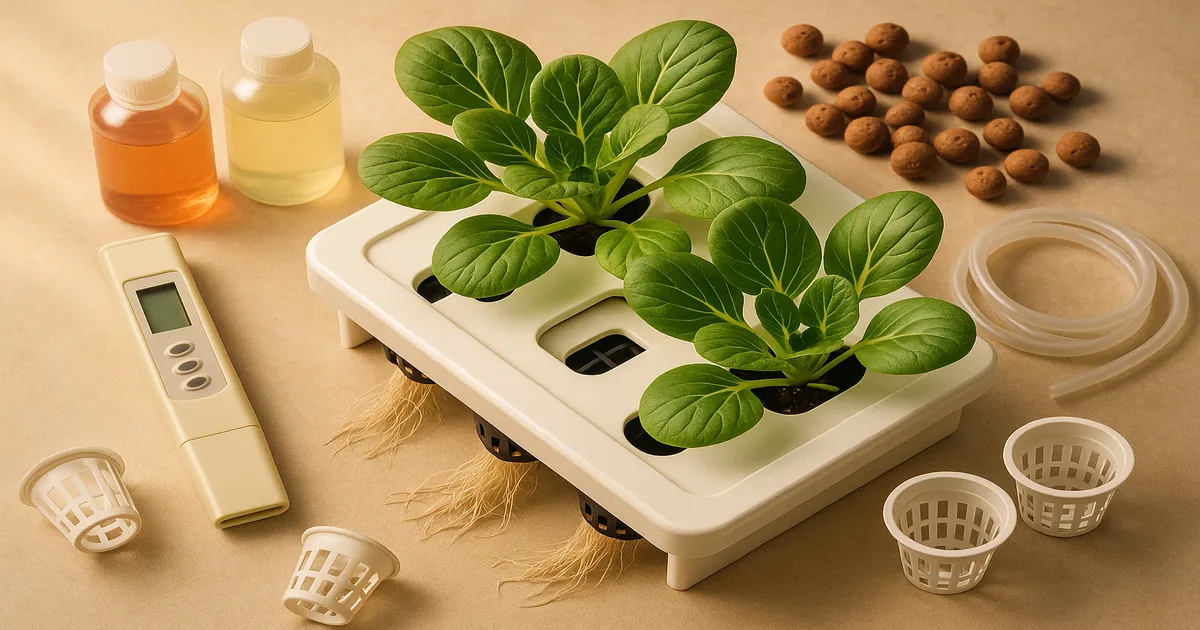
NFT and aeroponic systems leave roots directly exposed to the nutrient solution with almost no buffering medium to absorb or dilute an EC spike. An hour of elevated EC in an aeroponic system can cause visible root damage. Check these systems twice daily and keep a close eye on reservoir temperature — roots above 72°F (22°C) are already stressed before EC even becomes a factor.
DWC offers slightly more buffer due to reservoir volume, but still warrants daily monitoring. A larger reservoir dilutes swings better than a small one, so if you’re running DWC, bigger is more forgiving.
Medium-Sensitivity Systems: Drip, Ebb & Flow, and Coco Coir
Drip and ebb-and-flow systems can accumulate salts in the growing medium between irrigation cycles. The critical metric here is runoff EC:
- Runoff EC 10–20% above input EC = healthy, no action needed
- Runoff EC 50%+ above input EC = salt buildup; flush the medium immediately
Coco coir buffers somewhat against swings, but it also holds calcium and magnesium ions through cation exchange — meaning coco growers typically need to run slightly elevated Ca/Mg to compensate.
Monitoring Frequency by System Type
| System | Recommended Check Frequency |
|---|---|
| NFT / Aeroponics | 2× daily |
| DWC / Kratky | Daily |
| Drip / Ebb & Flow | Daily + runoff EC check |
| Coco Coir | Daily + runoff EC check |
| Wicking | Every 2–3 days |
pH and EC: Why You Must Check Both Together
How pH Lockout Mimics Low EC
This is the single most important concept in this guide. A plant showing yellowing leaves and slow growth when EC is already at 1,600 PPM (3.2 EC) probably doesn’t need more nutrients — it needs pH correction. Raising EC into an already locked-out system just builds up unused salts and makes the problem worse.
- pH below 5.5 → Calcium, magnesium, and phosphorus become unavailable
- pH above 6.5 → Iron, manganese, zinc, and boron become unavailable
Both scenarios produce deficiency symptoms that look identical to low EC on a visual inspection. Always check pH first.
Most hydroponic crops thrive at pH 5.8–6.2, with the full acceptable range being 5.5–6.5. Keeping pH near the middle of that range ensures the broadest spectrum of nutrient availability.
Adjusting pH Without Destabilising EC
Use phosphoric acid to lower pH and potassium hydroxide (KOH) or potassium bicarbonate to raise it. (General Hydroponics pH Down) Avoid sodium hydroxide — it adds sodium ions that raise EC without adding any plant nutrition and can accumulate to toxic levels over time.
A daily pH drift of 0.2–0.5 units is completely normal in active systems. Upward drift means plants are consuming acidic ions (NH₄⁺, H₂PO₄⁻); downward drift means they’re pulling nitrate and potassium. Consistent drift in one direction can actually tell you something useful about what your plants are eating.
Troubleshooting: Reading Plant Signals to Guide EC Decisions
Signs Your EC Is Too Low
- Slow, stunted growth despite adequate light
- Generalised pale or yellowing leaves across the whole plant (not just lower or upper leaves)
- Reduced vigour, thin stems, small leaves
- EC reading consistently below the target range for your growth stage
Signs Your EC Is Too High
- Brown or crispy leaf tips — the most common early signal
- Wilting even when the growing medium is wet (osmotic stress prevents water uptake)
- Stunted root growth, brown or slimy root tips
- Curling or cupping leaves in severe cases
Diagnosing Specific Deficiencies vs General EC Problems
General EC problems show up across the whole plant. Specific deficiencies tend to be localised — old leaves vs new growth, interveinal patterns, or affecting only certain tissue.
| Nutrient | Deficiency Sign |
|---|---|
| Calcium (Ca) | Tip burn, distorted new growth, blossom end rot |
| Magnesium (Mg) | Interveinal chlorosis on older leaves |
| Iron (Fe) | Interveinal chlorosis on new growth |
| Sulfur (S) | Yellowing of new growth |
| Manganese (Mn) | Mottled yellowing, stunted growth |
| Zinc (Zn) | Small leaves, shortened internodes |
| Boron (B) | Distorted growing tips, hollow stems |
| Copper (Cu) | Blue-green tint, wilting despite adequate water |
| Molybdenum (Mo) | Marginal scorch, cupped leaves |
Visual diagnosis is useful for narrowing down the problem, but always confirm with a calibrated meter before making any changes.
Tools for Accurate EC Monitoring
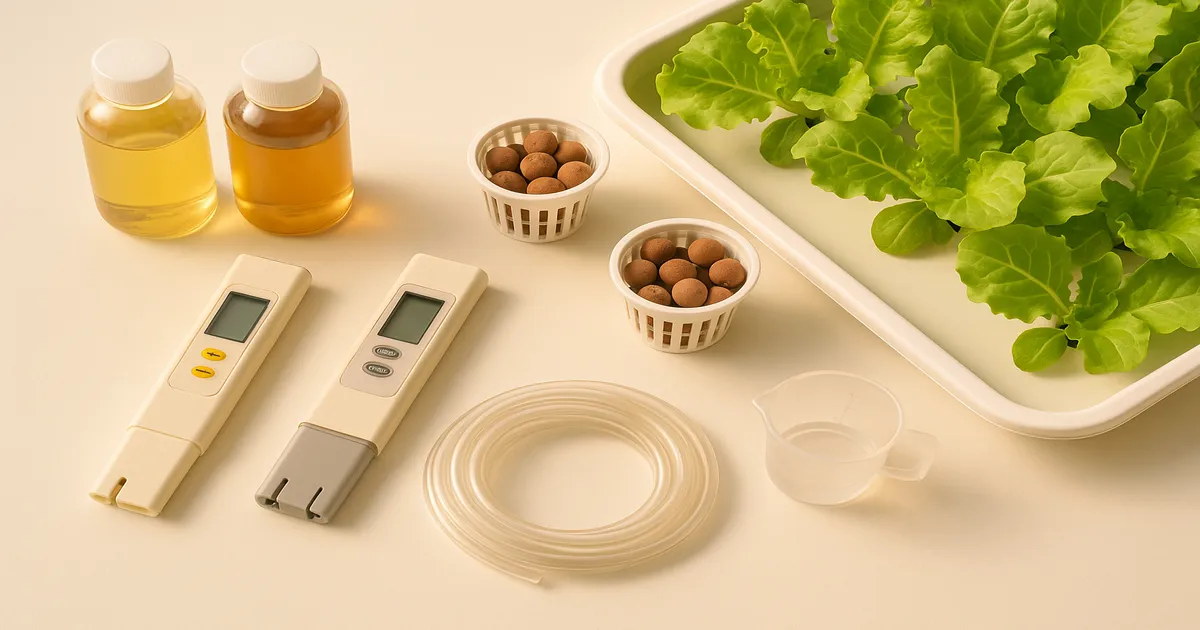
A quality handheld meter is all most home and small commercial growers need. Reliable options include the Bluelab Truncheon , the Apera PC60 , and the Milwaukee MW302 . Calibrate monthly using a 1.41 mS/cm or 2.77 mS/cm standard solution, and always rinse the probe with distilled water between readings to avoid cross-contamination.
If you’re running a larger system or want continuous oversight, inline monitors eliminate the need for manual testing. The Bluelab Guardian Monitor offers continuous readings with alerts when EC drifts outside your set range — worth the investment if you’re running an automated or high-value system.
If you’ve been chasing a deficiency for weeks without resolution — pH is correct, EC is on target, but plants still look off — leaf tissue testing is the next step. At $30–$80 per sample, it’s the most accurate way to see exactly what’s inside the plant rather than just what’s in the water. Most agricultural labs turn results around in 5–10 days and provide element-by-element breakdowns that no EC meter can replicate.
Frequently Asked Questions
Should I increase EC or check pH first?
Always check pH first. Deficiency symptoms caused by pH lockout look identical to low-EC symptoms, and raising EC into a locked-out system just piles on more salt without solving anything. Confirm pH is in the 5.8–6.2 range before touching your nutrient concentration.
How much should I increase EC at a time?
No more than 0.2–0.3 EC (100–150 PPM) per adjustment. After each increase, wait 24–48 hours and observe how plants respond before deciding whether another bump is needed. Jumping straight to your target EC in one step risks osmotic stress, especially in sensitive systems like NFT or aeroponics.
Why is my EC rising without me adding nutrients?
In warm or high-light conditions, plants absorb water much faster than they absorb nutrients. The water volume in your reservoir drops while the dissolved salts remain, so EC climbs passively. Top off with plain pH-adjusted water — not more nutrient solution — to bring EC back toward your target.
What happens if EC is too low in hydroponics?
Plants in a low-EC solution are essentially on a starvation diet. They’ll show slow growth, thin stems, and generalised yellowing across the whole plant. Over time this leads to reduced yields and increased susceptibility to pests and disease. Fix it with a gradual EC increase — no more than 0.2–0.3 EC (100–150 PPM) at a time — after confirming pH is correct.
What is the ideal EC for flowering and fruiting plants?
Most flowering and fruiting crops perform best at 1,000–1,600 PPM (2.0–3.2 EC) during peak production, though this varies by crop. Tomatoes can push higher — up to 2,800 PPM (5.6 EC) — but that upper range is a commercial stress-ripening technique, not a general recommendation. For most home growers, staying in the 1,400–2,100 PPM (2.8–4.2 EC) range during peak fruit set delivers better results with less risk.