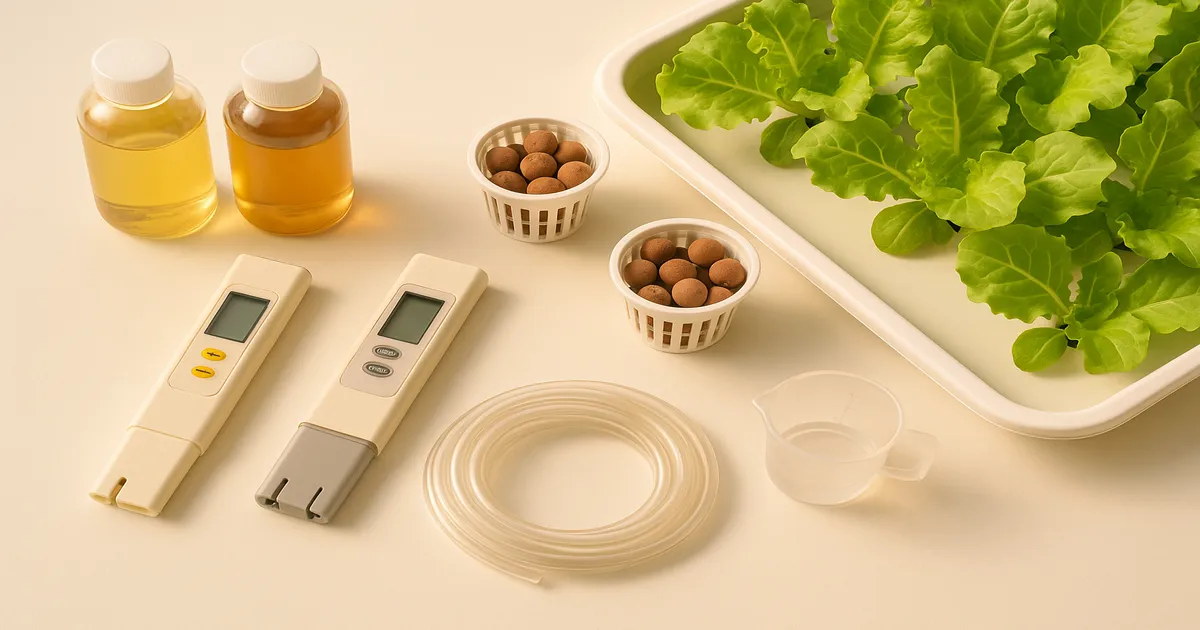
Quick Answer: There’s no single best PPM for hydroponics — the ideal range depends on your crop, growth stage, and system type. Most plants thrive somewhere between 500–1600 PPM (1.0–3.2 EC), with seedlings starting low around 100–250 PPM (0.2–0.5 EC) and heavy-feeding fruiting plants pushing toward the top. Use the charts below to dial in your specific situation.
If you’ve ever stared at your TDS meter wondering whether your reading is too high, too low, or just right, you’re not alone. Figuring out what is the best PPM for hydroponics is one of the first real skills you develop as a grower — and once it clicks, managing your system becomes dramatically easier. This guide covers quick-reference charts, step-by-step mixing instructions, and troubleshooting tips for the most common PPM problems.
What Is the Best PPM for Hydroponics? Quick-Reference Charts
General PPM Ranges by Crop and Stage
Here’s where most crops land across their lifecycle. Use this as your starting point, then fine-tune based on how your plants respond.
| Plant / Stage | PPM Range | EC Range |
|---|---|---|
| Seedlings / Clones | 100–250 PPM | 0.2–0.5 EC |
| Leafy greens (lettuce, spinach) | 560–840 PPM | 1.1–1.7 EC |
| Herbs (basil, cilantro, mint) | 700–1120 PPM | 1.4–2.2 EC |
| Tomatoes — vegetative | 1050–1400 PPM | 2.1–2.8 EC |
| Tomatoes — fruiting | 1400–2100 PPM | 2.8–4.2 EC |
| Cucumbers | 1190–1750 PPM | 2.4–3.5 EC |
| Peppers | 1050–1540 PPM | 2.1–3.1 EC |
| Strawberries | 980–1260 PPM | 1.96–2.5 EC |
| Cannabis — vegetative | 400–800 PPM | 0.8–1.6 EC |
| Cannabis — flowering | 800–1200 PPM | 1.6–2.4 EC |
| Microgreens | 500–800 PPM | 1.0–1.6 EC |
| Orchids / Flowers | 700–1050 PPM | 1.4–2.1 EC |
PPM vs. EC: Which Scale Is Your Meter Using?
PPM and EC measure the same thing — nutrient concentration — just in different units. EC (electrical conductivity) is the raw measurement; PPM is derived from it using a conversion factor. The catch is that not all meters use the same factor.
- 500 scale: 1.0 EC = 500 PPM (used by most North American meters, including Bluelab, Hanna, and most consumer TDS pens)
- 700 scale: 1.0 EC = 700 PPM (common on European meters)
Always check your meter’s manual. A reading of 1000 PPM on a 500-scale meter equals 2.0 EC, but on a 700-scale meter it equals only 1.43 EC — a meaningful difference when you’re trying to hit a target range.
What Is PPM and Why Does It Matter?
PPM stands for “parts per million” and is used interchangeably with TDS (total dissolved solids). When you dissolve nutrients into water, you’re adding measurable particles. PPM tells you how many of those particles exist per million parts of water — think of it as the density of food in your solution.
Too little and your plants starve. Too much and you cause osmotic stress, which pulls water out of roots rather than letting them absorb it. That’s the hydroponic equivalent of overwatering, and it looks almost identical.
PPM and pH: The Two Vital Signs of Any Hydroponic System
PPM tells you how much nutrient is in the water. pH tells you how much of it your plants can actually use. A perfectly mixed 1200 PPM solution at pH 7.5 can still starve your plants because most micronutrients become chemically unavailable above pH 6.5 — this is called nutrient lockout.
Always read PPM and pH together. One number without the other is only half the picture.
Best PPM for Hydroponics by Plant Type and Growth Stage
Seedlings and Clones: Start Low
Young plants have tiny, undeveloped root systems that can’t handle high nutrient loads. Start at 100–250 PPM (0.2–0.5 EC) and ramp up gradually over the first two weeks. The most common beginner mistake is mixing a full-strength solution for seedlings — the brown, crispy leaf tips that follow are a classic sign of nutrient burn.
Leafy Greens and Herbs
Lettuce, spinach, and similar leafy greens are light feeders. They’re comfortable at 560–840 PPM (1.1–1.7 EC) for their entire lifecycle, which makes them ideal beginner crops. Herbs like basil and mint are slightly hungrier, sitting in the 700–1120 PPM (1.4–2.2 EC) range. Both tolerate a wide pH window, which means fewer corrections and a more forgiving system overall.
Fruiting Vegetables: Tomatoes, Cucumbers, and Peppers
Fruiting plants are heavy feeders that need a progressive PPM ramp-up as they grow:
- Early vegetative: 400–600 PPM (0.8–1.2 EC)
- Late vegetative: 600–900 PPM (1.2–1.8 EC)
- Early fruiting: 900–1200 PPM (1.8–2.4 EC)
- Peak fruiting: 1200–1600 PPM (2.4–3.2 EC)
- Flush week: 0–400 PPM (0.0–0.8 EC) — plain or lightly amended water to clear residual salts before harvest
Tomatoes can push to 2100 PPM (4.2 EC) during peak fruit load, but only if your plants are healthy, your root zone is robust, and your pH is dialed in. Don’t chase that ceiling until you’ve got a few grows under your belt.
Cannabis: Vegetative vs. Flowering PPM
Cannabis runs lower than most fruiting plants, especially in veg. During vegetative growth, stay in the 400–800 PPM (0.8–1.6 EC) range. Flowering pushes that to 800–1200 PPM (1.6–2.4 EC), with a flush in the final one to two weeks before harvest.
Specialty Crops: Strawberries, Microgreens, and Orchids
Strawberries prefer 980–1260 PPM (1.96–2.5 EC) with a higher calcium demand — Cal-Mag supplementation is worth adding here. Microgreens are harvested so early that 500–800 PPM (1.0–1.6 EC) is more than sufficient. Orchids are sensitive; keep them at 700–1050 PPM (1.4–2.1 EC) and avoid sudden concentration swings.
Adjusting PPM for Different Hydroponic Systems
Deep Water Culture (DWC)
DWC puts roots in direct, constant contact with your nutrient solution, so plants can shift PPM levels fast — especially in warm weather. Check pH and PPM daily, and twice daily during summer or under high-intensity lights. A 100–200 PPM swing overnight isn’t unusual; it tells you a lot about how hard your plants are working.
NFT and Aeroponics
Aeroponic systems mist roots with nutrient solution, making them highly sensitive to salt buildup. Stick to 600–1000 PPM (1.2–2.0 EC) to prevent nozzle clogging and root tip burn. NFT channels are prone to rapid evaporation, which concentrates nutrients faster than you’d expect — check daily and keep your channel length and flow rate consistent.
Ebb and Flow and Drip Systems
These systems offer more stability because there’s time between flood cycles for the solution to equilibrate. Monitor runoff PPM from drip systems — if runoff is significantly higher than your input, salts are accumulating in the root zone. Flush with plain pH-adjusted water if runoff PPM exceeds your input by more than 200–300 PPM.
Kratky and Wick Systems
Kratky has no recirculation, so as plants drink water the remaining solution gets more concentrated. Check PPM every 3–5 days and top off with plain water when PPM climbs, or with dilute solution when it drops. Wick systems work best with low-PPM crops (herbs, lettuce) at 500–800 PPM (1.0–1.6 EC) — the passive wicking action can’t keep up with high-salt solutions.
Mixing the Perfect Nutrient Solution
Start With the Right Base Water
Your starting water matters more than most beginners realize. Tap water above 200 PPM already contains dissolved minerals that eat into your usable nutrient headroom. Reverse osmosis (RO) water starts near 0 PPM, giving you full control. If tap water is all you have, test it first and subtract that baseline from your target PPM.
Mixing Rules to Prevent Nutrient Lockout
- Always add nutrients to water, never the other way around
- Add Cal-Mag first, before any other nutrients, to prevent precipitation
- Mix each component fully before adding the next
- Check and adjust pH after mixing — every nutrient addition shifts it
Sample Recipes for Common Crops
Basic Lettuce/Herb Formula (per 10 gallons / 38 L) — General Hydroponics Flora Series:
- FloraMicro: 10 ml
- FloraGro: 5 ml
- FloraBloom: 5 ml
- Target: 700–900 PPM (1.4–1.8 EC), pH 5.8–6.2
Tomato Fruiting Formula (per 10 gallons / 38 L):
- FloraMicro: 15 ml
- FloraGro: 10 ml
- FloraBloom: 20 ml
- Cal-Mag: 10 ml
- Target: 1400–1800 PPM (2.8–3.6 EC), pH 5.8–6.3
Note: Always add FloraMicro first when using the Flora Series — adding FloraGro or FloraBloom first can cause precipitation.
NPK Ratios by Growth Stage
- Vegetative: Nitrogen-dominant (~3:1:2 N:P:K) — drives leaf and stem growth
- Bloom/Fruiting: Phosphorus and potassium elevated (~1:3:2 N:P:K) — supports flower set and fruit development
Essential Micronutrients and Target Levels
| Micronutrient | Target Range |
|---|---|
| Iron (Fe) | 1–5 PPM |
| Manganese (Mn) | 0.5–1 PPM |
| Zinc (Zn) | 0.05–0.5 PPM |
| Boron (B) | 0.1–0.5 PPM |
| Copper (Cu) | 0.01–0.05 PPM |
| Molybdenum (Mo) | 0.01–0.05 PPM |
Most quality nutrient formulas include these at appropriate levels. The main risk is lockout from pH being out of range, not from insufficient concentration.
pH and PPM Management: Keeping Your Solution in Balance
Optimal pH Range for Nutrient Availability
Target pH 5.8–6.2 as your sweet spot. Below pH 5.5, you risk manganese and iron toxicity alongside calcium lockout. Above pH 6.5, iron deficiency (yellowing between leaf veins) becomes common and phosphorus starts to precipitate out of solution. Slight natural oscillation between pH 5.8–6.3 is actually beneficial — different nutrients become most available at slightly different pH points.
How to Raise and Lower pH
To raise pH: Use pH Up (potassium hydroxide solution). Add 1–2 ml per 10 gallons, wait 15 minutes, then recheck. Resist the urge to dump in a large dose — pH adjustment is always a slow, iterative process.
To lower pH: Use pH Down (phosphoric acid). Same approach — small increments, wait, recheck. Phosphoric acid contributes a trace amount of phosphorus, which is harmless at normal dosing levels.
Reading PPM Trends Between Checks
This is one of the most useful diagnostic skills in hydroponics:
- PPM rising: Plants are consuming more water than nutrients. Top off with plain, pH-adjusted water.
- PPM falling: Plants are feeding heavily. Top off with a half-strength nutrient solution.
Consistent PPM drift in one direction isn’t a problem — it’s information. Use it.
Meters Worth Owning
- Apera PC60 (~$60): Reliable combo meter with automatic temperature compensation — a solid choice for most home growers
- Bluelab Combo Meter (~$200): Commercial-grade accuracy; worth the investment if you’re running a serious system
- Hanna HI9813-6 (~$80): A trusted mid-range option used widely in commercial operations
- Bluelab Guardian Monitor: Inline continuous monitoring for 24/7 pH and EC readings — invaluable for DWC
Calibrate your pH meter with pH 4.0 and 7.0 buffer solutions at least every one to two weeks. A drifting meter is worse than no meter — it gives you false confidence.
Troubleshooting Common PPM Problems
PPM Creep
PPM creep happens when water evaporates but dissolved salts stay behind, gradually concentrating your solution. It’s most common in warm environments and open reservoirs. Top off with plain, pH-adjusted water and keep your reservoir covered to slow evaporation.
pH Drift and pH Crash
pH drifting upward is usually caused by plants absorbing nitrate (which releases hydroxide ions), CO₂ off-gassing, or algae photosynthesis. Add pH Down in small increments and block light from reaching your reservoir to control algae.
pH crashing (rapid drop) typically signals microbial activity, root rot, or an ammonium-heavy nutrient formula. Do a full reservoir change, switch to a nitrate-dominant formula, and add beneficial bacteria to protect root health. (Botanicare Hydroguard)
Nutrient Burn
Nutrient burn shows up first as brown, crispy tips on leaf edges, progressing inward if uncorrected. It’s most common after jumping PPM too quickly or failing to account for a high-PPM tap water baseline. Flush with plain water, drop PPM by 200–300 points, and let plants recover before ramping back up.
Nutrient Deficiency vs. Lockout
A true deficiency means the nutrient isn’t present in the solution — your PPM is too low or your formula is incomplete. Lockout means the nutrient is there but chemically unavailable because pH is out of range. Check pH first. If pH is correct and symptoms persist, then look at your nutrient formula and overall PPM. Adding more nutrients without fixing pH just makes lockout worse.
When to Do a Full Reservoir Change
Change your reservoir completely every 7–14 days in recirculating systems. Salt buildup, microbial populations, and nutrient imbalances all compound over time. Fresh solution is almost always the fastest fix when something looks off and you can’t pinpoint the cause.
How Lighting Affects Your Ideal PPM
More light means faster photosynthesis, which means faster nutrient consumption and quicker PPM drops. Growers running high-intensity LEDs or HPS systems will see PPM fall faster between reservoir checks and may need to run slightly higher baseline concentrations to compensate. Low-light setups — windowsills, T5 fluorescents — should run PPM at the lower end of each crop’s range. Plants can only consume nutrients as fast as they can photosynthesize, and pushing PPM too high in a dim environment causes salt accumulation in the root zone.
| Crop Type | PPFD Target | DLI Target |
|---|---|---|
| Seedlings / Clones | 50–150 µmol/m²/s | 6–12 mol/m²/day |
| Leafy greens / herbs | 150–250 µmol/m²/s | 12–17 mol/m²/day |
| Vegetative fruiting plants | 400–600 µmol/m²/s | 20–30 mol/m²/day |
| Fruiting / flowering | 600–1000 µmol/m²/s | 30–45 mol/m²/day |
Frequently Asked Questions
What happens if PPM is too high in hydroponics? High PPM causes osmotic stress — roots struggle to absorb water because the nutrient solution is more concentrated than the fluid inside the plant. You’ll see wilting, brown leaf tips, and stunted growth. Flush with plain pH-adjusted water and reduce your nutrient concentration by 200–300 PPM before resuming normal feeding.
What happens if PPM is too low? Low PPM means plants aren’t getting enough nutrients to support healthy growth. Symptoms include pale or yellowing leaves, slow growth, and weak stems. Gradually increase your nutrient concentration in 100–200 PPM increments until symptoms improve, and always verify pH is in range before assuming a deficiency.
Should I adjust PPM up or down as plants mature? Up — with a few exceptions. Most crops need progressively higher PPM as they move from seedling to vegetative to fruiting stages. The exception is the final week or two before harvest, when many growers flush with plain or very low-PPM water to clear residual salts.
Does water temperature affect PPM readings? Yes. Warmer water holds dissolved solids differently, and most meters compensate for this automatically (look for “ATC” — automatic temperature compensation — on the spec sheet). More importantly, warm water (above 72°F / 22°C) promotes root pathogens and reduces dissolved oxygen, which affects how efficiently plants absorb nutrients regardless of PPM.
How often should I check PPM in my hydroponic system? Daily for active recirculating systems like DWC and NFT. Every 2–3 days for ebb and flow and drip systems. Every 3–5 days for passive systems like Kratky. Any time a plant looks off, check PPM and pH before doing anything else — those two readings solve the majority of hydroponic problems.