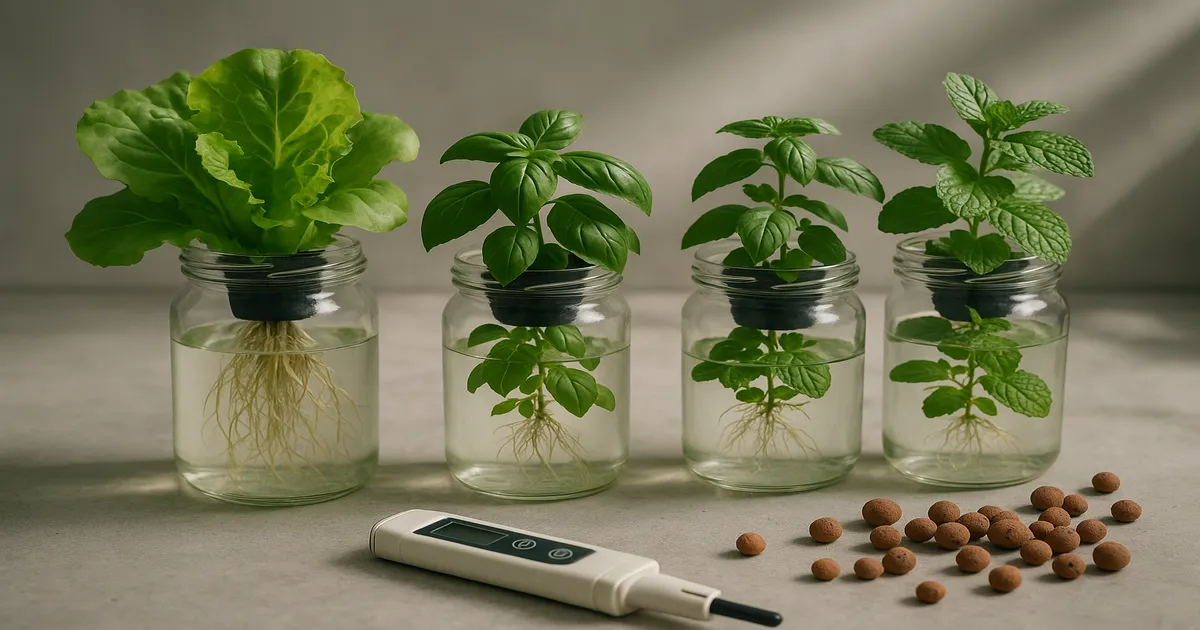
Quick Answer: The best plants for the Kratky method are lettuce, basil, spinach, mint, kale, and cilantro — fast-growing crops with low-to-medium nutrient demands that thrive in a passive, no-pump setup. Fruiting crops like tomatoes and peppers are possible but require larger reservoirs and more hands-on management. If you’re just starting out, lettuce or basil will give you a harvest in under 35 days with almost zero effort.
The Kratky method best plants share a few things in common: they grow quickly, don’t demand sky-high nutrient levels, and can complete most or all of their life cycle before the reservoir runs dry. Choose the wrong plant — say, a sprawling indeterminate tomato — and you’ll be constantly topping off water and troubleshooting. Choose right, and a mason jar on your windowsill can feed you in a month.
What Is the Kratky Method?
The Self-Regulating Air Gap Explained
Developed by researcher B.A. Kratky at the University of Hawaii, the Kratky method is about as simple as hydroponics gets. Fill a container with nutrient solution, suspend a plant in a net pot above it, and let nature do the work. No pumps. No air stones. No timers. No electricity.
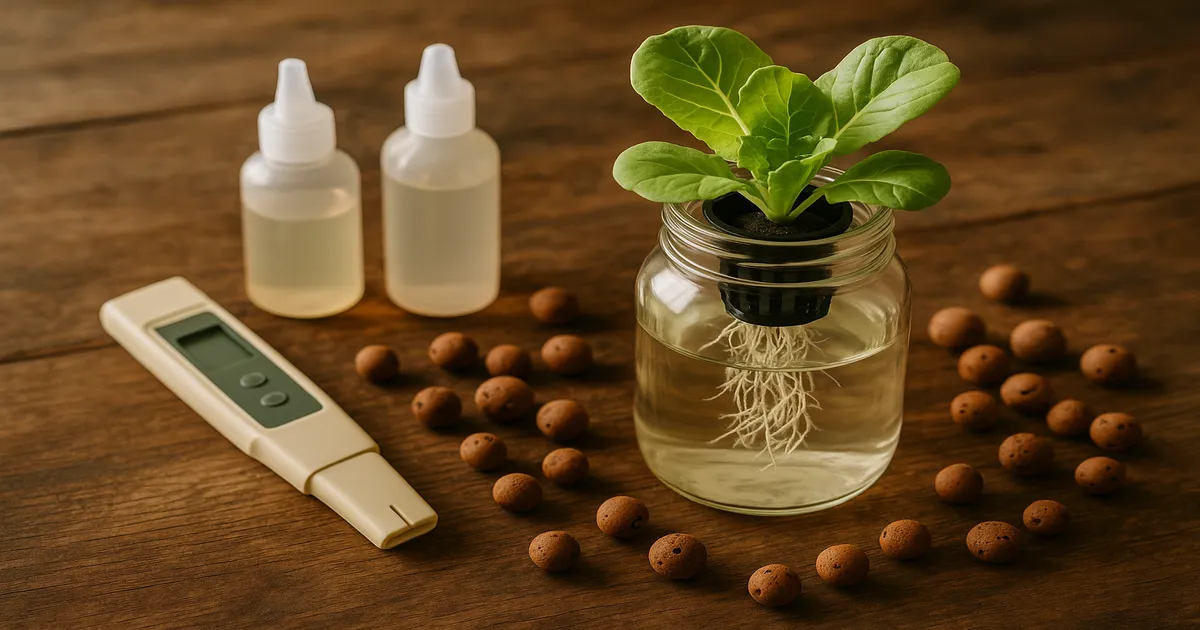
As the plant drinks, the water level drops — and that dropping level creates an air gap between the solution surface and the net pot. Roots that stay submerged absorb nutrients and water; roots exposed to the air gap absorb oxygen. This dual root zone is self-regulating, which is why the system works without active aeration.
System Configurations: Jars, Totes, and Buckets
The container you use depends mostly on plant size:
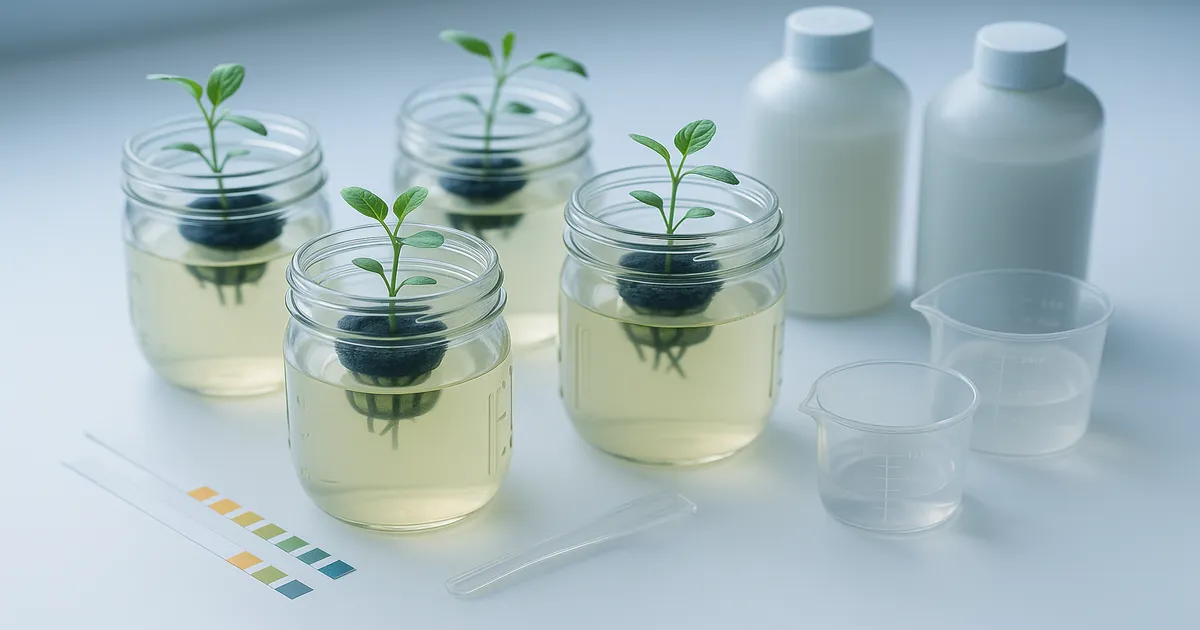
- Mason jars (1 qt – 1 gal): Perfect for herbs and single lettuce heads
- 5-gallon buckets: The go-to for tomatoes, peppers, and large basil plants
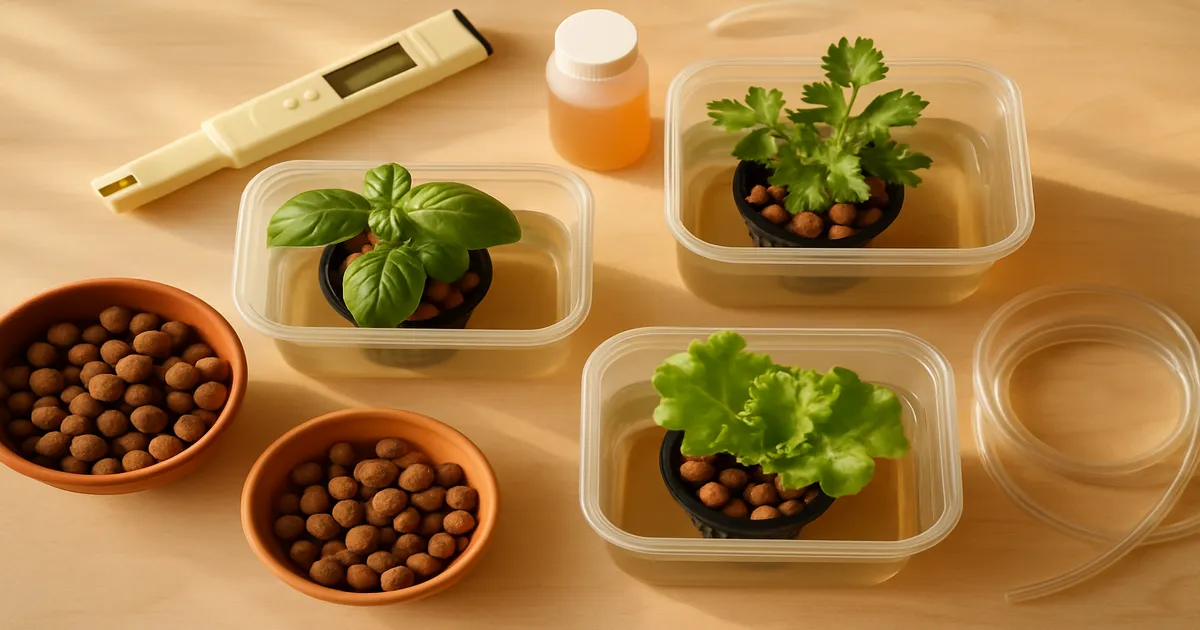
- Opaque storage totes: Great for growing 6–12 lettuce or herb plants simultaneously with a multi-hole lid
- Repurposed bottles (1–2 L): Ultra-low-cost option for a single herb plant
One rule applies to all of them: the container must be opaque. Light penetration breeds algae, and algae will wreck your nutrient solution fast.
Who Should Use the Kratky Method?
This system suits apartment growers with limited space, off-grid households without reliable power, and complete beginners who want results without a steep learning curve. It’s also a genuinely practical tool for experienced growers who want a low-maintenance side setup for herbs and salad greens.
Best Plants for the Kratky Method: Tier 1 (Easiest Crops)
Lettuce: The Quintessential Kratky Crop
Lettuce is the Kratky method’s poster child. It’s fast (30–45 days from transplant), low-nutrient, and perfectly sized for a 1–2 gallon reservoir. It also prefers cooler temperatures — 60–70°F (15–21°C) — that are easy to maintain indoors.
Best varieties: Butterhead (Boston, Bibb), Romaine, and loose-leaf types like Black Seeded Simpson and Red Sails. Loose-leaf varieties are especially satisfying because you can harvest outer leaves continuously for weeks.
- PPM/EC: 560–840 PPM (1.1–1.7 EC)
- pH: 5.8–6.2
- Container: 2-inch net pot in a 1–2 gallon reservoir
- Tip: Start at the lower end of the PPM range — lettuce doesn’t need much, and overfeeding causes tip burn
Basil and Other Popular Herbs
Basil thrives in Kratky. It loves warmth (70–80°F / 21–27°C), grows vigorously with decent light, and can produce continuous harvests for 3–4 months if you keep pinching the flower buds. Genovese is the classic choice, but Thai basil and lemon basil are equally well-suited.
- PPM/EC: 700–1,100 PPM (1.4–2.2 EC)
- pH: 5.8–6.4
- Container: 1-gallon minimum; larger gives more root room and extends harvest
- Key tip: Pinch flower buds as soon as they appear — once basil bolts, flavor drops fast
Spinach: Cool-Season Kratky Favourite
Spinach reaches baby-leaf stage in just 25–30 days, making it one of the fastest crops in a Kratky setup. It tolerates a wider pH range than most hydro crops and genuinely prefers cooler conditions (50–70°F / 10–21°C), making it a great fall and winter crop.
- PPM/EC: 700–1,000 PPM (1.4–2.0 EC)
- pH: 6.0–7.0
- Best varieties: Bloomsdale, Space, Tyee
- Watch out for: Heat — spinach bolts quickly above 75°F (24°C)
Mint and Spreading Herbs
Mint is almost aggressively easy in Kratky. It establishes fast, tolerates a range of conditions, and produces harvestable leaves within 20–30 days. Spearmint, peppermint, and lemon balm all perform well.
- PPM/EC: 600–900 PPM (1.2–1.8 EC)
- pH: 5.8–6.5
- Container: Use at least a 1-gallon reservoir — mint roots spread quickly and will fill a small jar in no time
Cilantro and Parsley
Cilantro is a quick-turn crop: you can start harvesting at 21–28 days. Choose slow-bolt varieties like Santo or Calypso, especially if your grow space runs warm. Parsley takes a bit longer (30–45 days) but is equally low-maintenance.
- PPM/EC: 700–1,000 PPM (1.4–2.0 EC)
- pH: 5.8–6.4
- Tip: Cilantro bolts fast in heat and long light cycles — keep temps below 75°F (24°C) and consider 14-hour photoperiods rather than 18
Kratky Method Best Plants: Tier 2 (Intermediate Crops)
Kale and Swiss Chard
Both kale and chard work well in Kratky, but they’re bigger plants that need more room and more nutrients than lettuce. Plan on a 2–3 gallon reservoir per plant and expect at least one top-off during the grow.
- PPM/EC: 800–1,200 PPM (1.6–2.4 EC)
- pH: 5.8–6.4
- Days to harvest: 40–60 days full size; 25–30 days for baby leaves
- Best kale varieties: Lacinato (Dinosaur), Red Russian, Dwarf Blue Curled
Arugula and Asian Greens
Arugula is fast (25–35 days), peppery, and surprisingly easy in Kratky. Bok choy, tatsoi, and mizuna are equally well-suited — all are compact, quick-maturing, and happy in the same PPM range as lettuce. These make great additions to a multi-plant tote setup.
Strawberries
Strawberries are doable but require careful management. They’re sensitive to EC swings and prefer a tight pH window.
- PPM/EC: 800–1,200 PPM (1.6–2.4 EC)
- pH: 5.8–6.2 — keep this tight
- Container: 1–2 gallon per plant
- Best approach: Day-neutral varieties like Albion or Seascape; expect fruit in 60–90 days from a rooted runner
Tier 3: Fruiting Crops and Advanced Grows
Tomatoes in the Kratky Method
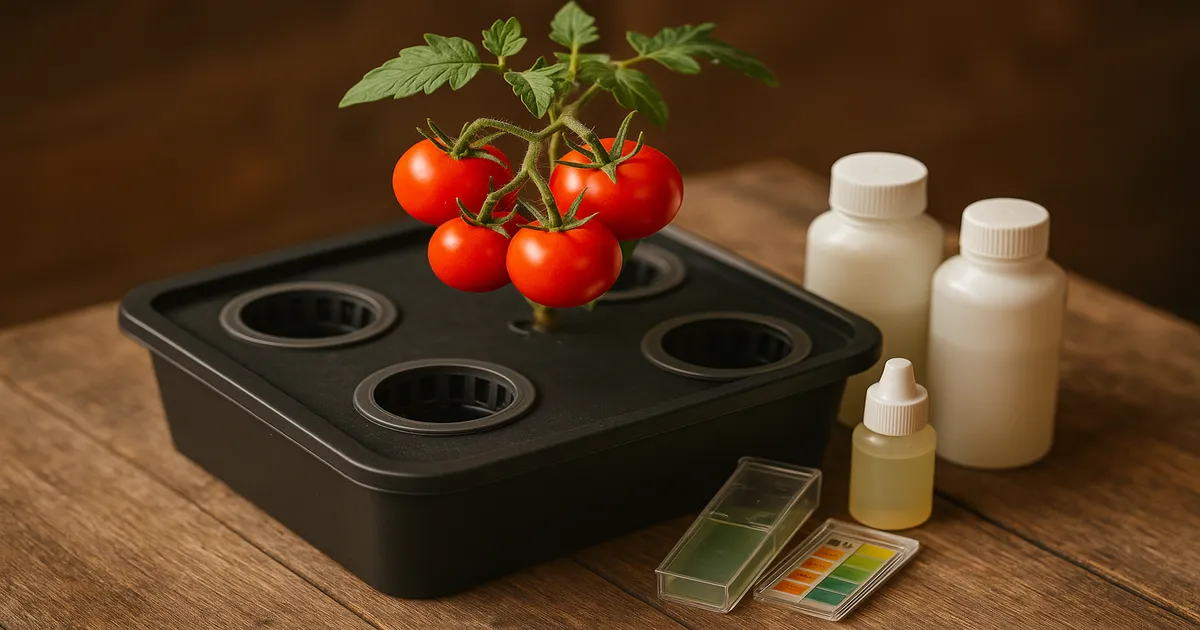
You can grow tomatoes with the Kratky method — but be clear-eyed about what that means. These are not set-and-forget grows. Tomatoes need 5-gallon buckets at minimum, high nutrient concentrations, and regular reservoir top-offs throughout their long season.
The MasterBlend tomato recipe is the community favorite: 12g MasterBlend 4-18-38 + 12g Calcium Nitrate + 6g Epsom Salt per 5 gallons, yielding roughly 1,400–1,600 PPM (2.8–3.2 EC).
- PPM/EC: 1,200–2,000 PPM (2.4–4.0 EC)
- pH: 5.8–6.3
- Best varieties: Determinate types like Bush Early Girl, Patio, or Celebrity — they stay compact and stop growing at a predictable size
Peppers and Cucumbers
Peppers follow a similar approach to tomatoes — 5-gallon bucket, high PPM, and periodic top-offs. They’re actually slightly more forgiving because they’re slower-growing and consume the reservoir more gradually. Cucumbers grow fast and drink a lot; expect to top off every 1–2 weeks.
Reservoir Top-Off Strategy for Long-Season Crops
The core challenge with fruiting crops is time. Lettuce finishes before the reservoir runs out. Tomatoes don’t. As the reservoir drops and you top off, nutrient ratios shift — some elements deplete faster than others, and salt accumulates if you’re only adding plain water.
When the reservoir drops by roughly 50%, top off with fresh full-strength nutrient solution at the same PPM you started with. Check EC before and after. If EC is rising (water being consumed faster than nutrients), top off with plain pH-adjusted water instead. A simple log — date, reservoir level, EC reading — makes the pattern easy to manage.
Nutrients, pH, and EC for Kratky Growers
PPM and EC Targets by Plant Type
| Plant Type | PPM | EC |
|---|---|---|
| Seedlings | 350–500 | 0.7–1.0 |
| Lettuce | 560–840 | 1.1–1.7 |
| Leafy greens (spinach, kale) | 700–1,200 | 1.4–2.4 |
| Herbs (basil, mint, cilantro) | 700–1,100 | 1.4–2.2 |
| Strawberries | 800–1,200 | 1.6–2.4 |
| Fruiting crops (tomato, pepper) | 1,200–2,000 | 2.4–4.0 |
Best Nutrient Products for Kratky Growers
- General Hydroponics Flora Series (Lucas Formula: 8 ml/gal FloraBloom + 16 ml/gal FloraMicro) → ~900–1,100 PPM (1.8–2.2 EC); reliable and widely available
- General Hydroponics MaxiGro → 7g/gallon ≈ 800–1,000 PPM (1.6–2.0 EC); single-part powder, great for beginners
- MasterBlend 4-18-38 combo → precise, cost-effective, and extremely popular in the Kratky community
- Dyna-Gro Grow → 2–3 tsp/gallon ≈ 700–900 PPM (1.4–1.8 EC); single-part liquid, very beginner-friendly
Start at the lower end of the PPM range for your crop. Passive systems don’t flush, so salt accumulates over time. For single-harvest crops like lettuce, this is rarely a problem. For long-season crops, plan top-offs with fresh solution and check EC regularly to catch concentration creep before it causes deficiencies or toxicities.
pH Management in Kratky Systems
Most Kratky crops are happy in the 5.8–6.4 range. The universal safe zone is pH 5.5–6.5 — outside those bounds, nutrient lockout becomes a real risk. Spinach is the outlier, tolerating up to pH 7.0.
pH tends to drift upward in Kratky systems over time. As plants preferentially uptake certain anions (nitrate, phosphate), the solution becomes more alkaline. The fix is simple: when you top off, use water adjusted to pH 5.5–5.8 rather than your starting pH. This counteracts upward drift without overcorrecting.
Check pH and EC at least once a week — more often if temps are warm or plants are growing fast. A reliable pH pen and a basic EC/TDS meter are all you need. The Apera PH60S and Bluelab pH Pen are both excellent options; the Milwaukee MW301 handles EC reliably. Calibrate your pH meter monthly with pH 4.0 and 7.0 buffer solutions.
EC troubleshooting at a glance:
- EC rising: Plants are drinking water faster than nutrients (common in heat). Top off with plain pH-adjusted water.
- EC dropping: Plants consuming nutrients faster than water (common in cool conditions). Top off with full-strength solution.
Keep your reservoir between 65–72°F (18–22°C). Warmer water holds less dissolved oxygen, accelerates microbial activity, and causes faster pH and EC swings. If your grow space runs hot, insulate the reservoir or use a container that doesn’t absorb radiant heat.
Lighting for Kratky Setups
Natural Light vs. Grow Lights
A sunny south-facing windowsill works for herbs and leafy greens if you get 4–6 hours of direct light. For fruiting crops or faster growth, supplemental lighting makes a real difference. Outdoor Kratky setups get plenty of light but need protection from rain — even a heavy shower can dilute your reservoir and introduce pathogens.
PPFD and DLI Targets
| Plant Type | PPFD (µmol/m²/s) | DLI (mol/m²/day) |
|---|---|---|
| Lettuce/leafy greens | 150–250 | 12–17 |
| Herbs (basil, mint) | 200–400 | 14–20 |
| Fruiting crops | 400–600+ | 20–30 |
| Microgreens | 100–200 | 8–12 |
| Seedlings | 50–150 | 6–10 |
Run leafy greens and herbs at 16–18 hours of light per day. Fruiting crops need 18 hours during the vegetative stage, then a switch to 12/12 to trigger flowering. Avoid 24-hour light — plants benefit from a dark period for respiration and metabolic recovery.
Recommended Grow Lights
- Budget/beginner: Spider Farmer SF-1000 (~$80–$100); great for a 2×2 ft tote setup
- Mid-range: Mars Hydro TSW-2000 (~$150–$180); covers a 3×3 ft area comfortably
- Shelving herb setups: Barrina T5 LED grow light bars (~$30–$60 for a 4-pack) are hard to beat for the price
Troubleshooting Common Kratky Problems
Tip Burn on Lettuce
Tip burn is the brown, papery damage that appears on inner lettuce leaves. It’s caused by a calcium deficiency at the leaf tips — not a lack of calcium in the solution, but an inability to move it fast enough through the plant. Poor airflow is usually the culprit.
- Keep EC on the lower end (560–700 PPM / 1.1–1.4 EC) for lettuce
- Improve air circulation with a small fan
- Use a nutrient blend with adequate calcium, or supplement with calcium nitrate
Root Rot
Healthy Kratky roots are white or light tan. Brown, slimy, foul-smelling roots mean rot. The causes are almost always warm reservoir temps, light leaks, or pathogens introduced through contaminated water or tools. Prevention is straightforward: keep the reservoir below 72°F, ensure the container is fully opaque, and use clean equipment. If rot has already set in, remove the plant, rinse the roots gently with clean water, and transfer to a fresh reservoir. Adding a small amount of hydrogen peroxide (3 ml of 3% H₂O₂ per gallon) to the new solution can help knock back remaining pathogens.
Algae Growth
Green slime on the reservoir walls or roots is almost always caused by light getting into the container. Double-check every seam, lid edge, and net pot hole. Wrapping the outside of a clear container in black tape or aluminum foil is a quick fix. Once algae takes hold, it competes with your plant for nutrients and oxygen — don’t ignore it.
Nutrient Deficiencies vs. Overfeeding
Yellowing lower leaves usually signal a nitrogen deficiency; pale new growth often points to iron or manganese lockout from high pH. Burnt, crispy leaf edges suggest overfeeding or salt buildup. When in doubt, check pH first — most apparent deficiencies in Kratky systems are actually lockout caused by pH drift rather than a missing nutrient.
Frequently Asked Questions
Can you reuse Kratky nutrient solution for the next grow? It’s not recommended. After a full grow cycle, the solution is depleted unevenly and may harbor pathogens. Start fresh each time — dump the old solution, rinse the container, and mix a new batch. The cost of nutrients is low enough that reusing isn’t worth the risk.
How often do you need to top off a Kratky system? For fast-finishing crops like lettuce and spinach, you may never need to top off at all if you start with enough solution. For herbs, plan on one top-off every 3–4 weeks. Fruiting crops like tomatoes may need topping off every 1–2 weeks during peak growth.
What is the best container size for Kratky beginners? A 1-gallon mason jar or a repurposed opaque plastic container is ideal for a first grow. It holds enough solution for a single lettuce head or herb plant from start to finish, and the small scale makes it easy to observe and learn from.
Can you grow Kratky plants outdoors? Yes, with some caveats. Outdoor light is free and abundant, but rain can dilute your reservoir, temperature swings affect pH and EC stability, and pests are harder to manage. Use a lid that keeps rain out while still allowing the plant stem through, and check your reservoir more frequently than you would indoors.
Why are my Kratky plants growing slowly? The most common causes are insufficient light, pH out of range (check first), low nutrient concentration, or reservoir temps that are too cold. Lettuce and herbs slow down noticeably below 60°F (15°C). If you’re growing under a windowsill and growth stalls, adding even a basic grow light usually makes an immediate difference.