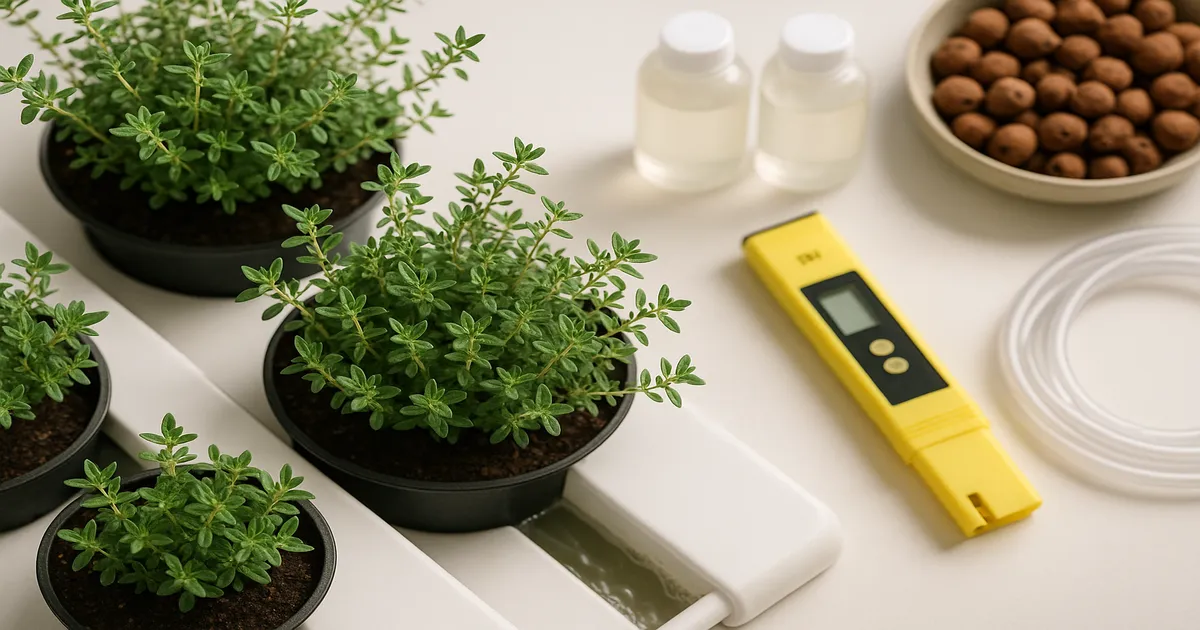
Quick Answer: To get thyme to grow successfully, give it at least 6–8 hours of direct sun, a well-draining growing medium, and a pH of 6.0–7.0 in soil (or 5.5–6.5 in hydroponics). Keep nutrients lean — excess nitrogen kills flavor — and let the roots dry slightly between waterings. Expect harvestable plants in 70–90 days from seed or just 30–45 days from cuttings.
Learning how to get thyme to grow well comes down to respecting its Mediterranean roots: full sun, lean soil, and good drainage. Get those three things right and thyme is one of the most forgiving herbs you can grow — in the ground, in a pot, or in a hydroponic system. This guide covers everything from propagation and pH to lighting, nutrients, and harvest timing, whether you’re growing on a windowsill or running a small indoor setup.
How to Get Thyme to Grow: What It Needs at a Glance
- Light: 6–8 hours of direct sun outdoors; 16–18 hours under grow lights indoors
- Growing medium: Well-draining soil or inert hydroponic media (rockwool, hydroton, perlite)
- pH: 6.0–7.0 in soil; 5.5–6.5 in hydroponics (sweet spot: 5.8–6.2)
- Nutrients: Moderate and lean — excess nitrogen reduces essential oil content
- Water: Consistent but never waterlogged; let the top inch dry between waterings
- Temperature: 65–75°F (18–24°C) for optimal germination and growth
Soil vs. Hydroponics: Which Is Right for You?
Soil suits beginners best. It’s forgiving, low-cost, and closely mirrors thyme’s natural habitat. Hydroponics makes sense if you want faster production, year-round indoor harvests, or you’re scaling up. Both work well — the main difference is precision. Hydroponics rewards careful pH and EC management with faster growth, while soil buffers mistakes more naturally.
Choosing Your Growing System
In-Ground and Raised Bed Growing
In-ground growing works well for thyme as long as your soil drains freely. Raised beds are even better — you control the mix, drainage is reliable, and the soil warms faster in spring. Amend heavy clay with perlite or coarse sand before planting.
Container Growing
Containers are ideal for beginners. Thyme’s shallow fibrous root system — only 6–8 inches deep — means a single 6–8 inch pot is genuinely sufficient for one plant. Terracotta is the best material. It breathes, wicks away excess moisture, and actively helps prevent the root rot that kills more thyme plants than anything else.
Hydroponic Systems for Thyme
Thyme’s compact root system suits several hydroponic setups. Here’s how they rank:
- NFT (Nutrient Film Technique) — Best choice. Shallow channels suit thyme’s roots perfectly, and the thin film of oxygenated nutrient solution keeps plants thriving.
- DWC (Deep Water Culture) — Works well with strong aeration. Keep dissolved oxygen high and reservoir temperature at 65–72°F (18–22°C).
- Kratky (Passive Hydro) — Low-tech and surprisingly effective for small-scale production. A great entry point for beginners.
- Ebb & Flow — Solid performer with inert media. The wet/dry cycles suit thyme’s preference for drying out between waterings.
- Aeroponics — Fastest growth, but the added complexity isn’t necessary for most home growers.
Best media by system:
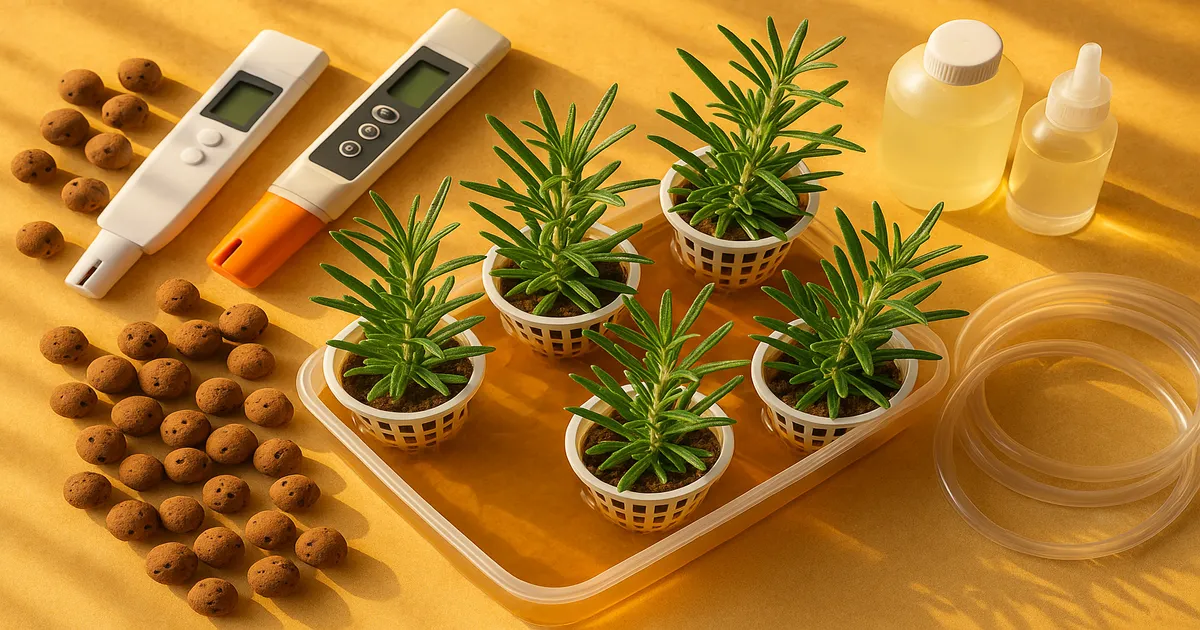
- NFT/DWC: Rockwool starter cubes for propagation, then net pots with hydroton
- Kratky: Rockwool or perlite in net pot lids
- Ebb & Flow: Hydroton or a perlite/vermiculite blend
- Containers/raised beds: Potting mix amended with 20–30% perlite or coarse horticultural sand
How to Propagate Thyme
Growing from Seed
Seeds are viable but slow — plan for 70–90 days from sowing to first harvest. Thyme seeds need light to germinate, so surface-sow them without covering. Keep the medium consistently moist and warm (65–75°F / 18–24°C). Germination typically takes 14–21 days.
Propagating from Stem Cuttings (Fastest Method)
Cuttings are what most experienced growers use. You get harvestable plants in 30–45 days and you know exactly what variety you’re working with.
- Select a healthy, non-woody stem tip and cut a 3–4 inch section just below a leaf node.
- Strip the leaves from the bottom 1.5–2 inches.
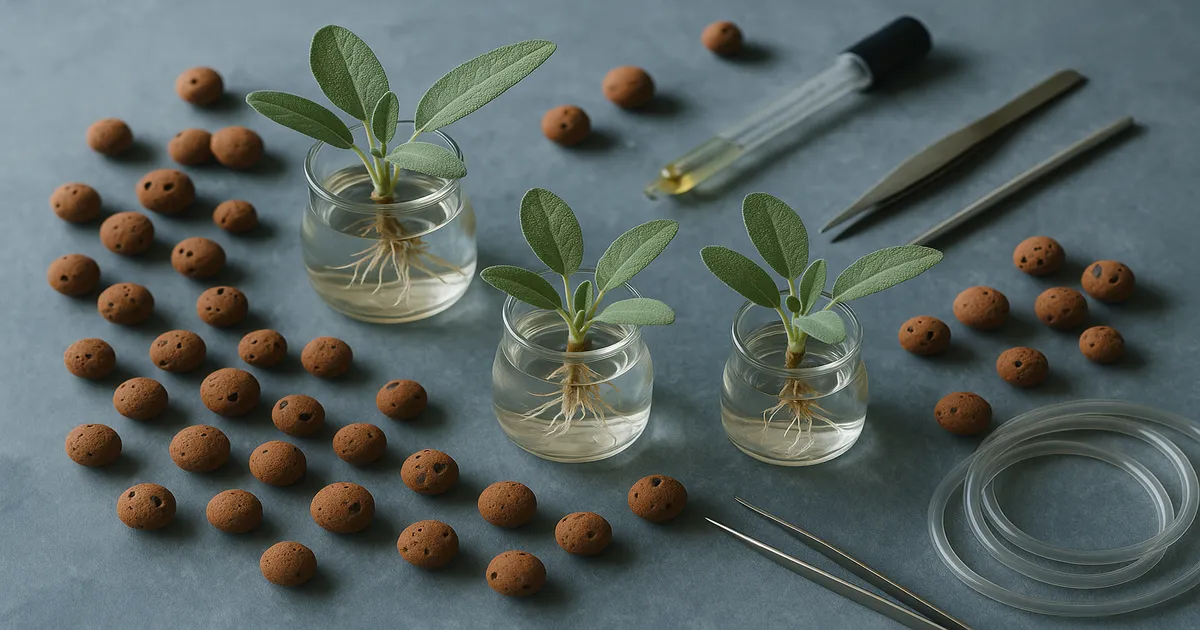
- Place in a glass of water, a moistened perlite plug, or a pre-soaked rockwool cube.
- Keep at 65–75°F (18–24°C) with indirect light until roots appear — usually 10–14 days.
- Transplant once roots reach ½–1 inch long.
Division of Established Plants
Division is the best way to rejuvenate an older, woody thyme plant. Dig up the clump in early spring, separate it into sections with healthy roots attached, and replant immediately. When transplanting any thyme — seedling or cutting — disturb the root ball as little as possible, water in gently, and keep the plant out of direct afternoon sun for the first 2–3 days.
Soil, pH, and Growing Medium
Ideal Soil Composition
Thyme wants soil that drains fast and stays relatively lean. A reliable mix is two parts quality potting soil to one part perlite or coarse sand. Thyme actually tolerates slightly alkaline conditions better than most herbs — it evolved in stony, mineral-rich soils across southern Europe. Heavy clay is the enemy. It holds moisture around the roots and invites rot.
pH Targets
- Soil: 6.0–7.0
- Hydroponics: 5.5–6.5 (optimal: 5.8–6.2)
Thyme is more pH-tolerant than many herbs, but sustained readings outside these ranges will lock out key nutrients regardless of how much you’re feeding.
Testing and Adjusting pH
For hydroponics, a reliable digital pH meter is non-negotiable. The Apera PH20 and Bluelab pH Pen are both excellent choices. Calibrate weekly with pH 4.0 and 7.0 buffer solutions, and store the probe in storage solution — not plain water.
- To raise pH: Add pH Up (KOH-based) in 0.5–1 mL increments per gallon, stir, wait 15 minutes, retest.
- To lower pH: Add pH Down (phosphoric acid-based) using the same incremental approach.
For soil, agricultural lime raises pH and elemental sulfur lowers it. Work amendments into the top 2–3 inches and retest after 1–2 weeks.
EC and Nutrient Concentration by Stage
| Growth Stage | Target PPM | Target EC |
|---|---|---|
| Seedling (weeks 1–3) | 400–600 | 0.8–1.2 |
| Vegetative (weeks 4–8) | 600–900 | 1.2–1.8 |
| Active growth/harvest | 800–1,100 | 1.6–2.2 |
| Mature/maintenance | 700–1,000 | 1.4–2.0 |
When EC rises between reservoir changes — caused by water evaporating and concentrating nutrients — top off with plain pH-adjusted water, not fresh nutrient solution. A Bluelab Truncheon or similar EC meter makes daily monitoring quick and reliable.
Nutrient Requirements for Thyme
Macronutrients: N, P, and K
Thyme is not a heavy feeder. Excess nitrogen produces soft, watery growth with weak aroma — the opposite of what you want. Target these levels in your nutrient solution:
- Nitrogen (N): 150–180 PPM
- Phosphorus (P): 40–60 PPM
- Potassium (K): 150–200 PPM
- Calcium (Ca): 80–120 PPM
- Magnesium (Mg): 30–50 PPM
During vegetative growth, aim for a 3-1-2 N-P-K ratio. In the final weeks before harvest, shift toward 1-1-3 — less nitrogen, more potassium — to push essential oil production.
Key Micronutrients
Iron is the micronutrient thyme growers most often get wrong. Deficiency shows up as interveinal chlorosis on young leaves — tissue between the veins turns yellow while the veins stay green. Always use chelated iron (Fe-EDTA or Fe-DTPA) at 2–4 PPM.
- Manganese (Mn): 0.5–1.0 PPM
- Boron (B): 0.3–0.5 PPM
- Zinc (Zn): 0.3–0.5 PPM
Recommended Nutrient Solutions
General Hydroponics Flora Series (beginner-friendly 3-part):
- FloraGro, FloraBloom, FloraMicro: 2.5 mL/gallon each
- Target: 700–900 PPM (1.4–1.8 EC) at pH 5.8–6.2
MaxiGro (single-part, simplest option): 5–7 g/gallon
Masterblend 4-18-38 (professional 3-part):
- Masterblend 4-18-38: 2.4 g/gallon
- Calcium Nitrate: 2.4 g/gallon
- Epsom Salt (MgSO₄): 1.2 g/gallon
- Target: 700–850 PPM (1.4–1.7 EC)
The Flavor Hack: Run Lean Before Harvest
In the final 1–2 weeks before harvest, drop your EC to 600–800 PPM (1.2–1.6 EC). This mild stress mimics the rocky, nutrient-poor soils of the Mediterranean and triggers the plant to concentrate thymol and carvacrol — the compounds responsible for thyme’s signature aroma. Commercial herb growers use this technique routinely. It’s one of the most impactful things you can do for quality.
Lighting: How Much Light Does Thyme Need to Grow?
Outdoors
Thyme needs a minimum of 6–8 hours of direct sun daily. Less than that produces leggy, pale plants with weak flavor. A south-facing or west-facing spot is ideal in most climates.
PPFD and DLI Targets by Stage
| Growth Stage | PPFD (µmol/m²/s) | DLI (mol/m²/day) |
|---|---|---|
| Seedling | 100–200 | 8–12 |
| Vegetative growth | 200–400 | 14–20 |
| Active production/harvest | 300–500 | 18–25 |
| Maximum flavor/essential oil | 400–600 | 20–28 |
For most home growers without CO₂ supplementation, 300–500 PPFD is the practical sweet spot.
Grow Light Recommendations
Budget (1–4 plants):
- Mars Hydro TS-600 (~$60–$80)
- Barrina T5 LED strips (~$35–$50) — excellent for shelf systems
Mid-range (4–12 plants):
- Spider Farmer SF-2000 (~$200–$250) — Samsung LM301B diodes, excellent efficiency
- HLG 100 V2 (~$150–$200) — premium light uniformity
Run 16–18 hours of light for vegetative production. One important note: UV-A and UV-B light stimulates terpene and essential oil production in thyme. Grow lights with a UV component will produce noticeably more aromatic harvests than standard broad-spectrum fixtures. Use a reliable digital timer to keep your schedule consistent — irregular light cycles stress plants and reduce yield.
Windowsill Tips
A south-facing window is your best bet indoors. In winter, natural DLI often drops below 10 mol/m²/day — supplement with a small LED strip to make up the difference. Rotate plants 90–180° every 2–3 days to prevent uneven, one-sided growth.
Ongoing Care: Watering, Pruning, and Harvesting
Watering
Thyme is drought-tolerant once established. Water thoroughly, then let the top inch of soil dry before watering again. In hydroponic systems, thyme consumes water faster than nutrients in warm conditions — top off with plain pH-adjusted water when levels drop rather than adding fresh nutrient solution.
Pruning for Bushy Growth
Regular pruning keeps thyme from becoming a woody, unproductive tangle. Trim up to one-third of the plant at a time, cutting just above a leaf node, every 3–4 weeks during the growing season. Never cut into the woody base — thyme won’t regenerate from old wood the way some herbs do.
Harvesting
Harvest in the morning after dew has dried but before afternoon heat. Essential oil concentration peaks early in the day. Snip stem tips 4–6 inches long, leaving enough foliage for the plant to recover. Never take more than one-third of the plant in a single session.
Managing Flowering
When thyme flowers, leaf flavor intensity drops slightly. Pinch off flower buds as they appear to keep the plant focused on foliage. That said, allowing some flowering is worthwhile if you want to attract pollinators or collect seeds — the flowers are edible and carry a mild thyme flavor.
Winter Care
Outdoors in USDA Zones 5–9, thyme goes semi-dormant in winter. Reduce watering, stop fertilizing, and cut back woody growth in early spring before new growth emerges. In Zone 4 and colder, bring containers indoors or mulch heavily around in-ground plants. Indoors under grow lights, thyme produces year-round without any dormancy period.
Troubleshooting Common Problems
Leggy, Stretched Growth
Long, weak stems reaching toward the light mean one thing: not enough light. Move the plant to a brighter spot or increase your PPFD. Prune the stretched growth back hard to encourage branching, then fix the light situation — the problem won’t resolve on its own.
Root Rot and Overwatering
Yellowing lower leaves, mushy stems at the base, and a sour smell from the growing medium are classic root rot signs. In soil, improve drainage and reduce watering frequency immediately. In hydroponic systems, add a beneficial bacteria product like Botanicare Hydroguard (Bacillus subtilis-based), increase aeration, and do a full reservoir change. Keeping reservoir temperature below 72°F (22°C) is one of the best preventive measures.
Yellowing Leaves
- Interveinal chlorosis on young leaves → Iron deficiency. Switch to chelated iron (Fe-EDTA or Fe-DTPA).
- Overall yellowing, older leaves first → Nitrogen deficiency or pH lockout. Check pH before adding more nutrients.
- Purple-tinged leaves → Phosphorus deficiency, often triggered by cold temperatures or low pH.
pH Drift in Hydroponic Systems
Upward pH drift usually signals algae growth — check for light leaks in your reservoir — or CO₂ off-gassing from the root zone. A rapid pH crash is more serious and often indicates microbial activity in the reservoir. Change the solution completely, clean the system, and recheck your aeration.
Frequently Asked Questions
How long does thyme take to grow from seed? Expect 14–21 days for germination and 70–90 days from sowing to your first harvest. Cuttings are much faster — 30–45 days to a harvestable plant.
Why is my thyme growing slowly indoors? Insufficient light is the most common cause. Thyme needs 16–18 hours of bright artificial light indoors. A south-facing window alone is rarely enough, especially in winter. Add a grow light and check that your temperature stays between 65–75°F (18–24°C).
Can thyme grow in water (hydroponics) year-round? Yes. Thyme performs well in NFT, DWC, Kratky, and Ebb & Flow systems. Maintain pH at 5.8–6.2, keep EC between 1.2–1.8 during vegetative growth, and ensure strong aeration. Indoors under grow lights, it produces continuously without a dormancy period.
How do I get thyme to grow bushier instead of leggy? Prune regularly — every 3–4 weeks during the growing season — cutting just above a leaf node. Never remove more than one-third of the plant at once, and never cut into the woody base. Consistent pruning combined with adequate light is what produces dense, productive plants.
Why does my thyme have weak flavor? The two most common causes are too much nitrogen and not enough light. Run a leaner nutrient solution (target 150–180 PPM nitrogen), ensure the plant gets 6–8 hours of direct sun or 300–500 PPFD indoors, and drop your EC to 600–800 PPM in the final 1–2 weeks before harvest to concentrate essential oils.