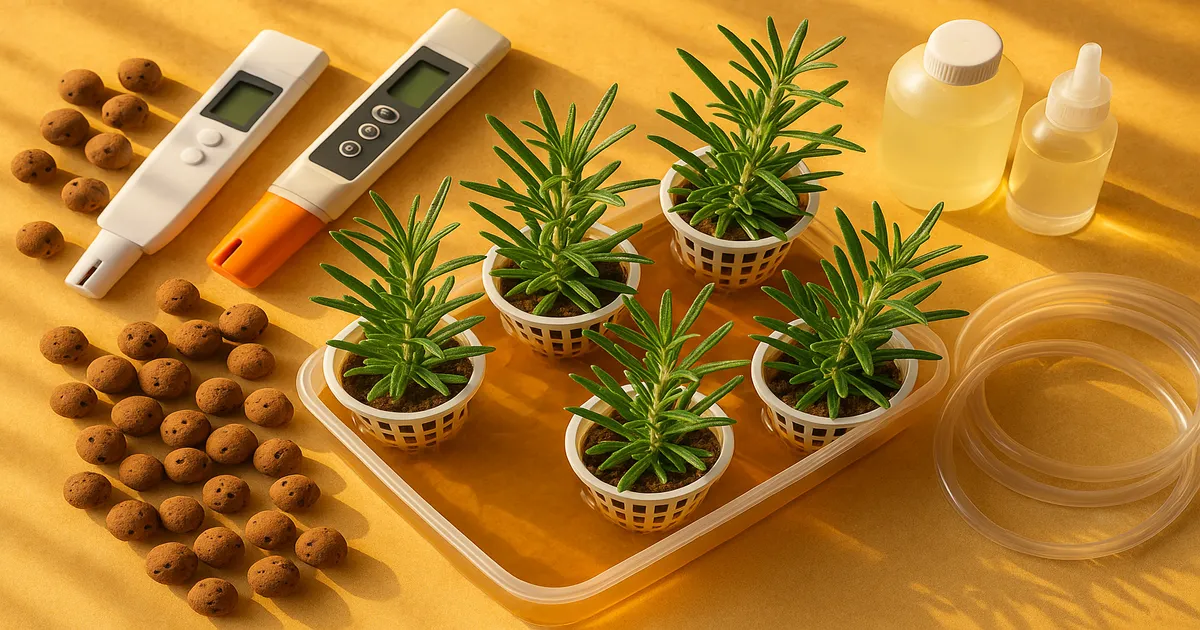
Quick Answer: To grow rosemary at home, give it 6–8+ hours of full sun (or a quality grow light), fast-draining soil or a well-managed hydroponic system, and a pH of 6.0–7.0 in soil or 5.5–6.5 in hydroponics. It’s a light feeder, so go easy on fertilizer. Get these basics right and your rosemary can thrive for 10–20 years.
Rosemary is one of the most rewarding herbs you can grow at home — aromatic, beautiful, and practically indestructible once it’s happy. Knowing how to grow rosemary at home comes down to understanding its Mediterranean roots: it wants sun, lean soil, and to dry out between waterings. Get those fundamentals right, and everything else falls into place.
What You Need to Grow Rosemary at Home
You don’t need much to get started. The essentials are:
- Light: 6–8+ hours of direct sun or a quality full-spectrum grow light
- Container or bed: With excellent drainage — this is non-negotiable
- Soil or growing medium: Sandy, well-draining mix or an appropriate hydroponic setup
- pH: 6.0–7.0 for soil, 5.5–6.5 for hydroponics
- Nutrients: A light hand — rosemary is not a heavy feeder
A healthy rosemary plant can live 10–20 years, so it’s worth setting it up properly from day one.
Soil vs. Hydroponics: Which Is Right for You?
Both work well, but they suit different growers.
| Factor | Soil / Container | Hydroponics |
|---|---|---|
| Beginner-friendliness | ★★★★★ | ★★★☆☆ |
| Watering frequency | Low (drought-tolerant) | Managed by system |
| Root rot risk | Low (with good drainage) | Moderate–High (DWC) |
| Growth speed | Moderate | Faster |
| Setup cost | Low | Moderate–High |
| pH management | Monthly checks | Daily checks |
| Best for | Most home growers | Enthusiasts, indoor setups |
If you’re new to growing herbs, start in a container with well-draining soil. If you already have a hydroponic setup or want faster year-round production, rosemary adapts well — especially in passive systems like Kratky or wicking.
Choosing the Best Rosemary Variety
Upright Varieties for Culinary Use
These are the workhorses — tall, productive, and classically flavored.
| Variety | Height | Growth Rate | Flavor Profile |
|---|---|---|---|
| ’Tuscan Blue’ | 4–6 ft | Fast | Bold, classic |
| ’Arp’ | 3–5 ft | Moderate | Mild, lemon-pine |
| ’Salem’ | 3–4 ft | Moderate | Strong, traditional |
| ’Blue Spires’ | 4–6 ft | Fast | Intense, resinous |
| ’Spice Islands’ | 3–5 ft | Moderate | Rich, complex |
‘Arp’ is the best choice for cold climates — it handles temperatures down to around 0°F (-18°C) with some protection. ‘Tuscan Blue’ is a great all-rounder for USDA Zone 7 or warmer.
Compact Varieties for Containers and Indoor Growing
Growing on a windowsill or under lights? These varieties are much easier to manage:
- ‘Irene’ (1–2 ft): Semi-trailing habit, excellent in pots
- ‘Huntington Carpet’ (6–12 in): Trailing form, great for hanging baskets
- ‘Benenden Blue’ (2–3 ft): Compact, intense flavor, narrow leaves
- ‘Hill Hardy’ (2–4 ft): Good cold tolerance, tidy growth habit
- ‘Mozart’ (2–3 ft): Dense and compact, well-suited to containers
Best Varieties for Hydroponics
Stick with compact varieties. ‘Benenden Blue’ and ‘Mozart’ are top picks — their contained size and steady growth rate make them easier to manage in NFT channels or DWC buckets. ‘Irene’ also works well in wicking systems or LECA. Avoid fast-growing upright varieties in small setups; they’ll outgrow the system quickly.
Growing Systems: Soil, Hydroponics, and In Between
Container and Soil Growing (Best for Beginners)
This is the most natural fit for rosemary. Its native habitat is rocky Mediterranean hillsides — poor, fast-draining soil with plenty of sun. A terracotta pot with a sandy, perlite-heavy mix mimics that environment almost perfectly.
A good beginner soil mix: 60% potting mix + 30% perlite + 10% coarse sand. Avoid moisture-retaining mixes marketed for tropical plants — they’re the opposite of what rosemary wants. Always use a container with at least one large drainage hole, and never let the plant sit in standing water.
Kratky and Wicking Systems (Passive Hydroponics)
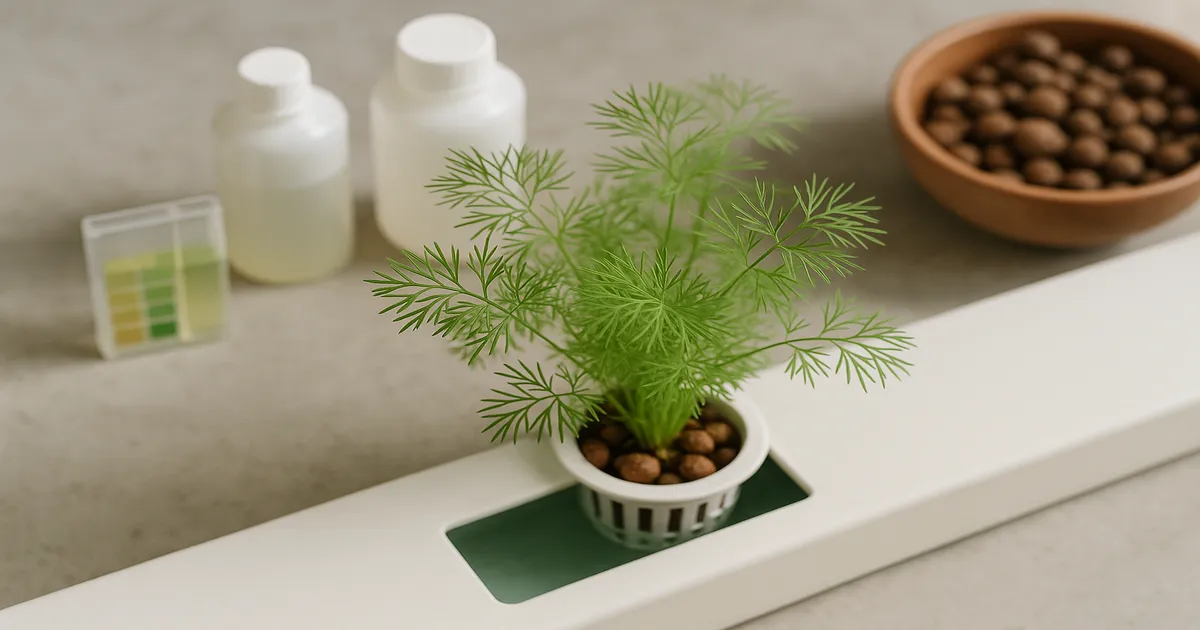
These passive systems are ideal for growers who want hydroponics without the complexity. The Kratky method uses a sealed reservoir with an air gap above the roots — once set up, it needs almost no maintenance. Wicking systems draw nutrient solution up through an absorbent medium, keeping moisture consistent without pumps.
Both methods suit rosemary’s preference for moderate, steady moisture rather than constant saturation. They’re also forgiving if you miss a reservoir check for a few days. Net pots filled with LECA work well in both setups. (Bootstrap Farmer 2-inch Net Cups)
NFT and DWC Systems (Active Hydroponics)
NFT (Nutrient Film Technique) works well for rosemary — a thin film of nutrient solution flows continuously over the roots, providing excellent oxygenation. DWC (Deep Water Culture) can also work, but root rot risk increases significantly in warm conditions. If you run DWC, keep your reservoir below 68°F (20°C) and use a strong air pump.
Both systems grow rosemary faster than soil, but they demand more attention to pH, EC, and equipment maintenance.
LECA and Semi-Hydro
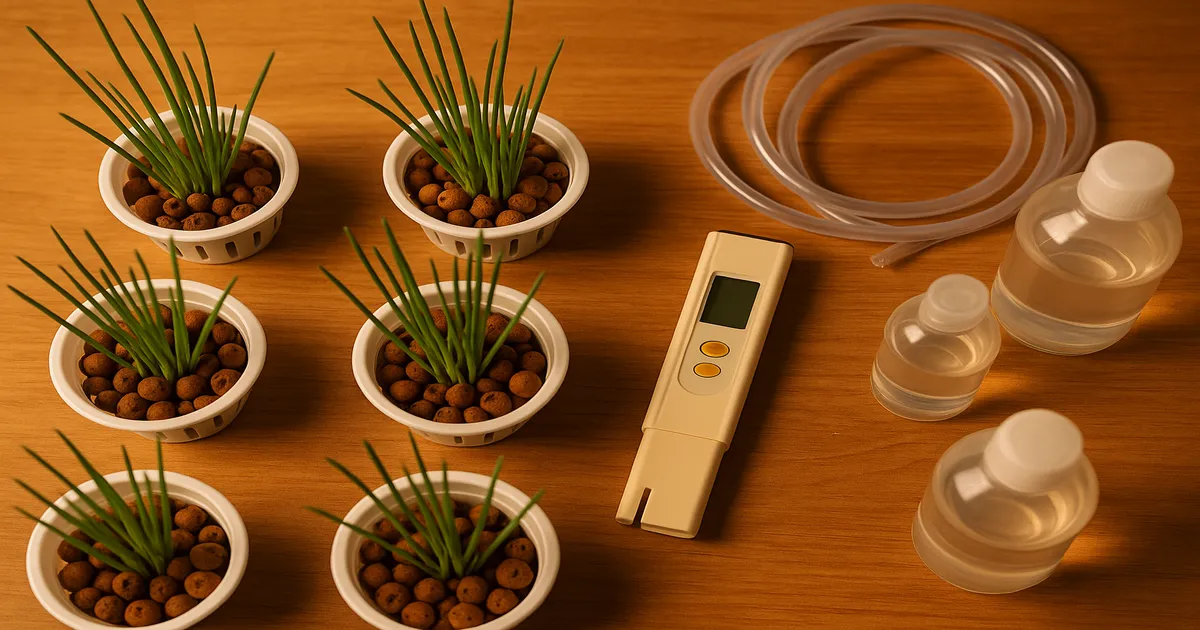
LECA (lightweight expanded clay aggregate) is an excellent medium for rosemary. The porous clay balls hold just enough moisture while allowing excellent airflow around the roots — closely mimicking the rocky, well-aerated soils rosemary evolved in. Root rot is far less likely here than in DWC, making it a great middle ground between soil and full hydroponics.
How to Grow Rosemary Indoors: Lighting Requirements
How Much Light Does Rosemary Need?
Insufficient light is the single biggest reason indoor rosemary fails. Without enough sun, the plant becomes leggy, loses its fragrance, and grows vulnerable to disease. The minimum is 6 hours of direct light; 8–12 hours is where it really thrives.
A south-facing window can work in summer, but in winter or northern latitudes, a grow light is almost always necessary.
PPFD and DLI Targets by Growth Stage
| Growth Stage | PPFD (μmol/m²/s) | DLI (mol/m²/day) |
|---|---|---|
| Seedling / Cutting | 100–200 | 8–12 |
| Vegetative / Young Plant | 200–400 | 14–20 |
| Mature / Active Harvest | 400–600 | 20–30 |
| Stress / Flavor Enhancement | 600–800 | 25–35 |
DLI formula: DLI = PPFD × hours of light × 0.0036 Example: 400 PPFD × 16 hours × 0.0036 = 23 mol/m²/day — right in the sweet spot for a mature plant.
Full-spectrum light (400–700 nm) is ideal. Blue light (400–500 nm) promotes compact growth and essential oil production; red light (600–700 nm) drives photosynthesis; UV-A (315–400 nm) stimulates terpene synthesis, which directly improves flavor and fragrance. Avoid HPS-only setups — they’re too heavy on red/far-red and produce stretchy, less aromatic plants.
For most home growers, a quantum board LED is the best all-around choice. Mount it 12–18 inches above the canopy and run 14–16 hours on / 8–10 hours off for continuous vegetative production. (Spider Farmer SF-1000) To enhance flavor before harvest, drop to 12 hours of light and reduce watering slightly — the mild stress boosts essential oil concentration.
Nutrients, pH, and EC for Rosemary
What Rosemary Actually Needs
Rosemary is a light feeder. Overfeeding — especially with nitrogen — is the most common mistake home growers make. Excess nitrogen produces lush, fast-growing foliage that smells of almost nothing and is prone to disease.
Key targets:
- Nitrogen (N): Moderate. In mature plants, aim for an N:K ratio of roughly 1:1.5 — potassium should lead
- Phosphorus (P): Moderate during establishment; lower once mature
- Potassium (K): Higher relative need — supports drought tolerance, essential oil synthesis, and vigor
- Calcium (Ca): 150–200 PPM in hydroponic solutions
- Magnesium (Mg): 40–60 PPM; deficiency shows as yellowing between leaf veins on older leaves
- Iron (Fe): Most critical micronutrient — use chelated iron (Fe-EDTA or Fe-DTPA) and target 2–3 PPM. Deficiency is common when pH drifts above 6.5.
Hydroponic Nutrient Solution for Rosemary
Target: 900–1,000 PPM (1.8–2.0 EC) at pH 6.0 for a mature plant.
| Component | Amount per Gallon | Purpose |
|---|---|---|
| Calcium Nitrate | 2.0 g | N + Ca |
| Potassium Nitrate | 1.0 g | K + N |
| Monopotassium Phosphate (MKP) | 0.5 g | P + K |
| Magnesium Sulfate (Epsom Salt) | 0.8 g | Mg + S |
| Chelated Micronutrient Mix | Per label (0.5–1.0 g) | All micros |
| Potassium Silicate (optional) | 0.5 mL | Stress tolerance |
Prefer a commercial option? The General Hydroponics Flora Series works well at 50–60% of the recommended label rate.
Fertilizing in Soil and Containers
Use a balanced slow-release fertilizer (10-10-10 or 5-5-5) at planting, then supplement with liquid feeding every 3–4 weeks during the growing season. Organic options like diluted fish emulsion (at 50% label rate) or a worm castings top-dressing work well and reduce the risk of overfeeding. Fertilize minimally in fall and winter, and resume in early spring as new growth emerges.
pH Management
- Soil: pH 6.0–7.0. Rosemary tolerates slightly alkaline conditions better than most herbs — pH 6.5–7.0 is fine.
- Hydroponics: pH 5.5–6.5, with 6.0 as your target. This keeps iron and other micronutrients accessible.
A quality digital pH meter is essential — test strips aren’t accurate enough. The Apera PH20 and Bluelab pH Pen are both reliable choices. Calibrate weekly using pH 4.0 and 7.0 buffer solutions. Always adjust pH after mixing your nutrients, since the nutrients themselves shift pH.
Managing EC and Preventing Nutrient Creep
Check EC every 2–3 days in hydroponic systems. When EC rises, the plant is drinking water faster than nutrients — top off with plain pH-adjusted water. When EC drops, add nutrients or do a partial reservoir refresh. Change the reservoir completely every 7–14 days.
In soil, white salt crust on the surface or pot edges signals buildup. Flush with 2–3× the pot volume of pH-adjusted water and reduce feeding frequency.
Planting, Propagation, and Ongoing Care
Seeds, Cuttings, or Transplants?
Cuttings are the preferred method. Take a 4–6 inch stem from a healthy plant, strip the lower leaves, and root it in moist perlite or a propagation medium. You’ll have a rooted cutting in 3–6 weeks, genetically identical to the parent plant.
Seeds are slow and inconsistent — germination takes 2–3 weeks with often-poor success rates even under ideal conditions. Nursery transplants are the easiest starting point if you just want a plant growing quickly with minimal fuss.
Soil Mix and Container Selection
Use a container with at least one large drainage hole — terracotta is ideal because it wicks excess moisture from the soil. A 6–10 inch pot works for most compact varieties; upright varieties will eventually need a 12–14 inch container.
Mix: 60% quality potting mix + 30% perlite + 10% coarse sand. This drains fast and stays aerated — exactly what rosemary’s roots need.
Watering
Let the soil dry out between waterings. Stick your finger 2 inches into the soil and only water when it’s dry at that depth. In a well-draining container, that typically means watering every 5–10 days depending on pot size, temperature, and light levels.
Overwatering is far more common than underwatering with rosemary. When in doubt, wait another day.
Pruning and Harvesting
Prune regularly to keep the plant bushy and prevent it from going woody at the base. Harvest by snipping the top 2–4 inches of stems — never remove more than one-third of the plant at a time. Cut just above a leaf node to encourage branching.
For maximum flavor, harvest in the morning after dew has dried but before midday heat dissipates the volatile oils.
Temperature, Humidity, and Airflow
Rosemary thrives at 65–85°F (18–29°C). It tolerates brief dips below 50°F (10°C) but dislikes prolonged cold, especially in containers where roots are more exposed. Indoors, keep it away from cold drafts and heating vents.
Humidity should stay between 30–50%. Higher humidity — common in kitchens and bathrooms — dramatically increases the risk of powdery mildew. Good airflow is essential: a small fan running on low near your plants makes a real difference, especially under grow lights where air tends to stagnate.
Frequently Asked Questions
How long does rosemary take to grow from a cutting? A cutting taken from a healthy plant will develop roots in 3–6 weeks in moist perlite or a propagation medium. It’ll be ready to transplant into its permanent container or hydroponic system once roots are 1–2 inches long.
Why is my indoor rosemary dying? The two most common causes are overwatering and insufficient light. Rosemary needs to dry out between waterings and requires at least 6 hours of direct light daily. If your plant is yellowing, dropping needles, or smelling musty at the roots, overwatering is almost certainly the culprit.
Can rosemary grow in water (hydroponics)? Yes — rosemary grows well in passive hydroponic systems like Kratky and wicking setups, and in active systems like NFT. DWC works but carries a higher root rot risk. Keep pH at 5.5–6.5 and EC at 1.8–2.0 for best results.
How often should I fertilize rosemary? In soil, every 3–4 weeks during the growing season using a diluted balanced fertilizer. In hydroponics, nutrients are delivered continuously through the solution — maintain 900–1,000 PPM and refresh the reservoir every 7–14 days.
Does rosemary need a lot of water? No. Rosemary is drought-tolerant and prefers to dry out between waterings. In a well-draining container, watering every 5–10 days is typical. Consistent overwatering is the fastest way to kill it.