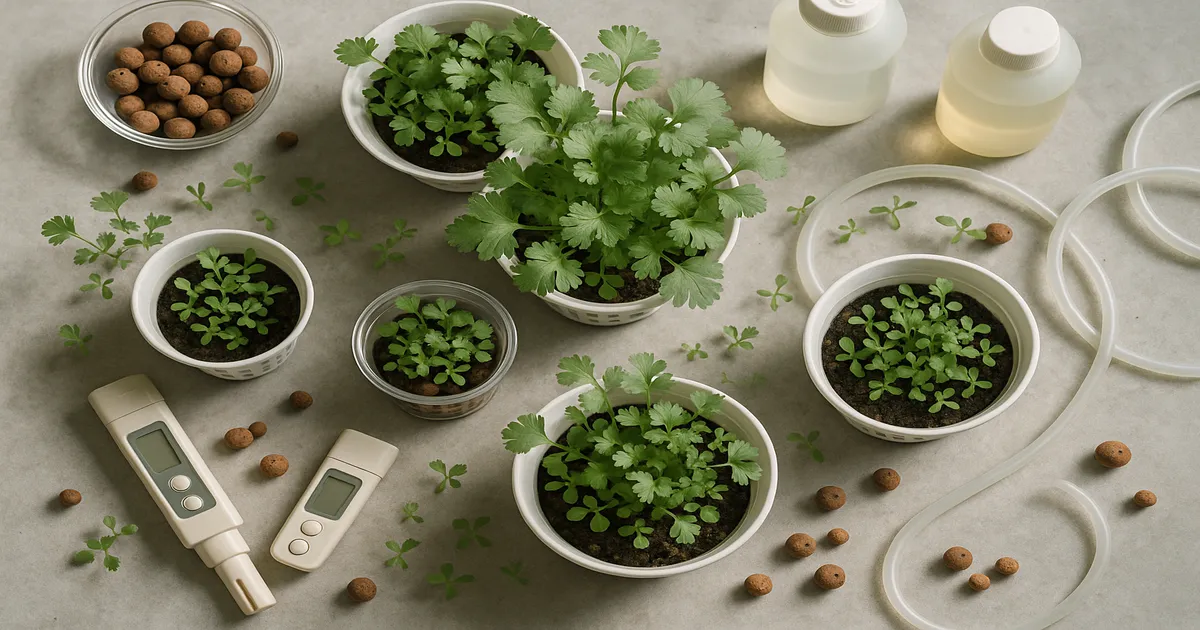
Quick Answer: To grow more cilantro, combine two strategies: maximize leaf production per plant through slow-bolt varieties, proper lighting, and cut-and-come-again harvesting, then maintain a continuous supply by sowing new seeds every 2–3 weeks. Bolting is your biggest enemy — controlling temperature and day length are the most powerful tools you have to fight it.
If you’ve ever watched a cilantro plant shoot up a flower stalk two weeks after planting, you already know the frustration. Learning how to grow more cilantro isn’t just about watering more or adding fertilizer. It’s about understanding why cilantro bolts and systematically removing every trigger that causes it.
The Two-Part Strategy for Growing More Cilantro
The first part is squeezing as much leaf production as possible from each plant: choose slow-bolt varieties, keep temperatures cool, control your photoperiod, and harvest regularly using the cut-and-come-again method. The second part is accepting that cilantro has a short life and planning around it. Succession planting every 2–3 weeks ensures you always have plants at peak production while others are winding down.
Neither strategy alone is enough. Even the best slow-bolt variety will eventually flower, and perfect succession timing won’t save you if every plant bolts in week three from heat stress.
Key Numbers at a Glance
| Parameter | Target Range |
|---|---|
| Air temperature | 50–75°F (10–24°C) |
| Soil pH | 6.2–6.8 |
| Hydroponic pH | 5.8–6.4 (sweet spot 6.0–6.2) |
| EC (vegetative) | 1.2–1.8 EC (600–900 PPM) |
| Light hours (photoperiod) | 10–12 hours/day |
| Days to first harvest | 21–28 days (transplant); 30–40 days (direct seed) |
Choose the Right Variety to Grow More Cilantro
Variety selection is one of the highest-leverage decisions you’ll make. The difference between a standard grocery-store cilantro variety and a dedicated slow-bolt cultivar can be two to three extra weeks of harvest.
| Variety | Bolt Resistance | Leaf Yield | Notes |
|---|---|---|---|
| Leisure | ★★★★★ | ★★★★★ | Top pick for home and commercial growers |
| Calypso | ★★★★★ | ★★★★☆ | Compact habit; excellent for containers and hydro |
| Santo | ★★★★☆ | ★★★★★ | Most widely available slow-bolt variety |
| Slow Bolt | ★★★★☆ | ★★★★☆ | Solid all-around performer; easy to find |
| Caribe | ★★★★☆ | ★★★★☆ | Vigorous; handles warmer conditions well |
| Jantar | ★★★☆☆ | ★★★★☆ | Outstanding flavor; moderate bolt resistance |
| Long Standing | ★★★★☆ | ★★★★☆ | Consistent; great for succession planting |
Leisure and Calypso perform well in both soil and hydroponic systems. Calypso’s compact growth habit makes it especially well-suited to NFT channels and smaller containers. One thing that doesn’t change between systems: cilantro has a taproot, so direct sowing is strongly preferred over transplanting. Disturbing the taproot during transplant almost always causes stress that accelerates bolting.
Vietnamese Coriander: The No-Bolt Alternative
If bolting is a constant battle, consider Persicaria odorata — Vietnamese coriander. It’s not true cilantro, but the flavor is remarkably similar and it never bolts. It’s a perennial in USDA zones 9–11 and thrives as a container plant indoors year-round. Worth keeping a pot going alongside your standard cilantro succession.
Succession Planting for a Continuous Harvest
Sowing a new batch of seeds every 2–3 weeks is the single most reliable method for maintaining a continuous cilantro harvest. By the time one planting starts to bolt, the next is hitting peak leaf production. Aim to keep at least two or three staggered plantings going at all times.
Mark your calendar and treat it like a recurring task. With cilantro’s short lifecycle, one missed sowing window creates a noticeable gap in your harvest.
Best Systems for Succession Planting
| System | Suitability | Notes |
|---|---|---|
| In-ground beds | Excellent | Best for large-scale succession; easy to section off rows |
| Raised beds | Excellent | Better drainage and soil temp control than in-ground |
| Containers/pots | Very Good | Minimum 8–12 inches deep for taproot; easy to rotate |
| Kratky (passive hydro) | Very Good | Low-maintenance; ideal for home growers |
| DWC | Good | Fast growth; requires temperature management |
| NFT | Good | Efficient at scale; good for commercial succession |
| Ebb & Flow | Good | Works well with net pots and loose grow media |
| Wicking systems | Good | Beginner-friendly; simple to set up multiple units |
Hydroponic systems offer a real speed advantage — cilantro typically grows 30–50% faster in hydro than in soil under equivalent conditions. That compresses your succession cycle, potentially allowing you to sow every 10–14 days instead of every 2–3 weeks.
Spacing and Density
- Soil or raised beds: 4–6 plants per square foot; thin once seedlings establish
- Containers: At least 8–12 inches deep to accommodate the taproot — shallower pots stress the plant and trigger early bolting
- Hydroponic net pots: 2–3 inch net pots work for individual plants; space 4–6 inches apart in NFT channels (Bootstrap Farmer 3-Inch Net Cups)
Lighting: Photoperiod and Intensity
Why 12 Hours Is the Magic Number
Cilantro is a facultative long-day plant, meaning longer days push it toward flowering. Keeping your photoperiod at or below 12 hours per day is one of the most powerful levers for delaying bolting indoors.
This trips up growers who come from growing basil. Running lights 18–24 hours works great for basil — but with cilantro, that schedule triggers bolting fast. Stick to 10–12 hours of light and give the plant a genuine dark period.
PPFD Targets by Growth Stage
| Growth Stage | PPFD (µmol/m²/s) | DLI (mol/m²/day) |
|---|---|---|
| Seedling | 100–200 | 4–8 |
| Vegetative / Leaf production | 200–400 | 10–14 |
| Maximum production | 350–500 | 14–18 |
Cilantro doesn’t need intense light. Pushing beyond 600 PPFD generates heat and can accelerate the very bolting you’re trying to prevent. Keep your spectrum leaning toward blue — a blue:red ratio of roughly 1:2 to 1:3 promotes compact, leafy growth and helps suppress early flowering.
Note on DLI correction: DLI values in the original draft were slightly high for a 10–12 hour photoperiod. The figures above reflect realistic DLI at those light hours and PPFD levels.
Recommended Grow Lights
- Home/hobbyist (1–4 sq ft): Keep the fixture 12–18 inches above the canopy. The Spider Farmer SF-1000 is a solid choice, as is the Mars Hydro TS-600
- Mid-scale (4–16 sq ft): Spider Farmer SF-2000 or AC Infinity IONBOARD S24
- Commercial: Fluence SPYDR or Gavita Pro LED bars with supplemental blue LED strips
Shade Cloth for Outdoor Growers
Cilantro thrives with just 4–6 hours of direct sun. Positioning plants where they receive afternoon shade can meaningfully slow bolting during summer. A 30–50% shade cloth stretched over your bed also keeps soil temperature lower — a double benefit.
Nutrients and Feeding
Macronutrient Priorities
Cilantro is a light-to-moderate feeder. Overfeeding causes tip burn, bitterness, and accelerated bolting. During vegetative leaf production, aim for a nutrient ratio of roughly 3:1:2 (N:P:K). Nitrogen drives leafy growth; excess phosphorus signals the plant to shift toward reproduction. Avoid high-phosphorus bloom boosters entirely during the leaf production phase.
EC and PPM Targets by Growth Stage
| Growth Stage | EC | PPM (500 scale) |
|---|---|---|
| Seedling (weeks 1–2) | 0.8–1.2 | 400–600 |
| Vegetative (weeks 2–5) | 1.2–1.8 | 600–900 |
| Pre-bolt / Heavy production | 1.6–2.2 | 800–1,100 |
Hydroponic Nutrient Solution
Per gallon of RO or filtered water for the vegetative stage:
- Base nutrient (3-part system at 3:2:1 Grow/Micro/Bloom ratio): follow manufacturer’s vegetative rate (General Hydroponics Flora Series 3-Part)
- Cal-Mag supplement: 5 mL/gallon
- Chelated iron: target 2–3 PPM Fe (Fe-EDTA or Fe-DTPA preferred)
- pH Down (phosphoric acid): adjust to pH 6.0–6.2 after mixing all nutrients
Note: The original draft listed Maxibloom 5-15-14 as a base nutrient for vegetative cilantro. Maxibloom is a high-phosphorus bloom formula and is not appropriate for leaf production. Use a balanced grow-stage formula instead.
Keep nutrient solution temperature between 65–72°F (18–22°C). Warmer solution promotes root rot; cooler solution slows nutrient uptake.
Soil Feeding Schedule
- Incorporate compost at 20–30% by volume at planting
- Top-dress with worm castings (¼ inch layer) every 3–4 weeks
- Supplement every two weeks with liquid fish emulsion during active growth
Micronutrients
Target 150–200 PPM calcium and 40–60 PPM magnesium in your hydroponic solution — a good Cal-Mag supplement covers both. Iron deficiency shows up as interveinal chlorosis on young leaves; chelated iron at 2–3 PPM Fe corrects it quickly.
pH and EC Management
Ideal pH by System
- Soil/raised bed: 6.2–6.8
- Hydroponic systems: 5.8–6.4 (sweet spot: 6.0–6.2)
- Aquaponics: 6.8–7.2 (a compromise between fish and plant needs)
Monitoring and Adjusting pH
A quality digital pH meter is non-negotiable for hydroponic growers. The Bluelab pH Pen and Apera PC60 are both reliable choices. Calibrate weekly with pH 4.0 and 7.0 buffer solutions — uncalibrated meters drift and give false confidence.
Always mix nutrients first, then adjust pH. Nutrient additions shift pH on their own, so adjusting before you add nutrients means adjusting twice.
EC Management
Top off your reservoir between changes using plain water, not nutrient solution. Evapotranspiration concentrates nutrients over time, and adding more nutrient solution pushes EC higher than your plants need. Do a full reservoir change every 7–10 days to prevent salt buildup. For soil growers, flush with 2–3x the pot volume of pH-adjusted water every 4–6 weeks.
Harvesting to Encourage More Growth
Cut-and-Come-Again Method
Start harvesting at 3–4 weeks from transplant or 4–5 weeks from direct seed — once plants are 6 inches tall with several sets of leaves. Always harvest outer stems first, cutting them at the base rather than snipping tips. This directs energy back to the center and encourages new growth.
Morning is the best time to harvest. Essential oil content peaks early in the day, so you get better flavor and the plant has the full day to recover.
Never remove more than one-third of the plant in a single harvest. Regular, moderate harvesting signals the plant to keep producing leaves — it’s one of the simplest ways to extend your harvest window.
What to Do When Cilantro Starts to Bolt
Watch for the signs: a tall central stalk, leaves becoming small and feathery, flavor turning sharp and then bitter. When you see this:
- Harvest everything immediately — flavor is still usable at the early bolt stage
- Pinch out the flower stalk to buy another week or two of leaf production
- Let it go to seed for coriander spice or to save seed for replanting
Lightly crush the seeds before planting (each “seed” is actually two seeds fused together) to improve germination rates. This closes the loop on your succession system and keeps seed costs near zero.
Expected yields:
- Soil (cut-and-come-again): 1–2 oz (28–57g) fresh leaves per plant per cycle
- Hydroponic (NFT/DWC with succession): 0.5–1.5 lbs (225–680g) per square foot per month
Troubleshooting Common Problems
Bolting Too Early
The most common culprits are temperatures above 75–80°F (24–27°C), day length exceeding 13 hours, drought stress, and root-bound conditions. Fix the environment first — shade cloth outdoors, a 12-hour photoperiod indoors, consistent watering, and containers deep enough for the taproot. Then layer in slow-bolt varieties on top of those environmental controls.
Yellowing Leaves and Tip Burn
Yellowing on older, lower leaves points to nitrogen deficiency — increase your N ratio or add fish emulsion. Yellowing between the veins on young leaves is interveinal chlorosis, a classic sign of iron deficiency; add chelated iron to reach 2–3 PPM Fe. Brown, crispy leaf tips usually indicate calcium deficiency or salt stress — check your EC and add Cal-Mag if calcium is below 150 PPM.
Leggy, Sparse Growth
Leggy cilantro is almost always a light problem. If plants are stretching toward the light source and producing sparse, widely-spaced leaves, your PPFD is too low. Aim for 200–400 PPFD during vegetative growth and make sure your spectrum isn’t too red-heavy. Move lights closer or upgrade your fixture.
Root Rot in Hydroponic Systems
Root rot is typically caused by warm nutrient solution and light leaking into the reservoir. Keep solution temperature at 65–72°F (18–22°C), block every light source from your reservoir, and add beneficial bacteria like Hydroguard at the manufacturer’s recommended rate. Healthy roots should be white and firm — brown, slimy roots need immediate attention.
Frequently Asked Questions
How long does cilantro last before it bolts? Under ideal conditions — cool temperatures, short photoperiod, and a slow-bolt variety — cilantro can produce harvestable leaves for 6–8 weeks. In warm weather or under long days, that window can shrink to 2–3 weeks. Succession planting is the only reliable way to maintain a continuous supply regardless of how long individual plants last.
Can I regrow cilantro from cuttings? Not reliably. Cilantro doesn’t root well from stem cuttings the way basil does. The most effective way to regenerate your supply is to direct-sow fresh seed on a regular schedule. If you want a cilantro-like herb that propagates easily from cuttings, Vietnamese coriander (Persicaria odorata) is the better choice.
Why does my hydroponic cilantro taste bitter? Bitterness usually signals one of three things: the plant is beginning to bolt, your EC is too high (over-feeding concentrates compounds that taste harsh), or you’re harvesting at the wrong time of day. Harvest in the morning when essential oil content peaks, keep EC within the vegetative range, and watch for early bolt signs so you can harvest before flavor degrades.
How many cilantro plants do I need for weekly harvests? For a household that uses cilantro regularly, plan on 6–9 plants across three staggered plantings (2–3 plants per planting). That gives you something to harvest every week without stripping any single plant too hard. Scale up proportionally for larger needs.
Does cilantro grow back after cutting? Yes — if you harvest correctly. Cut outer stems at the base, never remove more than one-third of the plant at once, and leave the central growing point intact. Done consistently, this cut-and-come-again approach can extend a single plant’s productive life by several weeks compared to tip-snipping or harvesting all at once.