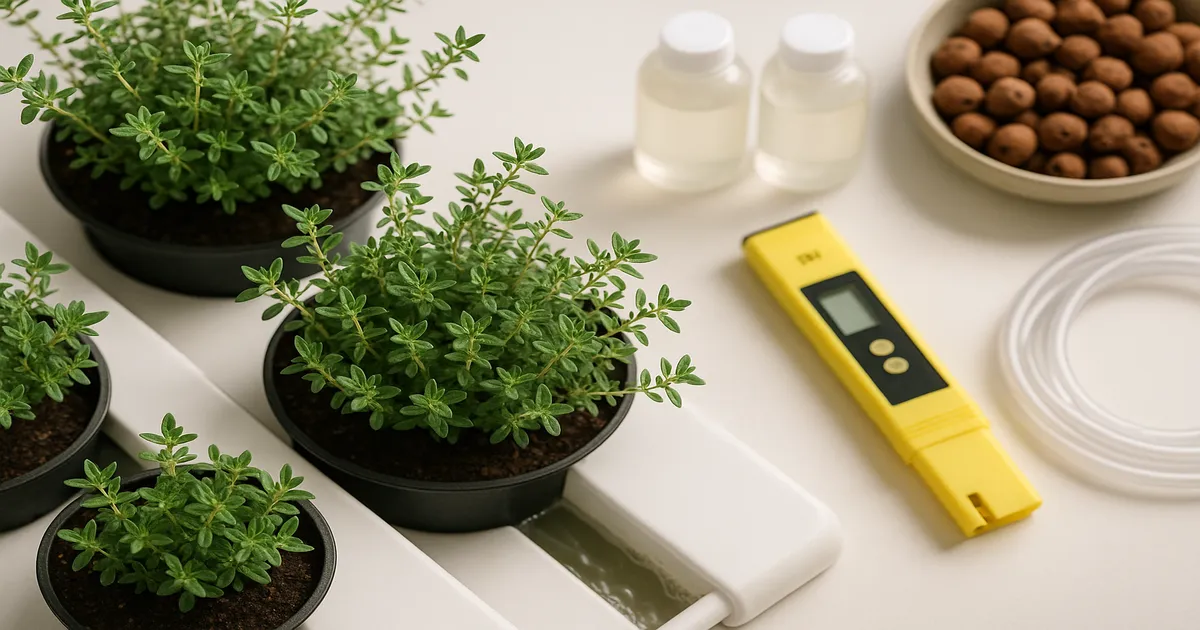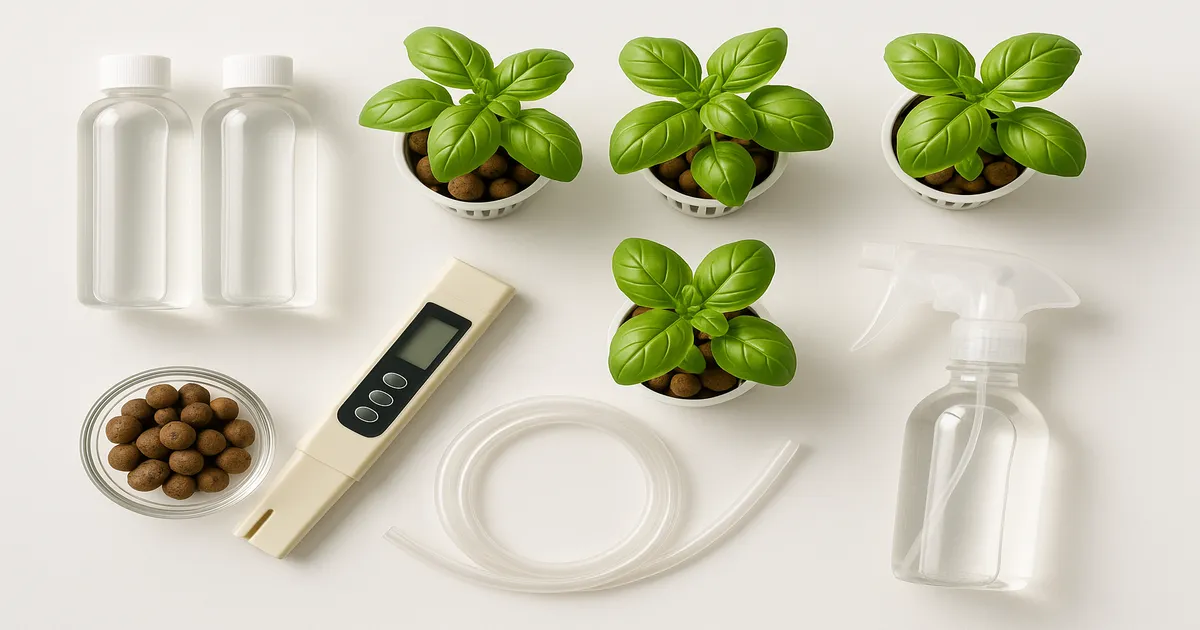
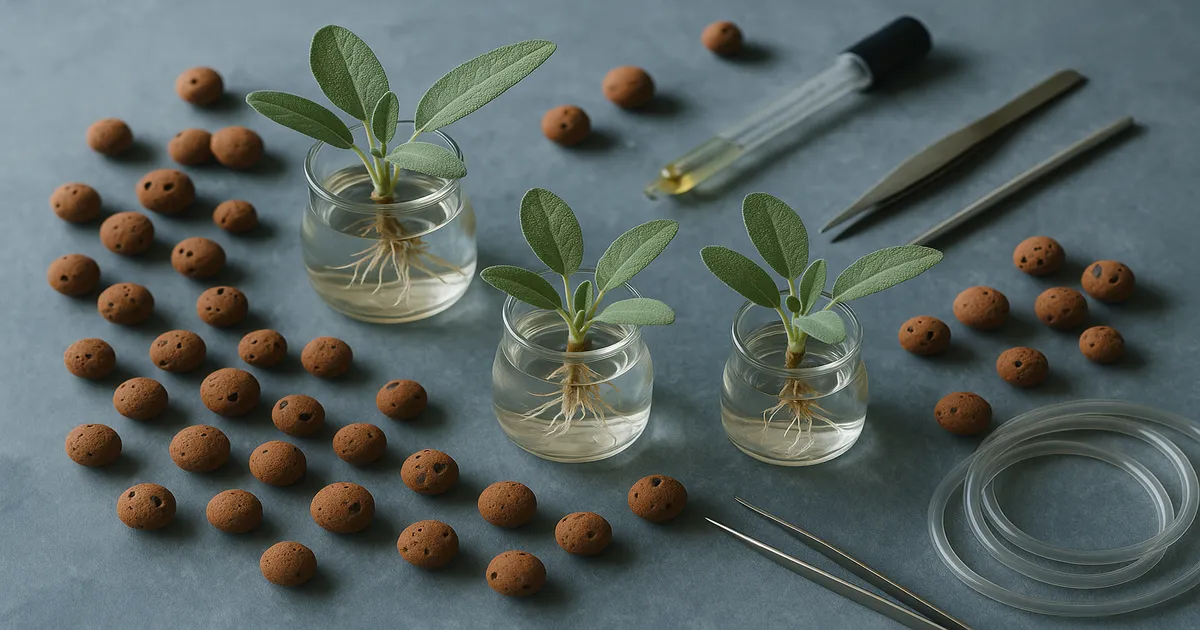
Quick Answer: White sage (Salvia apiana) is the gold standard for smudging — a slow-growing, drought-adapted shrub that needs full sun, excellent drainage, and lean nutrients to produce the aromatic oils that matter. It grows well in-ground (Zones 8–11), in containers, or hydroponically. Growing your own is the most ethical alternative to wild harvesting, which has put serious pressure on native populations. This guide covers everything you need to know about how to grow smudging sage — from seed to finished bundle.
Quick Reference: Core Growing Parameters
| Parameter | Soil / Containers | Hydroponics |
|---|---|---|
| pH | 6.0–7.0 | 5.8–6.5 (sweet spot 6.0–6.2) |
| EC (mature) | N/A | 1.2–1.8 EC (600–900 PPM) |
| Light (daily) | 6–8 hrs direct sun | 16/8 photoperiod, 400–600 PPFD |
| Temperature | 65–85°F (18–29°C) | Reservoir: 65–72°F (18–22°C) |
Choosing the Right Smudging Sage Variety
White Sage (Salvia apiana): The Ceremonial Standard
White sage is what most people picture when they think of smudging — silvery, woolly leaves with a deep, resinous scent. That aroma comes from a specific essential oil profile: 1,8-cineole, camphor, and α-thujone, which also produce the slow, even burn prized in ceremonial use. The tradeoff is that S. apiana is slow and particular. Expect 2–3 years from seed before you’re harvesting meaningful amounts, and it will not forgive soggy roots.
Common Garden Sage (Salvia officinalis): Best for Beginners and Hydroponics
If you want smudging sage on your table within a season, S. officinalis is your best starting point. It’s hardy to Zone 4–5, grows fast, and thrives in hydroponic systems that would stress S. apiana. For smudging, these cultivars stand out:
- ‘Berggarten’ — large rounded leaves, excellent oil content, compact habit
- ‘Holt’s Mammoth’ — oversized leaves perfect for bundle-making
- ‘Purpurascens’ (Purple Sage) — aromatic with beautiful purple-tinged foliage
Cleveland Sage and Other Smudging Species
Cleveland sage (Salvia clevelandii) is intensely fragrant — arguably more so than common sage — and handles drought nearly as well as S. apiana. It’s a strong middle-ground choice for Zones 8–10 growers who want more aroma than S. officinalis without the full challenge of white sage. Salvia leucophylla (Purple Sage) is another California native with woolly gray-green leaves, though it’s less commonly cultivated.
| Species | Difficulty | Growth Rate | Smudging Quality | Best For |
|---|---|---|---|---|
| S. apiana (White Sage) | Challenging | Slow (2–3 yrs) | ⭐⭐⭐⭐⭐ | Ceremonial, purists |
| S. officinalis (Garden Sage) | Easy | Fast (3–4 mo) | ⭐⭐⭐⭐ | Beginners, hydroponics |
| S. clevelandii (Cleveland Sage) | Moderate | Moderate | ⭐⭐⭐⭐ | Zones 8–10, fragrance |
| S. leucophylla (Purple Sage) | Moderate | Moderate | ⭐⭐⭐ | Native gardens |
Seeds vs. Cuttings
S. apiana seeds are notoriously stubborn — germination rates of 30–50% are typical. You’ll get better results with cold stratification (refrigerate moist seeds for 2–4 weeks) or light scarification before sowing. Even then, plan for 2–4 weeks to see sprouts. Stem-tip cuttings are far more reliable: take 4–6 inch tips in spring, dip in rooting hormone, and root in a perlite/vermiculite mix at 70–75°F (21–24°C). Roots develop in 3–5 weeks, and you’ll skip a full year of the growth timeline. For S. officinalis, established plants can also be divided in spring.
How to Grow Smudging Sage: Choosing Your System
In-Ground and Raised Bed Growing
In-ground growing is ideal for S. apiana in USDA Zones 8b–11, where the Mediterranean climate most closely mirrors its native habitat. Drainage is non-negotiable — white sage will die in waterlogged soil faster than almost any other herb. Raised beds give you full control over soil composition, which is a real advantage in heavier clay soils or wetter climates. Amend generously with 30–40% perlite and coarse sand; this is what separates thriving plants from dead ones.
Container Growing for Colder Climates
Containers are the smart move if you’re in Zone 7 or below. A 10–15 gallon pot with drainage holes lets you bring the plant indoors before frost and reposition it to chase sun. Use a well-draining mix and never let the pot sit in a saucer of standing water.
Hydroponic Systems: Kratky, NFT, and Ebb & Flow
Hydroponics works well for smudging sage — with the right system. Because white sage is drought-adapted, its roots need oxygen as much as moisture. Avoid systems that keep roots constantly submerged.
- Kratky (passive DWC): Excellent choice. The air gap between the water surface and net pot mimics the dry-down cycle sage prefers. Use 3-inch net pots in a dark reservoir to prevent algae growth.
- NFT (Nutrient Film Technique): A thin, intermittent film of solution keeps roots moist but well-oxygenated. Works best for S. officinalis rather than S. apiana.
- Ebb & Flow (Flood & Drain): Flood cycles followed by full drainage make this a natural fit for drought-adapted plants. Flood for 15–30 minutes, 2–3 times daily, depending on media and ambient temperature.
- Aeroponics: Nutrients are delivered as a fine mist directly to bare roots, with maximum oxygen exposure between cycles. It’s an advanced setup but arguably the best hydroponic environment for S. apiana — the root zone stays moist but never waterlogged.
For any hydroponic build, a reliable air pump keeps dissolved oxygen levels high and discourages root rot.
| System | Pros | Cons | Best For |
|---|---|---|---|
| In-ground | Low maintenance, natural | Drainage-dependent, zone-limited | Zones 8–11, S. apiana |
| Containers | Portable, overwintering | Dries out fast, root-bound risk | Cold climates, all species |
| Kratky | Simple, no pumps | Slower growth | Beginners, S. officinalis |
| NFT | Efficient, oxygenated | Equipment cost | Intermediate growers |
| Ebb & Flow | Flexible, scalable | Pump maintenance | All species |
Nutrient Requirements for Smudging Sage
Why Less Is More
Overfeeding smudging sage is the second most common mistake growers make (overwatering is the first). Excess nitrogen produces lush, fast-growing foliage that looks healthy but smells weak. The essential oils you want — camphor, cineole, and terpenes — concentrate when the plant experiences mild stress, not abundance.
Aim for a nutrient profile that favors lower nitrogen in mature plants. A ratio of 3-1-2 or 2-1-2 (N-P-K) works well. Potassium supports stomatal regulation and terpene production. Phosphorus supports root development and essential oil synthesis pathways.
EC and PPM Targets by Growth Stage
| Growth Stage | PPM | EC |
|---|---|---|
| Seedling (0–6 weeks) | 200–400 PPM | 0.4–0.8 EC |
| Vegetative (6 weeks–6 months) | 500–800 PPM | 1.0–1.6 EC |
| Established / Mature | 600–900 PPM | 1.2–1.8 EC |
| Pre-harvest (stress phase) | 300–500 PPM | 0.6–1.0 EC |
Micronutrients and CalMag
Don’t overlook calcium (150–200 PPM), magnesium (40–60 PPM), and sulfur — sulfur in particular supports aromatic compound synthesis. Hydro growers using RO water should add a CalMag supplement at 3–5 mL/gallon as a baseline. (Botanicare Cal-Mag Plus)
Key micronutrient targets:
- Iron (Fe): 2–4 PPM
- Manganese (Mn): 0.5–1.0 PPM
- Zinc (Zn): 0.1–0.3 PPM (supports terpene enzyme activity)
- Boron (B): 0.1–0.5 PPM
- Copper (Cu): 0.05–0.1 PPM
Pre-Harvest Nutrient Stress
Two to three weeks before harvest, reduce your nutrient solution to 300–500 PPM (0.6–1.0 EC). This mild stress pushes essential oil concentration higher — a technique used by cannabis and culinary herb growers with measurable results. Soil growers can achieve a similar effect by top-dressing with worm castings once or twice per season instead of synthetic fertilizers.
pH and EC Management
Ideal Ranges and Monitoring
Keep soil pH between 6.0–7.0. White sage tolerates slightly alkaline conditions better than most herbs — up to about 7.5 in its native habitat. For hydroponics, target 5.8–6.5 with a sweet spot of 6.0–6.2, which optimizes availability for most macro and micronutrients.
Invest in a quality digital pH meter and calibrate it weekly with pH 4.0 and 7.0 buffer solutions. Check pH and EC every 1–2 days in active hydro systems, every 3–5 days in soil or containers. (Apera PC60)
Adjusting pH Safely
Use potassium hydroxide (KOH) as your pH Up — it raises pH while adding beneficial potassium, a genuine double benefit for sage. For pH Down, phosphoric acid works well; add in 0.5 mL increments, stir, and retest before adding more. Always adjust pH after adding nutrients to your solution.
Preventing Salt Buildup and pH Drift
Top off your reservoir with plain pH-adjusted water between full changes — topping off with nutrient solution concentrates salts quickly. Do a full reservoir change every 7–14 days. In containers and soil, flush with 2–3× the pot volume of plain water every 4–6 weeks.
Upward pH drift is common in hydro systems as plants consume acidic ions. A small amount of potassium silicate helps buffer these swings while also strengthening cell walls and improving drought tolerance — a particularly good fit for white sage. Keep reservoir temperature at 65–72°F (18–22°C) to further stabilize pH and prevent root rot.
Lighting for Indoor Smudging Sage
Natural Light and DLI Targets
Salvia apiana is a full-sun plant. It needs 6–8 hours of direct sunlight daily and in its native Southern California habitat receives a DLI of 30–50 mol/m²/day in summer. Less than that and you’ll get leggy, low-aroma growth that won’t make good smudging material.
Grow Light Spectrum and PPFD Targets
Full-spectrum LEDs in the 3000K–4000K range work well for vegetative growth. Blue spectrum (400–500 nm) promotes compact, aromatic growth. Red spectrum (620–700 nm) drives photosynthesis efficiency. UV-B (280–315 nm) is the most valuable addition for aromatic herb growers — it directly stimulates terpene and essential oil production.
| Growth Stage | PPFD (µmol/m²/s) | DLI (mol/m²/day) |
|---|---|---|
| Seedling | 150–250 | 8–12 |
| Vegetative | 400–600 | 18–25 |
| Mature / Pre-harvest | 600–800 | 25–35 |
Run a 16/8 light/dark cycle during vegetative growth. Shifting to 14/10 indoors mimics late summer and encourages flowering and oil maturation. Don’t run 24-hour light cycles — sage needs a dark period for terpene accumulation and metabolic rest.
In the final 3–4 weeks before harvest, add 2–4 hours of UV-B exposure per day using a supplemental source like a T5 HO 10.0 reptile UV bulb. This additional UV stress measurably increases essential oil density in the leaves.
Fixture recommendations by budget:
- Budget: Mars Hydro TS-1000 or Spider Farmer SF-1000 (2×2 ft canopy)
- Mid-range: HLG 100 V2 Rspec or Spider Farmer SF-2000 (2×4 ft canopy)
- Advanced: Gavita Pro 1700e LED or HLG 650R (larger setups)
Planting, Care, and Harvesting
Germination and Seedling Care
Sow S. apiana seeds after cold stratification at a soil temperature of 65–75°F (18–24°C). Germination takes 2–4 weeks. Given the low germination rates typical of this species, sow 3–4 seeds per cell and thin to the strongest. Keep seedlings under lower-intensity light (150–250 PPFD) and at the lower end of the EC range — 200–400 PPM — until they’re established.
Transplanting and Spacing
Transplant white sage outdoors after your last frost, once nighttime temperatures stay above 50°F (10°C). Space plants 3–5 feet apart — they’ll eventually fill that space. In containers, a 10–15 gallon pot gives roots room to develop without holding excessive moisture.
Watering: The Most Common Mistake
The single biggest killer of white sage is overwatering. Let the soil dry out significantly between waterings — not just the surface, but several inches down. In containers, lift the pot; if it feels light, water thoroughly, then wait until it’s light again. In hydroponic systems, the dry-down cycle between flood events or the air gap in a Kratky reservoir serves the same function.
Pruning for Bushy Growth
Pinch growing tips regularly to encourage branching. Left unpruned, sage gets leggy — long bare stems with foliage only at the tips, which is the opposite of what you want for bundle-making. After each harvest, cut stems back by one-third to promote a dense, bushy structure for the next flush of growth.
When and How to Harvest Smudging Sage
Harvest in the morning after dew dries but before the heat of the day — essential oil concentration peaks at this time. For the most aromatic material, harvest before the plant flowers. Use clean, sharp scissors and take no more than one-third of the plant at a time. Bundle stems loosely, secure with natural cotton twine, and hang to dry in a warm, well-ventilated space for 2–4 weeks.
Realistic yield expectations:
- Mature S. apiana (3+ years): 1–3 oz dried leaf per harvest, 2–3 harvests/year in ideal conditions
- Established S. officinalis: 2–4 oz dried leaf per harvest, multiple harvests per season
Troubleshooting Common Problems
Root Rot
Root rot (Pythium, Phytophthora) is the most serious threat to white sage, especially in hydroponic systems or heavy soils. Symptoms include wilting despite moist conditions, yellowing lower leaves, and brown, slimy roots. Prevention is far easier than cure: keep reservoir temperatures below 72°F (22°C), maintain strong aeration, and never let roots sit in stagnant solution. If you catch it early, remove affected roots, treat with a hydrogen peroxide rinse (3 mL of 3% H₂O₂ per liter of water), and lower your reservoir temperature immediately.
Powdery Mildew
White sage is moderately susceptible to powdery mildew in humid indoor environments. Improve air circulation, keep humidity below 50% during lights-on periods, and avoid wetting foliage. A diluted potassium bicarbonate spray (1 tsp per quart of water) is an effective organic treatment.
Yellowing Leaves
Yellow leaves on sage usually point to one of three causes: overwatering, nitrogen deficiency, or iron lockout from incorrect pH. Check your pH first — iron becomes unavailable above pH 6.5 in hydro systems. If pH is correct, check your EC and compare against the stage targets above.
Leggy, Low-Aroma Growth
If your sage is stretching and smells faint, it’s almost always a light problem. Increase PPFD, reduce the distance between your light and canopy, or move outdoor plants to a sunnier position. Overfeeding nitrogen can also suppress oil production — dial back your EC and let the plant experience mild stress.
Frequently Asked Questions
How long does it take to grow smudging sage from seed? Salvia apiana takes 2–3 years from seed to produce harvest-worthy amounts. S. officinalis is ready to harvest in 3–4 months. Starting S. apiana from cuttings cuts roughly a year off the timeline.
Can you grow smudging sage indoors year-round? Yes — with adequate light. You’ll need at least 400–600 PPFD during the vegetative stage, which typically means a quality LED grow light. S. officinalis adapts more readily to indoor conditions than S. apiana.
What’s the difference between white sage and garden sage for smudging? White sage (S. apiana) has a stronger, more resinous scent and is the traditional choice for ceremonial smudging. Garden sage (S. officinalis) is milder but still aromatic and burns well. Both are valid — white sage is simply more potent.
How do I know when smudging sage is ready to harvest? Harvest before flowering, when leaves are fully developed and the plant is actively growing. Rub a leaf between your fingers — if the scent is strong and resinous, the essential oil content is at its peak.
Is it legal to grow white sage? Growing Salvia apiana is legal in the United States. Wild harvesting on public or protected land is restricted in many areas, which is exactly why growing your own is the responsible choice.