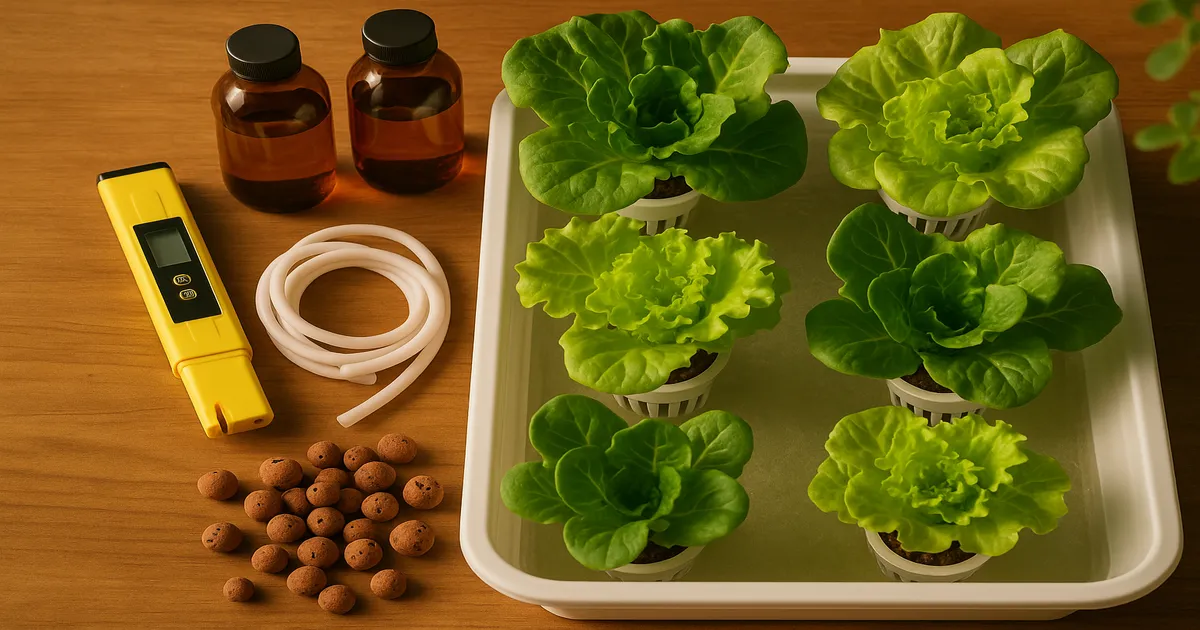
Quick Answer: Yes, you can regrow hydroponic lettuce — and it’s one of the most rewarding things you can do with a hydroponic setup. The two main approaches are cut-and-come-again (CCA) harvesting, where you cut leaves repeatedly while keeping the root system intact, and stump regrowing, where you place a lettuce base in water or a nutrient solution. Most varieties give you 2–3 quality harvests before flavor declines or the plant bolts.
Knowing whether you can regrow hydroponic lettuce is one of the first questions new growers ask — and the answer changes how you think about your whole system. Instead of treating each plant as a single harvest, you treat it as a renewable source of fresh greens. Hydroponics accelerates regrowth compared to soil because roots have constant, direct access to oxygen and nutrients. This guide covers everything you need to make it work: methods, varieties, nutrients, lighting, and the pitfalls that trip up most beginners.
Two Methods for Regrowing Hydroponic Lettuce
Method 1: Cut-and-Come-Again (CCA) Harvesting
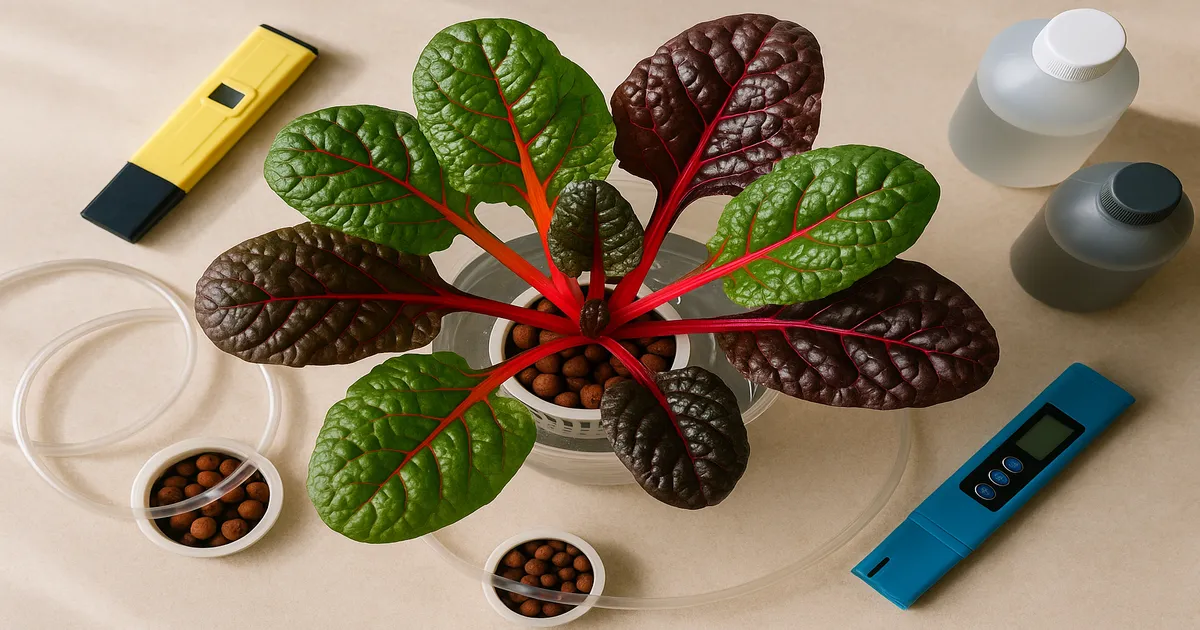
CCA is the gold standard for regrowing hydroponic lettuce. You harvest either the outer leaves individually or cut the entire plant down to 1–2 inches above the crown, leaving the apical meristem — the central growing tip — completely undamaged. That growing tip is everything. As long as it’s intact, the plant will push out new leaves.
Tool hygiene matters more than most beginners expect. Use clean, sharp scissors or a blade and sanitize between plants to avoid spreading pathogens. A clean cut also heals faster, getting the plant back into growth mode sooner.
Method 2: Regrowing Lettuce from Stumps or Scraps
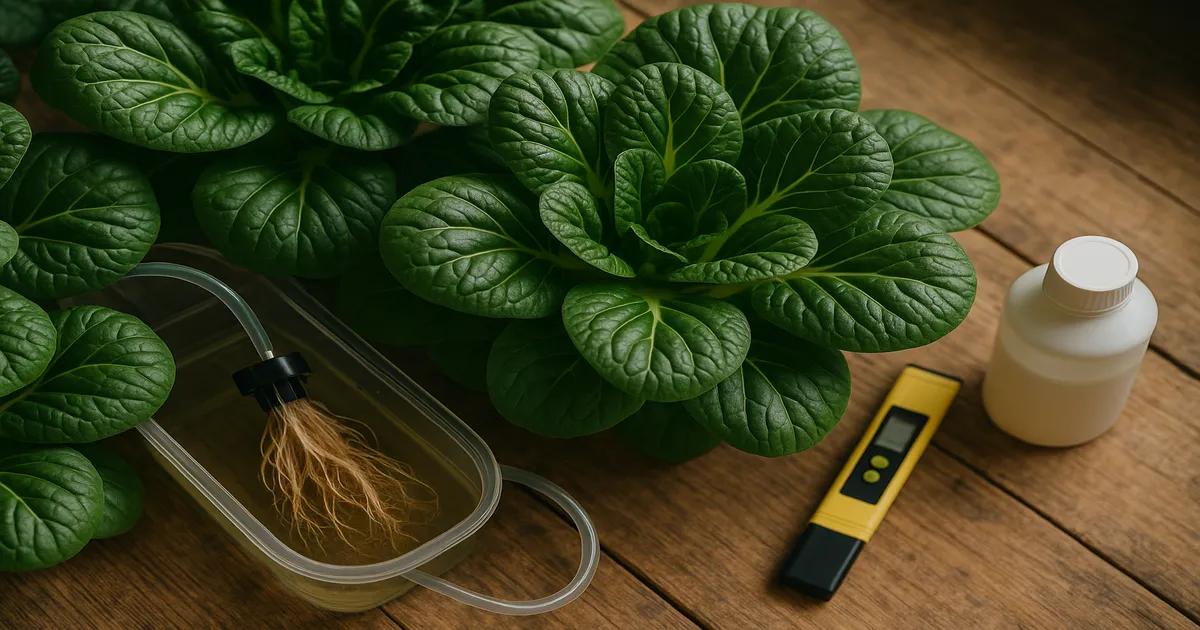
This is the method you’ve probably seen all over social media: take the bottom 1–2 inches of a grocery store lettuce head, place it in shallow water or drop it into a hydroponic system, and watch new leaves emerge. It works because the stem node and apical meristem are often still intact in store-bought heads.
Manage your expectations, though. Stump regrowing is a genuinely fun experiment and does produce edible leaves, but yields are modest — maybe a handful of leaves per stump — and the plant never fully recovers its original vigor. Think of it as a bonus harvest, not a production strategy.
Which Method Is Right for You?
If you want consistent yields, build around CCA. If you want a low-stakes experiment or a way to stretch grocery store greens a little further, stump regrowing costs nothing and delivers real satisfaction. Many growers do both.
Best Hydroponic Systems for Regrowing Lettuce
The general rule is simple: systems where the root zone stays undisturbed during harvest are best for CCA.
Deep Water Culture (DWC) is the top pick for beginners. Roots are suspended in an oxygenated nutrient solution and never disturbed when you harvest from above. Setup is straightforward, maintenance is minimal, and regrowth rates are excellent. A purpose-built DWC unit like the General Hydroponics WaterFarm makes this even easier to manage at home.
The Kratky method is passive DWC — a static reservoir with an air gap that develops naturally as the plant drinks down the solution. No pump, no electricity, very little to go wrong. It’s ideal for stump regrowing on a windowsill or countertop. Just keep the water level topped up and pH in check.
Nutrient Film Technique (NFT) runs a thin film of nutrient solution continuously over roots in sloped channels. It’s widely used in commercial lettuce production and handles CCA harvesting well. For home growers, it requires more infrastructure and is less forgiving of pump failures — but if you’re running a serious setup, the throughput is hard to beat.
Other systems worth knowing:
- Vertical towers work great for CCA — each plant sits in its own pocket, so harvesting one doesn’t disturb the others
- Ebb and flow systems work for regrowing but require careful timing to avoid stressing freshly cut plants
- Aeroponics delivers the fastest regrowth of any system due to superior root oxygenation, but the complexity and cost make it overkill for most home growers
Best Lettuce Varieties to Regrow Hydroponically
Loose-Leaf: Top Pick for Cut-and-Come-Again
Loose-leaf varieties are essentially bred for repeated harvesting. There’s no central head to protect, so you can cut freely without risking crown damage. Regrowth times run 10–18 days, and yield retention is typically 70–90% of the original harvest weight.
Top picks: Black Seeded Simpson, Oak Leaf, Lollo Rossa, Red Sails, and Salad Bowl. Several of these also have solid bolt resistance, which matters when you’re pushing a plant through multiple harvest cycles.
Butterhead and Bibb: Best All-Around Choice
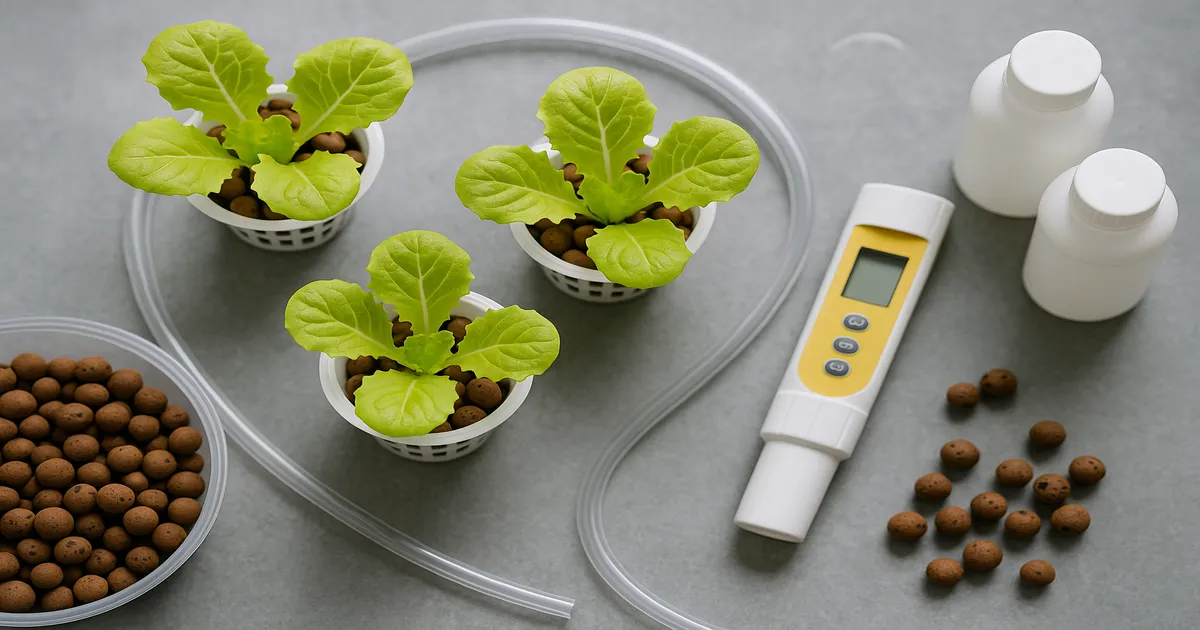
Butterhead types — Boston, Buttercrunch, Ermosa, Nancy — are arguably the best all-around choice for regrowing. Their loose, open head structure makes CCA harvesting easy without risking the crown, and flavor holds up beautifully across multiple cuts. Expect regrowth in 14–21 days and roughly 60–80% of original yield per cycle.
Romaine and Crisphead: Lower Priority
Romaine can be regrown, but the tight head structure makes it easy to accidentally damage the growing point. Outer-leaf harvesting works reasonably well. Crisphead (iceberg) varieties aren’t worth the effort — the dense structure makes clean CCA harvesting nearly impossible, and regrowth is slow and unpredictable.
Bolt-Resistant Varieties
If you want three full harvest cycles, bolt resistance is non-negotiable. Look for varieties labeled “slow to bolt.” Buttercrunch, Ermosa, and Salad Bowl are consistently strong performers in warm or high-light conditions.
Nutrient Management When You Regrow Hydroponic Lettuce
pH and EC Targets
Keep pH at 5.8–6.2. That’s the window where nitrogen, calcium, and iron all remain fully available. Slightly toward the higher end (6.0–6.2) improves calcium and magnesium uptake — especially important when the plant is regenerating new tissue after a cut.
| Growth Stage | PPM | EC |
|---|---|---|
| Stump Initiation (0–5 days post-cut) | 400–600 | 0.8–1.2 |
| Early Regrowth | 600–900 | 1.2–1.8 |
| Active Vegetative / Harvest-Ready | 800–1,200 | 1.6–2.4 |
| Late Cycle / Pre-Bolt | 600–800 | 1.2–1.6 |
Start at the low end immediately after a cut. The plant is stressed, and hitting it with full-strength nutrients right away risks burning tender new growth.
Key Nutrients for Regrowth
Nitrogen drives leaf growth and is the single most important macronutrient for regrowing lettuce. Calcium prevents tip burn — the most common disorder in hydroponic lettuce — by maintaining cell wall integrity. Potassium supports disease resistance and water regulation, and slightly elevated potassium also helps reduce tip burn. Target roughly 150–200 PPM for both calcium and potassium. Aim for an N:K ratio of 1.5:1 to 2:1, and avoid high-phosphorus bloom formulas — lettuce is a vegetative crop.
Recommended Nutrient Formulas
General Hydroponics Flora Series (3-part formula):
- Stump/initiation: FloraGro 5 mL/gal + FloraMicro 2.5 mL/gal + FloraBloom 1 mL/gal (~600–700 PPM)
- Active regrowth: FloraGro 7 mL/gal + FloraMicro 4 mL/gal + FloraBloom 2 mL/gal (~900–1,100 PPM)
Masterblend 4-18-38 (popular DIY formula):
- 2.4 g/gal Masterblend + 2.4 g/gal calcium nitrate + 1.2 g/gal Epsom salt (~800–1,000 PPM)
- Reduce by 30–40% for stump initiation
Simple 2-part option: MaxiGro or similar at 5–7 g/gal, targeting 700–1,000 PPM. Add a CalMag supplement like Botanicare Cal-Mag Plus at 2–5 mL/gal if tip burn appears.
Reservoir Maintenance
Change the reservoir every 7–14 days for small systems and every 14–21 days for larger ones. After a CCA cut, change it immediately — fresh nutrients give the stressed plant the best possible start. Keep reservoir temperature at 65–72°F (18–22°C); warmer water holds less oxygen and invites pathogens.
For pH monitoring, a reliable digital meter is non-negotiable. The Apera PC60 and Bluelab pH Pen are both excellent — calibrate weekly using pH 4.0 and 7.0 buffer solutions. Always adjust pH after mixing in nutrients, never before. Nutrients shift pH, so adjusting beforehand means you’re chasing a moving target.
Lighting for Regrowing Hydroponic Lettuce
Spectrum and Intensity
Lettuce is a low-to-medium light crop that responds strongly to blue-spectrum light (400–500 nm), which drives compact, leafy growth. Full-spectrum white LEDs at 3,500–5,000K work well, as do purpose-built grow lights with a red:blue ratio of roughly 5:1 to 8:1.
| Growth Stage | PPFD (µmol/m²/s) | DLI (mol/m²/day) |
|---|---|---|
| Stump Initiation (0–5 days post-cut) | 100–150 | 5–8 |
| Early Regrowth | 150–250 | 8–12 |
| Active Vegetative Growth | 200–300 | 12–17 |
| Maximum for Lettuce | 300–400 | 14–20 |
Reduce light intensity by 30–40% immediately after a CCA cut, then restore full intensity gradually over 3–5 days. A DLI of 14–17 mol/m²/day is the sweet spot for productive regrowth.
Photoperiod
An 18/6 (light/dark) schedule is the standard for hydroponic lettuce. Some growers drop to 14/10 to reduce bolting risk, accepting slightly slower growth in exchange for longer harvest windows. Avoid long photoperiods if your grow space runs warm — temperatures above 75°F (24°C) combined with extended days are the fastest route to a bolted, bitter plant.
For home growers, the Spider Farmer SF-2000 offers excellent value for 2×2 to 2×4 ft spaces. The Mars Hydro TS-1000 is another solid budget option. Step up to the HLG 100 V2 Rspec for better efficiency and a spectrum that genuinely suits leafy greens. Hang quantum boards 12–24 inches above the canopy and verify actual PPFD at canopy level with a PAR meter.
Troubleshooting Common Regrowing Problems
Bolting is the biggest threat. It’s triggered by heat above 75°F (24°C), long photoperiods, or plant stress — and once it starts, it’s essentially irreversible. The plant sends up a central flower stalk, leaves turn bitter, and regrowth quality collapses. Keep your grow space cool, stick to an 18/6 or 14/10 schedule, and choose bolt-resistant varieties. If you see the central stem elongating rapidly, harvest immediately and decide whether the stump is worth regrowing or whether it’s time to start fresh.
Tip burn — brown, papery edges on inner leaves — is a calcium delivery problem, not a calcium deficiency in the reservoir. The plant can’t move calcium fast enough to rapidly growing inner leaves, especially in low-airflow environments. Add a small fan to improve air circulation, ensure CalMag levels are adequate, and consider slightly elevated potassium. If tip burn persists, drop your light intensity slightly — rapid growth driven by high light can outpace calcium transport.
Slow or no regrowth after cutting usually comes down to three things: a damaged apical meristem, light levels that are too low, or EC that’s too high right after the cut. Check them in that order.
Root rot turns healthy white roots brown and slimy, and it spreads fast. Keep reservoir temperature below 72°F (22°C), cover your reservoir to block light, and add a beneficial bacteria product like Botanicare Hydroguard to your nutrient solution. Caught early, a reservoir change plus Hydroguard can often save the plant. If roots are mostly gone, start over.
Frequently Asked Questions
How many times can you regrow hydroponic lettuce?
Most varieties give you 2–3 quality harvests before yield and flavor noticeably decline. Loose-leaf varieties handle the most cycles; butterhead types are close behind. After the third harvest, most plants either bolt or produce small, bitter leaves that aren’t worth the effort.
Can you regrow store-bought lettuce in a hydroponic system?
Yes — as long as the base of the head (the bottom 1–2 inches) is intact with the stem node. Place it in a shallow container of pH-adjusted water or transfer it directly into a Kratky or DWC setup. Yields won’t match a purpose-grown hydroponic plant, but you’ll get a few handfuls of fresh leaves from something you’d otherwise compost.
How long does hydroponic lettuce take to regrow after cutting?
Loose-leaf varieties typically reach harvestable size in 10–18 days after a CCA cut. Butterhead types take 14–21 days. Speed depends heavily on light levels, nutrient availability, and whether the apical meristem was left fully intact.
How do you stop hydroponic lettuce from bolting when regrowing?
Keep temperatures below 75°F (24°C), use a 14/10 or 18/6 light schedule rather than 24-hour lighting, and choose bolt-resistant varieties like Buttercrunch or Ermosa. Harvesting regularly also helps — letting a plant sit unharvested for too long increases bolting risk, especially in warm conditions.
Does regrowing hydroponic lettuce actually save money?
Seeds are cheap — often just a few cents each — so the direct savings from regrowing aren’t dramatic. The real value is time: skipping the germination and seedling stage means you’re harvesting again in 10–21 days instead of 30–45. For growers who want a continuous supply of fresh greens, that time saving is worth more than the seed cost.