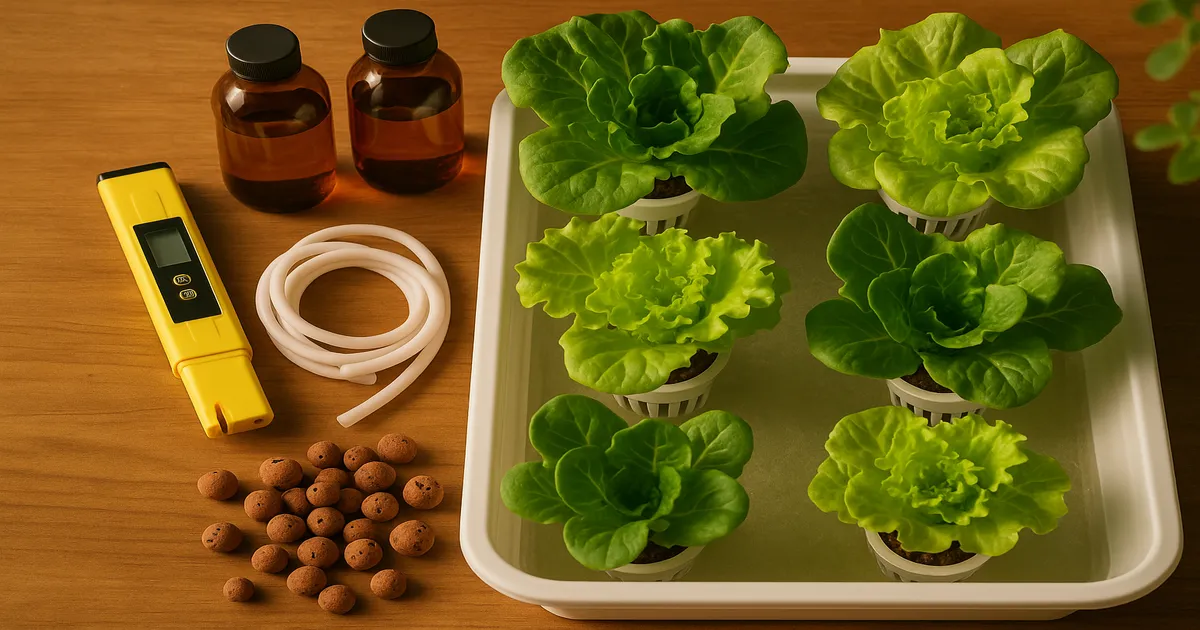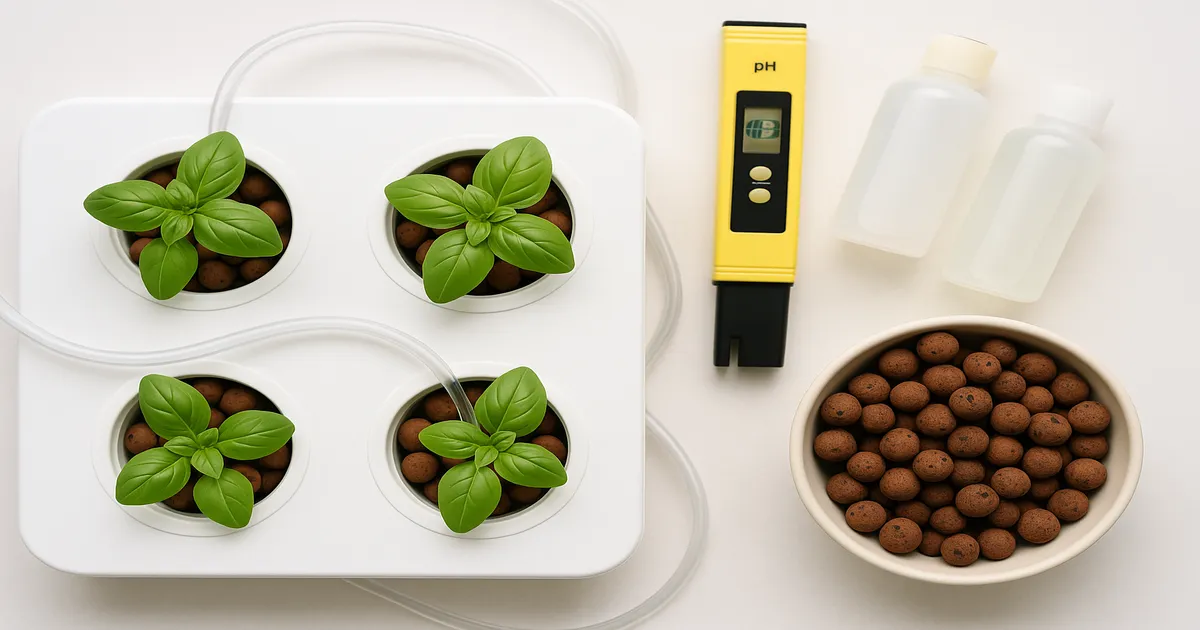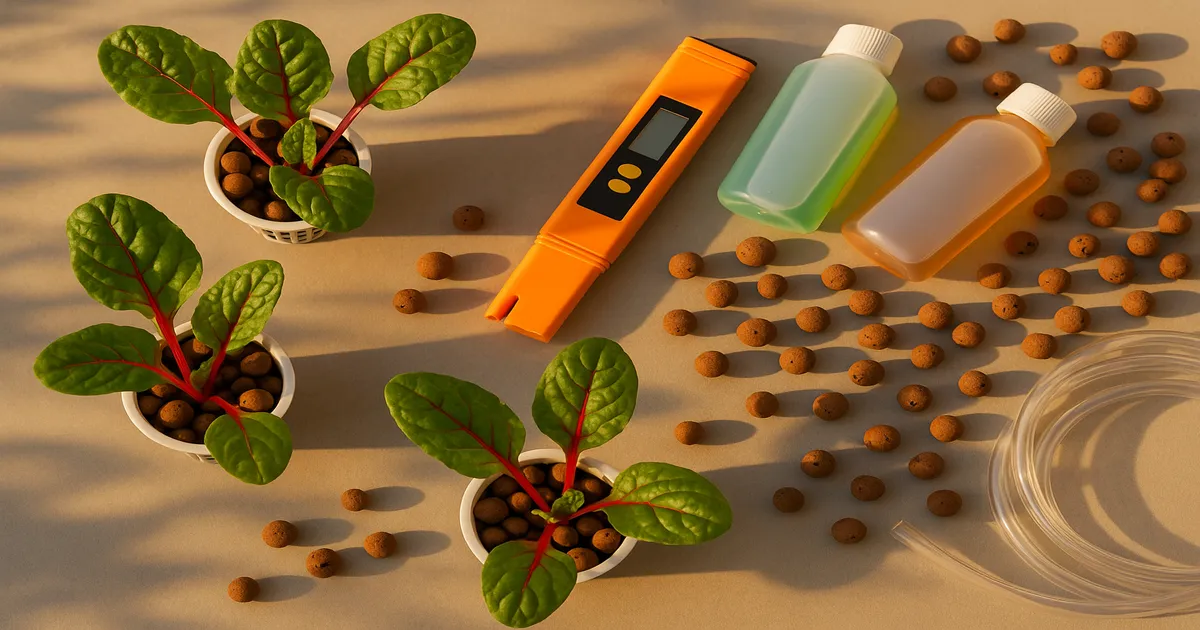
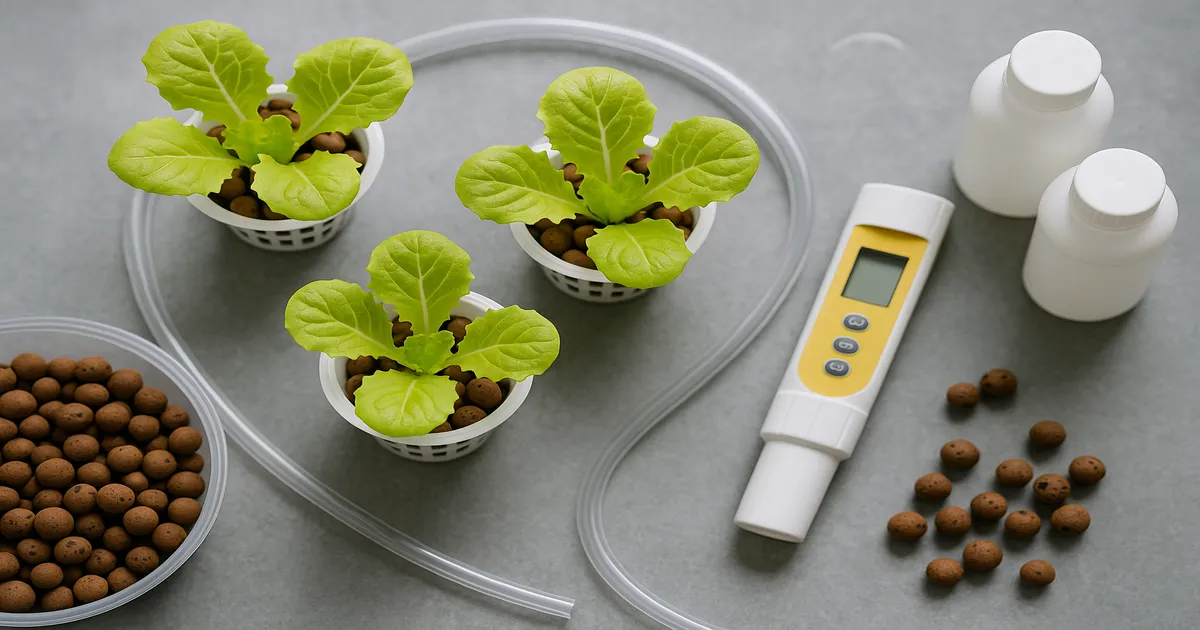
Quick Answer: Hydroponic lettuce growing takes plants from seed to harvest in just 28–45 days. Use a Deep Water Culture or Kratky setup, keep pH at 5.8–6.2, nutrient strength between 350–1200 PPM (0.7–2.4 EC) depending on growth stage, and give plants 16–18 hours of light daily. This guide covers system selection, variety choice, nutrients, lighting, and troubleshooting.
Hydroponic Lettuce Growing at a Glance
Lettuce is the go-to starter crop for good reason. It has shallow roots, a compact canopy, and one of the shortest harvest cycles of any vegetable — you’re eating fresh salad in under six weeks from seed. It tolerates a wide range of conditions and doesn’t demand the heavy nutrient loads that fruiting crops like tomatoes or peppers require.
If you’re new to hydroponics, lettuce will teach you the fundamentals without punishing small mistakes. If you’re scaling up commercially, it’s one of the most economically viable crops for vertical farms and NFT systems worldwide.
Bookmark these core parameters before you start:
| Parameter | Target Range |
|---|---|
| pH | 5.8–6.2 (aim for 6.0) |
| EC / PPM (seedling) | 0.7–1.0 EC / 350–500 PPM |
| EC / PPM (mature) | 1.6–2.4 EC / 800–1200 PPM |
| Light schedule | 18 hours on / 6 hours off |
| Reservoir temperature | 65–72°F (18–22°C) |
| Days to harvest | 28–45 days from transplant |
Choosing the Right System for Hydroponic Lettuce Growing
Deep Water Culture (DWC): Best for Beginners
In a DWC system, net pots sit in a reservoir lid and roots hang directly into oxygenated nutrient solution. An air pump and airstone keep dissolved oxygen levels high. It’s inexpensive to build, easy to monitor, and produces fast, vigorous growth. Most beginners should start here. A reliable air pump — such as the Vivosun 317 GPH Air Pump — keeps oxygen levels consistent and costs very little to run.
Kratky Method: No Pump, No Power Required
The Kratky method is a passive variation of DWC — no pump, no electricity, no moving parts. You fill a reservoir, let the plant drink, and as the water level drops, an air gap forms that oxygenates the roots naturally. It’s nearly foolproof for home growers who want low maintenance. The main limitation is that it suits a single harvest better than a continuous production cycle.
Nutrient Film Technique (NFT): The Commercial Standard
NFT channels a thin, continuous film of nutrient solution along the bottom of shallow grow channels, keeping roots partially in solution and partially in air. It’s highly water-efficient and scales well — most commercial hydroponic lettuce operations use NFT. The downside is that a pump failure can kill a crop within hours, so it demands more attention and backup planning than DWC.
Other Systems Worth Knowing
- Ebb and Flow: Periodically floods and drains a grow tray. Versatile and lettuce-friendly, but involves more hardware than DWC or NFT. Good if you want to grow multiple crop types in the same system.
- Aeroponics: Roots are misted in an enclosed chamber — highest oxygen exposure, fastest growth rates, but expensive and technically demanding. Overkill for most home lettuce growers.
- Wick systems: The simplest passive method, using an absorbent cord to draw solution to roots. Works for very small lettuce varieties but can’t deliver nutrients fast enough for full-size heads.
System Comparison
| System | Cost | Complexity | Best For |
|---|---|---|---|
| Kratky | Very low | Very easy | Home, single harvests |
| DWC | Low | Easy | Beginners, home growers |
| NFT | Medium | Moderate | Intermediate, commercial |
| Ebb & Flow | Medium | Moderate | Mixed-crop home setups |
| Aeroponics | High | Advanced | Commercial R&D |
| Wick | Very low | Very easy | Tiny plants, countertop |
Best Lettuce Varieties for Hydroponics
Butterhead and Bibb: Top Picks
Butterhead types are the gold standard for hydroponic production. Buttercrunch is the industry benchmark — compact, slow to bolt, mild-flavored, and ready in 28–35 days with excellent tip burn resistance. Rex was bred specifically for hydroponic NFT systems and delivers uniform heads with outstanding shelf life. Ermosa takes a few extra days (35–40) but produces premium-quality heads with exceptional tip burn tolerance.
Loose-Leaf: Fastest Harvests
If you want the fastest turnaround, loose-leaf types are your answer. Black Seeded Simpson can be ready in 21–28 days and handles cut-and-come-again harvesting well. The Salanova series from Rijk Zwaan was designed for hydroponic production — rosette-shaped, uniform, and highly productive. Oak Leaf varieties (green and red) add visual variety and harvest in 25–35 days.
Romaine and Specialty Varieties
Little Gem is the standout compact mini-romaine — it fits comfortably in small DWC setups and harvests in 30–40 days. Jericho is worth considering in warmer growing environments for its solid bolt resistance. For premium appeal, Outredgeous is a deep red romaine loaded with anthocyanins (it’s even been grown on the International Space Station), while Red Sails is a faster option at 28–35 days that adds color to any mixed planting.
Nutrients for Hydroponic Lettuce
EC and PPM Targets by Growth Stage
Lettuce is a light feeder. Pushing beyond 1400 PPM (2.8 EC) regularly leads to tip burn, salt stress, and bitter-tasting leaves.
| Growth Stage | PPM | EC |
|---|---|---|
| Seedling / Germination | 350–500 | 0.7–1.0 |
| Early Vegetative (weeks 1–2) | 500–700 | 1.0–1.4 |
| Active Vegetative (weeks 2–4) | 700–1000 | 1.4–2.0 |
| Mature / Pre-Harvest | 800–1200 | 1.6–2.4 |
Always start seedlings at half-strength and ramp up gradually as plants develop.
Macronutrient Ratios
Nitrogen is the most critical macronutrient for leafy lettuce, but the form matters as much as the amount. Aim for 70–80% nitrate-N (NO₃⁻) and limit ammonium-N (NH₄⁺) to 20–30% — excess ammonium is a leading cause of tip burn and root problems.
Calcium deserves special attention. Target 150–200 PPM and ensure good airflow around your plants to support transpiration, which is how calcium moves into leaf tissue. Potassium (150–250 PPM) supports cell turgor and disease resistance, while magnesium (30–50 PPM) keeps chlorophyll production running smoothly.
Micronutrients
Iron is the micronutrient most likely to cause visible problems. Deficiency shows up as interveinal chlorosis — yellow leaves with green veins — and it’s often triggered by pH drift rather than a true shortage of iron in the solution. Always use chelated iron (Fe-EDTA or Fe-DTPA) and target 2–3 PPM. Other key micronutrients: manganese at 0.5–1.0 PPM, zinc at 0.3–0.5 PPM, and boron at 0.3–0.5 PPM.
Recommended Nutrient Products
Three options consistently work well for lettuce growers:
- General Hydroponics Flora Series — Mix FloraGro, FloraMicro, and FloraBloom at a 3-2-1 mL/gallon ratio for a vegetative-heavy lettuce formula. Reliable, widely available, and well-documented.
- Masterblend 4-18-38 combo — Combine Masterblend 4-18-38, Calcium Nitrate, and Magnesium Sulfate at 2.4g : 2.4g : 1.2g per gallon. This produces approximately 800–1000 PPM (1.6–2.0 EC) at full strength — a popular choice for its precision and low cost per gallon.
- MaxiGro (General Hydroponics) — A single-part dry nutrient that simplifies mixing. Use approximately 1 tsp per gallon for 600–800 PPM (1.2–1.6 EC). Great for beginners who want simplicity.
pH and EC Management
Why pH Is Critical
At pH 5.8–6.2, every essential nutrient stays in its most plant-available form. Drift below 5.5 and you risk iron and manganese toxicity. Climb above 6.8 and those same nutrients lock out entirely — your plant starves even in a full nutrient solution. Aim for 6.0 as your daily target so natural drift in either direction keeps you inside the safe window.
How to Measure and Adjust pH
A quality digital pH meter is non-negotiable. Budget models work for home growing, but an Apera PH20 or Bluelab Combo Meter pays for itself in accuracy and durability. Calibrate weekly using pH 4.0 and 7.0 buffer solutions.
To adjust pH, add pH Down (phosphoric or citric acid-based) or pH Up (potassium hydroxide-based) in small increments — 0.5–1 mL per 5 gallons at a time. Stir thoroughly, wait 15 minutes, then recheck. Never make large single adjustments; pH shock can damage roots.
Reading EC Trends
- EC rising means plants are drinking more water than nutrients. Top off with plain, pH-adjusted water.
- EC falling means plants are consuming nutrients faster than water — common under high light or in warm conditions. Top off with fresh nutrient solution at your target EC.
Check EC daily in DWC systems and every 1–2 days in NFT. Replace your entire nutrient solution every 7–14 days in recirculating systems — salt buildup and nutrient imbalances accumulate in ways that meters don’t always catch. Keep reservoir temperature at 65–72°F (18–22°C); warmer water holds less dissolved oxygen and creates ideal conditions for Pythium root rot.
Lighting for Hydroponic Lettuce
Spectrum and Intensity
Lettuce runs primarily on blue light (400–500 nm) for compact vegetative growth and red light (620–700 nm) for photosynthetic efficiency. A red-to-blue ratio of 4:1 to 6:1 is standard in commercial production. Full-spectrum white LEDs that include green wavelengths work well for home growers — green light penetrates deeper into the canopy and contributes meaningfully to overall photosynthesis.
PPFD targets by stage:
- Seedlings: 100–200 µmol/m²/s
- Vegetative growth: 200–400 µmol/m²/s
- Optimal DLI: 17–20 mol/m²/day
Lettuce is a low-to-medium light crop. Pushing beyond 600 µmol/m²/s offers diminishing returns and adds heat stress risk.
Photoperiod
An 18/6 cycle (18 hours light, 6 hours dark) hits the sweet spot for maximum growth rate without triggering bolting. Don’t drop below 14 hours — growth slows noticeably. Be cautious with continuous 24-hour light; while some commercial varieties tolerate it, most home growers see bolting issues when temperatures climb above 75°F (24°C).
Recommended LED Fixtures
Look for fixtures rated at 2.5+ µmol/J efficacy — that’s the benchmark for energy-efficient lettuce production.
- Home/hobby (1–4 sq ft): Spider Farmer SF-1000 or Mars Hydro TS-1000 — hang 18–24 inches above the canopy
- Mid-scale (4–16 sq ft): HLG 300L Rspec or Spider Farmer SF-4000
- Commercial/vertical farm: Fluence SPYDR series or Gavita Pro LED bars — typically mounted 8–12 inches above canopy in stacked systems
Setting Up and Running Your System
Germination and Seedling Stage
Start seeds in rockwool cubes or Rapid Rooter plugs. Before using rockwool, pre-soak it in pH 5.5 water for 24 hours — unsoaked rockwool has an alkaline pH that will throw off your seedlings from day one. Place one seed per cube, keep them moist but not waterlogged, and maintain air temperature around 70–75°F (21–24°C). Use a T5 fluorescent or low-intensity LED at 100–150 µmol/m²/s during this stage.
Transplanting
Transplant once seedlings show their first true leaves and roots are visible emerging from the plug — typically 7–14 days after germination. Seat the plug snugly in a net pot with hydroton or clay pebbles to support it, and make sure the bottom of the net pot just touches the nutrient solution. Bump nutrient concentration to 500–700 PPM (1.0–1.4 EC) at transplant and increase gradually from there.
Daily and Weekly Maintenance
Daily:
- pH and EC readings
- Water level check (top off as needed)
- Visual inspection for yellowing, wilting, or pests
- Confirm pumps and air stones are running
Weekly:
- Clean algae or salt deposits from reservoir walls
- Adjust light height as plants grow
- Full reservoir replacement every 7–14 days
Harvesting
For butterhead and romaine types, harvest the whole head by cutting at the base just above the root collar when heads feel firm and full — typically 28–45 days from transplant. Expect 6–16 oz (170–450g) per head depending on variety.
For loose-leaf types, use the cut-and-come-again method: harvest outer leaves first, leaving the central growing point intact. Plants will continue producing for 2–3 additional harvests before quality declines. Expect 3–8 oz (85–225g) per plant per cutting.
Troubleshooting Common Problems in Hydroponic Lettuce Growing
Tip Burn
Tip burn — browning of inner leaf margins — is the most common problem in hydroponic lettuce. The root cause is a failure to deliver calcium to leaf tips, not a shortage of calcium in your solution. Calcium moves with transpiration, so poor airflow, high humidity, and high EC all contribute.
Fix it by:
- Adding a small fan to improve airflow across the canopy
- Keeping EC below 1200 PPM (2.4 EC) during the final growth stage
- Choosing tip burn-resistant varieties like Rex or Buttercrunch
- Confirming calcium is at 150–200 PPM in your solution
Yellowing Leaves and Nutrient Deficiencies
Interveinal chlorosis (yellow between green veins) on young leaves almost always points to iron deficiency triggered by pH drift above 6.5. Check and correct pH first before adding more iron. Uniform yellowing of older, lower leaves typically indicates nitrogen deficiency — increase your nutrient concentration by 100–150 PPM and recheck in 48 hours.
Bolting
Bolting (the plant sending up a flower stalk) is triggered by long days, high temperatures, or plant stress. If your lettuce bolts early, check that reservoir temperature is below 72°F (22°C), light period is no longer than 18 hours, and you’re growing a bolt-resistant variety like Jericho or Buttercrunch.
Root Problems and Pythium
Healthy lettuce roots are white and slightly fuzzy. Brown, slimy roots with a foul smell indicate Pythium (root rot), almost always caused by warm reservoir temperatures or low dissolved oxygen. Drop reservoir temperature to 65–68°F (18–20°C), increase aeration, and consider adding a beneficial bacteria product like Hydroguard to the reservoir.
Frequently Asked Questions
How long does hydroponic lettuce take to grow? Most varieties are ready 28–45 days from transplant. Loose-leaf types like Black Seeded Simpson can be harvested in as few as 21–28 days. Butterhead and romaine types typically take 30–45 days for a full head.
Can I grow hydroponic lettuce without a grow light? Yes, if you have a bright south-facing window that receives 6+ hours of direct sun. However, most indoor setups benefit from supplemental LED lighting to hit the 17–20 mol/m²/day DLI that lettuce needs for fast, compact growth.
How often should I change the nutrient solution? Every 7–14 days in recirculating systems like DWC and NFT. In a Kratky setup, top off with fresh nutrient solution as needed and do a full reservoir change between harvests.
What is the best pH for hydroponic lettuce? 5.8–6.2, with 6.0 as your ideal daily target. This range keeps all essential nutrients — especially iron, calcium, and manganese — in their most plant-available forms.
Why does my hydroponic lettuce taste bitter? Bitterness is usually caused by heat stress, bolting, or excessively high nutrient concentration (above 1400 PPM / 2.8 EC). Keep reservoir temperature below 72°F, maintain an 18/6 light schedule, and harvest before the plant shows any signs of bolting.