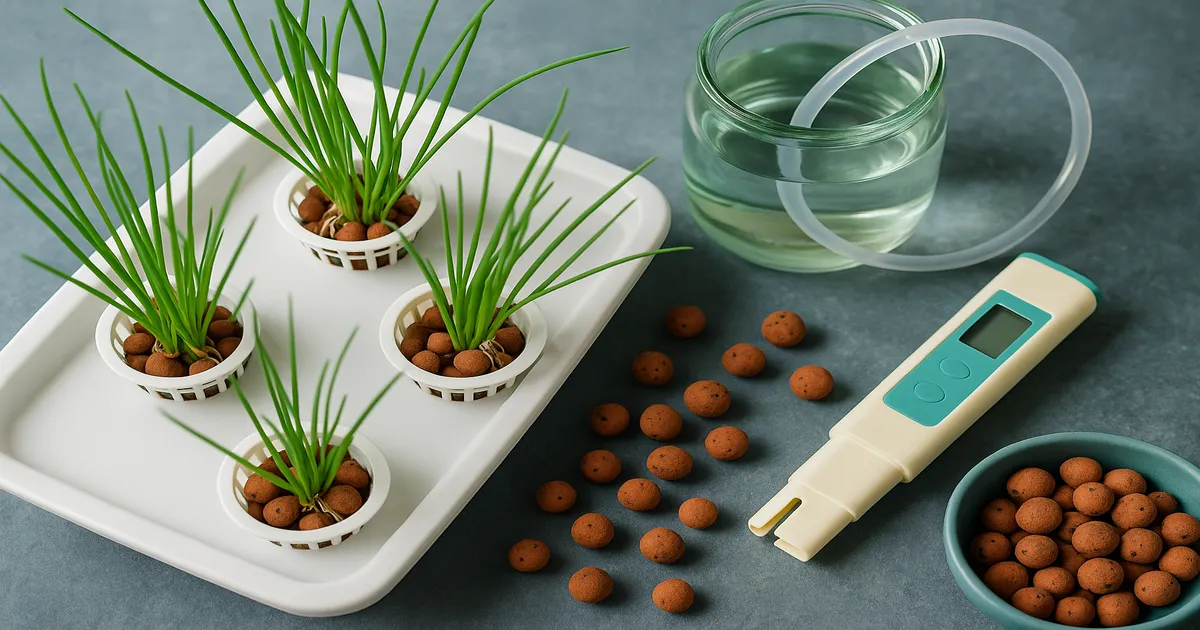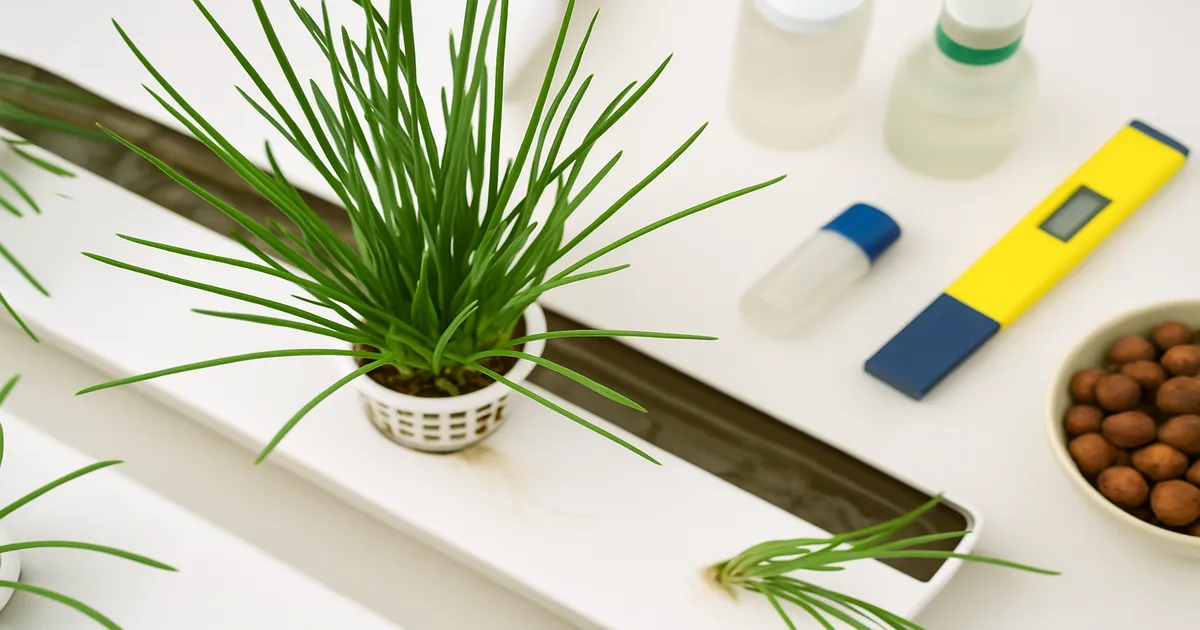
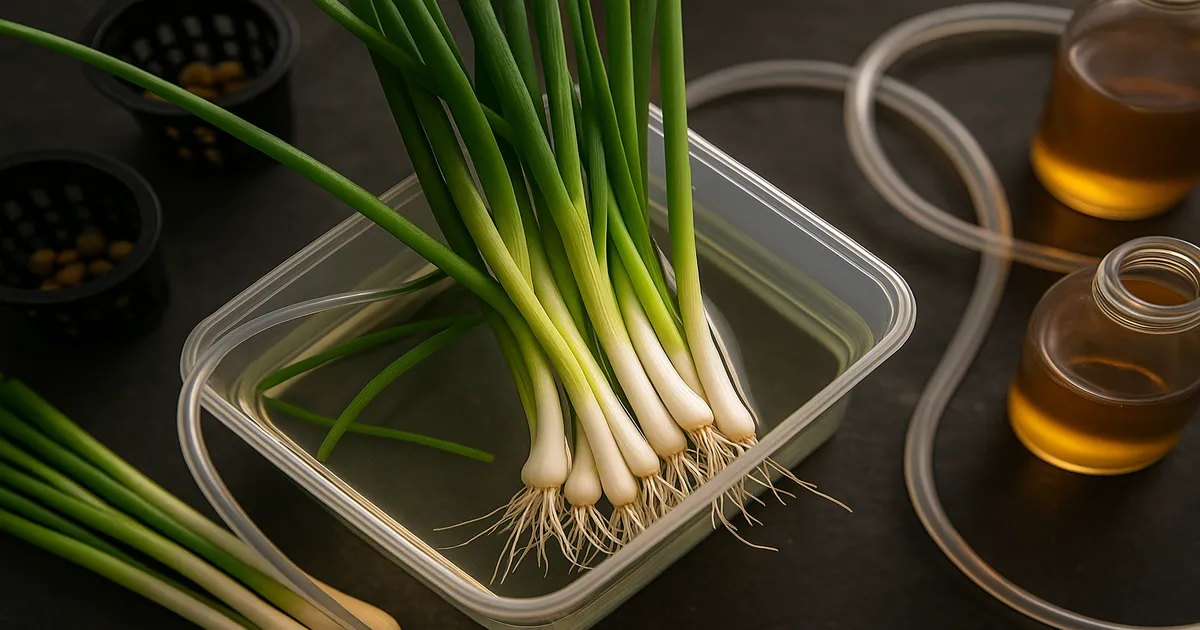
Quick Answer: Yes — green onions are one of the best crops you can grow hydroponically. They’re ready to harvest in 3–5 weeks, tolerate a wide range of nutrient concentrations, and will regrow 3–5 times from a single planting. If you’re new to hydroponics, this is an excellent place to start.
Growing Green Onions in Hydroponics: Systems, Nutrients, and Setup
Why Green Onions Work So Well Hydroponically
Green onions thrive in hydroponic systems for a few straightforward reasons. Their shallow, fibrous roots adapt easily to almost any growing medium or system type. They’re compact enough to fit 16–25 plants into a single square foot, and their cut-and-come-again growth habit means one planting keeps producing for weeks.
Unlike fruiting crops that demand precise feeding and lighting schedules, green onions are forgiving. They tolerate a wide EC range, don’t need intense light, and bounce back quickly after harvest cuts. That combination makes them ideal for beginners — and efficient enough for commercial vertical farms.
Key Numbers at a Glance
| Parameter | Target Range |
|---|---|
| pH | 6.0–6.5 (5.8–6.2 for DWC/aeroponics) |
| EC | 0.8–2.8 (by growth stage) |
| PPFD | 200–400 µmol/m²/s |
| Photoperiod | 16–18 hours |
| Harvest time | 3–5 weeks from transplant |
| Harvests per planting | 3–5 cuts |
Choosing the Best Hydroponic System for Green Onions
Kratky and Deep Water Culture (DWC): Best for Beginners
Kratky is the simplest option available. Fill a container with nutrient solution, drop your net pots in, and let the plants grow — no pump, no timer, no electricity required. DWC adds an air pump and air stone for better oxygenation, which speeds up growth noticeably. Both systems suit green onions well because their compact roots don’t need a lot of space or strong water flow.
For a first setup, a 5-gallon DWC bucket or a repurposed storage tote works great. (General Hydroponics WaterFarm) You can grow a surprisingly large number of plants for very little investment.
NFT and Vertical Tower Systems: Scaling Up
NFT (Nutrient Film Technique) runs a thin film of nutrient solution continuously through sloped channels, keeping roots moist without submerging them. It’s water-efficient and easy to scale, which is why commercial operations favor it for green onions. Vertical tower systems take a similar approach but stack growing sites vertically, maximizing yield per square foot — ideal if floor space is limited.
Both systems require a pump, timer, and slightly more plumbing knowledge than Kratky or DWC, but they’re straightforward once you understand the basics.
Other Options: Ebb & Flow, Wicking, and Aeroponics
- Ebb & Flow: Periodically floods the grow tray with nutrient solution, then drains it. Works well with rockwool or clay pebbles. Reliable and versatile, but requires a timer and pump.
- Wicking: The most budget-friendly option. A wick draws solution from a reservoir up into the growing medium. Growth is slower, but it’s a legitimate windowsill setup for casual growers.
- Aeroponics: Roots are misted with nutrient solution rather than submerged. Fastest growth rates possible, but equipment is expensive and clogging is a real issue. Overkill for most home growers.
Bottom line: Start with Kratky or DWC. They’re cheap, easy to troubleshoot, and produce excellent results. Once you’re comfortable managing pH and nutrients, an NFT channel or vertical tower is a natural next step.
Best Green Onion Varieties for Hydroponics
Top Varieties by Growth Rate and Flavor
Evergreen Hardy White (Allium fistulosum) is the go-to variety for hydroponic growers. It’s fast — ready in 21–28 days — with a mild, sweet flavor and outstanding regrowth after cutting. Tokyo Long White is another strong performer, producing long, elegant stalks with a clean flavor popular in Asian cuisine. Both are A. fistulosum types, which consistently outperform A. cepa (common bulbing onion) varieties in hydroponic environments.
For hydroponics, stick with bunching onion varieties. They’re bred for continuous stalk production with no energy wasted on bulb development. A. cepa types (spring onions) can be grown hydroponically but tend to bolt more readily and produce less reliably across multiple cuts.
Starting from Seed, Transplant, or Store-Bought Regrowth
You have three options for getting started:
- Seeds: Slower (add 1–2 weeks to your timeline) but cost-effective and scalable. Germinate in rockwool cubes or rapid rooter plugs, keeping them moist at 70–75°F (21–24°C) until roots emerge.
- Transplants: Purchase seedlings from a nursery and move them directly into your system. Fastest path to first harvest.
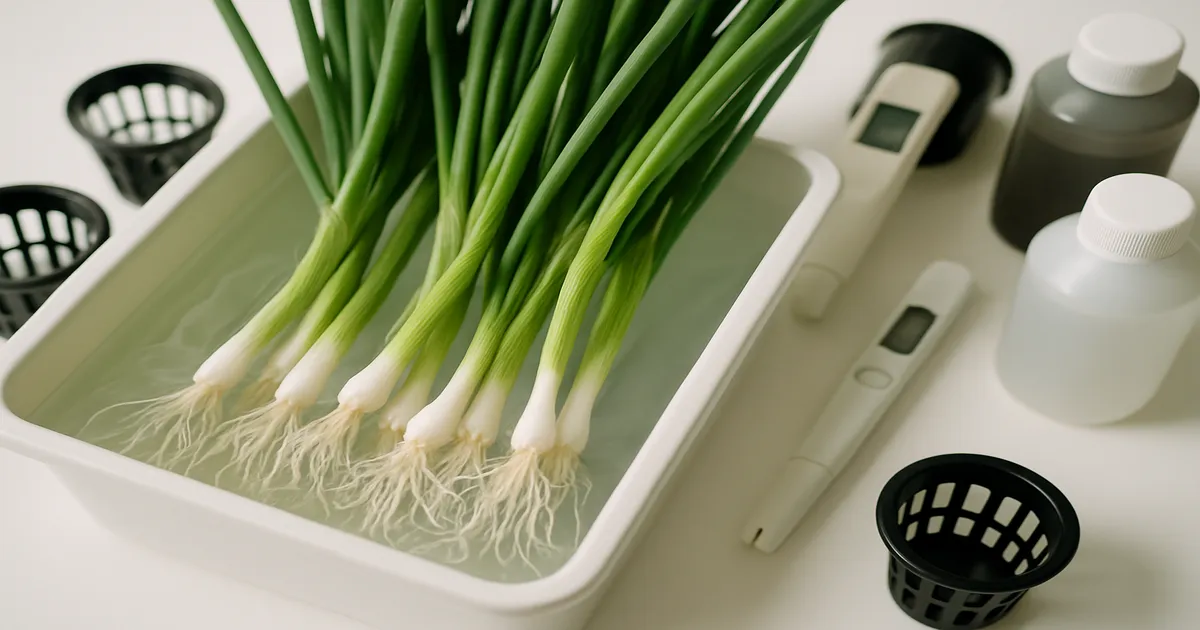
- Store-bought regrowth: Place the root ends of grocery store green onions in water or a Kratky setup. This works well as a starter method and is a great way to test a system before committing to seeds. Note that regrown store-bought onions may carry pathogens — rinse the roots thoroughly and monitor for rot.
Nutrient Requirements for Hydroponic Green Onions
EC and PPM Targets by Growth Stage
| Growth Stage | PPM (500 scale) | EC (mS/cm) |
|---|---|---|
| Seedling (weeks 1–2) | 400–600 | 0.8–1.2 |
| Vegetative growth (weeks 3–5) | 800–1,200 | 1.6–2.4 |
| Pre-harvest / maturation | 1,000–1,400 | 2.0–2.8 |
Keep EC below 1,600 PPM (3.2 mS/cm) at all times. Exceeding that threshold risks tip burn and root damage, especially in warmer reservoir conditions.
Macronutrients: What Green Onions Actually Need
Nitrogen is the most important macronutrient — it drives leafy, green stalk growth. Keep the N ratio high throughout the entire grow cycle, and make sure ammoniacal nitrogen stays below 30% of total N to avoid toxicity. Potassium supports cell wall integrity and firmer stalks as you approach harvest.
Sulfur deserves special mention for alliums. The characteristic onion flavor compounds are sulfur-based, so adequate sulfate (SO₄) in your solution — around 50–80 PPM — directly affects taste. Maintain calcium at 150–200 PPM and magnesium at 40–60 PPM, targeting a 3:1–4:1 Ca:Mg ratio to prevent deficiencies.
Micronutrients
- Iron (Fe): 2–4 PPM as chelated iron (Fe-EDTA preferred) — the most commonly deficient micronutrient
- Manganese (Mn): 0.5–1.0 PPM
- Zinc (Zn): 0.1–0.3 PPM
- Boron (B): 0.3–0.5 PPM — critical for root tip health
- Copper (Cu): 0.05–0.1 PPM
- Molybdenum (Mo): 0.01–0.05 PPM
Most complete hydroponic nutrient formulas cover these automatically. If you’re mixing your own, confirm that chelated iron is included.
Three Nutrient Solution Recipes
Option 1 — General Hydroponics Flora Series (beginner): Follow the manufacturer’s vegetative chart, emphasizing the Grow (N-heavy) component over Bloom. Target 800–1,200 PPM for active growth.
Option 2 — Masterblend 4-18-38 DIY (intermediate): Mix per gallon of RO water:
- Masterblend 4-18-38: 2.4 g
- Calcium Nitrate (15.5-0-0): 2.4 g
- Magnesium Sulfate (Epsom Salt): 1.2 g
This yields approximately 800–1,000 PPM (1.6–2.0 EC). Increase ratios by 25% for the pre-harvest stage.
Option 3 — MaxiGro (budget): 7 g/gallon gives roughly 800–900 PPM (1.6–1.8 EC). Add a CalMag supplement at 2–3 mL/gallon (General Hydroponics CALiMAGic) if you’re using RO or soft water.
Water Quality: RO vs. Tap
RO water (baseline EC below 0.1 mS/cm) gives you the cleanest starting point and the most predictable results. With tap water, test baseline EC and pH before mixing. If your tap comes in above 0.5 EC (250 PPM), it’s already contributing calcium, magnesium, or sodium that will affect your formula. Subtract your baseline EC from your target EC when mixing to avoid overshooting.
pH and EC Management
Ideal pH Range for Hydroponic Green Onions
Maintain pH 6.0–6.5 for most systems, or 5.8–6.2 for DWC and aeroponics. Alliums are moderately sensitive to pH swings — try to keep daily fluctuation within 0.3 units. Drift outside that window and nutrient lockout becomes a real problem, even if your EC looks perfect.
Monitoring and Adjusting pH and EC
A quality digital pH meter is non-negotiable. The Apera PC60 and Bluelab pH Pen are both reliable choices. Calibrate weekly using pH 4.0 and 7.0 buffer solutions and replace the probe every 12–18 months. For EC, the Bluelab Truncheon is a durable, calibration-free option. Check pH daily in active systems (DWC, NFT) and every 2–3 days for passive Kratky setups.
To adjust:
- pH too low: Add pH Up (potassium hydroxide) in 0.5–1 mL increments per 5 gallons. Stir and retest after 15 minutes.
- pH too high: Add pH Down (phosphoric acid) in the same small increments. Avoid baking soda as a regular substitute — sodium accumulation damages roots over time.
EC Stabilization and Reservoir Change Schedule
When reservoir level drops, top off with plain, pH-adjusted water — not fresh nutrient solution. Plants consume water faster than nutrients, so EC naturally rises between changes. Adding more nutrient solution on top pushes EC too high.
Replace the entire reservoir every 7–14 days for active systems and every 2–3 weeks for Kratky. Keep reservoir temperature at 65–72°F (18–22°C) to maximize dissolved oxygen and minimize pathogen risk.
Lighting for Hydroponic Green Onions
Spectrum, PPFD, and Photoperiod
Blue spectrum light (400–500 nm) drives compact, upright vegetative growth and deep green color. Red spectrum (620–700 nm) supports overall photosynthesis efficiency. A full-spectrum LED at 4000K–5000K covers both needs and is the practical choice for most home setups.
| Growth Stage | PPFD Target |
|---|---|
| Seedling (weeks 1–2) | 100–200 µmol/m²/s |
| Vegetative growth (weeks 2–5) | 200–400 µmol/m²/s |
| Maximum productivity | 400–600 µmol/m²/s |
Target a Daily Light Integral (DLI) of 12–17 mol/m²/day. Running 16 hours at 250 PPFD lands you at roughly 14.4 mol/m²/day — right in the sweet spot. Don’t drop below 14 hours or growth slows noticeably.
Recommended LED Fixtures
Budget: T5 or T8 LED shop lights (4000K–5000K) are surprisingly effective given green onions’ modest light requirements. A two-bulb 4-ft fixture costs $20–$50 and works well for countertop or shelf setups.
Hobbyist: The Spider Farmer SF-1000 or Mars Hydro TS-1000 offer full-spectrum quantum board efficiency at $60–$200, covering a 2×2 to 3×3 ft area comfortably.
Commercial: Fluence SPYDR or Gavita Pro LED bars are the industry standard for vertical farm racks — dimmable, efficient, and built for continuous operation.
Keep LED panels 12–24 inches from the canopy and line your grow space with Mylar or flat white paint to improve light distribution by 20–30%.
Avoiding Bolting
Bolting happens when green onions interpret long days and warm temperatures as a signal to flower. Once a plant bolts, stalk quality drops fast. Keep reservoir temps at 65–72°F (18–22°C), hold your photoperiod to 16 hours rather than 18 if you see early bolting, and choose A. fistulosum varieties like Evergreen Hardy White, which are more bolt-resistant than A. cepa types.
Planting, Growing, and Harvesting Green Onions Hydroponically
Germination and Seedling Setup
Sow seeds in rockwool cubes or rapid rooter plugs, keeping them moist (not waterlogged) at 70–75°F (21–24°C). Seeds typically germinate in 5–10 days. Keep seedlings under low light (100–200 PPFD) with a dilute nutrient solution at 400–600 PPM (0.8–1.2 EC) until roots are visible through the bottom of the plug.
Transplanting and Plant Spacing
Once roots are 0.5–1 inch long and seedlings have their first true leaf, move them into net pots. Use 1-inch or 2-inch net pots filled with clay pebbles or hydroton. Place the net pot so the bottom just contacts or sits slightly above the nutrient solution — roots will find their way down.
Green onions can be planted densely: up to 16–25 plants per square foot in optimized systems. In a DWC tote, 2-inch net pot holes spaced 2 inches apart work well. In NFT channels, plant every 1.5–2 inches.
How and When to Harvest: The Cut-and-Come-Again Method
Harvest when stalks reach 8–12 inches tall, typically 3–5 weeks from transplant. Cut stalks 1–2 inches above the base, leaving the root system and lower growth intact. The plant will regrow from the remaining base, usually producing a second harvest in 10–14 days. Most hydroponic setups yield 3–5 cuts per planting before plant vigor declines and it’s time to replant.
After the final harvest, remove the root mass, clean the system thoroughly, and start fresh. Residual root material left in the reservoir is a primary source of pythium (root rot) in subsequent grows.
Frequently Asked Questions
How long does it take to grow green onions hydroponically? From transplant, expect your first harvest in 3–5 weeks. If starting from seed, add 1–2 weeks for germination and early seedling development. Subsequent cuts from the same plant come in 10–14 days.
Can I regrow store-bought green onions in a hydroponic system? Yes. Place the root ends in a Kratky or DWC setup and they’ll regrow within days. It’s a great way to test a system before committing to seeds. Rinse the roots thoroughly first and monitor closely for rot, since grocery store onions may carry pathogens.
What is the best hydroponic system for growing green onions at home? DWC or Kratky. Both are inexpensive, easy to manage, and well-suited to green onions’ compact root systems. A simple storage tote with net pot holes drilled in the lid is enough to get started.
Why are my hydroponic green onions turning yellow? Yellowing is most often caused by nitrogen deficiency, pH drift outside the 6.0–6.5 range causing nutrient lockout, or iron deficiency. Check pH first — it’s the most common culprit. If pH is correct, check your EC and confirm your nutrient formula includes chelated iron.
How many times can I harvest green onions from one planting? Most hydroponic growers get 3–5 cuts from a single planting. After that, regrowth slows and flavor can become more pungent. At that point, clear the system, clean it thoroughly, and start a new batch.