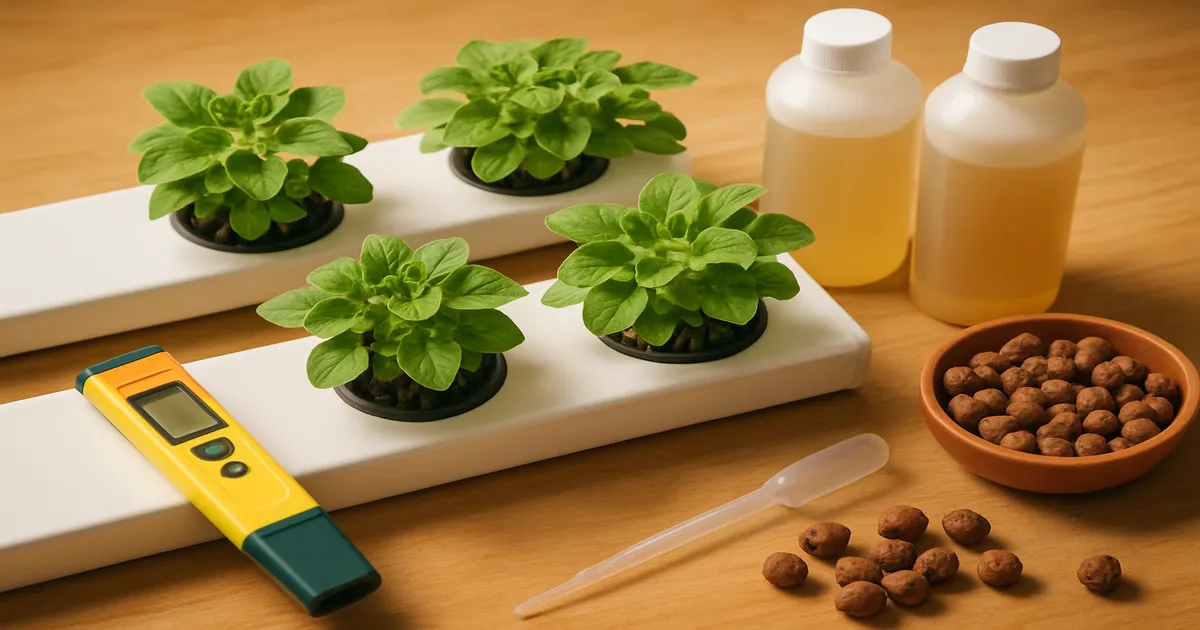
Quick Answer: Yes, you can grow oregano hydroponically — and it often produces more flavorful, aromatic leaves than soil-grown plants. Hydroponic oregano grows 30–50% faster, can be harvested year-round, and thrives in systems like NFT and Kratky that suit its lean, well-drained Mediterranean roots. It’s a beginner-to-intermediate crop that rewards attention to pH, nutrients, and light.
Oregano is one of those herbs that genuinely surprises people the first time they try it without soil. Can you grow oregano hydroponically? Not only can you — it’s one of the better herbs for the job. Origanum vulgare evolved on rocky, dry hillsides where nutrients are scarce and drainage is excellent. Hydroponic systems replicate those conditions naturally. You’re not fighting the plant’s instincts; you’re working with them.
Can You Grow Oregano Hydroponically? What to Expect
Expect your first harvest in 4–6 weeks from transplant, compared to 8–10 weeks in soil. Once established, plants can be harvested repeatedly for many months using a cut-and-come-again approach. Flavor tends to be equal to or better than soil-grown oregano when you manage the pre-harvest phase correctly — more on that in the nutrient section.
Oregano belongs to the Lamiaceae family alongside basil, thyme, and mint, all of which adapt well to soilless growing. If you’ve grown any of those hydroponically, oregano will feel familiar. Difficulty level: beginner-to-intermediate. The main skills you’ll develop are pH management and knowing when to harvest before the plant bolts.
Best Hydroponic Systems for Growing Oregano Hydroponically
NFT (Nutrient Film Technique): Top Choice for Oregano
NFT is the gold standard for oregano. A thin film of nutrient solution flows continuously over the roots, keeping them moist but never waterlogged, with maximum oxygen exposure. That high root oxygenation mirrors the dry, rocky Mediterranean conditions oregano evolved in better than almost any other system. It’s also scalable — NFT channels are easy to expand as your production grows.
The main drawback is setup cost and pump dependency. If a power outage hits, roots can dry out within an hour, so it’s worth having a backup plan.
Kratky Method: Best for Home Growers
The Kratky method is passive deep water culture — a reservoir, a net pot, and no pump required. You suspend the plant above the nutrient solution with an air gap between the water surface and the roots. As the plant drinks down the solution, that gap grows, giving roots the oxygen they need.
It’s the simplest way to get started. A mason jar or 5-gallon bucket is all you need. Growth is slightly slower than active systems, but the low maintenance and zero electricity cost make it hard to beat for a kitchen herb setup.
DWC, Ebb & Flow, and Aeroponics
Deep Water Culture (DWC) suspends roots directly in aerated nutrient solution. It produces fast, vigorous growth but requires an air pump running continuously and careful temperature control — water above 72°F (22°C) invites root rot quickly.
Ebb & Flow floods a growing tray on a timer, then drains completely. The wet/dry cycles suit oregano well and make it easy to grow alongside other herbs. Aeroponics delivers the fastest growth rates by misting roots directly, but the setup complexity and cost put it firmly in the advanced category.
Wicking and Media Bed Systems
Wicking systems are the most forgiving entry point if you’re brand new to hydroponics. Growth is slower, but fewer variables to manage. Media bed and Dutch bucket systems work well for larger, bushier oregano varieties and integrate naturally into mixed herb gardens. Neither is the top choice for production efficiency, but both get the job done.
Setting Up Your System
Seeds vs. Cuttings
Cuttings are faster. Take a 4–6 inch cutting from a healthy plant, strip the lower leaves, and root it in rockwool or a cup of water. You’ll have a transplant-ready plant in 1–2 weeks. Seeds work fine but add 3–4 weeks before transplanting. For beginners, buying a small oregano plant from a grocery store and taking cuttings is the most practical shortcut.
Choosing a Growing Medium
- Rockwool cubes — excellent for germination and propagation; transplants easily into any system
- Hydroton / clay pebbles — best all-around choice for NFT, DWC net pots, and media beds; reusable and pH-neutral
- Coco coir — retains moisture well; good for ebb & flow and Dutch bucket setups; watch for calcium and magnesium competition
Avoid standard potting soil — it clogs systems and introduces pests and pathogens.
Spacing and Plant Density
Give each plant at least 6–8 inches of space in NFT channels or DWC systems. In media beds, 8–10 inches between plants allows for the bushy growth habit oregano develops with regular pruning. Cramped plants compete for light and airflow, which increases disease pressure and produces weaker stems.
Reservoir Setup and Water Quality
Start with RO or distilled water whenever possible. Source water above 200 PPM (0.4 EC) will skew your nutrient ratios unpredictably. If you’re using tap water, let it sit 24 hours or run it through a carbon filter to off-gas chlorine — chloramine requires a dedicated filter or a small dose of sodium thiosulfate. Always use opaque reservoirs; light penetration grows algae, which destabilizes pH. If you’re on RO water, add a CalMag supplement at manufacturer rates to replace the minerals reverse osmosis removes.
Nutrient Requirements for Hydroponic Oregano
EC and PPM by Growth Stage
| Growth Stage | PPM | EC |
|---|---|---|
| Seedling / Propagation | 350–500 | 0.7–1.0 |
| Early Vegetative | 500–800 | 1.0–1.6 |
| Active Vegetative / Harvest | 800–1,200 | 1.6–2.4 |
| Pre-Harvest Stress Phase | 600–900 | 1.2–1.8 |
Oregano is a light feeder. Running EC above 2.4 risks tip burn and salt stress — and counterintuitively, it reduces the essential oil concentration that makes oregano worth growing in the first place.
N-P-K Ratio
During vegetative growth, aim for a 3-1-2 N-P-K ratio. This supports leafy growth without pushing the plant to produce watery, low-flavor foliage. In the week or two before a major harvest, shift toward 2-1-3 — lower nitrogen, higher potassium. That potassium boost triggers stress responses that concentrate carvacrol and thymol in the leaves. The flavor difference is noticeable.
Key Micronutrients
- Iron (chelated Fe-EDTA or Fe-DTPA): Most commonly deficient; keep pH in the 6.0–6.5 range to maintain solubility
- Zinc: Directly involved in carvacrol production; mild deficiency quietly reduces flavor without obvious visual symptoms
- Calcium: Prevents tip burn, especially important in fast-growing DWC systems
- Magnesium: Deficiency shows as yellowing between the veins of older leaves — a common early warning sign
Nutrient Products Worth Considering
General Hydroponics Flora Series is the most widely available three-part system. Suggested ratios per gallon:
- Seedling: FloraGro 2.5 mL + FloraMicro 2.5 mL + FloraBloom 1 mL
- Vegetative: FloraGro 3 mL + FloraMicro 2.5 mL + FloraBloom 2 mL
- Pre-harvest: FloraGro 1.5 mL + FloraMicro 2.5 mL + FloraBloom 3 mL
MaxiGro at 5–7 g/gal is a solid single-part option if you want simplicity without sacrificing results.
For advanced growers, the Masterblend 4-18-38 three-part system (2.4 g/gal Masterblend + 2.4 g/gal calcium nitrate + 1.2 g/gal Epsom salt) is a cost-effective middle ground between pre-mixed convenience and full DIY control, and it’s popular with small commercial herb producers.
pH and EC Management
Optimal pH Range
Keep pH between 6.0–6.5. Above 7.0, iron, manganese, and zinc become insoluble — your plants will show deficiency symptoms even when those elements are present in solution. Below 5.5, calcium and magnesium uptake suffers. The 6.0–6.5 window keeps everything available simultaneously.
A reliable pH pen makes monitoring much easier and pays for itself quickly.
Adjusting pH
Use potassium hydroxide (KOH) to raise pH — it contributes beneficial potassium as a bonus. To lower pH, phosphoric acid is the standard choice and adds phosphorus to the solution. Always add nutrients to water first, then adjust pH. Nutrients shift the final pH, so you’ll waste adjustment solution if you reverse the order. Add in small increments — 0.5–1 mL per 5 gallons — stir well, wait 15 minutes, then retest.
Reading EC Changes
- EC rising: Plants are drinking water faster than absorbing nutrients — top off with plain pH-adjusted water
- EC falling: Plants are feeding heavily — top off with fresh nutrient solution at full strength
Reservoir Change Schedule
For recirculating systems (NFT, DWC, ebb & flow), do a full reservoir change every 7–14 days. This prevents salt accumulation, pathogen buildup, and the pH instability that comes with an aging solution. Kratky systems are more forgiving — top off with 50% strength solution as needed and do a full change every 3–4 weeks.
Stability Tips
- Keep reservoir temperature at 65–72°F (18–22°C) — warmer water holds less dissolved oxygen and breeds root pathogens
- Add beneficial bacteria like Hydroguard to establish a stable microbial environment
- Use a larger reservoir than you think you need — more water volume buffers against rapid pH and EC swings
Lighting for Hydroponic Oregano
Spectrum and PPFD
Full-spectrum LEDs covering 400–700 nm are the standard recommendation. Blue light (400–500 nm) keeps plants compact and bushy and enhances essential oil production. Red light (600–700 nm) drives photosynthesis and overall biomass. UV-A (315–400 nm) meaningfully increases carvacrol and thymol content — worth seeking out if flavor is your priority.
| Growth Stage | Target PPFD |
|---|---|
| Seedling | 100–200 µmol/m²/s |
| Early Vegetative | 200–400 µmol/m²/s |
| Active Production | 400–600 µmol/m²/s |
| Flavor Enhancement | 600–800 µmol/m²/s |
Pushing past 800 µmol/m²/s without CO₂ supplementation can cause photoinhibition and leaf bleaching.
Photoperiod
Run a 16-hour light / 8-hour dark cycle. Oregano is a facultative long-day plant — it stays vegetative under long days and may initiate flowering when days shorten below about 12 hours. Don’t run 24-hour light; oregano uses the dark period for metabolic processes including essential oil synthesis.
Target a DLI of 12–20 mol/m²/day. At 500 µmol/m²/s for 16 hours, DLI works out to 28.8 — slightly high, so consider dropping intensity to around 400 µmol/m²/s or trimming the photoperiod to 14 hours.
Grow Light Recommendations
For home growers, the Spider Farmer SF-1000 and Mars Hydro TS-1000 are reliable, affordable choices with good full-spectrum coverage for a 2×2 to 2×4 foot growing area. Both deliver the spectrum oregano needs without overpaying for features a herb garden doesn’t require.
Harvesting and Ongoing Care
When and How to Harvest
Harvest once plants are 6–8 inches tall with several sets of leaves. Never remove more than one-third of the plant at a single harvest — this preserves enough foliage for rapid regrowth. Cut just above a leaf node, and the plant will branch from that point, becoming bushier with each cycle.
Cut-and-Come-Again Method
Rather than pulling whole plants, harvest the top third every 2–4 weeks once the plant is established. Each cut encourages two new shoots to form. After a few cycles, you’ll have a dense, multi-stemmed plant producing far more harvestable leaf than a single-stem plant ever could.
Managing Bolting
When oregano bolts, it redirects energy from leaves to flowers and seeds. Flavor drops noticeably. Watch for tight clusters of small leaves forming at stem tips — that’s the flower bud before it opens. Pinch them off immediately. Maintaining a 16/8 photoperiod and keeping temperatures below 80°F (27°C) are your best preventive measures.
Maximizing Flavor
The two most effective techniques: pre-harvest nitrogen reduction (shift to 2-1-3 N-P-K and drop EC to 1.2–1.8 for 1–2 weeks before harvest) and harvesting in the morning before heat volatilizes the essential oils. Slightly higher light intensity in the final week also increases carvacrol concentration.
Temperature and Humidity
Oregano grows best at 65–80°F (18–27°C) with humidity between 40–60%. Above 70% humidity, powdery mildew becomes a real risk, especially in dense canopies with poor airflow. Keep a small fan running — it strengthens stems and dramatically reduces disease pressure.
Troubleshooting Common Problems
Yellowing Leaves
Young leaves yellowing points to iron deficiency — almost always a pH problem rather than a lack of iron in solution. Check pH first and bring it into the 6.0–6.5 range. Older leaves yellowing with green veins is classic magnesium deficiency; add a CalMag supplement or increase magnesium sulfate in your mix.
Root Rot
Slimy, brown roots with a foul smell mean root rot, usually Pythium species. The cause is almost always warm water (above 72°F / 22°C) combined with poor aeration. Lower your reservoir temperature, increase airflow, and add beneficial bacteria like Hydroguard immediately. Catch it early and you can save the plant; let it go and you’ll lose the whole reservoir.
Leggy, Low-Aromatic Plants
Stretchy stems and weak flavor together almost always mean insufficient light. Check your DLI — if it’s below 10 mol/m²/day, increase PPFD or extend your photoperiod. Excess nitrogen produces lush but watery, low-flavor foliage; if your leaves look big and dark green but taste bland, dial back the nitrogen and let the plant run slightly lean for a week before your next harvest.
Frequently Asked Questions
How long does it take to grow oregano hydroponically? From transplant, expect your first harvest in 4–6 weeks. From seed, add another 3–4 weeks for germination and early establishment. Once the plant is mature, you can harvest every 2–4 weeks indefinitely using the cut-and-come-again method.
Does hydroponic oregano taste as good as soil-grown? Often better. When you manage the pre-harvest phase correctly — reducing nitrogen, slightly stressing the plant, and harvesting in the morning — hydroponic oregano can have a higher concentration of carvacrol and thymol than most soil-grown varieties.
What is the best pH for growing oregano hydroponically? Keep pH between 6.0 and 6.5. This range keeps iron, calcium, magnesium, and zinc all available simultaneously. Drifting above 6.8 is the most common cause of nutrient deficiency symptoms in hydroponic oregano.
Can oregano grow in a Kratky system? Yes, and it’s one of the better herbs for Kratky. Oregano’s preference for lean, well-oxygenated conditions suits the passive air gap the Kratky method creates. Use a 1-gallon or larger container and top off with 50% strength nutrient solution as the reservoir drops.
How do I stop my hydroponic oregano from bolting? Maintain a 16-hour light / 8-hour dark photoperiod, keep temperatures below 80°F (27°C), and pinch off any flower buds as soon as they appear. Harvesting regularly also helps — a plant that’s being cut back frequently has less energy to redirect toward reproduction.