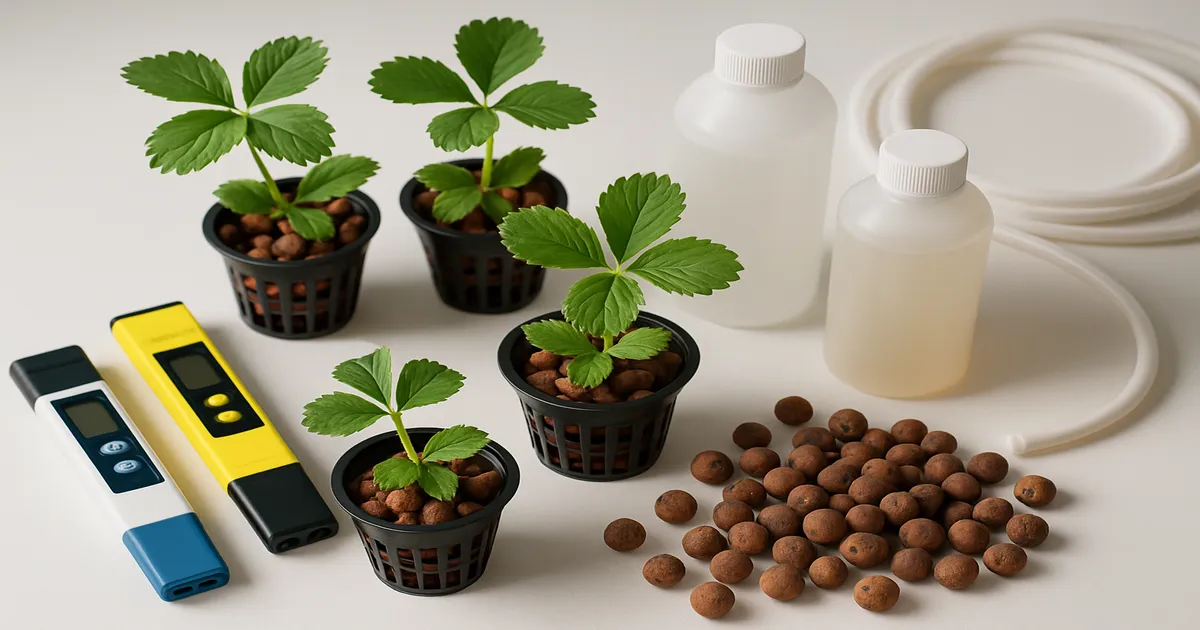
Quick Answer: The best places to buy strawberry plugs online are certified nurseries and specialist plant suppliers that offer virus-indexed stock with phytosanitary documentation. Shop during the main shipping windows — September through November or January through March — to get the healthiest plants. For hydroponics, prioritize day-neutral varieties like Albion, San Andreas, or Seascape.
If you’ve been searching for where to buy strawberry plugs online, you’ve probably noticed that local garden centers rarely stock the named cultivars serious growers need. Online suppliers change that entirely. You get access to certified disease-free plants, dozens of varieties, and bulk pricing that simply isn’t available on a local shelf.
Where to Buy Strawberry Plugs Online: Top Suppliers and What to Look For
What Are Strawberry Plugs?
Strawberry plugs are young, rooted plants established in small media cells — typically rockwool, peat, coco coir, or foam — and ready to transplant directly into your system. They sit between bare-root runners (dormant, no media, cheaper to ship but slower to establish) and potted transplants (larger but bulkier and more expensive). Plugs give you a live root system that establishes quickly, at a fraction of the shipping cost of a potted plant.
Buying online gives you access to:
- Certified virus-indexed stock — strawberries are highly susceptible to viral diseases, and reputable online nurseries test for this; your local garden center almost certainly doesn’t
- Named cultivar selection — dozens of varieties versus the two or three generic options on a local shelf
- Bulk and small-pack pricing — from a tray of 50 to several hundred plugs
- Traceability — phytosanitary certificates, growing history, and documented source material
Best Times of Year to Order
Most suppliers ship during two main windows:
- September through November — for overwintering or early spring production in mild climates
- January through March — for spring and summer planting in most regions
Order early. Popular varieties like Albion and San Andreas sell out fast, and late orders often ship stressed plugs that have sat in cold storage too long.
How to Choose a Reputable Online Supplier
What to Look For Before You Buy
A trustworthy supplier will be transparent about their propagation methods and certifications. Before you order, check for:
- Virus-indexed certification — the single most important quality marker for strawberry plants
- Phytosanitary certificates — legally required for interstate shipping in many states
- Positive reviews from growers, not just general garden customers
- Clear variety descriptions — fruiting type, yield expectations, climate suitability
- Responsive customer service before the sale, not just after
Certified Virus-Indexed vs. Standard Plugs
Virus-indexed plugs have been laboratory-tested and confirmed free of common strawberry viruses — Strawberry Mottle Virus, Strawberry Mild Yellow Edge Virus, and others. These pathogens reduce yields by 20–50% and have no cure once a plant is infected. Standard plugs may be cheaper, but the risk isn’t worth it, especially in a recirculating hydroponic system where disease spreads fast.
Phytosanitary Certificates and State Restrictions
The USDA and individual state departments of agriculture regulate the interstate movement of strawberry plant material. Some states — California, Florida, and several others — have strict quarantine requirements or outright restrictions on certain varieties or sources.
Before you order:
- Check your state’s department of agriculture website for strawberry plant import restrictions
- Confirm the supplier can provide a phytosanitary certificate for your state
- Ask whether the plants are certified under your state’s specific program (e.g., California’s CDFA Strawberry Program)
Bulk vs. Small-Quantity Pricing
Plug pricing scales significantly with quantity:
- Mini plugs (50–72 cell trays): Best for home growers; lower cost per plug, easy to establish in small systems
- Standard plugs (32–50 cell trays): The most common option; good balance of size and price for home and small commercial growers
- Large plugs (18–32 cell trays): Faster to first harvest; higher per-plug cost; suited to commercial operations wanting to minimize establishment time
Home growers buying 25–100 plugs can expect to pay $1.50–$4.00 per plug depending on variety and certification level. Bulk orders of 500+ plugs can bring that down to $0.75–$1.50 per plug.
Choosing the Right Strawberry Variety for Hydroponics
Day-Neutral vs. June-Bearing vs. Everbearing
June-bearing varieties produce one large crop per year, triggered by short days and cool temperatures — great for field production, impractical for indoor growing. Everbearing varieties produce two crops (spring and fall) with moderate day-length sensitivity. Day-neutral varieties fruit continuously regardless of day length or season, which is exactly why they dominate hydroponic production worldwide.
If you’re growing in a controlled environment, start with day-neutrals. Full stop.
Top Day-Neutral Varieties for Hydroponics
| Variety | Yield | Flavor | Difficulty | Key Notes |
|---|---|---|---|---|
| Albion | High | Excellent | Moderate | Industry standard; large, firm fruit; great shelf life |
| Seascape | High | Very Good | Easy | Heat-tolerant; reliable; ideal for beginners |
| San Andreas | Very High | Good–Very Good | Easy | High yield, disease-resistant; top commercial choice |
| Portola | High | Good | Easy | Excellent for warm climates; very heat-tolerant |
| Cabrillo | Moderate–High | Excellent | Moderate | Outstanding flavor; softer fruit, shorter shelf life |
Albion is the go-to for most growers balancing flavor and yield. San Andreas is the pick if maximum production is the priority. Cabrillo is for the flavor-obsessed who don’t mind the softer texture.
Matching Variety to Your Climate
- Hot climates (USDA zones 8–10): Portola, Seascape
- Cool climates (zones 5–7): Albion, San Andreas
- Flavor-first growers: Albion, Cabrillo
- Yield-first commercial growers: San Andreas, Albion
- Beginners: Seascape — forgiving, productive, and widely available
For outdoor raised beds and containers in warmer climates, Seascape and Portola handle heat and inconsistent watering better than Albion. June-bearing varieties like Chandler or Earliglow suit in-ground garden beds where a single seasonal harvest is acceptable.
Best Systems for Strawberry Plugs
NFT: The Commercial Standard
NFT (Nutrient Film Technique) dominates commercial strawberry production for good reason. A thin film of nutrient solution flows continuously over bare roots, delivering excellent oxygenation and nutrient access. Plugs in rockwool or foam cubes drop directly into NFT channels with minimal fuss. The main challenge is managing root zone temperature — keep your reservoir at 65–72°F (18–22°C).
Vertical Tower Systems for Home Growers
Tower systems maximize plant density in a small footprint, making them the most popular choice for home growers. Plugs transplant easily into tower pockets. The trade-off is light distribution — plants on lower tiers get significantly less light, so supplemental side lighting is often necessary for consistent yields across all levels.
Dutch Bucket, DWC, and Ebb & Flow
Dutch buckets work excellently with strawberries, especially for day-neutral varieties in coco coir or perlite. DWC produces fast growth but requires careful dissolved oxygen management — root rot is a real risk without adequate aeration, so pair it with a quality air pump. Ebb and flow is versatile and media-agnostic, making it a solid choice if you’re already running that system for other crops.
Raised Beds and Containers
Plugs transplant into raised beds and containers just as easily as into hydroponic systems. Use a quality amended mix (compost, perlite, aged bark) and plant so the crown sits just at soil level — too deep and it rots, too shallow and it dries out. Container growers in zones 6 and below should plan to overwinter plants in a garage or cold frame.
Nutrients, pH, and EC for Strawberry Plugs
EC and PPM Targets by Growth Stage
| Growth Stage | PPM (500 scale) | EC (mS/cm) | Notes |
|---|---|---|---|
| Transplant / Establishment | 400–600 | 0.8–1.2 | Low strength reduces transplant stress |
| Vegetative | 800–1,000 | 1.6–2.0 | Increase gradually |
| Flowering | 1,000–1,400 | 2.0–2.8 | Boost K and Ca |
| Fruiting / Ripening | 1,200–1,600 | 2.4–3.2 | Higher K:N ratio critical |
| Stress / Hot Weather | 800–1,000 | 1.6–2.0 | Reduce concentration in heat |
Macronutrients: N, P, K, Ca, Mg
The most important shift to understand is the K:N ratio. During vegetative growth, keep it roughly 1:1. As plants move into fruiting, shift to approximately 2:1 potassium to nitrogen — this drives fruit development and sugar content rather than leafy growth.
- Nitrogen: 150–200 ppm vegetative; reduce to 100–150 ppm fruiting
- Phosphorus: 40–60 ppm throughout — critical for root establishment in new plugs
- Potassium: 150–200 ppm vegetative; increase to 200–300 ppm fruiting
- Calcium: 150–200 ppm — essential for preventing tip burn and blossom end rot
- Magnesium: 40–60 ppm; maintain a Ca:Mg ratio of 3:1 to 4:1
Micronutrients
Chelated iron is the most common deficiency in strawberry hydroponic systems — target 2–5 ppm and always use EDTA or DTPA chelated forms. Boron (0.3–0.5 ppm) is critical for fruit set and is often overlooked. Copper is beneficial in small amounts but toxic above 0.1 ppm, so don’t over-supplement.
Starter Nutrient Recipes
General Hydroponics Flora Series
- Vegetative: FloraGro 3 tsp/gal + FloraMicro 2 tsp/gal + FloraBloom 1 tsp/gal
- Fruiting: FloraGro 1 tsp/gal + FloraMicro 2 tsp/gal + FloraBloom 3 tsp/gal
- Target: 1,000–1,400 PPM (2.0–2.8 EC)
Masterblend 4-18-38 DIY (per 5 gallons)
- Masterblend 4-18-38: 12 g
- Calcium Nitrate 15.5-0-0: 12 g
- Magnesium Sulfate (Epsom Salt): 6 g
- Yields ~800–1,000 PPM (1.6–2.0 EC); increase Masterblend to 15 g during fruiting
Jack’s Nutrients 5-12-26 is cost-effective at larger scale. Athena Blended Line is popular with commercial CEA strawberry operations.
pH Management
Target pH 5.8–6.2 in hydroponic systems, with 6.0 as your sweet spot. For soil and soilless media, aim for pH 6.0–6.5. Above pH 6.5, iron and manganese become locked out — you’ll see interveinal chlorosis on young leaves. Below pH 5.5, calcium and magnesium availability drops sharply, leading to tip burn and poor fruit development.
For pH monitoring, a reliable digital meter is non-negotiable. The Apera PH20 or Bluelab pH Pen covers most home growers at $50–80. For EC, the Apera EC20 or HM Digital TDS-3 are solid budget options. Calibrate your pH meter with pH 4.0 and 7.0 buffer solutions at least weekly — a drifting meter is the most common source of “mystery” deficiencies. If you’re scaling up, the Bluelab Guardian Monitor displays pH and EC simultaneously and is worth the investment.
pH adjusters:
- pH Down: Phosphoric acid is the standard choice — it lowers pH and adds a small amount of phosphorus
- pH Up: Potassium hydroxide is ideal for strawberries because it adds potassium while raising pH
Always add adjusters in small increments — 0.5–1 mL per gallon maximum. Mix thoroughly, wait 15–30 minutes, then retest.
Common drift problems:
- pH drifting up: Normal in recirculating systems as plants absorb nitrate. Increase pH Down frequency; check for algae growth.
- EC rising: Plants are consuming water faster than nutrients. Top off with plain pH-adjusted water only.
- EC falling: Plants are consuming nutrients faster than water — common during heavy fruiting. Add fresh full-strength nutrient solution.
Change your reservoir completely every 7–14 days in recirculating systems and keep it covered to prevent algae and evaporation.
Lighting for Indoor Strawberry Plugs
PPFD and DLI Targets
| Growth Stage | PPFD (μmol/m²/s) | DLI (mol/m²/day) |
|---|---|---|
| Plug Establishment | 150–250 | 8–12 |
| Vegetative | 200–400 | 12–18 |
| Flowering | 400–600 | 18–25 |
| Fruiting | 500–800 | 22–30 |
Run 16–18 hours of light during vegetative establishment, then drop to 14–16 hours once flowering begins. Continuous 24-hour light stresses plants and reduces fruit quality. Day-neutral varieties don’t need short days to flower, but they do need a proper dark period.
Recommended LED Grow Lights
Home setups:
- Mars Hydro TS-1000 (~$150) — solid entry-level option for a small setup
- Spider Farmer SF-2000 (~$200) — excellent spectrum and efficiency for the price
- HLG 100 V2 Rspec (~$150) — premium Samsung diodes, great for fruiting
Mid-scale:
- HLG 300L Rspec (~$400) — professional quality, excellent fruiting performance
- Spider Farmer SF-4000 (~$400) — high output, dimmable
Commercial:
- Gavita Pro 1700e LED (~$1,000) — used in professional strawberry operations
- Fluence SPYDR 2x — industry standard for vertical farm strawberry production
Hang most LED fixtures 12–18 inches above the canopy and verify actual PPFD at plant level with a PAR meter. The Apogee MQ-500 is the professional standard; the Photone smartphone app is a surprisingly accurate budget alternative. For vertical towers, add side-mounted strip lights to reach lower tiers that overhead fixtures can’t adequately cover.
Transplanting Your Strawberry Plugs
When your plugs arrive, inspect them immediately. Healthy plugs should have firm, white or light-tan roots, green leaves with no yellowing, and a well-defined crown. If the plugs are in rockwool or coco, soak them in pH-adjusted water (pH 5.8–6.0) for 30 minutes before placing in your system — this brings the media to the correct pH and rehydrates the root zone.
Place plugs so the crown sits just at the media surface. Too deep and it rots; too shallow and it dries out. After transplanting, keep light intensity low (150–200 PPFD) and nutrient strength at 400–600 PPM for the first 5–7 days. This reduces stress and gives roots time to colonize the new media before you push growth.
FAQ: Buying Strawberry Plugs Online
Q: Can I buy strawberry plugs online and ship them to any state? Most states allow it, but California, Florida, and a handful of others have strict import restrictions or require specific certifications. Always check your state’s department of agriculture website before ordering, and confirm the supplier can provide a phytosanitary certificate for your state.
Q: What’s the difference between strawberry plugs and bare-root runners? Plugs are rooted plants in a growing media cell — they establish faster and handle transplant stress better. Bare-root runners are dormant plants with no media, cheaper to ship but slower to get going. For hydroponics, plugs are almost always the better choice.
Q: How many strawberry plugs do I need for a home hydroponic system? A standard NFT or tower system for home use typically holds 20–60 plants. For a continuous harvest, stagger your plantings — start a new batch every 6–8 weeks so you always have plants at different fruiting stages.
Q: When is the best time to order strawberry plugs online? Order during the two main shipping windows: September through November, or January through March. Popular varieties sell out early, so place your order as soon as you know your planting date.
Q: How long do strawberry plugs take to produce fruit after transplanting? Day-neutral varieties like Albion and San Andreas typically begin flowering 4–6 weeks after transplant under good conditions (adequate light, correct nutrients, stable temperature). Expect your first ripe fruit 6–10 weeks after transplanting, depending on your system and environment.