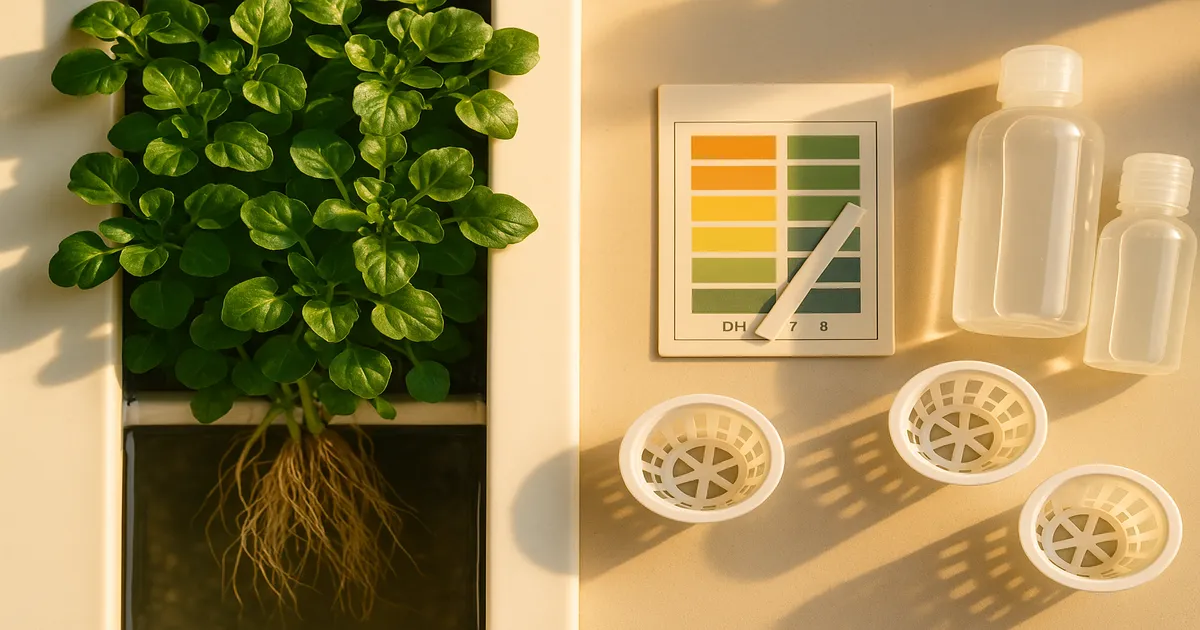
Quick Answer: Watercress (Nasturtium officinale) is a semi-aquatic perennial brassica that naturally grows along cool, oxygen-rich streams and springs — which makes it one of the most hydroponic-ready plants you can grow. In a well-managed NFT or DWC system, you can harvest fresh watercress in as little as 14–21 days from transplant, with the plant continuously regrowing using a cut-and-come-again method.
How Does Watercress Grow? The Basics
Watercress at a Glance
Watercress scored a perfect 100/100 on the CDC’s Powerhouse Vegetables list. It earns that ranking. The leaves are packed with Vitamin K, Vitamin C, calcium, iron, and glucosinolates — the sulfur-containing compounds responsible for its peppery bite and studied for potential cancer-fighting properties. As a cool-season crop, watercress thrives between 50–75°F (10–24°C) and turns bitter and bolts when temperatures push past 80°F (27°C) for any length of time.
Understanding how watercress grows in its natural habitat is the key to replicating those conditions artificially — and hydroponics does it better than almost any other method.
The Natural Growth Habit of Watercress
Native Habitat: Streams, Springs, and Shallow Waterways
In the wild, watercress colonizes the edges of slow-moving streams and limestone springs across Europe, Asia, and North America. The water is typically cool, well-oxygenated, and rich in calcium and bicarbonates. Those conditions directly shape what the plant needs in a hydroponic system — constant moisture, high dissolved oxygen, and a higher pH than most leafy greens prefer.
Stem and Leaf Structure
The stems are hollow and semi-succulent, which allows the plant to absorb water directly through stem tissue rather than relying solely on roots. Leaves are pinnate, arranged in groups of 3–9 rounded leaflets along a central stem. That distinctive peppery bite comes from glucosinolates — sulfur-containing compounds the plant produces as a natural defense mechanism.
How Watercress Roots and Propagates
One of watercress’s most useful traits is how easily it roots from cuttings. Nodes along the stem produce white root nubs in plain water within 3–7 days — no rooting hormone needed. Drop a cutting in a glass of water and you’ll see roots forming almost before you’ve forgotten about it. This makes propagation from cuttings faster and more reliable than starting from seed.
Life Cycle: Perennial, Annual, or Cut-and-Come-Again?
Botanically, watercress is a perennial. It will overwinter and regrow in mild climates. In most cultivation systems, though, it’s managed as a cut-and-come-again crop — harvested repeatedly until heat or day length triggers bolting. Bolting sends up clusters of small white flowers and shifts the plant’s energy away from leafy growth, making leaves tougher and more intensely bitter. The main triggers are heat above 80°F (27°C), extended daylight hours, and water stress.
Watercress How Does It Grow in Hydroponic Systems
NFT (Nutrient Film Technique): The Commercial Favourite
NFT is the gold standard for commercial watercress production. A thin, continuous film of nutrient solution flowing over bare roots is essentially a controlled stream — roots get constant moisture and oxygen simultaneously, which is exactly what watercress wants. If you’re scaling up or building a dedicated setup, NFT is the system to beat.
DWC (Deep Water Culture): Best for Home Growers
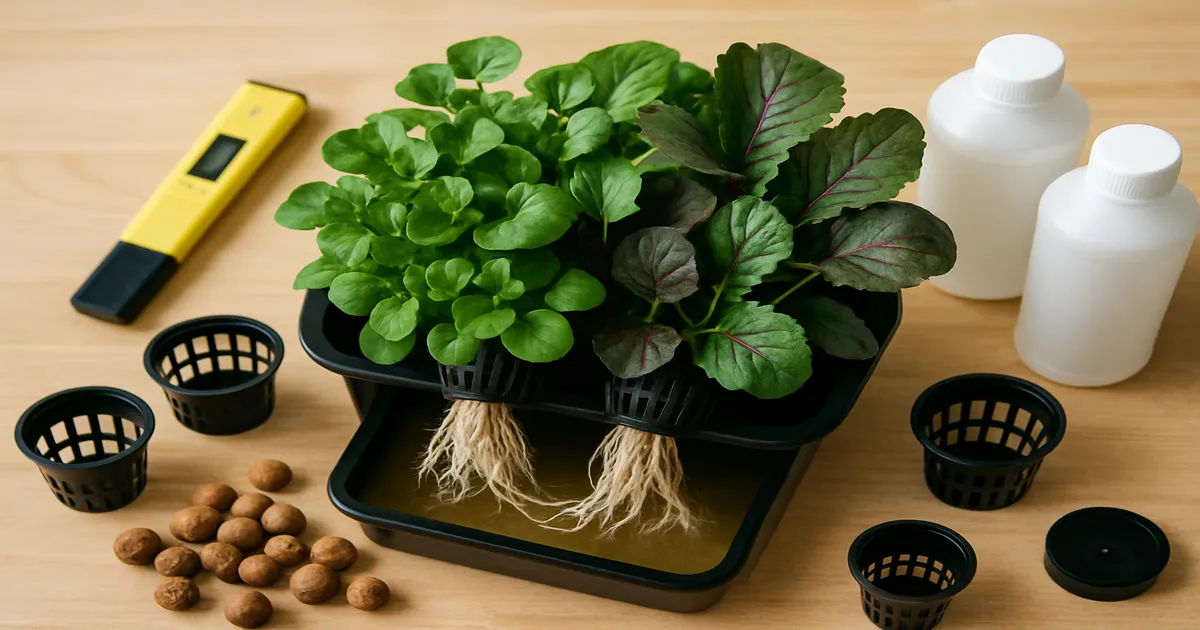
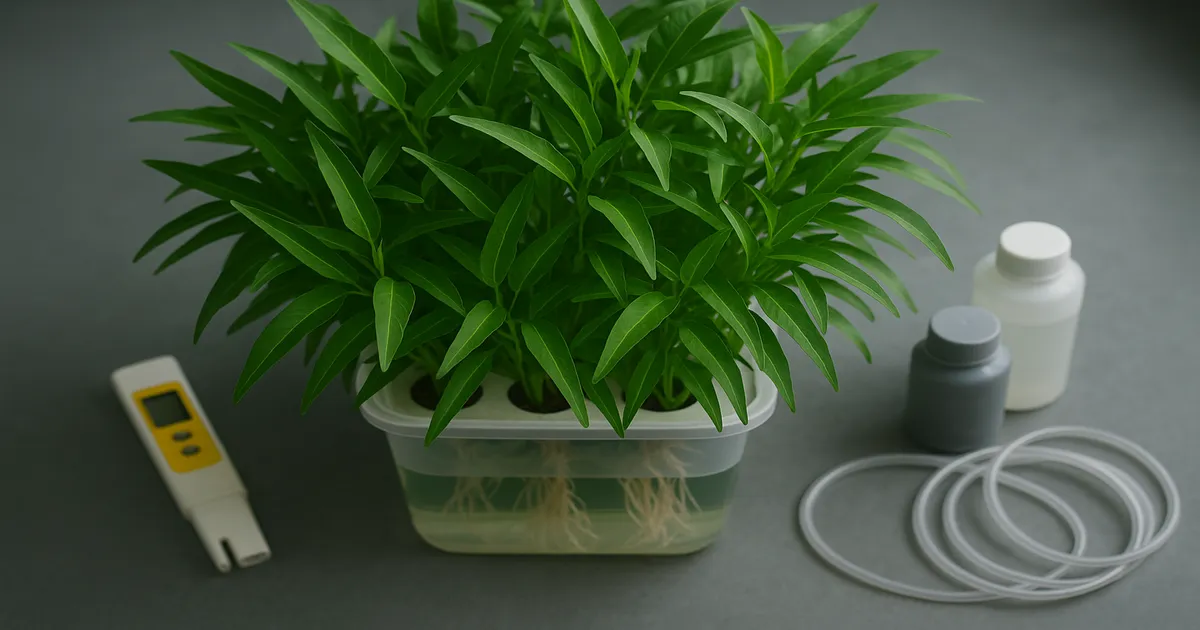
In DWC, roots hang directly into aerated nutrient solution. Watercress tolerates — actually prefers — this constant submersion better than almost any other leafy green. For home growers, a simple 5-gallon DWC bucket is an affordable, low-maintenance entry point that produces impressive yields. (General Hydroponics WaterFarm 8-Pod System)
Kratky Passive System: Low-Effort Option
The Kratky method works for watercress, but requires one important habit: top off the reservoir frequently. Because there’s no pump, the air gap above the solution grows as plants drink. Watercress drinks fast — check levels every 2–3 days rather than weekly.
Aquaponics: The Natural Partnership
Watercress and aquaponics are a near-perfect match. The plant’s exceptional nitrogen uptake makes it an outstanding biofilter, and the naturally higher pH of aquaponic systems (6.8–7.2) aligns well with watercress preferences. Trout are the ideal fish partner since they share watercress’s preference for cool water, though tilapia works in warmer systems. Supplement iron and potassium, as fish waste tends to run short on both.
Other Systems: Ebb & Flow, Soil, and Wick
Ebb and flow works with frequent flood cycles — every 2–3 hours during the day. Soil growing is viable if you keep conditions genuinely boggy, but drainage and aeration become difficult to manage consistently. Wick systems are the weakest option; passive wicking simply can’t deliver water fast enough. Stick to active systems for reliable results.
Nutrient Requirements for Hydroponic Watercress
EC and PPM Targets by Growth Stage
| Growth Stage | PPM | EC |
|---|---|---|
| Germination / Seedling | 200–400 | 0.4–0.8 |
| Early Vegetative | 400–700 | 0.8–1.4 |
| Active Vegetative / Harvest | 700–1,000 | 1.4–2.0 |
| Mature / Pre-harvest | 800–1,100 | 1.6–2.2 |
| Microgreens | 300–500 | 0.6–1.0 |
Don’t push past 1,200 PPM (2.4 EC). Watercress is moderately sensitive to high salt concentrations, and exceeding that threshold consistently causes tip burn and reduces flavor quality.
Macronutrients
Watercress is a heavy nitrogen feeder. Target 150–200 ppm N, sourced primarily from nitrate (NO₃⁻) rather than ammoniacal nitrogen (NH₄⁺). Ammoniacal nitrogen destabilizes pH and can cause root toxicity in submersion systems. Potassium should nearly match nitrogen at 150–250 ppm K, supporting both water regulation and glucosinolate production. Phosphorus needs are moderate — 30–50 ppm — so don’t oversupply it, or you’ll lock out zinc and iron.
Secondary Macronutrients
Calcium is the nutrient most likely to cause problems. Watercress evolved in calcium-rich spring water and needs 150–200 ppm Ca — significantly more than most hydroponic crops. Deficiency shows up as tip burn and hollow stems. Magnesium should sit at 30–50 ppm, maintaining a Ca:Mg ratio of roughly 3:1 to 4:1. Sulfur (30–60 ppm) plays a direct role in glucosinolate synthesis — it’s what gives watercress its peppery character, so don’t skip it.
Micronutrients
Iron is the trickiest micronutrient at watercress’s higher pH range. Target 2–4 ppm and use chelated iron — Fe-DTPA is more stable than Fe-EDTA above pH 6.5, making it the better choice for watercress systems. Boron (0.3–0.5 ppm) is important for cell wall integrity; deficiency causes distorted or hollow stems. A quality commercial trace element mix will cover manganese, zinc, copper, and molybdenum at appropriate levels.
Ready-to-Use Nutrient Recipes
General Hydroponics Flora Series at a vegetative-heavy 3:2:1 ratio (Grow:Micro:Bloom), 5–7 mL/gallon total, works well for watercress.
Masterblend three-part formula :
- Masterblend 4-18-38: 2.4 g/gallon
- Calcium Nitrate (15.5-0-0): 2.7 g/gallon (increase by ~10–15% over standard recipe for watercress)
- Magnesium Sulfate (Epsom Salt): 1.2 g/gallon
- Yields approximately 800–900 PPM (1.6–1.8 EC)
Simplified home grower recipe (per gallon):
- Calcium Nitrate: 1.5 g
- Potassium Nitrate: 0.8 g
- Monopotassium Phosphate: 0.4 g
- Magnesium Sulfate: 0.6 g
- Chelated Iron (Fe-DTPA 11%): 0.05 g (Fe-DTPA preferred over Fe-EDTA at watercress pH)
- Commercial trace element mix: per label
- Yields approximately 600–750 PPM (1.2–1.5 EC)
pH and EC Management
Ideal pH Range
Most hydroponic crops run at pH 5.5–6.2. Watercress is different — target pH 6.5–7.1, with 6.8 as your daily setpoint. This isn’t a quirk; it’s biology. The plant evolved in limestone spring water naturally buffered toward alkalinity. Running below pH 6.2 for extended periods causes calcium and magnesium lockout, and you’ll see yellowing within days.
For pH Up, use potassium hydroxide (KOH) rather than sodium hydroxide (NaOH) — potassium is a plant nutrient, sodium isn’t. For pH Down, phosphoric acid is the standard choice. Always add adjusters in small increments, stir thoroughly, and wait 15 minutes before retesting.
EC Monitoring and Reservoir Management
As plants drink water faster than they consume nutrients, EC creeps upward. Top off with plain, pH-adjusted water — not nutrient solution — whenever the reservoir drops by 10–20%. Do a complete reservoir change every 7–14 days to prevent salt buildup and pathogen accumulation.
A reliable pH meter is non-negotiable. The Apera PH60 and Bluelab pH Pen are both solid choices — calibrate weekly using pH 4.0 and 7.0 buffer solutions. For EC, the Bluelab Truncheon is durable and requires no calibration. Check pH and EC daily in DWC and NFT systems; every 2–3 days is acceptable for Kratky.
Troubleshooting pH and EC Problems
| Problem | Likely Cause | Fix |
|---|---|---|
| pH rising >0.3 units/day | High transpiration; alkaline source water | Add pH Down; check tap water bicarbonate levels |
| pH crashing below 6.2 | Microbial activity; ammoniacal nitrogen | Increase aeration; switch to nitrate-based nutrients |
| pH swinging wildly | Low buffering capacity (RO water) | Add small amount of calcium carbonate to buffer |
| pH consistently above 7.2 | Hard tap water; limestone media | Pre-treat water; switch to clay pebbles or coco coir |
Lighting for Indoor Watercress
Spectrum, PPFD, and Photoperiod
Blue spectrum light (400–500 nm) is your priority with watercress. It keeps growth compact, delays bolting, and drives glucosinolate production — better flavor and nutrition in one. Red spectrum (600–700 nm) powers overall photosynthesis and biomass. Use far-red sparingly or not at all; it promotes stem elongation and accelerates bolting.
| Growth Stage | PPFD (μmol/m²/s) |
|---|---|
| Germination | 50–100 |
| Seedling (1–2 weeks) | 100–200 |
| Vegetative / Harvest | 200–400 |
| Maximum productive | 400–600 |
Watercress is a low-to-moderate light crop. Stick to 14–16 hours of light per day. Pushing beyond 16 hours can trigger bolting in some varieties, particularly as plants mature. If you notice premature flowering, drop to a 14-hour photoperiod and check that solution temperature is staying cool.
For a home NFT or DWC setup, a full-spectrum LED panel in the 100–200W range covers a 2×4 ft growing area comfortably. (Mars Hydro TS 1000 LED Grow Light) Prioritize lights with strong blue output and adjustable intensity so you can dial back during the seedling stage and ramp up as plants mature.
Planting, Propagation, and Harvesting
Starting from Seed vs. Cuttings
Seeds work fine — sow on the surface of a moist rockwool cube or rapid rooter plug, keep at 65–70°F (18–21°C), and expect germination in 5–7 days. Cuttings are faster and easier. A 4–6 inch cutting placed in plain water will develop roots within 3–7 days. Once roots reach 1–2 inches, they’re ready to transplant.
Transplanting into Your System
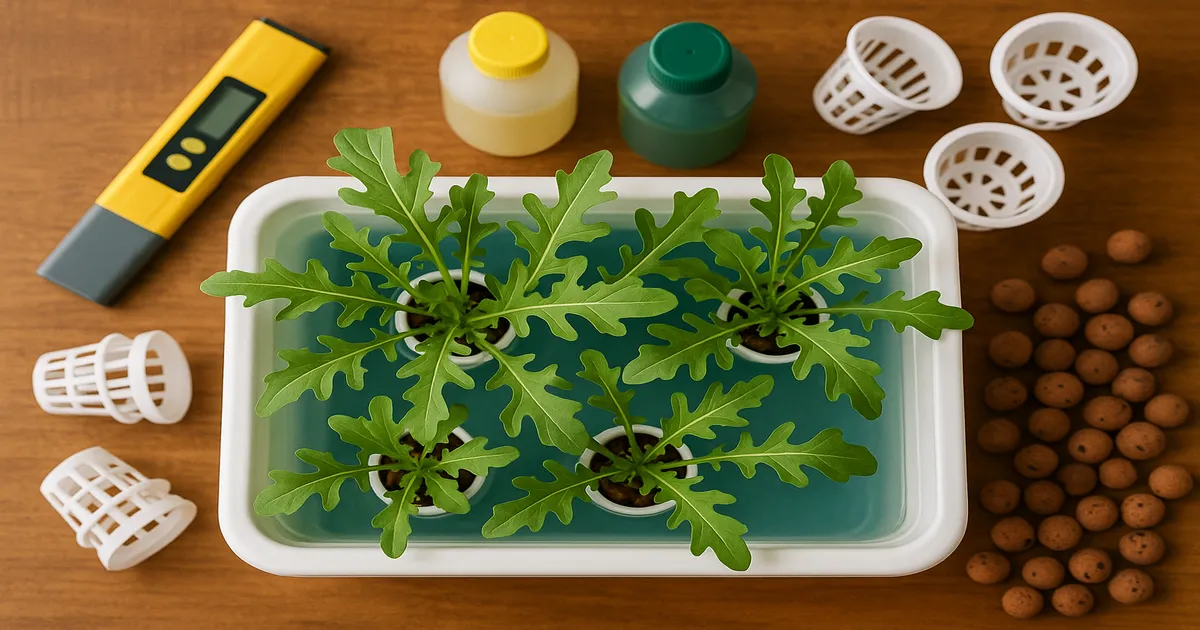
For DWC, place rooted cuttings or seedling plugs into 2-inch net pots filled with clay pebbles, ensuring roots reach or nearly reach the solution. For NFT, lay plugs directly into channel cups. Keep the solution level slightly higher in the first week to help young roots establish, then drop to normal operating level.
Keep solution temperature between 60–70°F (15–21°C). Above 72°F (22°C), dissolved oxygen drops and root rot risk climbs fast. Air temperature should stay in the 50–75°F (10–24°C) range. If you’re growing in a warm room, an aquarium chiller is a worthwhile investment.
Harvesting: Cut-and-Come-Again
Harvest by cutting stems 3–4 inches above the base, leaving several leaf nodes intact. New growth emerges from those nodes within days. Under ideal conditions, you can harvest every 2–3 weeks indefinitely. Commercial operations typically target 14–21 days from transplant to first harvest, then cycle through 3–5 cuts before replanting.
Growing Watercress as Microgreens
Sow seeds densely on a shallow tray with a thin layer of growing medium, keep EC at 300–500 PPM (0.6–1.0 EC), and harvest at 7–14 days when the first true leaves appear. The flavor is milder and more tender than mature watercress — excellent for salads and garnishes.
Troubleshooting Common Problems
Yellowing Leaves
Overall yellowing starting on older leaves usually signals nitrogen deficiency or calcium lockout from low pH. Interveinal chlorosis — veins stay green but tissue between them turns yellow — points to magnesium deficiency. Check pH first. If it’s below 6.2, correct that before adding any supplements.
Tip Burn and Leaf Curl
Tip burn (brown, crispy leaf edges) is almost always a calcium delivery problem — either actual deficiency or high EC preventing uptake. Leaf curl often accompanies high EC stress. Confirm EC hasn’t crept above 1,200 PPM (2.4 EC) and that pH is in the 6.5–7.1 range where calcium remains available.
Bolting: Causes and Prevention
Bolting is triggered by heat, extended light hours, or water stress — often a combination. Prevention:
- Keep solution temperature below 70°F (21°C)
- Maintain a 14–16 hour photoperiod with blue-dominant lighting
- Never let the reservoir run dry
- Harvest regularly — mature plants bolt faster than actively growing ones
Root Rot and Oxygen Deficiency
Slimy, brown roots in an otherwise healthy-looking system usually mean solution temperature has crept up and dissolved oxygen has dropped. Add an air stone if you don’t have one, upgrade to a larger air pump, and get solution temperature back below 70°F (21°C). Beneficial bacteria products can help recover mildly affected roots.
Bitter or Tough Leaves
Some bitterness is normal and desirable — it’s the glucosinolates. Harsh, unpleasant bitterness usually means the plant has experienced heat stress, water stress, or is approaching bolt. Harvest earlier, keep temperatures cool, and ensure the solution never runs dry between checks.
Frequently Asked Questions
How long does watercress take to grow hydroponically? From transplant, expect your first harvest in 14–21 days under good conditions. From seed, add another 7–10 days for germination and early seedling development. Cuttings root in 3–7 days and reach harvest faster than seed-started plants.
Can watercress grow in still water? Yes, but it performs better with some water movement or aeration. In a Kratky or DWC setup, an air stone provides enough dissolved oxygen to keep roots healthy. Completely stagnant, unaerated water increases root rot risk, especially above 70°F (21°C).
What is the best pH for growing watercress hydroponically? Target pH 6.5–7.1, with 6.8 as your daily setpoint. This is higher than most hydroponic crops and reflects watercress’s natural habitat in limestone-buffered spring water. Running below pH 6.2 causes calcium and magnesium lockout.
Why is my hydroponic watercress bolting so quickly? The most common causes are solution temperature above 70°F (21°C), photoperiods longer than 16 hours, or water stress from a low reservoir. Address temperature first — it’s the most frequent culprit. Switching to blue-dominant lighting and harvesting more frequently also helps delay bolting.
Can I grow watercress from supermarket cuttings? Yes. Place fresh supermarket watercress stems in a glass of plain water on a bright windowsill. Roots typically appear within 3–7 days. Once roots reach 1–2 inches, transplant into your hydroponic system. Success rate is high as long as the stems are fresh and haven’t been treated with growth inhibitors.