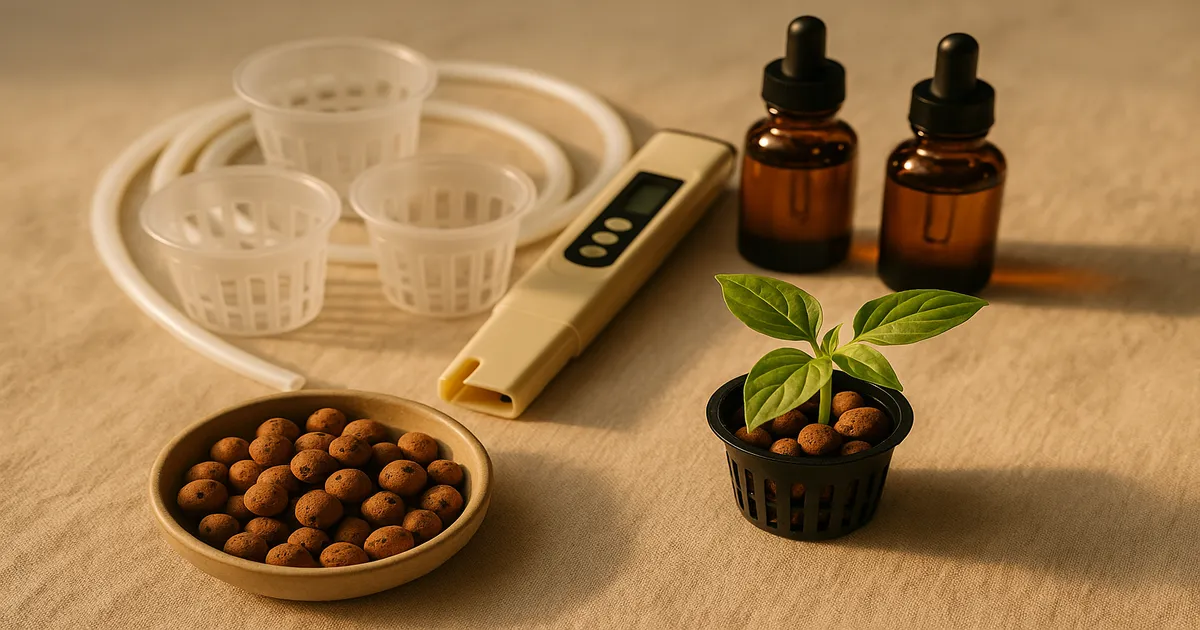
Quick Answer: The best hydroponic plants for beginners indoors are lettuce, basil, spinach, mint, and chives — all fast-growing, forgiving, and perfectly suited to simple Deep Water Culture (DWC) or Kratky systems. Indoor hydroponics uses 70–90% less water than soil gardening, produces harvests 30–50% faster, and works year-round regardless of climate. This guide covers everything you need: systems, nutrients, lighting, and daily care.
Getting started with hydroponic plants for beginners indoors doesn’t require a greenhouse, an engineering degree, or a big budget. A five-gallon bucket, some nutrients, an LED light, and a pack of lettuce seeds can have you harvesting in under five weeks. The learning curve is real, but it’s gentle — and the fast feedback loop keeps you motivated.
Best Hydroponic Plants for Beginners Indoors: Systems Overview
Choosing the Right System First
Before you pick your plants, pick your system. The method you choose determines which crops will thrive and how much daily attention you’ll need to give. Here are the four most practical options for indoor beginners.
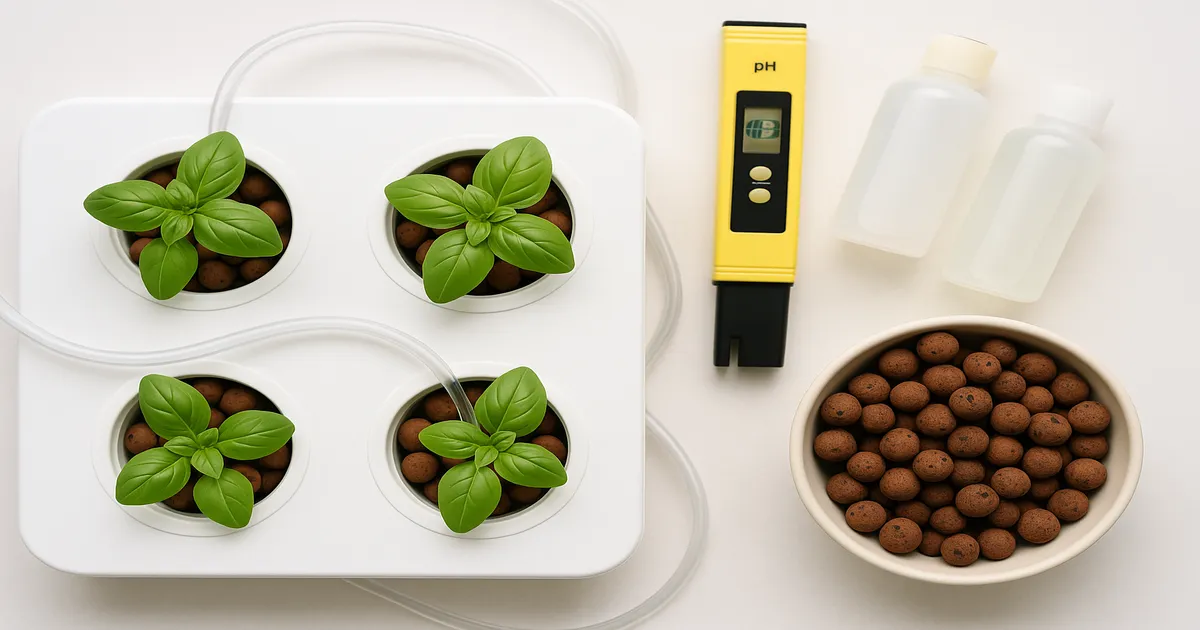
Deep Water Culture (DWC) suspends plant roots in a reservoir of oxygenated, nutrient-rich water. An air pump and air stone keep the solution oxygenated — without that oxygen, roots suffocate quickly. That’s essentially the whole system. A basic single-bucket DWC setup costs $30–60 to build yourself and can grow two to four heads of lettuce or several herb plants at once. Fewer moving parts means fewer failure points. When something goes wrong, it’s almost always pH or nutrient concentration — both easy to test and fix.
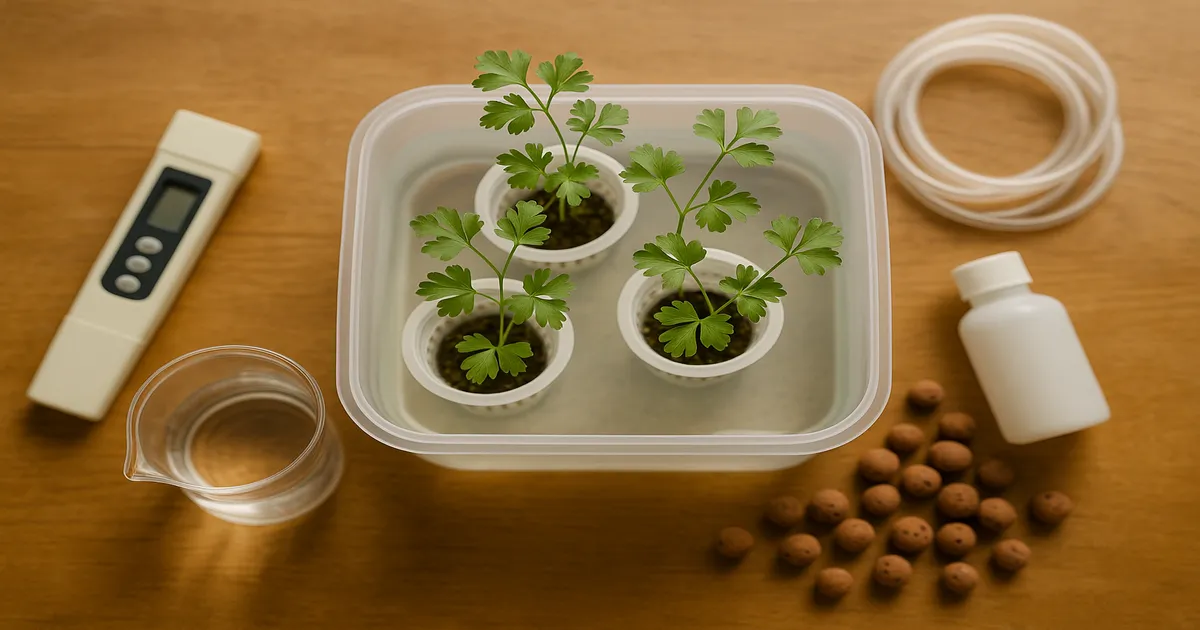
The Kratky method is passive DWC with no air pump. Fill a reservoir, suspend your plant so the roots just touch the solution, and leave an air gap above the waterline. As the plant drinks, the gap grows and roots access oxygen naturally. No electricity required beyond your grow light. A mason jar, a net cup, some nutrients, and a small LED is all you need — startup cost under $20. It works beautifully for lettuce, herbs, and spinach, making it arguably the single easiest entry point into hydroponics.
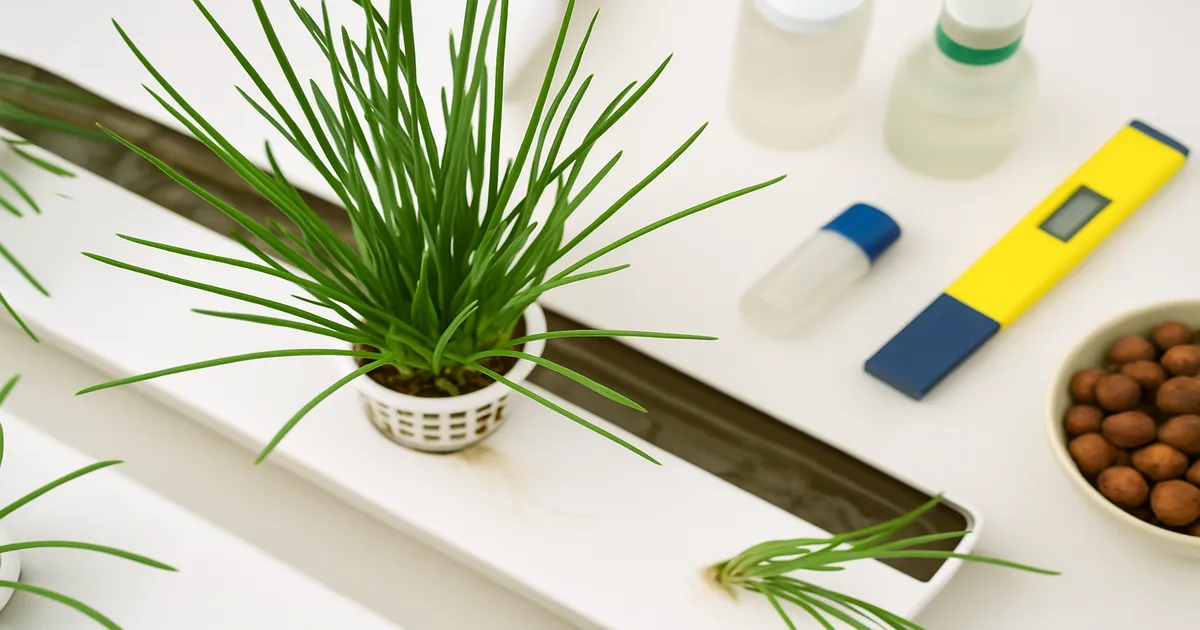
Wick systems draw nutrient solution up from a reservoir through an absorbent rope or fabric wick — completely passive and silent. The limitation is delivery speed. Wicks can’t move water fast enough for thirsty plants, so stick to small herbs like mint, chives, and thyme.
NFT and Ebb & Flow are excellent intermediate goals, not starting points. Nutrient Film Technique runs a thin stream of solution continuously over roots in sloped channels, while Ebb & Flow periodically floods and drains a grow tray on a timer. Both require pumps, timers, and more careful calibration. Get comfortable with pH and EC management in a simple DWC first, then graduate to these.
All-in-One Kits vs. DIY Builds
| All-in-One Kit | DIY Build | |
|---|---|---|
| Cost | $80–$300+ | $30–$80 |
| Setup time | 15–30 minutes | 1–3 hours |
| Customization | Limited | High |
| Best for | Absolute beginners | Budget-conscious or hands-on growers |
Popular kits like the AeroGarden Harvest and iDOO systems include built-in lights, timers, and nutrient pods — genuinely plug-and-play. The Lettuce Grow Farmstand scales well if you want to grow more than a few plants. A DIY five-gallon bucket DWC costs a fraction of the price and teaches you far more about how the system actually works.
Best Hydroponic Plants for Beginners to Grow Indoors
Leafy Greens: Lettuce, Spinach, and Kale
Leafy greens are the undisputed starting point. They grow fast, tolerate a wide nutrient range (600–900 PPM / 1.2–1.8 EC), prefer cooler temperatures (65–72°F / 18–22°C), and don’t need intense light. Lettuce varieties like Buttercrunch, Black Seeded Simpson, and Romaine are all excellent choices. Expect harvest in 25–40 days depending on variety and light intensity.
Spinach performs similarly but prefers reservoir temperatures under 68°F (20°C) to prevent bolting — slightly cooler than lettuce. Baby kale is more nutrient-hungry than lettuce (push toward 900–1,100 PPM) but still manageable for beginners who have one or two grows under their belt.
Herbs: Basil, Mint, Chives, and Cilantro
Basil grows aggressively, responds well to pruning, and gives you continuous harvests for weeks. Genovese and Thai basil both thrive in DWC at 700–900 PPM (1.4–1.8 EC) and pH 5.5–6.5. Mint is even more forgiving — but give it its own container, or it will crowd out everything else.
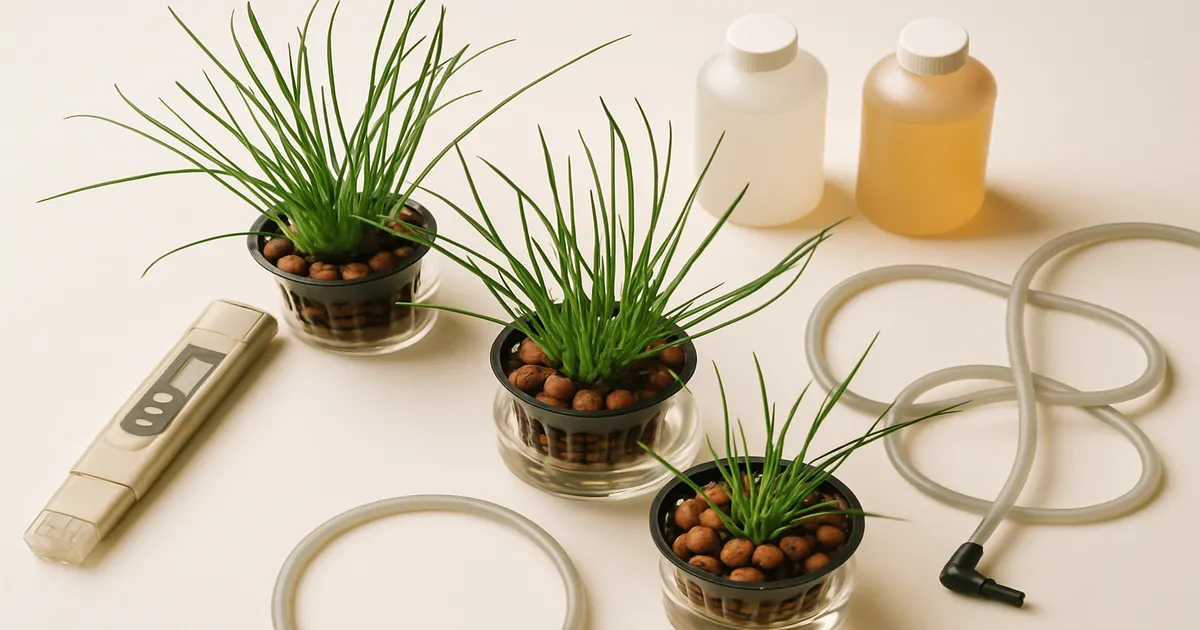
Chives are slow starters (three to four weeks before you see real growth) but essentially maintenance-free once established. Cilantro is fast but bolts quickly in warm conditions; keep your reservoir below 68°F (20°C) and harvest frequently to extend its useful life.
Microgreens: The Fastest Indoor Harvest
Microgreens aren’t technically hydroponics — they’re typically grown in a thin layer of growing medium — but they’re the fastest confidence-builder available to new indoor growers. Sunflower, radish, pea shoots, and broccoli microgreens are ready in 7–14 days. You’ll learn seed germination, light positioning, and watering discipline without the complexity of a full nutrient system.
Intermediate Picks: Strawberries and Cherry Tomatoes
Once you’ve successfully grown two or three rounds of lettuce and herbs, strawberries and cherry tomatoes are achievable next steps. Day-neutral strawberry varieties like Albion or Seascape produce fruit year-round and do well in DWC or NFT at pH 5.5–6.0 and 1,000–1,400 PPM (2.0–2.8 EC). Cherry tomato varieties like Tiny Tim or Tumbling Tom stay compact enough for indoor systems but require more light (400–600 PPFD), more nutrients (1,200–1,600 PPM), and more attention than leafy greens.
Plants to Avoid Until You Have Experience
- Large indeterminate tomato varieties — grow 5–8 feet and need heavy support and high-intensity lighting
- Cucumbers — aggressive growers requiring significant vertical space and precise nutrient management
- Peppers — slow to mature; long commitment before first harvest
- Melons and squash — impractical for most indoor spaces
Nutrients, pH, and Water Quality
Understanding NPK in Hydroponics
In soil gardening, the soil itself buffers and slowly releases minerals. In hydroponics, your water is the soil. Every nutrient the plant needs must be present and available in your reservoir. Nitrogen (N) drives leafy growth, phosphorus (P) supports roots and flowering, and potassium (K) governs overall vigor and disease resistance.
Secondary nutrients matter too. Calcium (target 150–200 PPM) prevents tip burn in lettuce and blossom end rot in tomatoes. Magnesium (target 30–50 PPM) is the central atom of chlorophyll — deficiency shows up as yellowing between leaf veins. A complete hydroponic nutrient formula covers all of these automatically.
Recommended PPM and EC Ranges by Growth Stage
| Stage | PPM | EC |
|---|---|---|
| Seedling | 100–400 | 0.2–0.8 |
| Early Vegetative | 400–800 | 0.8–1.6 |
| Late Vegetative | 800–1,200 | 1.6–2.4 |
| Flowering/Fruiting | 1,200–1,600 | 2.4–3.2 |
For most beginner crops — lettuce, spinach, herbs — stay in the 600–800 PPM (1.2–1.6 EC) range. It’s forgiving and virtually eliminates nutrient burn risk.
Three Nutrient Options for Beginners
General Hydroponics Flora Series (3-part liquid): The most widely used beginner nutrient system. For vegetative herbs and greens, mix 5 mL/gal FloraMicro + 5 mL/gal FloraGro + 2 mL/gal FloraBloom, targeting 800–1,000 PPM (1.6–2.0 EC).
Masterblend 4-18-38 (dry formula): Extremely cost-effective. Per gallon of RO or distilled water, combine 2.4 g Masterblend 4-18-38 + 2.4 g Calcium Nitrate (15.5-0-0) + 1.2 g Magnesium Sulfate (Epsom salt). This yields approximately 800–900 PPM (1.6–1.8 EC) at pH ~6.0. A 25 lb bag costs around $40 and makes hundreds of gallons.
Single-part powders: MaxiGro (7 g/gal for vegetative) or FoxFarm Grow Big Hydro are simple options for those who want to avoid multi-part mixing.
Water Quality and Chlorine
If your tap water reads above 200 PPM on a TDS meter, start with reverse osmosis or distilled water — baseline mineral content will throw off your nutrient ratios. Tap water in the 50–150 PPM range is generally fine; just account for it when calculating your target EC.
Standard chlorine off-gasses if you let tap water sit uncovered for 24 hours. Chloramine — used in many municipal water supplies — does not off-gas and requires a campden tablet or ascorbic acid to neutralize it before use.
Mixing Your First Reservoir
- Start with clean, room-temperature water (65–70°F / 18–21°C)
- Add nutrients in order: Micro first, stir thoroughly, then Grow, then Bloom
- Never mix concentrated nutrient parts directly together — always dilute each in water first
- Check EC/PPM and adjust up (more nutrients) or down (more water) to hit your target
- Add pH Down drop by drop until you reach pH 5.8–6.2
- Wait 15–30 minutes, retest, and make any final micro-adjustments
pH: The Most Critical Variable
pH determines whether your plants can actually absorb the nutrients you’ve carefully mixed. At pH 7.5, iron becomes nearly unavailable — your plant starves even though iron is sitting right there in the solution. At pH 5.0, phosphorus precipitates out. The sweet spot for most hydroponic crops is pH 5.8–6.2.
Beginners often see yellowing leaves and assume they need more nutrients. Half the time, the real problem is pH drift locking out what’s already present.
Ideal pH by plant:
- Lettuce, spinach, kale: 5.5–6.5 (optimal 6.0)
- Basil, mint, chives, cilantro: 5.5–6.5 (optimal 6.0)
- Cherry tomatoes, strawberries: 5.5–6.3 (optimal 5.8–6.0)
A quality combo meter like the Apera PC60 reads pH to ±0.01–0.05 accuracy. Cheap strip tests will frustrate you with imprecision. Calibrate your meter every one to two weeks using fresh 4.0 and 7.0 buffer solutions, and store the probe in storage solution — not plain water.
EC Drift and Reservoir Changes
EC drifting upward means your plants are drinking more water than nutrients — top off with plain pH-adjusted water. EC drifting downward means the opposite — top off with a dilute nutrient solution. Both are normal; the key is catching drift early with daily checks. Smaller reservoirs (under 5 gallons) swing dramatically, so aim for 10+ gallons when possible.
Do a full reservoir change every 7–14 days. Salt buildup, nutrient imbalances, and pathogen accumulation all increase over time. Never let the reservoir drop below 50% of its original volume between changes.
Indoor Grow Lights for Hydroponic Beginners
What Plants Actually Need
Plants use blue light (400–500 nm) for compact vegetative growth and red light (620–700 nm) for photosynthesis efficiency and flowering. As a beginner, you don’t need to overthink spectrum. A full-spectrum white LED in the 3,500K–4,000K range covers all growth stages adequately — no fixture changes required from seedling to harvest.
PPFD (Photosynthetic Photon Flux Density) measures instantaneous light intensity at your canopy in μmol/m²/s. DLI (Daily Light Integral) is the total light dose your plant receives over a full day.
Formula: PPFD × (hours × 3,600) ÷ 1,000,000 = DLI
Example: 300 PPFD × (16 hours × 3,600) ÷ 1,000,000 = 17.3 mol/m²/day — right in the sweet spot for lettuce.
| Plant | Target PPFD | Target DLI | Light Hours |
|---|---|---|---|
| Lettuce/spinach | 200–400 | 17–20 | 16–18 hrs |
| Basil/mint | 200–400 | 20–25 | 16–18 hrs |
| Cherry tomatoes | 400–600 | 25–35 | 16–18 hrs |
| Strawberries | 300–500 | 25–30 | 12–16 hrs |
Recommended LED Fixtures
For a 2×2 to 2×4 ft grow space, these fixtures deliver excellent value:
- Mars Hydro TS1000 (~$80–100): True ~150W draw; covers a 2×2 ft space well for lettuce and herbs
- Spider Farmer SF-1000 (~$90–110): Comparable output with efficient Samsung LM301B diodes; solid choice for a dedicated herb or lettuce setup
- Barrina T5 LED strips (~$30–40 for a 4-pack): Lower intensity but ideal for microgreens, seedlings, and compact Kratky setups on a tight budget
Use a plug-in timer to automate your photoperiod. Sixteen hours on, eight hours off is the standard starting point for most leafy greens and herbs.
Frequently Asked Questions
How long does it take to grow lettuce hydroponically indoors? Most lettuce varieties are ready to harvest in 25–40 days under good hydroponic conditions — roughly half the time of soil gardening. Buttercrunch and Black Seeded Simpson are among the fastest.
Do I need a special nutrient solution for each plant? Not as a beginner. A general-purpose vegetative formula like General Hydroponics Flora Series or Masterblend works well for lettuce, spinach, and most herbs. You’ll only need to adjust ratios when you move to fruiting plants like tomatoes or strawberries.
Can I use tap water for hydroponics? Yes, if it reads below 200 PPM on a TDS meter. Let it sit uncovered for 24 hours to off-gas chlorine, or treat it with ascorbic acid if your municipality uses chloramine. Always check and adjust pH before adding plants.
How often should I check my hydroponic system? Check pH and water level daily, especially in small reservoirs. EC/PPM can be checked every two to three days. Do a full reservoir change every 7–14 days.
What’s the cheapest way to start growing hydroponically indoors? A Kratky setup using a mason jar, a 2-inch net cup, a small bag of clay pebbles, a single-part nutrient like MaxiGro, and a budget LED strip light can get you started for under $30. Grow lettuce or basil first — both are nearly foolproof in this setup.