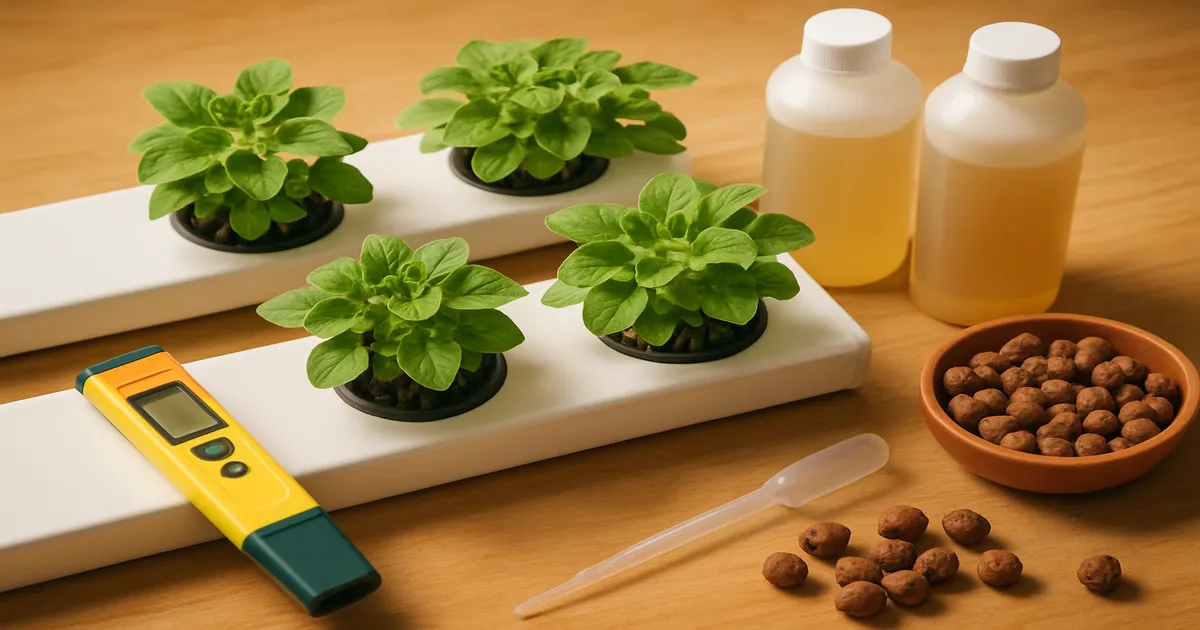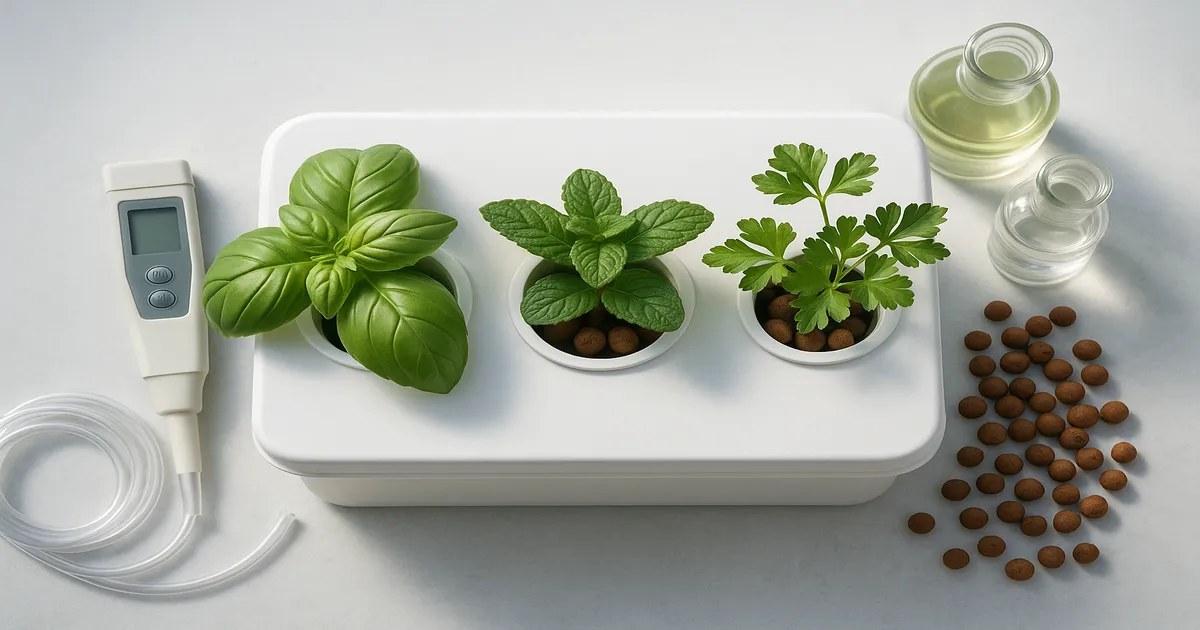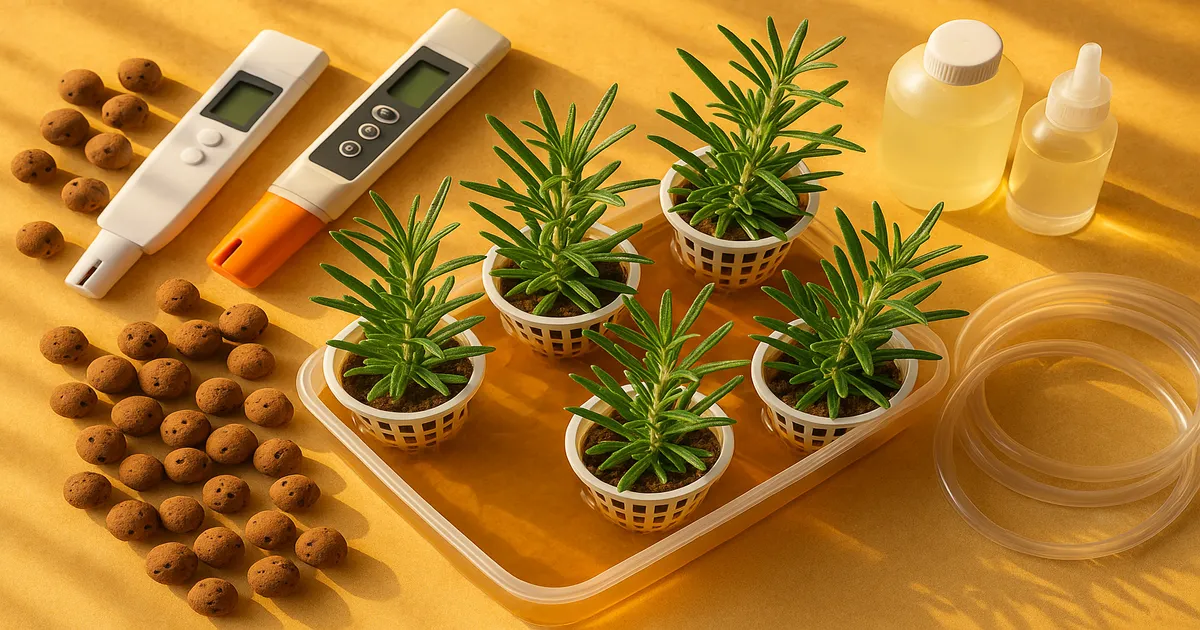
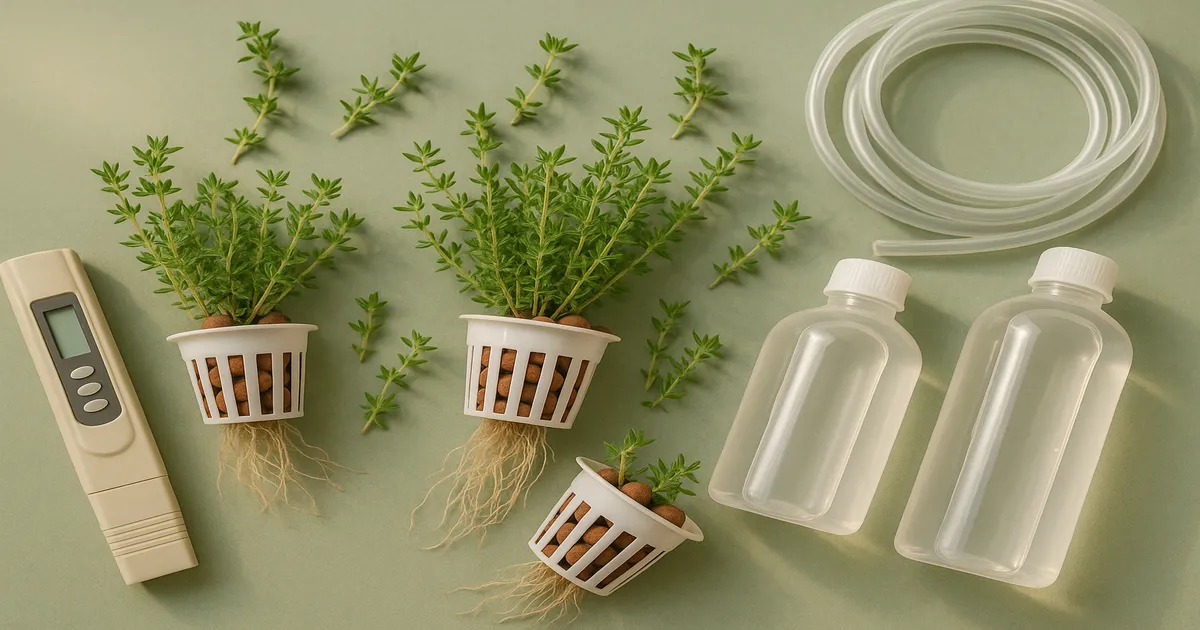
Quick Answer: Yes, thyme can absolutely be grown hydroponically — and it thrives in soilless systems. Thymus vulgaris grows 20–40% faster than soil-grown thyme, produces consistent essential oils year-round, and its low nutrient demand makes it one of the more beginner-friendly herbs to start with.
If you’ve ever wondered whether thyme can be grown hydroponically, the short answer is yes — enthusiastically so. This hardy Mediterranean herb adapts beautifully to soilless systems, especially those that keep roots well-oxygenated and avoid waterlogging. The key is understanding what thyme actually wants: good drainage, bright light, and moderate nutrients. Get those three things right, and you’ll be harvesting fragrant stems every few weeks.
Can Thyme Be Grown Hydroponically? What Makes It Such a Good Fit
Thyme (Thymus vulgaris) is native to sun-drenched, rocky Mediterranean hillsides — environments with excellent drainage and lean soil. That background translates surprisingly well to hydroponics. Its roots prefer oxygenated, free-draining conditions rather than constant moisture, which means the right hydroponic setup actually mimics its natural habitat better than heavy garden soil does.
A few standout advantages:
- Faster growth: Hydroponic thyme grows 20–40% faster than soil-grown thyme under equivalent lighting.
- Year-round production: Controlled indoor environments eliminate seasonal limitations.
- Consistent essential oils: Stable nutrient and light conditions produce predictable thymol and carvacrol concentrations — important if you’re growing for culinary or medicinal use.
- Low nutrient demand: Thyme tops out around 1,200 PPM (2.4 EC) at peak growth, making it forgiving for beginners still dialing in their systems.
A Note on True Culinary Thyme vs. Cat Thyme
Before sourcing plants or seeds, confirm you’re buying a Thymus species. Teucrium marum — commonly called cat thyme — looks similar with its small grey-green leaves and compact habit, but it belongs to the germander family, smells musty rather than herbal, and has no culinary use. Always check the Latin name on your seed packet or cutting source.
Best Hydroponic Systems for Growing Thyme Hydroponically
NFT (Nutrient Film Technique): The Top Choice
NFT runs a thin, continuous film of nutrient solution over roots in a shallow channel, leaving most of the root mass exposed to air. For thyme, this is ideal — it closely mimics the well-drained, aerated conditions the plant evolved in. Roots stay moist but never saturated, and oxygen levels remain high without extra effort. If you’re building a dedicated herb system, NFT is the gold standard for thyme.
DWC and Kratky: What You Need to Know
Deep Water Culture suspends roots directly in an oxygenated nutrient reservoir. It works well for thyme, but only if you maintain dissolved oxygen (DO) above 6 mg/L — ideally 8–10 mg/L. A strong air pump and quality air stones are non-negotiable; thyme roots rot quickly in warm, stagnant water. A reliable option here is the Vivosun 317 GPH air pump, which provides consistent output for reservoirs up to 20 gallons.
Kratky (passive DWC with no pump) is a viable low-cost option, but you must maintain a proper air gap between the water surface and the net pot. As the plant drinks down the reservoir, that gap provides the oxygen thyme needs. Top off carefully to preserve it.
Ebb & Flow, Aeroponics, and Vertical Towers
Ebb and flow systems flood the growing tray periodically then drain completely — a cycle that suits thyme’s dry-preference roots very well. Aeroponics delivers the highest root oxygenation of any system and produces fast growth, though setup costs are higher. Vertical tower systems are a popular choice for culinary herb production and work well for upright thyme varieties.
| System | Suitability | Key Consideration |
|---|---|---|
| NFT | ⭐⭐⭐⭐⭐ Excellent | Best overall for thyme |
| DWC | ⭐⭐⭐⭐ Very Good | Requires strong aeration (DO > 6 mg/L) |
| Kratky | ⭐⭐⭐ Good | Air gap above solution is critical |
| Ebb & Flow | ⭐⭐⭐⭐ Very Good | Excellent drainage cycles |
| Aeroponics | ⭐⭐⭐⭐ Very Good | Faster growth; higher cost |
| Vertical Tower | ⭐⭐⭐⭐ Very Good | Space-efficient; great for culinary herbs |
| Wicking | ⭐⭐⭐ Moderate | Slower growth; avoid overly wet media |
Wicking works at small scale but is the slowest-performing option and the hardest to keep from oversaturating roots. If you’re serious about yield, invest in NFT or DWC instead.
Best Thyme Varieties and Propagation Methods
Top Varieties for Culinary Production
| Variety | Flavor | Growth Habit | Suitability |
|---|---|---|---|
| Common/French Thyme | Classic, strong thymol | Upright, 12–18 in | ⭐⭐⭐⭐⭐ |
| English Thyme (Broadleaf) | Mild, slightly sweet | Upright, 8–12 in | ⭐⭐⭐⭐⭐ |
| Lemon Thyme | Citrusy, bright | Spreading, 6–12 in | ⭐⭐⭐⭐ |
| German Thyme | Robust, earthy | Compact, 8–10 in | ⭐⭐⭐⭐⭐ |
| Creeping Thyme | Mild, floral | Low, spreading | ⭐⭐⭐ |
| Silver Thyme | Mild, decorative | Compact | ⭐⭐⭐ |
For most growers, Common/French or English thyme are the best starting points — high essential oil content, upright growth that fits NFT channels well, and proven performance in soilless systems.
Seeds, Cuttings, or Transplants?
Cuttings are the preferred propagation method. Take 3–4 inch stems from non-flowering growth, strip the lower leaves, and root them in rockwool cubes or Rapid Rooter plugs. Roots typically appear in 10–21 days, and you’ll reach first harvest in just 4–6 weeks — roughly half the time of starting from seed.
Seeds are viable but slower and less predictable. Germination takes 14–21 days at 65–75°F (18–24°C), with germination rates around 60–70%, so sow extras. From seed, expect 8–12 weeks to first harvest. If you’re transplanting from a soil-grown plant, wash the roots thoroughly through multiple rinses before introducing them to your system — soil carries pathogens that can devastate a reservoir.
Yield expectations:
- First harvest: 4–6 weeks from rooted cutting; 8–12 weeks from seed
- Harvest frequency: Every 3–4 weeks once established
- Yield per plant: 0.5–2 oz (14–56 g) fresh herb per cycle
- Never trim more than one-third of the plant per harvest
Nutrient Requirements for Hydroponic Thyme
EC and PPM Targets by Growth Stage
| Growth Stage | PPM | EC |
|---|---|---|
| Seedling / Cutting (0–3 weeks) | 350–500 | 0.7–1.0 |
| Vegetative / Establishment (3–8 weeks) | 600–900 | 1.2–1.8 |
| Mature / Active Harvest (8+ weeks) | 800–1,200 | 1.6–2.4 |
| Pre-harvest stress (optional) | 400–600 | 0.8–1.2 |
Thyme is a light feeder. Running nutrients above 1,400 PPM (2.8 EC) risks tip burn and salt stress — there’s no benefit to pushing harder.
Macronutrients: N, P, K, Ca, and Mg
Keep nitrogen moderate. A lower N ratio compared to leafy greens encourages compact, aromatic growth rather than lush but flavor-diluted foliage. Aim for an N:K ratio of roughly 1:1.5 at maturity. Potassium is especially important because it drives terpene synthesis — thymol and carvacrol, the compounds responsible for that distinctive flavor and aroma. Phosphorus matters most in the early weeks for root development. Calcium at 150–200 PPM keeps woody stems and cell walls strong.
Micronutrients
- Iron: 2–4 PPM as chelated iron (Fe-EDTA or Fe-DTPA); deficiency causes interveinal chlorosis quickly
- Manganese: 0.5–1.0 PPM
- Zinc: 0.1–0.3 PPM; supports terpene enzyme activity
- Boron: 0.3–0.5 PPM; important for woody stem development
- Copper: 0.05–0.1 PPM
Recommended Nutrient Solutions
The General Hydroponics Flora Series works well for thyme right out of the box. For a dry nutrient approach, the Masterblend system is cost-effective and precise.
Masterblend recipe per gallon of RO water (mature plants):
- 2.4 g Masterblend 4-18-38
- 2.4 g Calcium Nitrate (15.5-0-0)
- 1.2 g Epsom Salt (MgSO₄)
This targets approximately 800–1,000 PPM (1.6–2.0 EC) — right in thyme’s sweet spot. Adding potassium silicate at 50–100 PPM Si is worthwhile: silica strengthens stems, improves heat tolerance, and emerging research suggests it enhances essential oil content.
pH, EC, and Water Management
Ideal pH Range
Target pH 5.8–6.2 as your daily operating range, within a broader acceptable window of pH 5.5–6.5. Slightly higher pH (up to 6.5) can actually benefit thyme by mimicking the alkaline soils of its Mediterranean homeland. Drifting below 5.5 risks locking out calcium and magnesium; above 6.8, iron and manganese become unavailable.
Monitoring and Adjustment
A reliable digital pH meter is non-negotiable. The Apera PH60 and Bluelab pH Pen are both excellent choices — calibrate weekly with pH 4.0 and 7.0 buffer solutions. For EC, the Bluelab Truncheon gives accurate, consistent readings without batteries.
Monitoring frequency:
- Small reservoirs (under 5 gallons): Check pH and EC daily
- Medium reservoirs (5–20 gallons): Check every 2–3 days
For pH Up, use potassium hydroxide (KOH) solution — it raises pH while adding beneficial potassium. For pH Down, phosphoric acid (H₃PO₄) lowers pH while contributing phosphorus; use it in moderation. Always add adjusters in small increments, stir thoroughly, wait 15 minutes, then retest before adding more.
Troubleshooting Common Fluctuations
| Problem | Likely Cause | Fix |
|---|---|---|
| pH rising over 24 hours | Plants consuming acidic ions; CO₂ outgassing | Normal during active growth; adjust pH Down as needed |
| pH crashing suddenly | Microbial activity; algae die-off | Eliminate light leaks; increase reservoir change frequency |
| EC creeping up | Plants consuming water faster than nutrients | Top off with plain pH-adjusted water |
| EC dropping rapidly | Fast growth; high nutrient uptake | Replenish with half-strength nutrient solution |
Keep your reservoir at 65–72°F (18–22°C) — warmer water holds less oxygen and invites pathogens. Do a full reservoir change every 7–14 days to prevent salt buildup.
Lighting for Hydroponic Thyme
PPFD and DLI Targets
| Growth Stage | PPFD (µmol/m²/s) | DLI (mol/m²/day) |
|---|---|---|
| Seedling / Cutting | 150–250 | 8–12 |
| Vegetative / Establishment | 250–400 | 12–18 |
| Mature / Harvest-ready | 400–600 | 18–26 |
| High-intensity oil production | 600–800 | 22–30 |
Thyme can tolerate up to 1,000 µmol/m²/s without photoinhibition, but most home growers get the best balance of growth and energy efficiency at 400–600 PPFD.
Spectrum and Photoperiod
Blue-heavy spectrum (5,000–6,500K) is your best choice for culinary thyme. It promotes compact, dense growth and higher essential oil concentrations. Full-spectrum (3,000–5,000K) works well for general vegetative growth. Red-dominant light encourages stem elongation and flowering — less useful unless you’re collecting seed.
Run thyme at 14–16 hours of light per day. Always include a 6–8 hour dark period — continuous 24-hour light can stress the plant and reduce essential oil quality. A simple outlet timer handles this automatically.
Recommended LED Fixtures
| Fixture | Coverage | Approx. Cost |
|---|---|---|
| Mars Hydro TS-600 | 2×2 ft | $60–$80 |
| Spider Farmer SF-1000 | 2×3 ft | $100–$130 |
| AC Infinity IONBOARD S24 | 2×4 ft | $150–$200 |
| Gavita Pro 1700e LED | 4×4 ft | $900–$1,100 |
| T5 HO Fluorescent (4-bulb) | 2×4 ft | $80–$120 |
Hang LED panels 12–24 inches (30–60 cm) above the canopy and use a PAR meter to verify even light distribution across your growing area.
Common Problems and How to Fix Them
Root Rot
Root rot caused by Pythium or Fusarium is the most serious threat to hydroponic thyme. Roots turn brown and slimy, the plant wilts despite adequate nutrients, and the reservoir develops a foul odor. The primary triggers are low dissolved oxygen, reservoir temperatures above 75°F (24°C), and poor sanitation between grows.
Prevention is straightforward: keep reservoir temperature at 65–72°F, maintain DO above 6 mg/L with strong aeration, and clean your system thoroughly between crop cycles. Beneficial bacteria products like Botanicare Hydroguard are worth adding as a preventive measure — they colonize roots and outcompete pathogenic organisms.
Nutrient Deficiencies
Iron deficiency is the most common micronutrient issue — it shows up as yellowing between leaf veins while the veins stay green. This usually signals a pH problem rather than a lack of iron in your solution; check pH first before adding more Fe. Use chelated iron (Fe-EDTA or Fe-DTPA) for best availability across your target pH range.
Magnesium deficiency can appear in high-light environments where the plant is working hard. Look for older leaves yellowing from the edges inward. A small Epsom salt top-up usually resolves it quickly.
Overwatering and Oxygen Starvation
Thyme is drought-tolerant by nature. Its roots need oxygen as much as they need water. In systems that keep roots constantly submerged without adequate aeration, the plant essentially suffocates — leaves yellow, growth stalls, and the plant gradually declines even though the reservoir looks full. If you’re running DWC, treat your air pump as essential equipment, not optional. In NFT or ebb and flow, double-check that channels drain fully and that no standing water remains between cycles.
Frequently Asked Questions
Can thyme be grown hydroponically from seed? Yes, but cuttings are faster and more reliable. Seeds take 14–21 days to germinate and 8–12 weeks to reach first harvest. Cuttings root in 10–21 days and are ready to harvest in 4–6 weeks. If you start from seed, maintain 65–75°F and expect germination rates around 60–70%.
What is the best hydroponic system for thyme? NFT (Nutrient Film Technique) is the top choice because it keeps roots moist but never saturated — closely matching thyme’s natural preference for well-drained, aerated conditions. DWC with strong aeration is a close second and easier to set up at home.
How often should I harvest hydroponic thyme? Once established, you can harvest every 3–4 weeks. Always cut stems just above a leaf node and never remove more than one-third of the plant at a time. This encourages bushy regrowth rather than a slow recovery from over-cutting.
Why does my hydroponic thyme smell weak? Low light is the most common cause. Thyme produces thymol and carvacrol in response to light stress — insufficient PPFD means less essential oil. Aim for 400–600 µmol/m²/s at the canopy. A slight nutrient reduction (pre-harvest stress) in the week before cutting can also concentrate flavors noticeably.
Can I grow thyme hydroponically alongside other herbs? Yes, with some planning. Thyme shares compatible nutrient ranges with rosemary, oregano, and sage — all Mediterranean herbs with similar EC and pH preferences. Avoid mixing it with heavy feeders like basil or mint in the same reservoir, as their higher nutrient demands will push EC beyond thyme’s comfort zone.