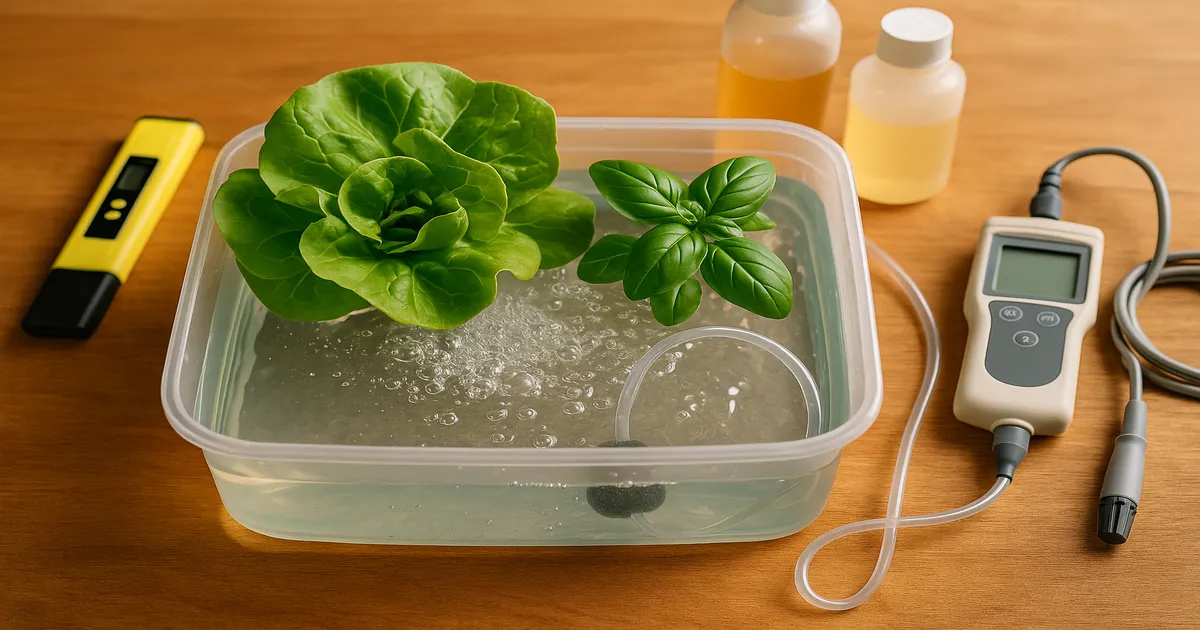
Quick Answer: Deep Flow Technique (DFT) systems submerge roots in 4–12 inches of nutrient solution, cutting off the natural air exposure that shallow systems rely on. Every milligram of oxygen your roots receive must come from dissolved oxygen (DO) in the water — and without active aeration, DO drops fast enough to kill roots and trigger disease outbreaks. Supplemental aeration isn’t optional in DFT; it’s the foundation the whole system is built on.
Why Additional Aeration Is Needed in a Deep Flow Technique System
The Core Problem
In a Nutrient Film Technique (NFT) system, roots dangle in a 1–3 mm film of water. The upper root mass sits in open air and breathes freely. Deep Flow Technique flips that equation — roots are submerged in 4–12 inches of flowing solution, with little or no direct air contact. Every molecule of oxygen they receive has to be dissolved in the water itself.
That’s a fundamentally different oxygen delivery challenge, and depth is the reason why additional aeration is needed in a Deep Flow Technique system.
What Happens Without Sufficient Aeration
When dissolved oxygen drops below 5 mg/L, root metabolism slows and nutrient uptake begins to fail. Drop below 3 mg/L and you’re in crisis territory. Roots switch to anaerobic respiration, producing ethanol and lactic acid — both toxic to root tissue. Pythium and other water molds explode in low-oxygen conditions and can destroy an entire crop in 48–72 hours. Aeration is the single most critical engineering challenge in DFT design.
What Is Deep Flow Technique and How Does It Differ From Other Systems
DFT Defined
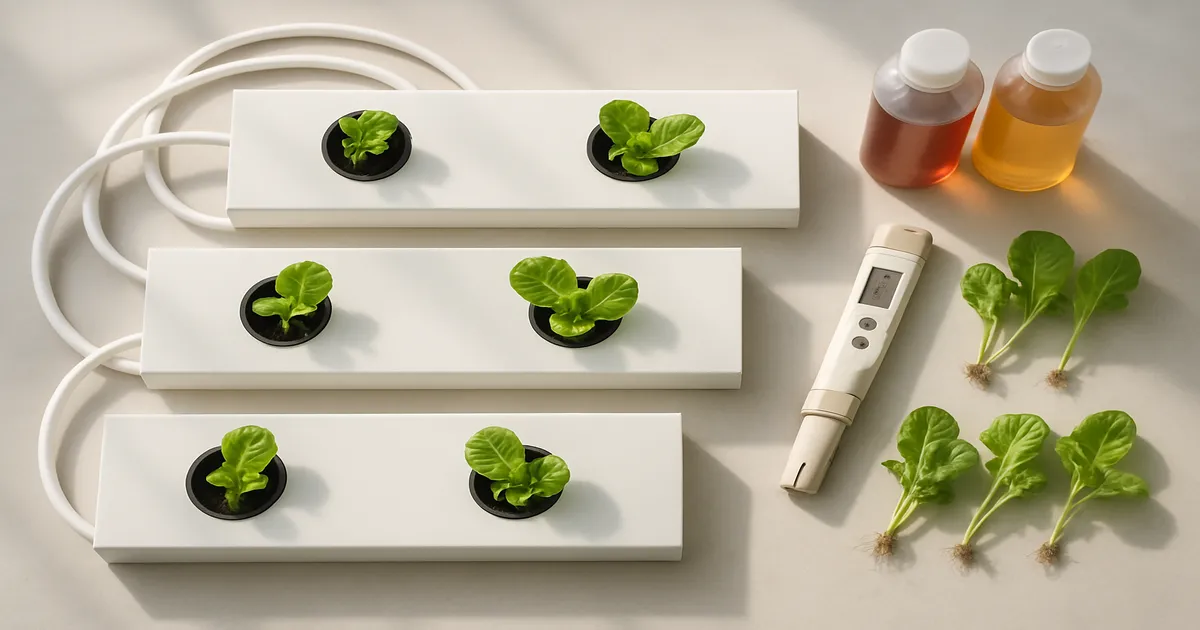
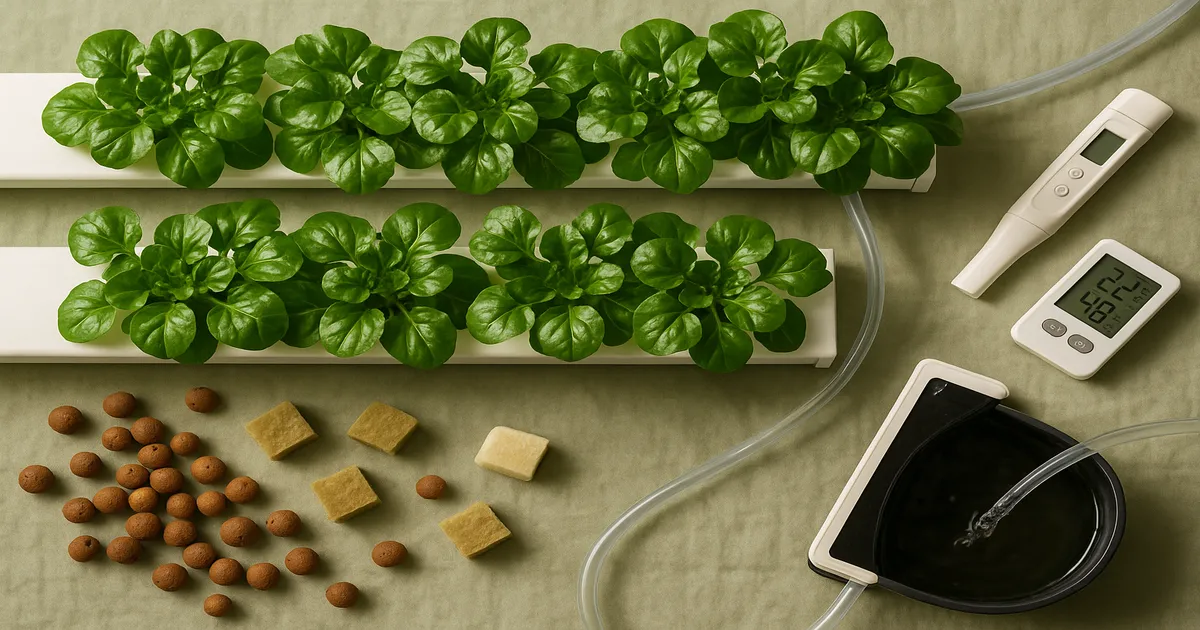
Deep Flow Technique is a recirculating hydroponic method where nutrient solution flows continuously through channels or troughs at a depth of 4–12 inches (10–30 cm). Plants sit in net pots or rafts above the channel, with roots submerged in the moving solution. The combination of depth and active flow defines DFT and separates it from similar-looking systems. You’ll sometimes see it called Recirculating Deep Flow Technique (RDFT) — same concept, just emphasizing the recirculating pump loop.
DFT vs. NFT: Why Depth Changes Everything
NFT uses a pump to trickle a thin film of solution across a sloped channel floor. Roots form a thick mat, but the upper layers stay dry and breathe atmospheric oxygen directly. DFT submerges that entire root mass. More depth means more biomass to feed, more respiration happening underwater, and far greater demand on whatever oxygen the water can carry.
DFT vs. DWC and Kratky
Deep Water Culture (DWC) shares the high-submersion challenge with DFT and also requires aggressive aeration — typically via large air stones in a static or gently recirculating reservoir. DFT’s active flow adds some passive oxygenation through turbulence, but not nearly enough on its own.
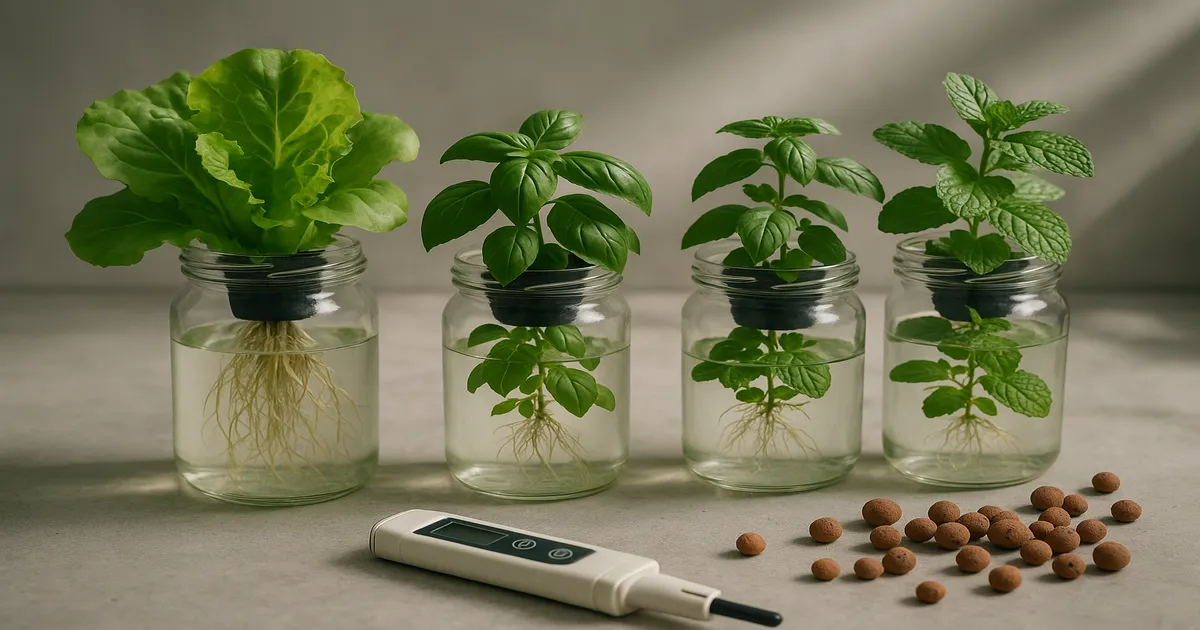
Kratky is a passive, no-pump method where an air gap forms between the water surface and the net pot as roots drink down the solution. That gap provides partial passive aeration, which is why Kratky can work without an air pump — though it’s still vulnerable to low DO in warm conditions.
Aeration Needs Across Hydroponic Systems
| System | Solution Depth | Flow Type | Root Air Exposure | Aeration Need |
|---|---|---|---|---|
| NFT | 1–3 mm film | Continuous thin film | High (upper roots) | Low–Moderate |
| DFT | 4–12 inches | Recirculating flow | Low–None | High |
| DWC/RDWC | 8–16 inches | Static or recirculating | Low–None | High |
| Kratky | 4–8 inches | None (passive) | Partial (air gap) | Moderate (passive) |
| Ebb & Flow | Variable | Flood/drain cycles | High (drain phase) | Moderate |
The Science of Oxygen Depletion in Deep Nutrient Solutions
How Roots Use Dissolved Oxygen
Plant roots don’t photosynthesize — they respire. They consume oxygen to produce ATP, the cellular energy currency that powers ion pumps, cell division, and metabolic processes. Without a steady oxygen supply, root cells can’t do their jobs, no matter how rich the nutrient solution is. DO isn’t just a water quality metric; it’s a direct measure of whether your roots can function at all.
What Happens When DO Drops
Below 5 mg/L, root function begins to decline measurably. Below 3 mg/L, cells switch to anaerobic fermentation, generating ethanol and lactic acid. Both compounds are toxic to root tissue and create the characteristic foul, swampy smell that experienced growers recognize immediately as a DO emergency. Anaerobic conditions also create the perfect environment for Pythium root rot — a pathogen that is almost always present in trace amounts but remains harmless when DO is adequate.
Optimal Dissolved Oxygen Levels for DFT Root Zones
- 7–12 mg/L: Optimal — full aerobic respiration, maximum nutrient uptake
- 5–7 mg/L: Sub-optimal — uptake slows, stress responses activate
- Below 5 mg/L: Significant decline in root function
- Below 3 mg/L: Root death and rapid pathogen spread
If you’re running DFT seriously, invest in a reliable dissolved oxygen meter. (Apera Instruments DO9500) Guessing isn’t a strategy here.
Water Temperature and Oxygen Capacity
Water holds less dissolved oxygen as temperature rises — a physical law you can’t negotiate with.
- 68°F (20°C): ~9.1 mg/L maximum DO
- 77°F (25°C): ~8.2 mg/L maximum DO
- 86°F (30°C): ~7.5 mg/L maximum DO
At 86°F, your theoretical maximum is already brushing the lower edge of the optimal range — before plant respiration starts consuming that oxygen. In warm climates or summer grows, solution temperature management becomes just as important as aeration hardware. Target solution temperatures of 65–72°F (18–22°C) for most DFT crops.
How Poor Aeration Disrupts Nutrient Uptake
The Link Between DO and Active Nutrient Transport
Nutrient uptake isn’t passive diffusion — it’s active work. Root cells use H⁺-ATPase ion pumps to drag ions like calcium, potassium, and nitrate across cell membranes against concentration gradients. Those pumps run on ATP. ATP comes from aerobic respiration. No oxygen means no ATP means no nutrient transport, even if your solution is perfectly mixed and pH-balanced.
Why Low DO Mimics Nutrient Deficiency
This is one of the most common diagnostic mistakes in DFT. A grower sees interveinal chlorosis or tip burn, tests EC and pH (both look fine), and reaches for more fertilizer. The real problem is that roots can’t absorb what’s already there because DO is too low. Adding more nutrients to an oxygen-starved system accomplishes nothing — and can push EC to harmful levels.
If your plants look deficient but your numbers check out, test your DO before adjusting your recipe.
Calcium, Potassium, and Nitrate: The First Casualties
These three nutrients rely most heavily on active transport and are the first to show deficiency symptoms when DO drops:
- Calcium: Tip burn on lettuce, blossom end rot on fruiting crops
- Potassium: Marginal leaf scorch, weak stems
- Nitrate: Yellowing, stunted growth
All three symptoms can appear even with correct EC if aeration is inadequate.
Aeration’s Role in pH Stability
Root respiration produces CO₂, which dissolves in water to form carbonic acid (H₂CO₃) and pushes pH downward. Vigorous aeration degasses that CO₂ before it can acidify the solution, helping stabilize pH between adjustment sessions. Poor aeration leads to CO₂ buildup, pH drift, and nutrient lockout — a compounding problem that can spiral quickly. Good aeration quietly prevents all of it.
Aeration Methods for Deep Flow Technique Systems
Why Additional Aeration Is Needed: Matching Method to Scale
The right aeration strategy depends on your system size. Here’s a practical breakdown:
- Hobbyist (under 50 gallons): Quality air pump + fine-pore diffusers + return-line turbulence
- Small commercial (50–500 gallons): Air pump array or venturi injectors + spray-bar returns + DO monitoring
- Large commercial (500+ gallons): Dedicated aeration blowers, nanobubble generators, or oxygen injection with inline DO sensors
Over-aerating is essentially impossible in DFT — more is almost always better.
Air Stones and Diffusers
Air stones are the most accessible starting point for hobbyist DFT. Place diffusers along the channel floor, spaced so bubbles rise through the full root zone. A practical sizing guide: aim for roughly 1 L/min of air output per 2–4 gallons of solution volume. Larger commercial air pumps can drive multiple channels from a single unit. Use fine-pore ceramic diffusers rather than coarse bubble stones — smaller bubbles have more surface area and transfer oxygen more efficiently.
Venturi Injectors and Inline Aeration
A venturi injector creates a pressure differential in the return line that draws air into the flowing water — no extra electricity required beyond the existing circulation pump. They’re inexpensive, reliable, and surprisingly effective for mid-size systems. The trade-off is that they require adequate pump pressure and add some resistance to the flow circuit.
Return-Line Turbulence
Every time nutrient solution drops from a return line into the reservoir or channel, it picks up oxygen at the surface. Increasing the drop height of your return flow, adding a spray bar, or creating a waterfall-style return all add passive oxygenation without extra equipment. It’s not sufficient as a standalone strategy in DFT, but it meaningfully supplements your primary aeration.
Nanobubble Technology for Commercial DFT
Large commercial plant factories increasingly use pure oxygen injection or nanobubble generators to push DO well above ambient saturation — sometimes to 15–20 mg/L. Nanobubbles (under 1 micron in diameter) stay suspended in solution for hours rather than seconds, dramatically improving oxygen transfer efficiency. The equipment cost is substantial, but at commercial scale the yield improvements justify it.
Nutrient and pH Management in a Well-Aerated DFT System
pH Range
Keep pH in the 5.8–6.2 range for leafy greens and herbs. Fruiting crops tolerate a slightly wider window of 5.8–6.5. Below 5.5, calcium and magnesium availability drops sharply. Above 6.5, iron becomes unavailable and you’ll see interveinal chlorosis that no amount of iron supplementation will fix until pH comes back down. Use a calibrated pH pen and check at least twice daily. (Apera PC60)
EC Targets by Crop and Growth Stage
| Crop Type | Seedling | Vegetative | Mature/Harvest |
|---|---|---|---|
| Lettuce & leafy greens | 0.8–1.2 EC (400–600 PPM) | 1.2–1.8 EC (600–900 PPM) | 1.4–2.0 EC (700–1000 PPM) |
| Herbs (basil, cilantro) | 1.2–1.6 EC (600–800 PPM) | 1.8–2.4 EC (900–1200 PPM) | 2.0–2.8 EC (1000–1400 PPM) |
| Fruiting crops | 1.6–2.0 EC (800–1000 PPM) | 2.4–3.6 EC (1200–1800 PPM) | 3.2–4.8 EC (1600–2400 PPM) |
| Strawberries | 1.2–1.6 EC (600–800 PPM) | 2.0–2.8 EC (1000–1400 PPM) | 2.4–3.2 EC (1200–1600 PPM) |
Nutrient Recipe for Leafy Greens
General-purpose DFT leafy green recipe per 100 gallons (378 L):
- Calcium Nitrate [Ca(NO₃)₂]: 190 g
- Potassium Nitrate [KNO₃]: 115 g
- Monopotassium Phosphate [KH₂PO₄]: 55 g
- Magnesium Sulfate [MgSO₄·7H₂O]: 100 g
- Chelated Iron (Fe-EDTA 13%): 15 g
- Micronutrient blend: per manufacturer label
For growers who prefer pre-formulated options, the Masterblend 4-18-38 system paired with calcium nitrate and magnesium sulfate is cost-effective at scale. The General Hydroponics Flora Series works well for hobbyists who want easy 3-part flexibility.
Reservoir Change Schedule
Change reservoirs every 7–14 days for small systems and 14–21 days for commercial operations. As solution ages, nutrient ratios drift as plants preferentially consume certain ions. Top off with plain water when EC rises (plants are drinking water faster than nutrients) and with dilute solution when EC drops.
Troubleshooting Aeration Problems in DFT
Signs of Oxygen Deficiency
You’ll usually see the problem before you measure it. Warning signs include:
- Brown, slimy, or mushy root tips
- Foul (sulfurous or swampy) root smell
- Wilting despite a full reservoir and correct EC
- Stunted growth with no obvious nutrient imbalance
- Tip burn or chlorosis with correct pH and EC
Any one of these should prompt an immediate DO check and temperature reading.
Root Rot: Causes, Identification, and Recovery
Pythium root rot is an opportunistic water mold. It’s almost always present in trace amounts but only becomes destructive when DO drops below 3 mg/L. Infected roots turn brown, develop a slimy coating, and lose their fine root hairs. The smell is unmistakable.
Recovery steps:
- Increase aeration immediately — add air stones, raise pump output, increase return-line turbulence
- Lower solution temperature to 65–68°F (18–20°C) if possible
- Remove and dispose of the most heavily infected root material
- Add beneficial bacteria to outcompete the pathogen (Botanicare Hydroguard)
- Perform a full reservoir change with fresh solution
pH Crashing and CO₂ Buildup
If your pH is consistently drifting downward and you’re not using ammonium-heavy nutrients, CO₂ buildup from poor aeration is the likely culprit. The fix is almost always more aeration — specifically, increasing surface agitation to degas CO₂ from the solution. Check your air pump output, inspect diffusers for clogging, and consider adding a spray-bar return if you don’t already have one.
Best Crops for DFT and Their Aeration Sensitivity
Butterhead and romaine lettuce are the workhorses of commercial DFT — fast cycles (28–45 days), predictable yields, and reasonable tolerance for minor DO fluctuations. Spinach prefers cooler solution temperatures in the 60–68°F (15–20°C) range, which conveniently also means higher natural DO capacity. Arugula turns around in 21–30 days and is excellent for successive planting in long DFT channels.
Basil is the canary in the coal mine for DFT aeration problems. It’s among the first crops to show root rot symptoms when DO dips, and it has zero tolerance for sustained low-oxygen conditions. If your basil roots are turning brown, your aeration is inadequate — and your lettuce is probably suffering too, just more quietly. Kale and Swiss chard are moderately demanding, with longer cycles (35–50 days) and higher biomass that increases root zone oxygen demand over time.
Sensitivity roughly tracks with growth rate and root density:
- Basil — highest sensitivity, first to show symptoms
- Swiss chard and kale — moderate sensitivity
- Romaine lettuce — moderate, tolerates brief fluctuations
- Butterhead lettuce — most forgiving of the common DFT crops
If you’re running basil, don’t rely on a single small air stone. Redundant aeration — two air pumps on separate circuits, plus venturi injection on the return line — is worth the investment.
Frequently Asked Questions
Q: Why is additional aeration needed in a Deep Flow Technique system compared to NFT? A: In NFT, the upper root mass is exposed to open air and breathes atmospheric oxygen directly. DFT submerges the entire root zone in 4–12 inches of solution, so all oxygen must come from DO in the water. Without active aeration, DO depletes quickly and roots suffocate.
Q: What dissolved oxygen level should I target in a DFT system? A: Aim for 7–12 mg/L for optimal root function. Below 5 mg/L, nutrient uptake begins to decline. Below 3 mg/L, roots switch to anaerobic respiration and Pythium root rot becomes a serious risk.
Q: Can I run a DFT system without an air pump? A: Not reliably. Return-line turbulence and venturi injectors help, but they’re supplements — not replacements — for a dedicated air pump. Without active aeration, DO will drop to dangerous levels, especially in warm conditions or with high-biomass crops like basil.
Q: How does water temperature affect aeration needs in DFT? A: Warmer water holds less dissolved oxygen. At 86°F (30°C), maximum DO is only ~7.5 mg/L — already near the lower edge of the optimal range before plant respiration consumes any of it. Keep solution temperatures at 65–72°F (18–22°C) and increase aeration intensity during warm periods.
Q: How do I know if my DFT aeration is failing? A: Watch for brown or slimy root tips, a foul swampy smell, wilting with correct EC and pH, or nutrient deficiency symptoms that don’t respond to nutrient adjustments. Confirm with a DO meter — if readings are below 5 mg/L, increase aeration immediately.