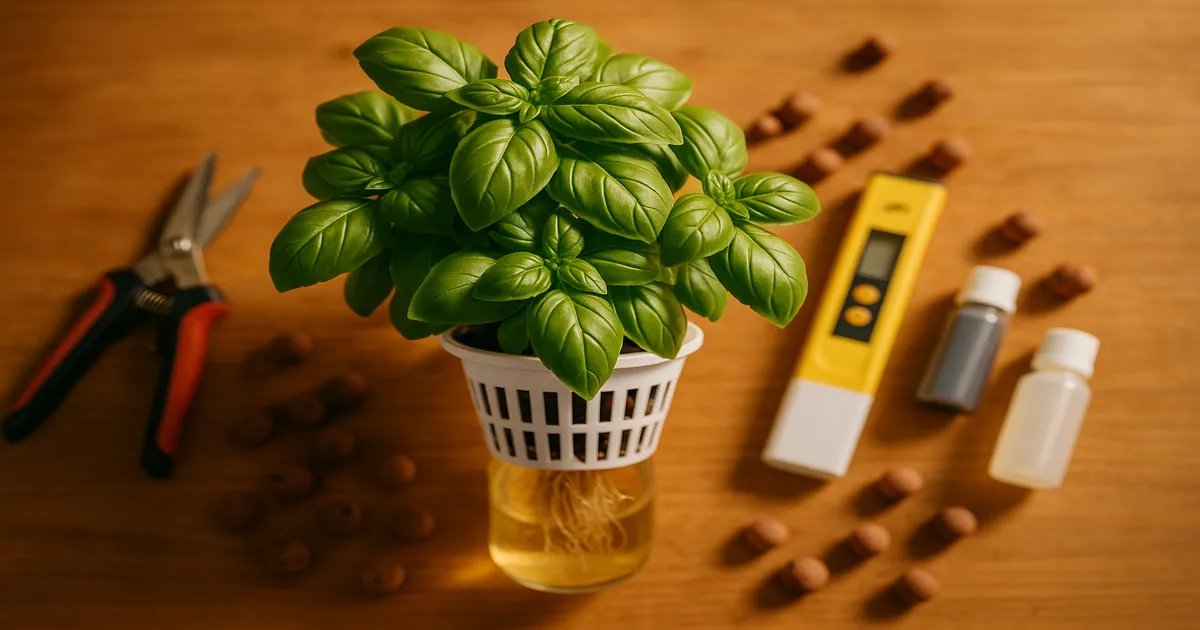
Quick Answer: Trim your basil for the first time when it has 3–4 sets of true leaves and stands 6–8 inches tall — usually 3–4 weeks after germination. After that, trim every 7–14 days during active growth, and always cut before flower buds open. Those two triggers — plant maturity and the appearance of flower buds — are all you need to keep basil productive for months.
Knowing when to trim your basil is the difference between a scraggly, bitter plant that bolts in six weeks and a lush, bushy herb that keeps producing all season. The good news: once you understand what the plant is actually doing, the timing rules are simple.
When Should I Trim My Basil? The Core Rules
Two Triggers That Tell You It’s Time to Cut
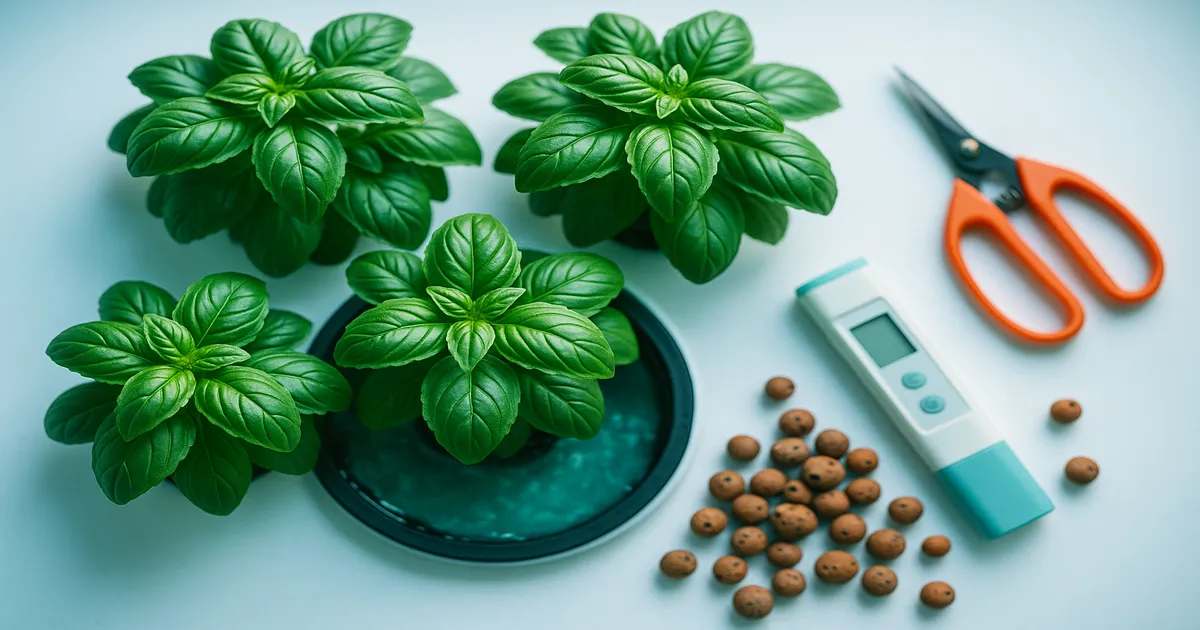
Trigger 1 — Size: Count the leaf sets from the bottom of the stem. Once you have four pairs of true leaves and the plant feels sturdy, you’re ready for the first trim. That usually happens 3–4 weeks after germination under good light and nutrition.
Trigger 2 — Flower buds: Look for tiny, tightly clustered green knobs forming at the very top of the main stem. The leaves near the tip may also turn smaller and more pointed — an early warning sign. The moment you spot buds, cut immediately. Even a day or two of bolting causes a noticeable drop in leaf quality and flavor.
Trimming Frequency by Growing System
During active growth, trim every 7–14 days or whenever the plant adds 2–3 new leaf sets — whichever comes first. Faster-growing hydroponic systems need more frequent attention:
| Growing System | Trim Frequency |
|---|---|
| Aeroponics | Every 5–7 days |
| Deep Water Culture (DWC) | Every 7–10 days |
| NFT / Ebb & Flow | Every 7–10 days |
| Kratky (passive hydro) | Every 10–14 days |
| Aquaponics | Every 10–14 days |
| Soil / Container | Every 10–14 days |
| Outdoor / Garden Bed | Check weekly; weather-dependent |
How to Trim Basil Correctly
Where to Make the Cut
Always cut just above a leaf node — the point where two leaves branch out from the stem. Leave at least one full set of leaves below your cut so the plant retains photosynthetic surface. Cutting mid-internode (between nodes) or below all the leaves leaves a bare stub that won’t produce new growth.
Use clean, sharp scissors or pruning shears. Dull blades crush stems and create entry points for disease. Wipe blades with isopropyl alcohol between plants to prevent spreading pathogens.
How Much to Remove at One Time
The golden rule: never remove more than one-third of the plant in a single session. Taking too much at once reduces photosynthetic capacity sharply and can trigger shock — especially in hydroponic systems where the plant relies on consistent leaf area for water uptake.
For routine maintenance trims, you’re typically removing just the top two to four inches of each main stem. That’s enough to encourage branching without stressing the plant.
Why Trimming Works: Apical Dominance in Plain English
Every time you cut above a leaf node, two new lateral shoots emerge from the buds just below the cut. One cut becomes two branches. Trim those, and you get four. The math compounds quickly.
The science behind this is apical dominance. The growing tip produces a hormone called auxin, which travels downward and suppresses side shoots. Remove the tip, and that suppression disappears — the plant surges growth outward instead of upward. In practical terms, every trim you make is unlocking growth that was chemically blocked.
This is also why regular trimming extends flavor. Basil’s aroma comes from volatile compounds — primarily linalool, eugenol, and methyl chavicol — concentrated in young leaves just before flowering. Once bolting begins, essential oil production drops, leaves turn bitter, and the plant shifts energy toward seed production. Pre-bolt trimming keeps the plant locked in its most flavorful state, extending productive life from the typical 4–6 weeks to 4–6 months in a controlled indoor environment.
Nutrients and pH Around Trimming Sessions
Reduce Nutrients Briefly After Heavy Trims
After removing more than 30% of foliage, the plant can’t process nutrients at its normal rate — it simply has less leaf surface driving transpiration and photosynthesis. Maintaining full-strength nutrients during this window causes salts to accumulate in the root zone, pushing EC up at exactly the wrong moment.
Drop EC by 15–20% for 48–72 hours after any heavy trim, then return to your normal feeding schedule once new growth is visibly active.
Macronutrient Targets for the Vegetative and Trimming Phase
Target 800–1,200 PPM / 1.6–2.4 EC total during your primary production window:
- Nitrogen (N): 150–200 PPM — favour nitrate-heavy sources like calcium nitrate; ammonium-heavy formulas produce soft, disease-prone growth
- Potassium (K): 150–200 PPM — critical for stomatal regulation and aroma compound production
- Calcium (Ca): 80–120 PPM — rapid post-trim regrowth is calcium-hungry; deficiency shows as tip burn on new leaves
- Magnesium (Mg): 30–50 PPM — deficiency appears as interveinal yellowing on older leaves
- Phosphorus (P): 40–60 PPM — excess P locks out zinc and iron, so don’t overdo it
Consider adding a silica supplement at 10–20 PPM Si after heavy trims. Silica strengthens cell walls and improves stress tolerance during recovery.
Two Reliable Nutrient Recipes
General Hydroponics Flora Series (3-part):
- FloraMicro 5 mL/gal + FloraGro 5 mL/gal + FloraBloom 2 mL/gal → ~900–1,100 PPM (1.8–2.2 EC)
- Always add FloraMicro first to prevent precipitation
Masterblend 2-part:
- 12 g Masterblend 4-18-38 + 12 g Calcium Nitrate + 6 g Magnesium Sulfate per 10 L → ~800–1,000 PPM (1.6–2.0 EC)
- Cost-effective at roughly $0.10–0.15 per gallon
pH Targets and Reservoir Management
- Hydroponic systems: pH 5.8–6.2 (correct if it drifts outside 5.5–6.5)
- Soil and soilless media: pH 6.2–6.8
Basil is moderately sensitive to pH drift. Nutrients can be sitting at perfect concentrations and still be unavailable if pH is off — one of the most common hidden causes of poor post-trim recovery.
In the 24–48 hours after a heavy trim, expect EC to rise slightly as water uptake slows. pH may also drift upward more gradually than usual because reduced photosynthesis means less CO₂ consumption. Neither shift is dramatic, but both are worth catching early with daily monitoring.
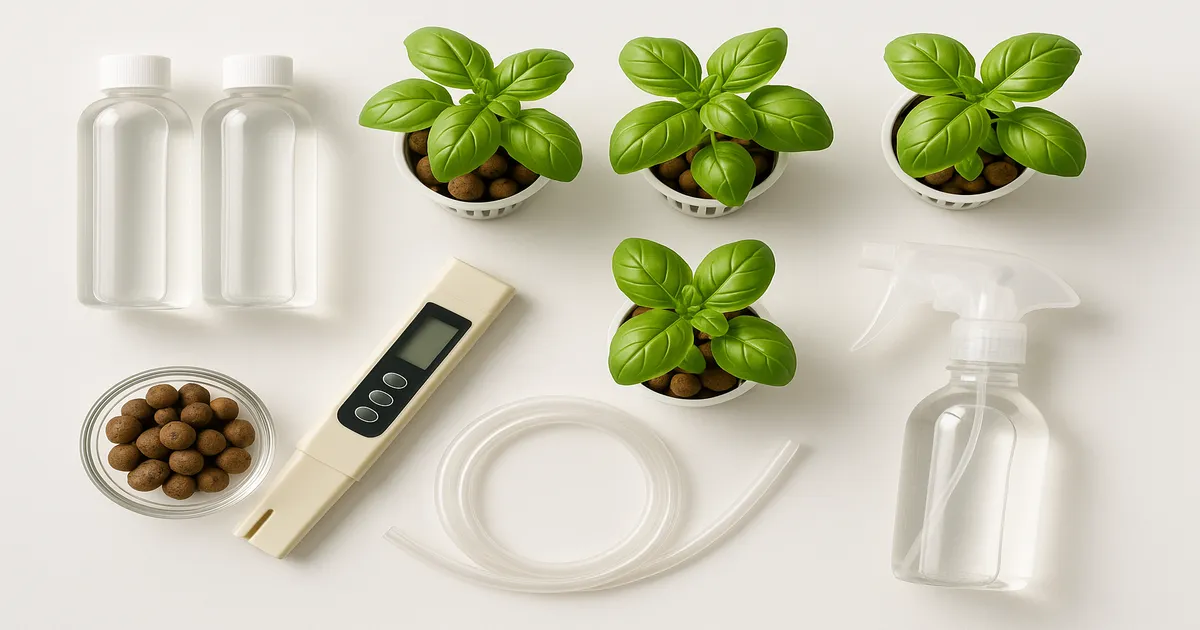
Check pH and EC at least once daily. For continuous monitoring, an inline meter removes the guesswork entirely. (Bluelab Guardian Monitor) For pH adjustment, use phosphoric acid (pH Down) or potassium hydroxide (pH Up) in small increments — 1–2 mL per 10 gallons at a time — and wait 15–30 minutes before retesting.
If you’re using RO water (under 20 PPM / 0.04 EC), add a CalMag supplement at 150–200 PPM before other nutrients to provide buffering capacity.
Lighting for Maximum Regrowth After Trimming
Spectrum, Intensity, and Photoperiod
Blue light (400–500 nm) promotes compact internodes and high essential oil content. Red light (600–700 nm) drives biomass and photosynthetic efficiency. A blue:red ratio of roughly 1:3 to 1:4 hits the sweet spot for flavorful, productive basil.
For the vegetative and trimming phase, target:
- PPFD: 250–400 µmol/m²/s
- DLI: 14–20 mol/m²/day
Basil’s light saturation point sits around 500–600 µmol/m²/s without CO₂ supplementation. Pushing beyond that generates heat without improving yield.
Run 16–18 hours of light per day. This keeps basil in vegetative mode longer and significantly delays bolting. Don’t drop below 14 hours — growth slows noticeably. Avoid 24-hour lighting; basil uses its dark period for respiration and metabolic recovery, and continuous light causes leaf curl over time.
Recommended LED Grow Lights
Home/hobby scale (1–4 sq ft):
- Spider Farmer SF-1000 (~$100–150): Full-spectrum quantum board, excellent for small DWC or container setups
- Barrina T5 LED Grow Lights (~$40–60 for 4-pack): Great for shelf systems with very low heat output
Mid-scale (4–16 sq ft):
- Spider Farmer SF-2000 (~$200–250): 200W true draw; ideal for a 2×4 ft grow tent
Troubleshooting Common Trimming Problems
Plant Not Regrowing After Trimming
Slow or absent regrowth usually comes down to one of four things:
- Cut too low: If you cut below all leaf nodes, there’s nothing left to sprout from. Always leave at least one node intact.
- EC too high post-trim: Drop EC by 15–20% and monitor until new growth appears.
- Insufficient light: New lateral buds need strong light to activate. Check PPFD against the targets above.
- Root stress: Root rot, rootbound conditions, or pH-driven nutrient lockout will all stall recovery. Check roots and pH first.
Basil Bolting Too Quickly Despite Regular Trimming
If your basil bolts faster than you can keep up, the problem is usually environmental rather than trimming technique:
- Short photoperiod: Anything under 14–16 hours accelerates bolting. Extend your light schedule.
- Heat stress: Temperatures above 85°F (29°C) trigger premature bolting. Keep the growing environment at 65–75°F (18–24°C).
- Drought stress or rootbound conditions: Both signal the plant to reproduce urgently. Check reservoir levels and root space.
Post-Trim Nutrient Deficiency Symptoms
Rapid regrowth is metabolically demanding, and deficiency symptoms can appear quickly:
- Tip burn (brown edges on new leaves): Calcium deficiency. Increase Ca to 80–120 PPM and confirm pH is in the 5.8–6.2 range for Ca uptake.
- Interveinal chlorosis on older leaves: Magnesium deficiency. Add Epsom salt at 1–2 g/gal or increase Mg to 30–50 PPM.
- Interveinal chlorosis on new leaves: Iron deficiency, often pH-related. Iron becomes unavailable above pH 6.5 in hydroponic systems.
- Distorted or cupped growing tips: Boron deficiency. Target 0.3–0.5 PPM B and ensure pH isn’t suppressing uptake.
If multiple symptoms appear at once, suspect pH-related nutrient lockout before assuming you need more of any specific element.
Frequently Asked Questions About Trimming Basil
When should I trim my basil for the first time?
Trim for the first time when the plant has 3–4 sets of true leaves (not counting the seed leaves) and stands 6–8 inches tall. This typically happens 3–4 weeks after germination. Trimming before this point stresses a plant that’s still establishing its root system.
How often should I trim my basil plant?
Trim every 7–14 days during active growth, or whenever the plant adds 2–3 new sets of leaves. In fast-growing systems like DWC or aeroponics, you may need to trim as frequently as every 5–7 days. Regular light trims are far better than infrequent heavy ones.
Should I cut basil from the top or the bottom?
Always cut from the top, just above a leaf node. Removing the top growing tip triggers lateral bud growth and creates a bushier plant. Harvesting leaves from the bottom while leaving the top intact does the opposite — it encourages the plant to keep growing tall and eventually bolt.
What happens if I don’t trim my basil?
An untrimmed basil plant grows tall and spindly, produces fewer leaves, and bolts much sooner. Once it flowers, leaf flavor drops sharply and the plant begins to die back. Regular trimming is the single most effective thing you can do to extend your harvest.
Can I trim basil that has already started to flower?
Yes — cut the flower stems back to the nearest healthy leaf node immediately. Remove all visible buds. The plant will often recover and produce new vegetative growth, though flavor may take a week or two to fully return. Catch it early for the best results.