Quick Answer: Yes, you can use organic fertilizer in hydroponic and soilless systems — but it requires a fundamentally different approach than conventional hydroponics. Because organic nutrients must be broken down by microbes before plants can absorb them, you need to deliberately build and maintain a living microbial ecosystem in your reservoir or substrate. Done right, it works beautifully; done carelessly, it leads to pH crashes, clogged emitters, and stunted plants.
Plenty of growers ask whether they can use organic fertilizer in hydroponic or soilless systems, and the honest answer is: yes, with real caveats. Synthetic nutrients are pre-dissolved mineral salts that roots absorb immediately. Organic inputs — fish hydrolysate, kelp, worm castings — are bound in complex molecules that microbes must first break down into plant-available ions. That single difference reshapes everything: your system choice, how you manage pH, and how you interpret your EC meter.
Can You Use Organic Fertilizer in Hydroponic Systems? What Makes It Different
In a conventional hydroponic system, you dissolve mineral salts in water and roots drink them up directly. No middleman. Organic hydroponics inserts a critical one — a microbial community that mineralizes organic compounds into nitrates, phosphates, and other ions plants can actually use.
That mineralization lag makes organic systems less forgiving of neglect. You’re not just managing a nutrient solution; you’re managing a living ecosystem.
What Is Bioponics (Living Water Growing)?
Bioponics — sometimes called “living water” growing — is the formal term for hydroponic systems that deliberately use organic inputs and cultivate beneficial microbial communities in the nutrient solution. The goal is a reservoir that functions like healthy soil water: teeming with bacteria and fungi that constantly convert organic matter into plant food.
Is Organic Hydroponic Produce Truly Organic? The Certification Debate
This is contested territory. The USDA’s National Organic Program (NOP) currently allows hydroponic operations to receive organic certification, but many certifiers and organic farming advocates argue that growing without soil violates the philosophical core of organic agriculture. If you’re growing for commercial sale, verify current NOP rules and work with an accredited certifier — the regulatory landscape has shifted before and may shift again.
Which Hydroponic Systems Work Best with Organic Fertilizers?
High-Compatibility: Media Beds, Ebb & Flow, and Aquaponics
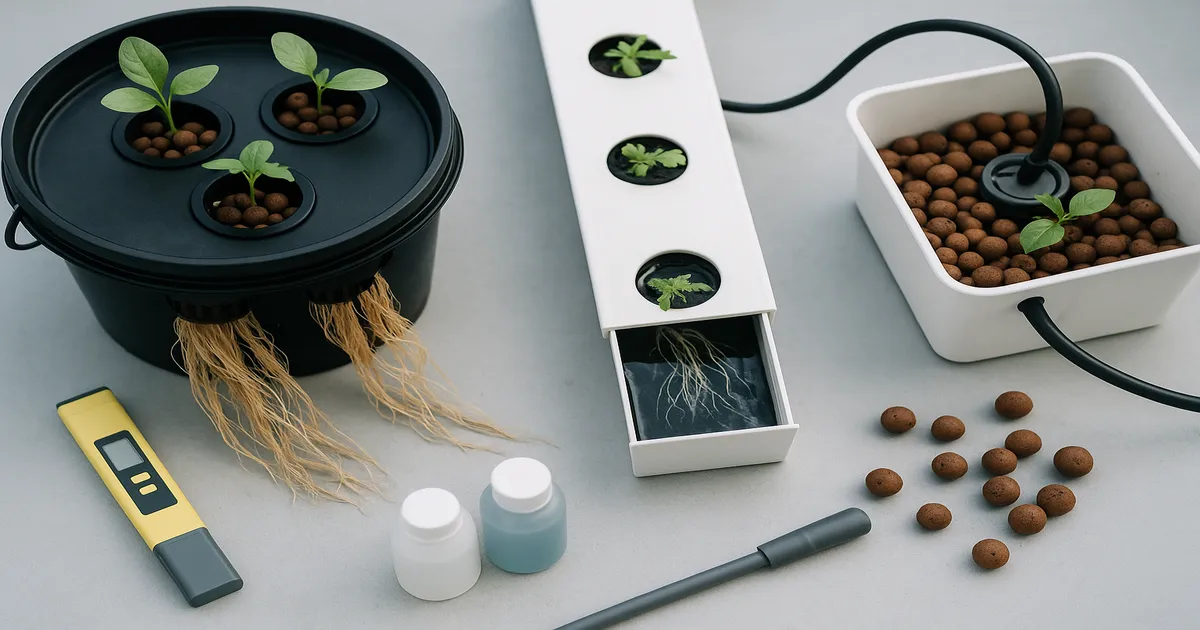
Media-based systems — filled with coco coir, LECA, or perlite — are the friendliest environment for organic growing. The substrate becomes a home for beneficial microbes, and more microbial surface area means faster, more consistent nutrient mineralization.
Ebb and flow systems share this advantage when run with a solid substrate. Aquaponics is the gold standard: fish waste is inherently organic, and the system is specifically engineered around biological nutrient cycling.
Moderate-Compatibility: DWC, Drip, and Wicking
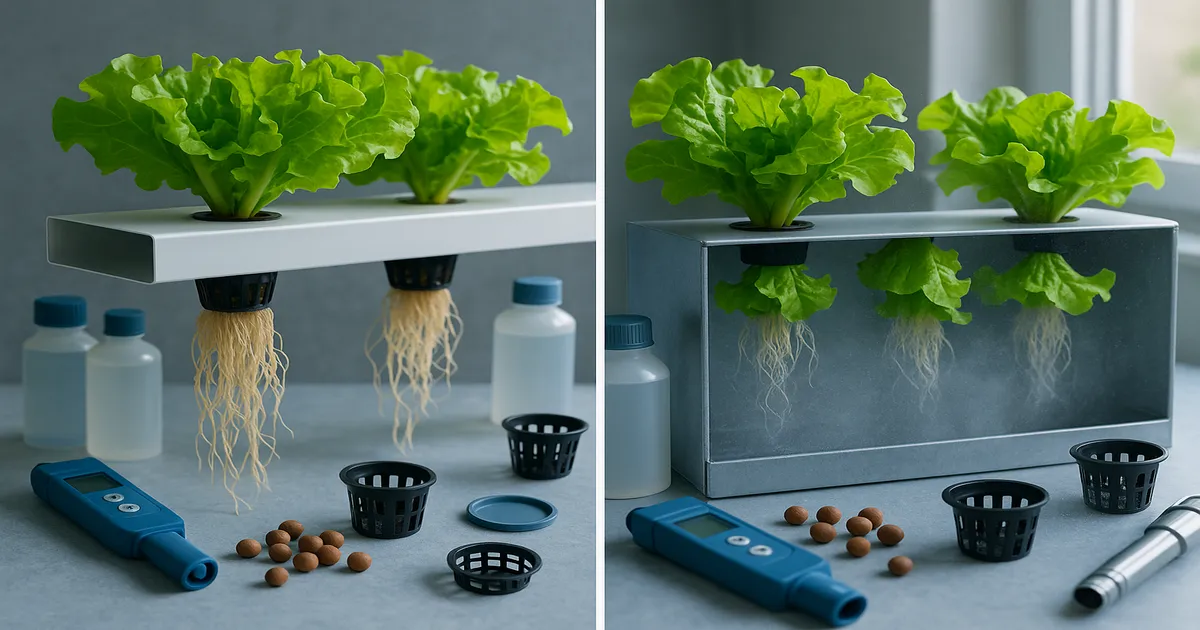
Deep water culture works reasonably well because strong aeration supports microbial activity in the reservoir. The main risks are organic matter accumulating in the bucket and clogging at the air stone. Drip systems are functional, but emitters are vulnerable to particulate blockage from unfiltered organic inputs — use a 200-micron inline filter to protect them. Wicking systems are simple and low-risk, making them a solid choice for small-scale organic herb growing.
Low-Compatibility: NFT and Kratky
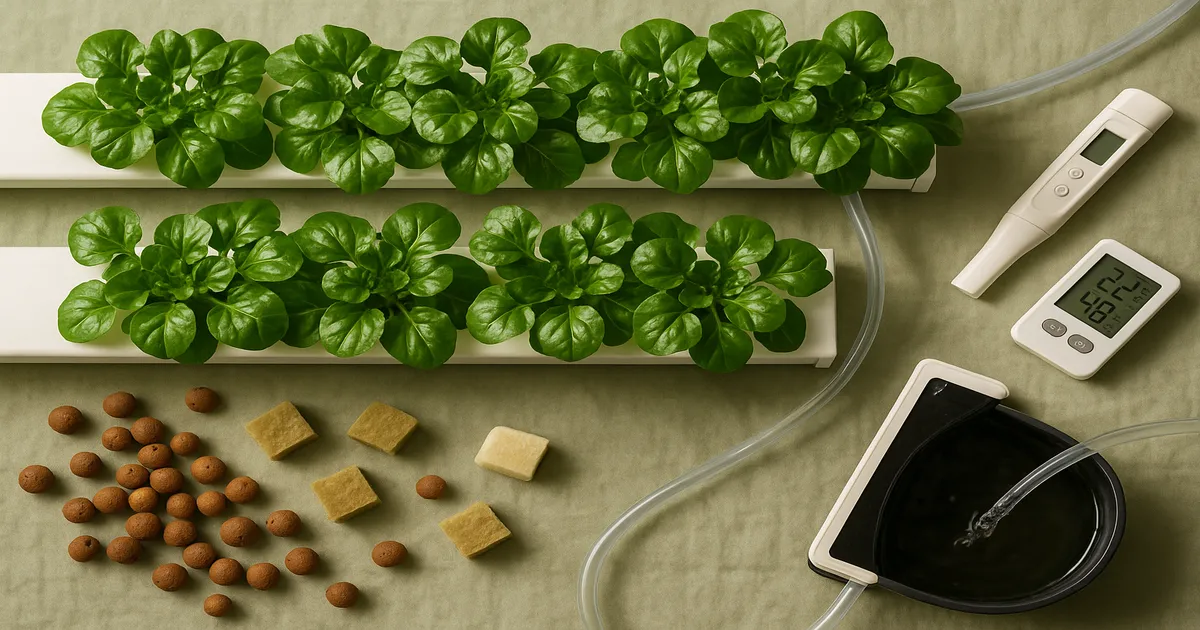
Nutrient Film Technique (NFT) channels carry a thin, fast-moving film of solution — not enough to support meaningful microbial colonization, and very prone to clogging. Kratky (passive DWC with no pump or aeration) is similarly problematic because microbial activity depends heavily on dissolved oxygen, which a static reservoir quickly depletes. Neither is impossible, but both require extra filtering and close attention.
Best Soilless Media for Organic Growing
- Coco coir — Top choice. Naturally supports microbial life, has some inherent pH buffering, and holds moisture well.
- Biochar — Excellent. Its porous structure harbors large microbial populations and improves nutrient retention.
- LECA (expanded clay) — Good all-around. Inert, reusable, and develops healthy biofilms over time.
- Perlite/vermiculite blends — Lightweight and well-draining; work well in drip and ebb and flow setups.
- Rockwool — Less ideal. Its naturally high pH (7.5–8.0) requires pre-soaking to adjust, and it offers limited habitat for microbes.
Best Organic Fertilizers for Hydroponic and Soilless Systems
Top Liquid Inputs: Fish Hydrolysate, Kelp Extract, and Worm Casting Tea
Fish hydrolysate is your workhorse nitrogen source. Unlike fish emulsion, which is heat-processed and loses many bioactive compounds, fish hydrolysate is cold-processed — it retains amino acids, enzymes, and a broader micronutrient profile. Use it at 1–5 mL per gallon depending on concentration and growth stage.
Kelp extract pulls double duty: it delivers micronutrients and natural plant hormones (cytokinins) that promote cell division and root development. Use at 1–3 mL per gallon. Worm casting tea is less about raw nutrients and more about microbial inoculation — it floods your reservoir with beneficial bacteria. Use it at 5–20% solution strength.
Phosphorus and Potassium: Bat Guano, Molasses, and Wood Ash
High-phosphorus bat guano works well for flowering stages — steep it in aerated water for 24–48 hours and apply at 1–5 g per gallon. Unsulfured molasses is primarily a microbial food source rather than a direct plant nutrient; it feeds the beneficial bacteria you want to cultivate, at 1–5 mL per gallon. Wood ash raises potassium but also raises pH significantly — use it cautiously and test after each addition.
Calcium, Magnesium, and Sulfur
Calcium is often the trickiest secondary macronutrient to supply organically. Oyster shell flour and calcium carbonate both work, though they’re slow-release. Target 150–200 PPM calcium in solution. For magnesium, Epsom salt (magnesium sulfate) is widely accepted in organic growing and dissolves cleanly — target 50–75 PPM Mg, using about 0.5 g per gallon as a starting point. It covers your sulfur needs at the same time.
Micronutrients and Biostimulants
Kelp extract and compost tea together cover most micronutrient bases — iron, manganese, zinc, copper, boron, and molybdenum all appear in kelp in trace amounts. Iron chlorosis is the deficiency most likely to sneak up on you in organic systems. If you see yellowing between leaf veins on new growth, add chelated iron (EDTA or DTPA) at 2–4 PPM. It’s one area where a semi-synthetic input is often the most practical fix.
Biostimulants don’t feed plants directly — they supercharge the microbial and chemical processes that make nutrients available:
- Mycorrhizal fungi — Extend root surface area and improve phosphorus uptake
- Bacillus subtilis — Beneficial bacteria that outcompete pathogens and enhance nutrient cycling
- Humic and fulvic acids — Chelate minerals, buffer pH, and improve nutrient uptake; use at 1–2 mL per gallon
Sample Organic Nutrient Recipe: Vegetative Stage
Per gallon of water, targeting 600–800 PPM (1.2–1.6 EC) at pH 6.0–6.5:
| Input | Amount |
|---|---|
| Fish hydrolysate (3-1-2) | 3 mL |
| Kelp extract | 2 mL |
| Worm casting tea (1:5 dilution) | ½ cup |
| Liquid humic acid | 1 mL |
| Calcium carbonate (if Ca deficient) | 0.5 g |
| Epsom salt | 0.5 g |
Mix in this order, check pH after everything is added, and adjust before introducing to your system.
EC, PPM, and pH Management in Organic Hydroponic Systems
Why EC Readings Are Less Reliable with Organic Fertilizer
Your EC or TDS meter reads all dissolved solids — including organic compounds that haven’t been mineralized yet. This means your meter might show 900 PPM while your plants are actually starving, because a significant chunk of that reading is unavailable organic matter. Treat EC as a directional guide in organic systems, not a precise measurement.
PPM and EC Targets by Growth Stage
| Growth Stage | PPM | EC |
|---|---|---|
| Seedling / Clone | 200–400 | 0.4–0.8 |
| Early Vegetative | 400–700 | 0.8–1.4 |
| Late Vegetative | 700–1,000 | 1.4–2.0 |
| Early Flower / Fruit | 900–1,200 | 1.8–2.4 |
| Late Flower / Ripening | 600–900 | 1.2–1.8 |
| Flush (if used) | 0–200 | 0.0–0.4 |
Top off with plain water between changes — plants drink water faster than nutrients, so the reservoir concentrates over time. Do a full reservoir change every 7–14 days in organic systems; organic matter accumulates and microbial activity can make chemistry unpredictable over longer periods.
Ideal pH Range for Organic Hydroponics
Organic systems target pH 6.0–6.5, slightly higher than the conventional hydroponic range of 5.5–6.2. The bacteria responsible for mineralizing your organic inputs thrive at near-neutral pH. Drop below pH 5.8 and their activity slows sharply — your plants get less of what they need even if the EC looks fine.
Microbial respiration produces CO₂, which dissolves into water and forms carbonic acid. Bacteria also release organic acids as byproducts of decomposition. The result: pH can drop 0.5–1.0 units per day in an active organic reservoir. This isn’t a malfunction — it’s your microbes doing their job. The challenge is staying ahead of it.
To raise pH organically:
- Oyster shell flour in a mesh bag — slow-release, passive correction
- Calcium carbonate powder — faster action when stirred in
- Potassium silicate — raises pH while adding beneficial silicon; use at 1–2 mL per gallon
- Dolomite lime — adds calcium and magnesium while buffering; excellent in media-based systems
To lower pH organically:
- Citric acid — effective, but microbes consume it quickly and pH can rebound
- Apple cider vinegar — gentle; good for small adjustments in small systems
- Lemon juice — similar to ACV; temporary but useful in a pinch
None of these are as stable as phosphoric acid, but phosphoric acid isn’t organically certified. In organic systems, pH adjustment is an ongoing process, not a set-and-forget task.
For long-term stability, maintain alkalinity at 2–4 dKH with a slow-release calcium carbonate source, add humic acid consistently, and do partial reservoir changes (25–30%) every 5–7 days to reset accumulating acids before they compound.
Monitoring Tools
Check pH and EC daily in an active organic system — twice daily in hot weather or during peak growth. A quality digital pH meter is non-negotiable; calibrate weekly with pH 4.0 and 7.0 buffer solutions. The Apera PC60 is a reliable all-in-one option that reads both pH and EC. For serious growers, a continuous inline monitor like the Bluelab Guardian Monitor catches swings before they cause damage.
Building a Healthy Microbial Ecosystem in Your System
Why Microbes Are the Engine of Organic Hydroponics
In healthy soil, billions of microorganisms work constantly to convert organic matter into plant-available nutrients. That process happens automatically because soil is full of microbial life. In hydroponics, you’re working with water and inert substrates — the microbes aren’t there unless you put them there and give them a reason to stay.
How to Inoculate Your System
Start every new system with a deliberate inoculation. Commercial microbial products containing Bacillus subtilis and mycorrhizal fungi are the most reliable way to establish a healthy colony quickly. Apply at system startup, then again after each full reservoir change. Don’t sterilize your reservoir between changes with bleach or hydrogen peroxide — you’ll wipe out the community you’ve worked to build.
Worm casting tea is one of the most effective and affordable inoculants available. Steep quality worm castings in aerated water for 24–48 hours using an air pump and air stone, then add at 5–20% solution strength to your reservoir. Add a small amount of unsulfured molasses (1–2 mL per gallon) to the brew to feed the bacteria during steeping. Compost tea works similarly but requires a well-made, pathogen-free compost source.
Frequently Asked Questions
Can I use organic fertilizer in a DWC system? Yes, but with precautions. Strong aeration is essential — dissolved oxygen keeps beneficial microbes active and prevents anaerobic conditions that cause root rot. Filter your inputs to remove large particles, and change the reservoir every 7–10 days to prevent organic matter buildup.
Will organic nutrients clog my drip emitters? They can, especially if you use unfiltered inputs like bat guano or compost tea with large particles. Use a 200-micron inline filter on your drip lines and stick to liquid organic inputs (fish hydrolysate, kelp extract) rather than teas with heavy sediment.
Do organic nutrients work as fast as synthetic nutrients in hydroponics? No. There’s always a mineralization lag while microbes break down organic compounds. Expect slightly slower initial uptake, especially in a new system before the microbial community is established. Once your system matures — typically after 2–4 weeks — the gap narrows considerably.
What’s the biggest mistake growers make with organic hydroponic fertilizer? Treating it like synthetic hydroponics. Growers who chase EC targets aggressively, sterilize their reservoirs between changes, or let pH crash below 5.8 undermine the microbial activity that makes the whole system work. Managing the biology is the job.
Can I mix organic and synthetic nutrients in a hydroponic system? Yes, and many growers do. A common approach is using synthetic nutrients as the base for reliable mineral delivery, then supplementing with organic inputs like kelp extract, humic acid, and worm casting tea for biostimulant benefits. This hybrid approach sacrifices organic certification but gives you more control over nutrient availability.