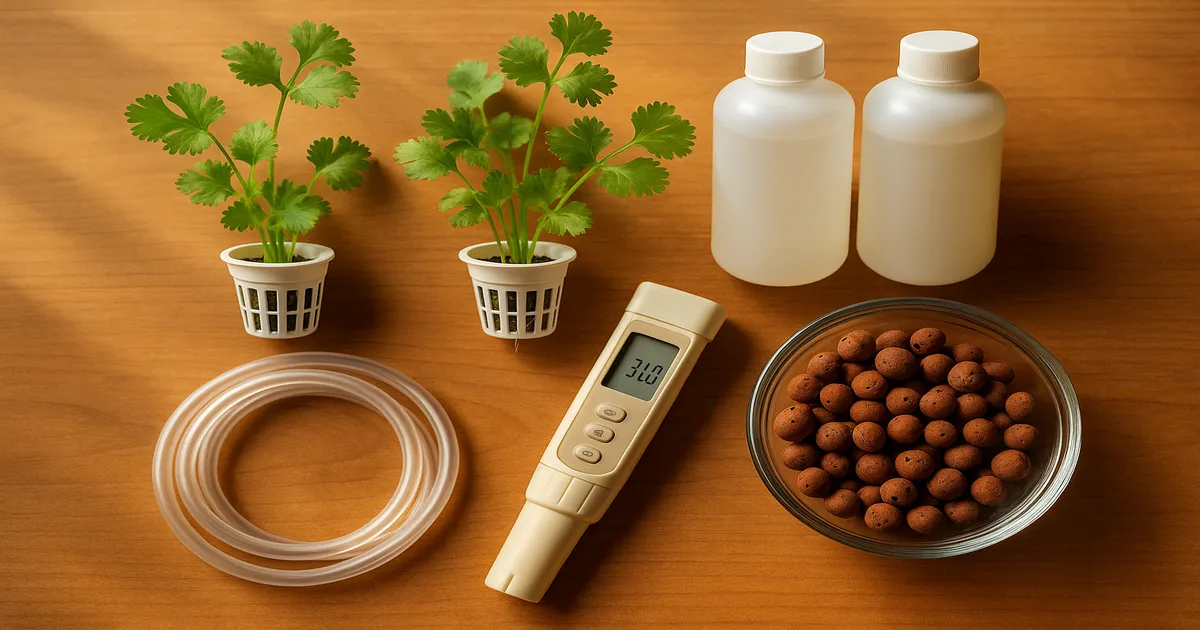
Quick Answer: Hydroponic cilantro grows 2–3× faster than soil-grown plants, reaching harvest in just 3–4 weeks indoors. A simple Kratky or DWC setup, a pH of 5.8–6.4, and 14–16 hours of light per day are all you need to produce fresh cilantro year-round. The biggest challenge is bolting, but indoor environmental control makes it very manageable.
Learning how to grow cilantro indoors with hydroponics is one of the best beginner projects in controlled-environment growing. You get faster harvests, no seasonal limits, and a steady supply of one of the world’s most popular herbs — all from a compact indoor setup. This guide covers everything: system selection, nutrients, lighting, harvesting, and troubleshooting.
Choosing the Best Hydroponic System for Indoor Cilantro
Kratky and Deep Water Culture (DWC)
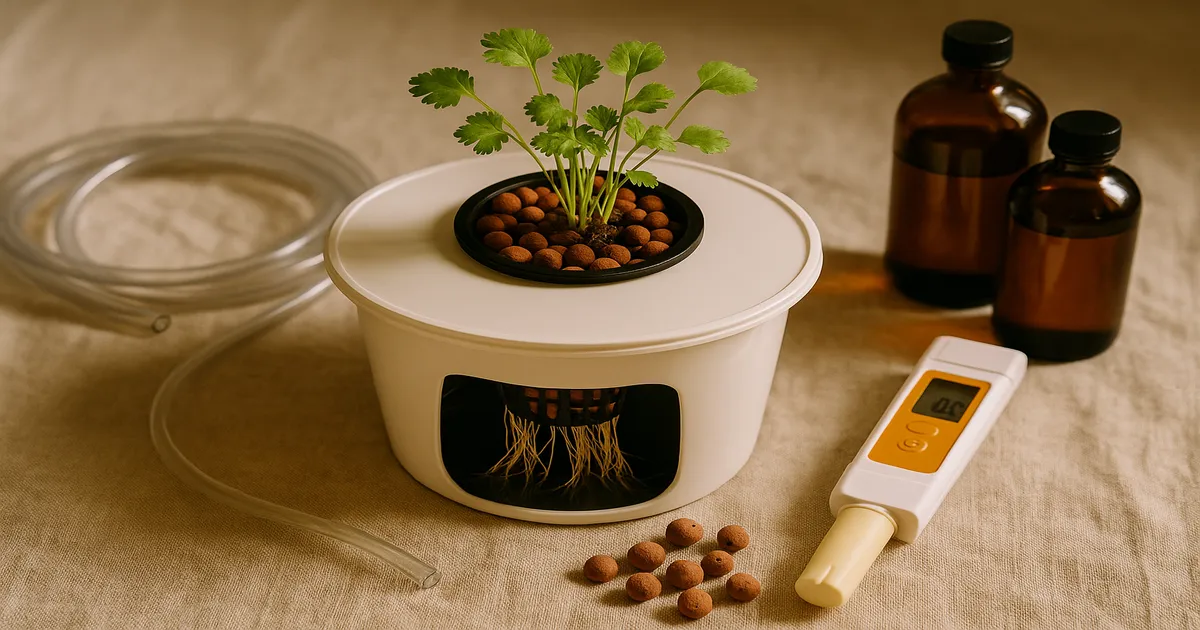
For most home growers, Kratky or DWC is the right call. Kratky is entirely passive — no pump, no timer, just a reservoir, net pots, and nutrient solution. Fill it up, plant your cilantro, and let it grow. DWC adds an air pump and air stone, which boosts dissolved oxygen and speeds up growth noticeably.
Both systems are inexpensive, easy to set up, and forgiving for beginners. Cilantro’s shallow, fibrous root system is well-suited to both.
NFT Systems
NFT (Nutrient Film Technique) runs a thin stream of nutrient solution continuously over plant roots through sloped channels. It’s efficient and scalable — a great choice if you want staggered batches for uninterrupted harvests. The trade-off is a pump, timer, and a slightly more complex setup compared to Kratky.
Ebb & Flow and Wicking Systems
Ebb & Flow floods the grow tray periodically and drains it back. Cilantro grows well in it, though the added complexity isn’t worth much for a small herb crop. Wicking systems are the simplest and cheapest option, using capillary action to draw nutrient solution to roots. Growth is slower, but they work fine if you want the lowest possible barrier to entry.
System Comparison
| System | Difficulty | Cost | Growth Speed | Best For |
|---|---|---|---|---|
| Kratky | ⭐ Easy | $ | Fast | Beginners, small batches |
| DWC | ⭐⭐ Easy–Med | $$ | Fastest | Home growers wanting speed |
| NFT | ⭐⭐⭐ Medium | $$$ | Fast | Continuous harvest setups |
| Ebb & Flow | ⭐⭐⭐ Medium | $$$ | Fast | Multi-crop setups |
| Wicking | ⭐ Easy | $ | Moderate | Absolute beginners |
Use 2-inch net pots as the standard for cilantro — they fit most hydroponic lids and channels and suit the root system well. Space plants 4–6 inches apart to allow airflow between stems, which reduces fungal pressure and keeps growth compact.
How to Start Cilantro Seeds for Hydroponics
Selecting and Preparing Seeds
Here’s something most growers don’t know: what looks like a single cilantro seed is actually two seeds fused inside one husk. Gently crushing the husk between your fingers before planting exposes both embryos to moisture and improves germination rates. Standard varieties work well, but if bolting is your main concern, look for slow-bolt varieties like ‘Leisure’ or ‘Santo’.
Germination Media
All three common media work well — the key is consistent moisture without waterlogging.
- Rockwool cubes: Pre-soak in pH 5.5–6.0 water for 30 minutes. Place 2–3 seeds per cube, cover lightly, and keep in a warm (68–72°F / 20–22°C), dark spot until sprouts appear.
- Rapid Rooters: Slightly more forgiving than rockwool; hold moisture well and transition easily into net pots.
- Hydroton (clay pebbles): Rinse thoroughly first. Works best in DWC where roots quickly reach the nutrient solution.
Cover seedlings with a humidity dome or plastic wrap during germination. Once sprouts appear, move them under light immediately.
Transplanting and Succession Planting
Transplant when seedlings have their first set of true leaves and roots are visible at the bottom of the media — usually around day 10–14. Nestle the cube or plug into a 2-inch net pot and fill around it with rinsed hydroton to stabilize. In Kratky or DWC, position the bottom of the net pot just at or slightly above the nutrient solution surface so roots can reach down on their own.
The single most important strategy for a continuous supply: start a new batch every 2–3 weeks. By the time your first planting bolts, your second batch is ready to harvest.
Growth Timeline
| Stage | Timeframe |
|---|---|
| Germination | 3–7 days |
| Seedling establishment | Days 7–14 |
| First harvest-ready growth | Weeks 3–4 from transplant |
| Productive harvest window | 2–4 weeks (cut-and-come-again) |
| Bolting | Weeks 5–8, depending on conditions |
Nutrient Requirements for Hydroponic Cilantro
EC and PPM Targets by Growth Stage
| Growth Stage | PPM | EC |
|---|---|---|
| Germination | 100–250 PPM | 0.2–0.5 EC |
| Seedling (weeks 1–2) | 400–600 PPM | 0.8–1.2 EC |
| Vegetative / Leaf Production | 800–1,200 PPM | 1.6–2.4 EC |
| Pre-harvest / Mature | 600–900 PPM | 1.2–1.8 EC |
Don’t push EC above 1,400 PPM (2.8 EC) — it causes tip burn, stunted growth, and accelerates bolting.
Macronutrients
Nitrogen is the star nutrient for cilantro. It drives leafy vegetative growth, and you want 80–90% of it coming from nitrate-N (NO₃⁻) rather than ammoniacal nitrogen. Too much ammoniacal N destabilizes pH and can damage roots.
- Phosphorus: Moderate need; supports root development. Keep N:P around 5:1 to 7:1.
- Potassium: Moderate-high; critical for water uptake and flavor. Deficiency shows as leaf-edge scorch.
- Calcium: Target 150–200 PPM; prevents tip burn and maintains cell wall integrity.
- Magnesium: Target 40–60 PPM; deficiency causes yellowing between leaf veins.
Micronutrients
| Micronutrient | Target PPM | Deficiency Symptom |
|---|---|---|
| Iron (Fe) | 2–5 PPM | Interveinal chlorosis on new leaves |
| Manganese (Mn) | 0.5–1.0 PPM | Mottled yellowing between veins |
| Zinc (Zn) | 0.1–0.3 PPM | Small, distorted new leaves |
| Boron (B) | 0.3–0.5 PPM | Distorted growing tips |
| Copper (Cu) | 0.05–0.1 PPM | Wilting despite adequate water |
Nutrient Recipes
Beginner — General Hydroponics Flora Series (per gallon):
- FloraGro: 5 mL
- FloraBloom: 2 mL
- FloraMicro: 3 mL
- Targets approximately 900–1,100 PPM (1.8–2.2 EC)
Advanced — MasterBlend 3-Part Dry Formula (per gallon):
- MasterBlend 4-18-38: 2.4 g
- Calcium Nitrate: 2.4 g
- Magnesium Sulfate (Epsom Salt): 1.2 g
- Targets approximately 800–1,000 PPM (1.6–2.0 EC); very cost-effective for larger setups
Reservoir Management
Do a full reservoir change every 7–10 days to prevent salt buildup and pH drift. Between changes, top off with plain pH-adjusted water — not nutrient solution — to replace what evaporates. Keep reservoir temperature at 65–72°F (18–22°C); warmer water holds less dissolved oxygen and invites root pathogens.
pH Management for Hydroponic Cilantro Indoors
Optimal pH Range
The sweet spot is pH 6.0–6.2, within a workable range of 5.8–6.4. Drop below 5.5 and iron, manganese, and zinc become toxic while calcium and magnesium availability crashes. Push above 6.8 and iron and boron lock out entirely — your plants will show deficiency symptoms even with a full nutrient reservoir.
Monitoring Tools
Skip test strips for anything beyond a rough check. A quality digital pH meter gives you accurate, repeatable readings. (Apera PH20) Calibrate with pH 4.0 and 7.0 buffer solutions every 1–2 weeks, rinse the probe with distilled water before and after use, and store it in probe storage solution — never distilled water. For EC, a dedicated digital meter is equally essential. Check pH daily during the first week of a new reservoir, then every 2–3 days once it stabilizes.
Adjusting pH
Always adjust in small increments — 0.5–1 mL per gallon — stir thoroughly, wait 15 minutes, then recheck before adding more.
- pH too low: Use a pH Up solution (typically potassium hydroxide).
- pH too high: Use pH Down (phosphoric acid is preferred in hydroponics since it contributes phosphorus).
Overshooting in either direction is easy to do and annoying to fix. Slow and steady wins here.
Common pH and EC Problems
| Problem | Likely Cause | Fix |
|---|---|---|
| pH dropping daily | Microbial activity, algae, plant uptake | Change reservoir; block all light from reservoir |
| pH rising daily | Plants taking up more anions than cations | Adjust nutrient ratios; improve air circulation |
| EC rising | Water evaporating faster than nutrient uptake | Top off with plain water more frequently |
| EC dropping fast | Fast plant growth consuming nutrients | Top off with dilute nutrient solution |
| pH swings >0.5 in 24 hours | Algae bloom or contamination | Full reservoir change; eliminate all light leaks |
Using RO water — or low-EC tap water below 150 PPM / 0.3 EC — gives you the most predictable baseline. Hard tap water means you’ll be fighting pH Down constantly.
Lighting for Indoor Hydroponic Cilantro
Best Light Spectrum
Blue-spectrum light (400–500 nm) is your best friend for cilantro. It drives compact vegetative growth and actively suppresses the bolting response. Full-spectrum LEDs in the 4000K–6500K range are ideal — the cooler and bluer the white light, the better for leafy herbs. Red spectrum (600–700 nm) supports overall photosynthesis, so a true full-spectrum fixture covers both bases. A small amount of UV can boost essential oil production and enhance aroma, though it’s optional. (Spider Farmer SF-1000 LED Grow Light)
PPFD and DLI Targets
| Growth Stage | PPFD (µmol/m²/s) | DLI (mol/m²/day) |
|---|---|---|
| Germination | 50–100 | 4–6 |
| Seedling | 100–200 | 8–12 |
| Vegetative / Harvest | 200–400 | 12–18 |
| Maximum productive | 400–600 | 16–20 |
DLI is the most useful planning metric. Calculate it with: PPFD × hours of light × 0.0036. For example, 300 PPFD × 16 hours × 0.0036 = 17.3 DLI — right in the sweet spot for productive leaf growth.
Photoperiod and Bolting
Run lights for 14–16 hours per day during vegetative production. This gives cilantro enough energy for rapid growth without pushing it into the long-day conditions that trigger bolting. An outlet timer makes this completely hands-off. If plants are bolting faster than expected, try dropping to 14 hours and reducing intensity slightly before adjusting other variables. Keep PPFD under 600 µmol/m²/s — high intensity combined with long photoperiods is a bolting accelerant.
Temperature, Humidity, and Airflow
Cilantro is a cool-season herb. Keep it in the 60–75°F (15–24°C) range. Once temperatures climb above 80°F (27°C) consistently, bolting accelerates rapidly — this is the main reason outdoor summer cilantro is so frustrating. A climate-controlled indoor room solves this problem entirely.
Target 50–70% relative humidity. Too low and plants stress; too high and you risk powdery mildew and damping off. A small oscillating fan running at low speed keeps air moving around plants, strengthens stems, and dramatically reduces fungal pressure. Good airflow is one of the most underrated tools in an indoor grow.
Keep your reservoir water at 65–72°F (18–22°C) — just as important as ambient air temperature. In summer, a small aquarium chiller or frozen water bottles can keep temperatures in range if your room runs warm.
Harvesting Hydroponic Cilantro and Preventing Bolting
The Cut-and-Come-Again Method
Start harvesting when plants reach 4–6 inches tall, typically 3–4 weeks after transplant. Use clean scissors to cut outer stems down to about one-third of the plant’s total height — never strip the plant bare. This approach encourages new growth from the center, extending your productive window by several weeks. Harvest frequently; regular cutting actively delays bolting by keeping the plant in a vegetative state.
Recognizing and Delaying Bolting
Watch for these signs:
- Stems elongating rapidly between leaf nodes
- Leaves becoming feathery and more finely divided
- A central flower stalk emerging from the crown
Once you see these signs, you can delay — but not stop — the process. Pinch off flower stalks as soon as they appear, keep temperatures cool, and maintain your photoperiod. Bolting is a one-way door; once it begins in earnest, leaf quality declines quickly.
When Cilantro Bolts: Harvest Coriander Seeds
Don’t pull the plant in frustration. Let it flower and set seed — those seeds are coriander, a completely different and valuable spice. Allow the seed heads to dry on the plant, then harvest and store them. It’s a satisfying bonus from a plant you’d otherwise compost.
Troubleshooting Common Problems When Growing Cilantro Indoors Hydroponically
Yellowing Leaves
The location of yellowing tells you everything. Older, lower leaves yellowing first points to nitrogen deficiency — the plant is pulling N from older tissue to feed new growth. Bump up your EC slightly and verify your nitrogen source. New leaves yellowing first (interveinal chlorosis) suggests iron or manganese lockout, almost always caused by pH drifting above 6.5. Check and correct pH before adding more nutrients.
Wilting Despite Full Reservoir
This usually means root rot, not drought. Warm reservoir water, poor aeration, or light leaks into the reservoir create ideal conditions for Pythium and other pathogens. Drain and clean the reservoir, trim any brown slimy roots, and add a beneficial bacteria product like Hydroguard to the fresh solution. Drop reservoir temperature to 65–68°F and ensure your air pump is running continuously.
Leggy, Weak Stems
Insufficient light is the most common cause. Increase PPFD to at least 200 µmol/m²/s and add a small fan to create gentle stem resistance — this triggers thicker, sturdier growth. If light intensity is already adequate, check that your photoperiod isn’t exceeding 16 hours, which can cause excessive stretching in some conditions.
Slow Germination
If seeds haven’t sprouted after 10 days, the most likely culprits are temperature (too cold — below 65°F slows germination significantly), waterlogged media, or old seed stock. Try pre-crushing the seed husk, use a seedling heat mat to maintain 68–72°F, and ensure media is moist but not saturated.
Frequently Asked Questions
How long does it take to grow cilantro hydroponically indoors? From seed to first harvest is typically 3–4 weeks. Germination takes 3–7 days, seedling establishment another 7–10 days, and then plants reach harvestable size (4–6 inches) within 2–3 weeks of transplant. Successive plantings every 2–3 weeks give you a continuous supply.
Can I grow cilantro hydroponically without a grow light? You can use a bright south-facing window, but results are inconsistent — especially in winter when day length drops below 10 hours. A dedicated grow light gives you reliable control over photoperiod and intensity, which directly affects both yield and bolting. Even an inexpensive full-spectrum LED panel makes a significant difference.
What is the best hydroponic system for growing cilantro indoors as a beginner? Kratky is the easiest starting point — no pump, no electricity beyond a light, and very little maintenance. Once you’re comfortable with nutrient mixing and pH management, upgrading to DWC with an air pump will noticeably increase growth speed.
Why does my hydroponic cilantro keep bolting so fast? The three main triggers are high temperature (above 75°F), long photoperiods (above 16 hours), and high light intensity (above 600 µmol/m²/s). Address all three before assuming it’s a nutrient issue. Choosing a slow-bolt variety like ‘Santo’ or ‘Leisure’ also helps significantly.
Can I reuse the nutrient solution after a cilantro crop? It’s not recommended. After a full crop cycle, the solution accumulates salt imbalances, dead root matter, and potential pathogens. Always start a new batch with a clean reservoir and fresh nutrient solution. The cost of nutrients is minimal compared to the risk of carrying over problems to your next planting.