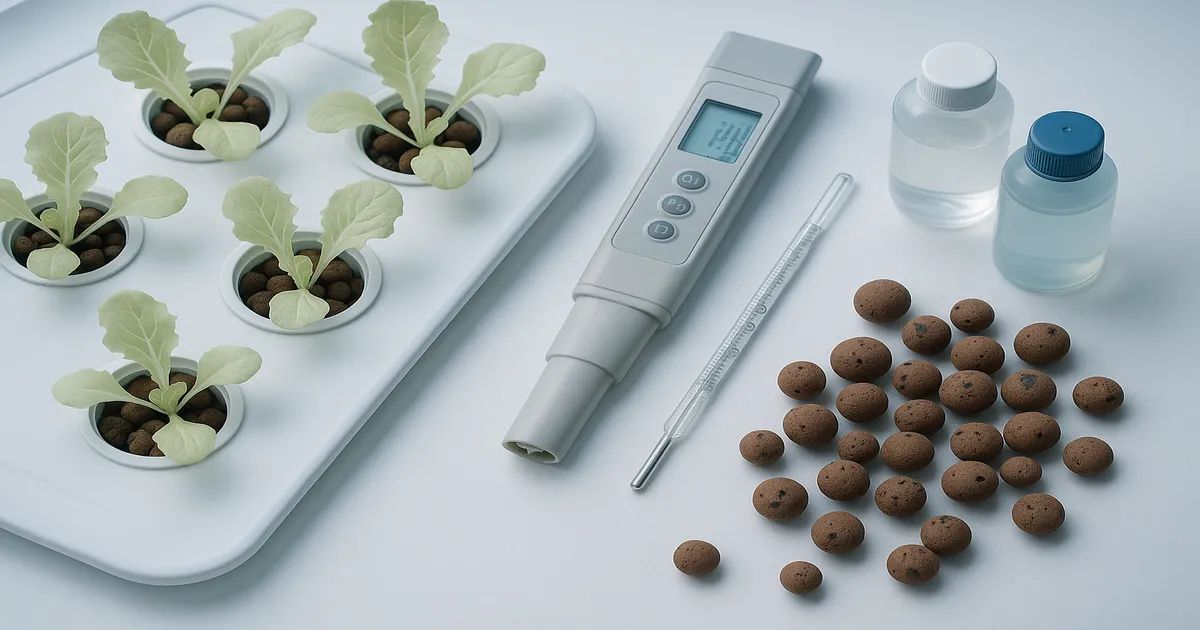
Quick Answer: Wimpy lettuce is almost always caused by one or more of five things: inadequate light, pH-driven nutrient lockout, insufficient nutrients, environmental stress, or a variety mismatch. Light is the most common culprit by far. Fix your light and pH first, and you’ll solve the problem most of the time.
If your lettuce grows wimpy — thin stems, pale leaves, floppy heads — you’re not alone. It’s one of the most common complaints from both beginner and experienced growers, and the good news is that it’s almost always fixable once you know what to look for.
Why Does My Lettuce Grow Wimpy? The Five Core Causes
| Symptom | Most Likely Cause |
|---|---|
| Thin, tall, elongated stems | Inadequate light (etiolation) |
| Pale yellow or light green leaves | Nitrogen deficiency or pH lockout |
| Tip burn (brown leaf edges) | Calcium deficiency or low airflow |
| Purple leaf undersides | Phosphorus deficiency |
| Slow growth across the board | Low EC/PPM, heat stress, or poor airflow |
| Loose, floppy head formation | Low light + potassium deficiency |
These problems rarely travel alone. Low light weakens photosynthesis, which reduces nutrient uptake efficiency, which makes a minor pH drift look like a full-blown deficiency. One issue cascades into several — which is why diagnosis order matters.
Start by asking three questions:
- Is my light actually bright enough, and is it on long enough?
- What is my pH right now — not last week?
- When did I last check or refresh my nutrient solution?
Those three answers will point you toward the cause 80% of the time.
What Wimpy Lettuce Is Actually Telling You
The Plant Physiology Behind Weak Growth
“Wimpy” isn’t just an aesthetic complaint — it’s a set of specific physiological responses. The most telling is etiolation: the plant stretches toward light, producing long internodes and thin stems that can’t support proper leaf development. Pale leaves, loose head formation, bitter taste, and sluggish growth all follow from the same root causes.
Lettuce is 94–96% water. That sounds impressive until you realize how little margin for error it leaves. Its shallow root system and limited internal nutrient reserves mean it responds to deficiencies faster than almost any other crop. With a production window of just 30–60 days, any setback that costs you a week of growth has a real impact on what ends up on your plate.
The Cascade Failure Effect
Most guides skip this part. Fixing your pH won’t fully rescue a plant that’s been light-starved for two weeks — the weakened photosynthetic capacity means it can’t process nutrients efficiently even after the pH is corrected. That’s why the troubleshooting steps below are ordered deliberately. Fix the biggest constraint first, then work down the list.
Cause #1 — Inadequate Light (The Most Common Reason Lettuce Grows Wimpy)
Etiolation and Weak Stems
When lettuce doesn’t receive enough light, it stretches. Stems elongate, become thin and weak, and leaves stay small and pale because there isn’t enough light energy to drive chlorophyll production or normal cell division. This is etiolation — a survival response, not a nutrient problem. More light is the only fix.
PPFD Targets by Growth Stage
PPFD (photosynthetic photon flux density) is the standard measure of light intensity for plants. Here’s what lettuce needs:
| Growth Stage | Target PPFD |
|---|---|
| Seedling | 100–200 µmol/m²/s |
| Early Vegetative | 150–250 µmol/m²/s |
| Full Vegetative | 200–300 µmol/m²/s |
| Maximum (high-light varieties) | Up to 400 µmol/m²/s |
Lettuce is a low-to-medium light crop. Above 400–500 µmol/m²/s you risk photoinhibition and worsened tip burn — more isn’t better here.
Daily Light Integral (DLI)
DLI measures the total light your plants receive over a full day — intensity × duration. Formula: PPFD × hours × 0.0036 = DLI (mol/m²/day).
| PPFD | 12-hour day | 16-hour day |
|---|---|---|
| 150 µmol/m²/s | 6.5 mol/m²/day | 8.6 mol/m²/day |
| 200 µmol/m²/s | 8.6 mol/m²/day | 11.5 mol/m²/day |
| 250 µmol/m²/s | 10.8 mol/m²/day | 14.4 mol/m²/day |
| 300 µmol/m²/s | 12.9 mol/m²/day | 17.3 mol/m²/day |
Target 12–17 mol/m²/day for healthy lettuce. Below 6 mol/m²/day, wimpy growth is almost guaranteed. If your fixture is weak, run it longer — but cap your photoperiod at 18 hours. Lettuce needs a dark period to regulate its growth cycle properly.
Choosing the Right Grow Light
Full-spectrum white LEDs at 4,000–6,500K are the best all-around choice for indoor lettuce. They deliver the blue light (400–500 nm) lettuce needs for compact, dense growth and the red light (600–700 nm) that drives photosynthesis — without the complexity of tuning separate channels. A quality panel like the Spider Farmer SF-1000 covers a 2×2 ft space efficiently and is a reliable starting point for home growers.
Be cautious with far-red-heavy spectrums. Small amounts of far-red can accelerate growth via the Emerson enhancement effect, but too much promotes shade-avoidance responses and bolting.
To measure what your plants are actually receiving, a PAR meter is invaluable. (Apogee MQ-500) Without one, you’re guessing at the most important variable in your grow.
Signs of too little light: Tall, spindly stems; pale or yellowish leaves; slow growth; leaves reaching upward. Signs of too much light: Tip burn; bleached patches on leaves; leaves cupping downward; stunted growth despite good nutrition.
Cause #2 — pH Problems and Nutrient Lockout
Ideal pH Ranges
- Hydroponics: pH 5.8–6.2 (aim for 6.0)
- Soil / Coco Coir: pH 6.0–6.5 (aim for 6.2–6.3)
Outside these windows, nutrients become chemically unavailable — even if your solution is perfectly mixed. This is nutrient lockout, and it’s the leading cause of wimpy hydroponic lettuce that looks deficient despite proper feeding.
Note: the upper end of the soil range is sometimes cited as 6.8, but for coco coir specifically, staying closer to 6.0–6.3 avoids iron lockout, which coco is prone to at higher pH.
How pH Drift Locks Out Key Nutrients
Below pH 5.5, iron and manganese become toxic while calcium and magnesium lock out. Above pH 6.5 in hydroponics, iron, boron, and copper become unavailable. Either extreme produces pale, weak, struggling plants that look like they need more nutrients when what they actually need is a pH correction.
Monitoring and Adjusting pH
Use a quality digital pH meter and calibrate it weekly with pH 4.0 and 7.0 buffer solutions. The Apera PH20 is a reliable, affordable option that holds calibration well. Store the probe in storage solution — not plain water — to extend its life.
When adjusting:
- Use pH Down (phosphoric acid) or pH Up (potassium hydroxide) in small increments
- Add roughly 1 mL per 10 gallons, wait 15 minutes, then retest
- Pre-mix your adjustment chemical in a small cup of reservoir water before adding it to the main reservoir
- Adjust toward the center of your target range, not the edge, to give yourself buffer room for natural drift
EC Swings and What They Signal
- EC rising: Plants are drinking more water than nutrients → top off with plain pH-adjusted water
- EC falling: Plants are consuming nutrients faster → add fresh nutrient solution
- Healthy systems swing no more than 0.2–0.3 EC per day
- Change your reservoir completely every 7–14 days in small systems
If you’re using tap water, let it sit 24 hours for chlorine to off-gas, or use a dechlorinator if your water contains chloramine (which doesn’t off-gas). Hard tap water above 200 PPM may already carry significant calcium and magnesium — adjust your nutrient recipe accordingly. Reverse osmosis water at 0–50 PPM gives you the most control.
Cause #3 — Nutrient Deficiencies and Imbalances
Macronutrient Targets
Lettuce is a leafy crop, and nitrogen is its most critical macronutrient. Deficiency shows up as yellowing older leaves, thin stems, and that classic wimpy appearance. Target 150–200 PPM nitrogen, with 50–70% in nitrate form — too much ammonium causes soft, disease-prone tissue.
- Phosphorus (P): Purple/reddish undersides, poor root mass. Target 40–60 PPM.
- Potassium (K): Tip burn, weak stems, poor head formation. Target 150–250 PPM.
- Calcium (Ca): Tip burn is the most common lettuce disorder. Target 100–150 PPM.
- Magnesium (Mg): Interveinal chlorosis on older leaves. Target 30–50 PPM.
Micronutrients That Cause Wimpy Growth
| Micronutrient | Target PPM | Deficiency Symptom |
|---|---|---|
| Iron (Fe) | 2–4 PPM | Interveinal chlorosis on new growth |
| Manganese (Mn) | 0.5–1.0 PPM | Pale new leaves |
| Zinc (Zn) | 0.1–0.3 PPM | Small, distorted leaves; stunted internodes |
| Boron (B) | 0.3–0.5 PPM | Distorted growing tips, hollow stems |
| Copper (Cu) | 0.05–0.1 PPM | Wilting, blue-green discoloration |
EC and PPM Targets by Stage
| Stage | PPM (500 scale) | EC |
|---|---|---|
| Seedling (Days 1–10) | 350–500 | 0.7–1.0 |
| Early Vegetative (Days 10–21) | 600–800 | 1.2–1.6 |
| Full Vegetative (Days 21–45) | 800–1,200 | 1.6–2.4 |
| Pre-Harvest (Final 5–7 days) | 400–600 | 0.8–1.2 |
Recommended Nutrient Recipes
MasterBlend 4-18-38, per gallon:
- MasterBlend 4-18-38: 2.4 g
- Calcium Nitrate 15.5-0-0: 2.4 g
- Magnesium Sulfate (Epsom Salt): 1.2 g
This yields approximately 800–900 PPM (1.6–1.8 EC) — precise, affordable, and well-matched to lettuce. (MasterBlend 4-18-38 Complete Combo Kit)
General Hydroponics Flora Series (3-part), per gallon at 800–1,000 PPM:
- FloraMicro: 5 mL (always add first)
- FloraGro: 5 mL
- FloraBloom: 2 mL
The ideal N:P:K ratio for lettuce is roughly 3:1:3 to 4:1:4. Avoid bloom-heavy formulas — they promote flowering and bolting, not the leaf mass you’re after.
For soil growers: Use a compost-amended mix with 25–30% perlite for drainage. Top-dress with worm castings (1 cup per square foot at transplant) and liquid-feed with fish emulsion at 2–3 mL/L every 7–10 days. Organic feeding is less precise, which makes pH management even more critical.
Cause #4 — Environmental Stress: Temperature, Humidity, and Airflow
Temperature
Lettuce grows best at 60–70°F (15–21°C), with nights slightly cooler than days. Above 75°F (24°C), growth quality starts to decline. Above 80°F (27°C), you’re looking at bolting, bitterness, and loose, floppy heads — symptoms that mimic nutrient problems but are actually heat stress. There’s no nutrient fix for this. Cool the environment or switch to a heat-tolerant variety.
Humidity and Airflow
Aim for 50–70% relative humidity. But humidity alone isn’t enough — you also need airflow. A gentle fan running continuously does two things: it prevents the humid boundary layer that promotes fungal disease, and it provides the mechanical stimulation (thigmomorphogenesis) that causes stems to thicken and strengthen. Without it, stems stay weak and floppy even with perfect light and nutrition.
Root Zone Temperature
Warm reservoir water holds less dissolved oxygen, and roots need oxygen to drive active nutrient uptake. Keep your reservoir at 65–72°F (18–22°C). Above 75°F (24°C), oxygen levels drop, beneficial microbes give way to pathogens, and nutrient absorption becomes sluggish — contributing directly to wimpy growth even when your solution is perfectly balanced.
Cause #5 — Variety Selection and System Mismatch
Choosing the Right Variety
Not all lettuce varieties are equally vigorous. Loose-leaf types — Black Seeded Simpson, Oak Leaf, Salanova — are the most forgiving for indoor growing. They’re fast, productive, and tolerant of less-than-perfect conditions. Butterhead varieties like Buttercrunch are slightly more demanding but still beginner-friendly. Crisphead (iceberg-type) varieties are the hardest to grow indoors and require the most light, nutrition, and climate control to form proper heads.
If you’re growing in a warm room with moderate light, choosing a heat-sensitive crisphead is setting yourself up for wimpy results before you even start.
Matching System to Goals
| System | Suitability | Notes |
|---|---|---|
| DWC | Excellent | Fast growth; great for home growers |
| NFT | Excellent | Commercial standard |
| Kratky | Good | No pump; ideal for beginners |
| Ebb & Flow | Good | Versatile; requires timing care |
| Aeroponics | Very Good | Fastest growth; higher complexity |
| Wicking | Fair | Works for small varieties only |
| Coco Coir / Soil | Good | Good buffer; needs pH management |
Beginners should start with loose-leaf varieties in a DWC or Kratky setup. (General Hydroponics WaterFarm Complete Kit) These systems are the most tolerant of minor light and pH fluctuations, grow quickly (30–45 days), and give you fast feedback so you can dial in your setup before moving to more demanding varieties.
Step-by-Step: Fix Wimpy Lettuce Fast
Step 1 — Audit your light. Measure PPFD at canopy level if you have a PAR meter. If not, estimate from your fixture specs and hanging distance. Calculate DLI (PPFD × hours × 0.0036). Below 10 mol/m²/day? Raise intensity, lower the fixture, or extend your photoperiod to 16–18 hours.
Step 2 — Test and correct pH before anything else. Read your meter now — not from memory. Hydro: pH 5.8–6.2. Soil/coco: pH 6.0–6.5. Adjust incrementally and retest. This single step resolves more apparent deficiency problems than any nutrient addition ever will.
Step 3 — Check EC and refresh your solution. Compare your EC/PPM to the target for your growth stage. If it’s low, mix a fresh batch. If your reservoir is more than 10–14 days old, change it completely regardless of readings — old solution accumulates imbalances that meters don’t fully capture.
Step 4 — Evaluate your environment. Check air temperature at canopy level (not room temperature — it’s often different). Confirm a fan is moving air gently across the plants. Check reservoir temperature. Address anything outside the ideal range before adding more nutrients.
Step 5 — Reassess variety and system. If you’ve corrected light, pH, nutrients, and environment and still have wimpy lettuce, the variety may simply be mismatched to your setup. Switch to a loose-leaf type and see if results improve within two weeks.
Frequently Asked Questions
Why does my lettuce grow tall and spindly instead of full and leafy? Tall, spindly lettuce is almost always etiolation — the plant stretching toward insufficient light. Increase your PPFD to 200–300 µmol/m²/s and aim for a DLI of at least 12 mol/m²/day. Nutrient issues can contribute, but fix the light first.
Can overwatering cause wimpy lettuce in soil? Yes. Waterlogged soil suffocates roots, reducing their ability to absorb oxygen and nutrients. The result looks like a nutrient deficiency — pale, weak plants — but adding fertilizer won’t help. Improve drainage by mixing in 25–30% perlite and water only when the top inch of soil is dry.
How long does it take to see improvement after fixing the problem? Expect visible improvement within 5–10 days for light and pH corrections. Nutrient deficiency recovery depends on severity — mild cases recover in a week; severe cases may take two weeks and won’t fully reverse damage to existing leaves. New growth is your best indicator of progress.
My pH and EC look fine, but my lettuce still grows wimpy. What am I missing? Check root zone temperature and airflow. Warm reservoir water (above 75°F) and stagnant air are two commonly overlooked causes. Also verify your pH meter is properly calibrated — an uncalibrated meter can give false readings that mask the real problem.
Does lettuce variety really make that much difference? More than most growers expect. A crisphead variety under a weak light in a warm room will always struggle, while a loose-leaf variety in the same conditions may thrive. Match the variety to your actual setup, not your ideal setup.