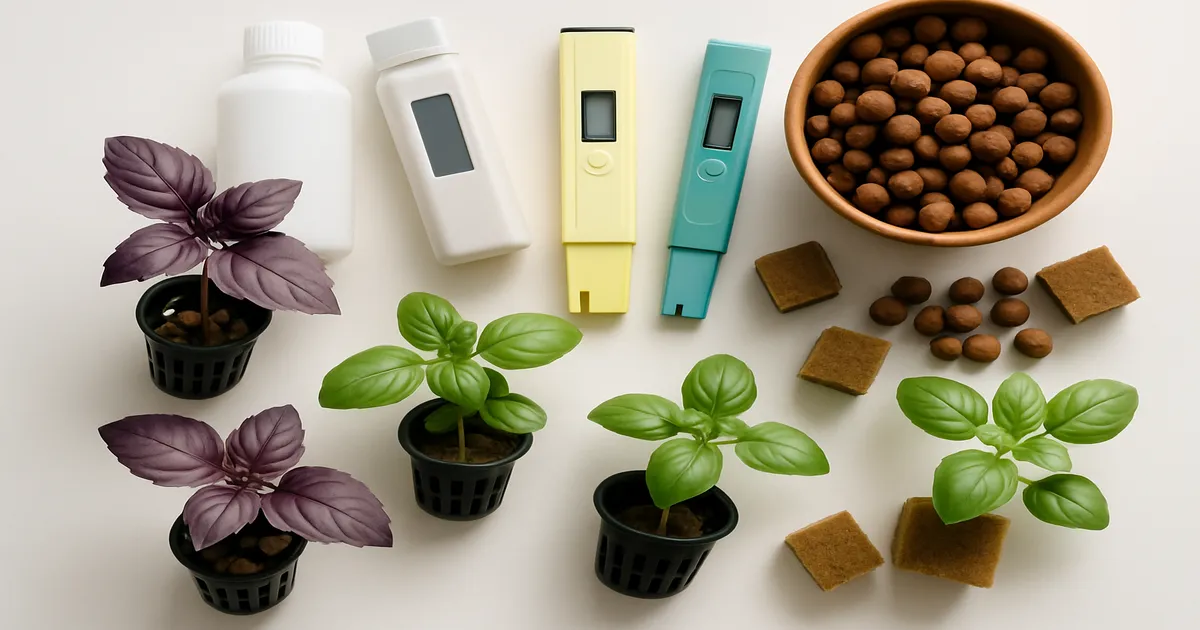
Quick Answer: To get herbs without any green, you have four main options: blanch existing herb shoots by excluding all light (producing white or yellow growth), grow naturally non-green cultivars like purple basil or bronze fennel, harvest microgreens at the cotyledon stage before chlorophyll fully develops, or use dried and powdered herb forms. Each method needs a different setup, but all are achievable at home with the right approach.
If you’ve been searching for how to get herbs without any green, you’re probably after something very specific — blanched white chervil for a restaurant-quality dish, deep purple basil that photographs beautifully, or pale microgreen cotyledons before they turn green. These aren’t the same goal, and they need completely different techniques. This guide covers all four approaches so you can pick the right path and get real results.
Four Ways to Get Herbs Without Any Green
What Does “Herbs Without Any Green” Actually Mean?
Green color in plants comes from chlorophyll — the pigment that captures light for photosynthesis. Remove or suppress it, and you get something far more interesting. There are four distinct ways to do this:
- Blanching / Etiolation — Exclude light completely. Shoots elongate rapidly and lose all green pigmentation, producing white or pale yellow growth that’s tender and mild-flavored.
- Non-Green Cultivars — Grow herb varieties dominated by red, purple, or bronze pigments (anthocyanins) that mask any underlying green. Think purple basil or red shiso.
- Dried and Powdered Herbs — No fresh green plant material at all. Dehydration eliminates the visual green and concentrates flavor.
- Cotyledon-Stage Microgreens — Harvest before true leaves emerge and before chlorophyll fully develops, catching the seedling at its palest, most delicate stage.
Which Method Is Right for You?
| Method | Difficulty | Time to Harvest | Best Use Case |
|---|---|---|---|
| Blanching / Etiolation | ★★★☆☆ | 7–28 days | Gourmet cooking, reduced bitterness |
| Non-green cultivars | ★★☆☆☆ | 6–10 weeks | Visual appeal, antioxidant value |
| Dried / Powdered herbs | ★☆☆☆☆ | Hours (drying time) | Pantry staples, long shelf life |
| Cotyledon microgreens | ★★☆☆☆ | 5–10 days | Food styling, delicate flavor |
The Science Behind Herbs Without Any Green
Chlorophyll, Etiolation, and Light Deprivation
Chlorophyll is produced in response to light. Deprive a plant of light entirely, and it stops making chlorophyll and enters etiolation — a survival response that redirects all energy into rapid upward growth, reaching for a light source that never comes. The result is elongated, pale yellow or white shoots with a tender texture and dramatically reduced bitterness.
This is exactly what happens to white asparagus, Belgian endive, and blanched celery hearts. It’s not a deficiency — it’s a deliberate technique with a long culinary history.
Anthocyanins: The Pigments Behind Purple, Red, and Bronze Herbs
Anthocyanins are water-soluble pigments produced in plant cells in response to light stress, phosphorus availability, cooler temperatures, and genetics. In high concentrations, they completely dominate a plant’s appearance, masking whatever chlorophyll is present underneath. That’s why purple basil looks nearly black — the chlorophyll is still there, just invisible.
Anthocyanin-rich herbs also carry real nutritional weight. Their antioxidant (ORAC) values are often 3–5× higher than their green counterparts, which is why red shiso and purple basil are increasingly popular in functional food markets.
Silver and Gray Herbs: A Different Mechanism
Silver and gray herbs like sage, lavender, and artemisia aren’t anthocyanin-dominant. They appear silver because dense fine hairs (trichomes) on the leaf surface reflect light before it even reaches the green tissue underneath. The effect is striking, and these plants are far easier to grow than blanched or albino varieties.
Albino and Variegated Cultivars
Some herbs carry genetic mutations that partially or completely disable chlorophyll production. Albino plants produce no green pigment at all. Variegated plants produce it only in certain cells, creating the familiar green-and-white or green-and-yellow patterning. Both are visually striking but grow more slowly and need gentler care than standard varieties.
Choosing Your Growing System
Best Hydroponic Systems for Blanching
Deep Water Culture (DWC) is the top choice for blanching. Roots sit in oxygenated nutrient solution while shoots are sealed in darkness above. Position the reservoir outside the dark chamber entirely — this makes maintenance easy without disturbing the blackout environment. A quality air pump like the Hydrofarm Active Aqua Air Pump keeps dissolved oxygen levels stable, which is especially important for etiolated roots that are more vulnerable to pathogen buildup.
Ebb and Flow systems also work well for blanching trays, particularly for larger root crops like chicory and sea kale where you need to flood and drain without repeatedly opening the dark chamber.
Best Systems for Purple, Bronze, and Silver Herb Varieties
For naturally colored cultivars, you have more flexibility:
- DWC — Fast growth, easy nutrient adjustment for anthocyanin enhancement
- Kratky (passive hydro) — Low maintenance, great for small batches of purple basil or red shiso
- NFT — Excellent for continuous production of colored herbs at scale
- Soil/Container — Forgiving and ideal for silver/gray herbs like sage and lavender that prefer drier conditions
Setting Up a Dark Chamber for True Blanching
This is where most first-timers go wrong. Any light leak will trigger chlorophyll synthesis and ruin your blanch — even 1–2 foot-candles of ambient light is enough to start greening the shoots.
Here’s how to build a reliable dark chamber:
- Start with a grow tent or a dedicated dark cabinet with no natural light exposure. A light-proof grow tent like the AC Infinity CLOUDLAB 633 works well and comes with sealed ports already built in.
- Line all interior surfaces with black plastic sheeting or landscape fabric — double-layer any seams.
- Run your DWC reservoir outside the chamber with tubing feeding through a light-trapped port (a 90-degree turn in opaque tubing prevents light travel).
- Seal all electrical cable entry points with black foam tape.
- Do a “hand test” — sit inside the sealed chamber for 5 minutes. If you can see your hand, you have a light leak.
- Maintain temperature at 55–65°F (13–18°C). Cooler temperatures slow respiration and extend your quality window.
The Best Herbs to Grow Without Green
Herbs That Blanch to White or Yellow
| Herb | Blanching Time | Flavor Change | Difficulty |
|---|---|---|---|
| Dandelion | 7–14 days | Bitter → tender, mild | ★☆☆☆☆ |
| Chervil | 7–10 days | Anise → very delicate | ★★☆☆☆ |
| Endive | 10–14 days | Bitter → mild, buttery | ★★☆☆☆ |
| Chicory | 14–21 days | Bitter → mild, nutty | ★★☆☆☆ |
| Celery | 14–21 days | Strong → delicate, sweet | ★★☆☆☆ |
| Leek | 14–21 days | Sharp → mild, sweet | ★★☆☆☆ |
| Sea Kale | 21–28 days | Tough → tender, asparagus-like | ★★★☆☆ |
Dandelion is the easiest entry point — it blanches fast, tolerates imperfect conditions, and the flavor improvement is dramatic. Sea kale takes longer but produces something genuinely extraordinary.
Naturally Purple, Red, and Bronze Herb Varieties
- Purple basil (‘Dark Opal’, ‘Genovese Purple’) — Deep purple-black leaves, slightly spicier than green basil, commands premium prices at markets
- Bronze fennel (Foeniculum vulgare ‘Purpureum’) — Feathery copper-bronze foliage, same anise flavor, stunning in salads
- Red shiso / perilla (Perilla frutescens var. purpurea) — Deep burgundy leaves, essential in Japanese cuisine, extremely high anthocyanin content
- Purple sage (Salvia officinalis ‘Purpurascens’) — Soft purple-gray leaves, same culinary use as common sage
Silver and Gray Herbs
- Common sage (Salvia officinalis) — Silver-green, nearly gray in dry conditions
- Lavender (Lavandula spp.) — Silvery stems and foliage
- Artemisia / Wormwood (Artemisia spp.) — Intensely silver-white, almost no visible green
Microgreens to Harvest Before Chlorophyll Develops
The window is narrow but real. Most microgreens emerge from the growing medium as pale yellow or cream-colored cotyledons before light exposure triggers chlorophyll production. Harvest within 12–24 hours of emergence — before the first significant light exposure after germination — and you’ll have genuinely non-green, delicate seedlings. Basil, sunflower, and pea shoots all show this effect clearly.
Nutrients, pH, and EC for Non-Green Herb Production
Why Non-Green Herbs Have Different Nutrient Needs
Standard herb nutrient formulas are designed for photosynthesizing green plants. Non-green herbs operate differently. Blanched shoots run on stored reserves and don’t need a full nutrient load — overfeeding causes root burn with no visual warning signs. Anthocyanin herbs need a specific macronutrient shift to maximize pigment. Albino plants are so nutrient-sensitive that standard-strength solutions can kill them outright.
Macronutrient Ratios to Suppress Green and Boost Pigment
For maximum anthocyanin expression in purple and red herbs:
- Reduce nitrogen by 20–30% below standard herb formulas — excess nitrogen is the single biggest cause of purple herbs reverting to green
- Increase phosphorus to 1.5–2× standard levels — phosphorus stress is a well-documented anthocyanin trigger
- Maintain standard to slightly elevated potassium — supports pigment stability and overall plant health
- Keep calcium at 150–200 PPM — especially important for the tender cell walls of blanched shoots
- Keep magnesium at the lower end (40–60 PPM) — reduces chlorophyll synthesis
EC and PPM Targets by Method
| Stage / Method | PPM | EC |
|---|---|---|
| Seedlings — all types | 200–400 PPM | 0.4–0.8 EC |
| Blanching phase | 300–600 PPM | 0.6–1.2 EC |
| Vegetative colored herbs | 800–1,200 PPM | 1.6–2.4 EC |
| Mature colored herbs | 1,000–1,400 PPM | 2.0–2.8 EC |
| Albino / variegated herbs | 400–700 PPM | 0.8–1.4 EC |
| Cotyledon-stage microgreens | 0–300 PPM | 0.0–0.6 EC |
Three Ready-to-Use Nutrient Recipes
Recipe 1 — Blanched Herb Solution (per 5 gallons / 19 liters):
- FloraGro: 2.5 ml (General Hydroponics Flora Series)
- FloraMicro: 5 ml
- FloraBloom: 7.5 ml
- Target: 400–600 PPM, pH 6.0
Recipe 2 — Anthocyanin-Boosting Solution (per 5 gallons / 19 liters):
- Masterblend 4-18-38: 12 g
- Calcium Nitrate: 10 g (reduced from standard 12 g)
- Magnesium Sulfate: 6 g
- Target: 900–1,100 PPM, pH 6.0–6.2
Recipe 3 — Gentle Albino/Variegated Solution (per 5 gallons / 19 liters):
- Any balanced herb formula at 50% dilution
- CalMag supplement: 1 ml per gallon (Botanicare Cal-Mag Plus)
- Target: 400–600 PPM, pH 6.1–6.4
Pro tip: Microgreens harvested at the cotyledon stage often need zero added nutrients. The seed itself stores enough energy for the first few days of growth.
pH Targets by Growing Method
| Growing Method | Target pH |
|---|---|
| Hydroponic blanching | 5.8–6.2 |
| Colored herbs in hydro | 5.8–6.3 |
| Colored herbs in soil | 6.0–6.8 |
| Microgreens (cotyledon stage) | 5.5–6.5 |
| Albino / variegated in hydro | 6.0–6.4 |
Monitoring and Adjusting pH and EC
A reliable pH meter is non-negotiable for any hydroponic non-green herb system. The Apera PC60 and Bluelab pH Pen are both excellent choices — calibrate weekly with pH 4.0 and 7.0 buffer solutions without exception. For EC, the Bluelab Truncheon is a reliable workhorse for both hobby and commercial growers.
For dark chamber operations where you can’t check manually without disturbing the blackout, a continuous monitoring system like the Bluelab Guardian Monitor is worth the investment. pH test strips are fine for casual soil-grown colored herb gardens but lack the precision needed for hydroponic blanching.
One critical rule: Always adjust pH in the reservoir outside the dark chamber. Add your pH Down or pH Up, mix thoroughly, let it stabilize for 5–10 minutes, then return the solution to the plant area. Never add concentrated acids or bases directly into the root zone — the shock can cause immediate damage to the fine root hairs of etiolated plants.
Reservoir Management
Blanching systems need a full reservoir change every 7–10 days. Etiolated roots are vulnerable to pathogen buildup in warm, dark conditions, so don’t stretch this schedule. Colored herb hydroponic systems can go 14 days between changes.
EC drift rules:
- EC rising above target → top off with plain pH-adjusted water (water is evaporating faster than nutrients are consumed)
- EC dropping below target → top off with fresh nutrient solution (plants are feeding actively)
Potassium silicate at 50–100 PPM is worth adding to blanching reservoirs — it buffers pH naturally and strengthens cell walls in etiolated tissue.
Frequently Asked Questions
Can I get herbs without any green using just a cardboard box? Yes, for short-term blanching of small plants like dandelion or chervil. Line the inside with black plastic to prevent any light filtering through, and check for gaps around the lid. It won’t hold temperature as well as a proper dark chamber, but it works for a first attempt.
Why is my purple basil turning green? Almost always excess nitrogen. Reduce your nitrogen input by 20–30%, increase phosphorus slightly, and make sure your plants are getting adequate light — counterintuitively, low light also causes anthocyanin-dominant herbs to revert toward green as they try to maximize photosynthesis.
Do blanched herbs have less nutritional value than green herbs? Yes, significantly. Without chlorophyll and light-driven synthesis, blanched herbs lose most of their vitamin content. They’re valued for flavor and texture, not nutrition. If nutritional density matters, purple and red cultivars are the better choice — their anthocyanin content gives them higher antioxidant values than standard green herbs.
How do I stop mold in my dark blanching chamber? Keep temperature at 55–65°F (13–18°C), change the reservoir every 7–10 days, and ensure good airflow around the roots even in darkness. A small fan running outside the chamber with ducting into the space helps without introducing light. Avoid overfeeding — excess nutrients in warm, dark conditions accelerate bacterial and fungal growth.
Can I blanch herbs that are already fully grown and green? Yes. Move established plants into complete darkness and the new growth that emerges will be etiolated and pale. Existing green leaves won’t turn white — only new growth produced in darkness will blanch. For the cleanest results, cut the plant back before moving it into the dark chamber so all new growth emerges without chlorophyll.