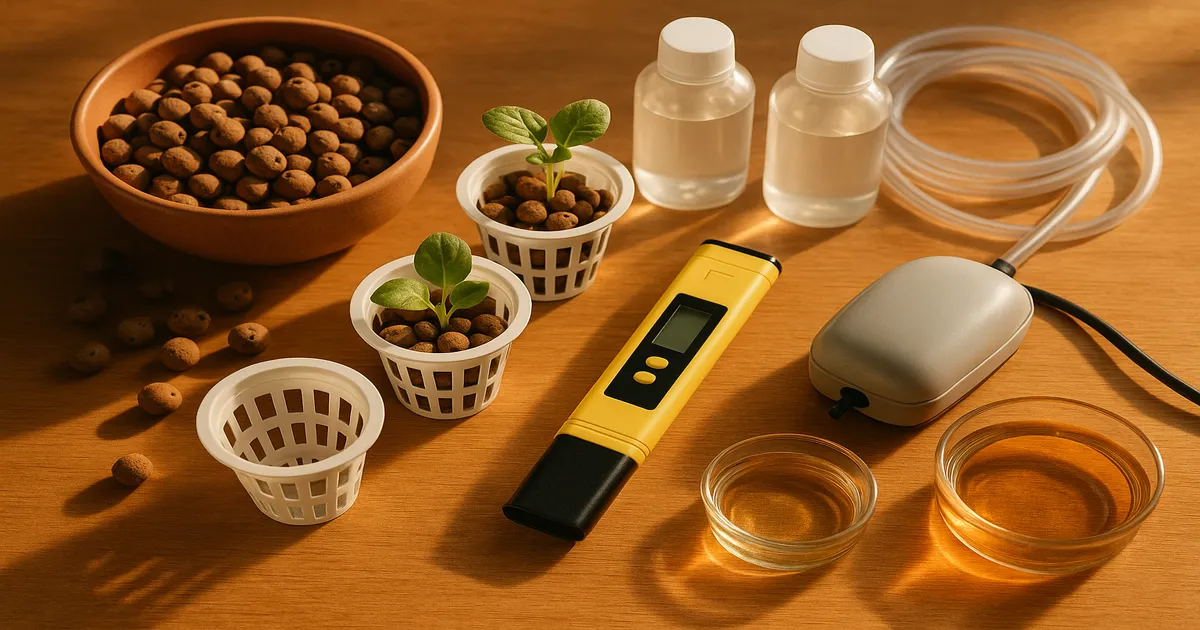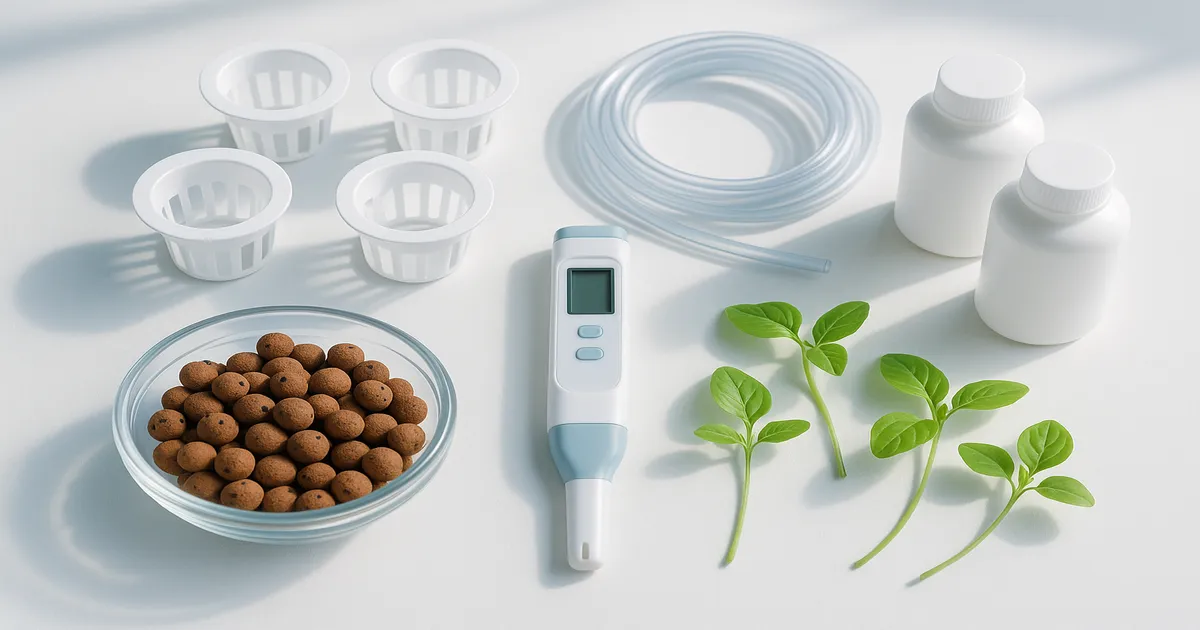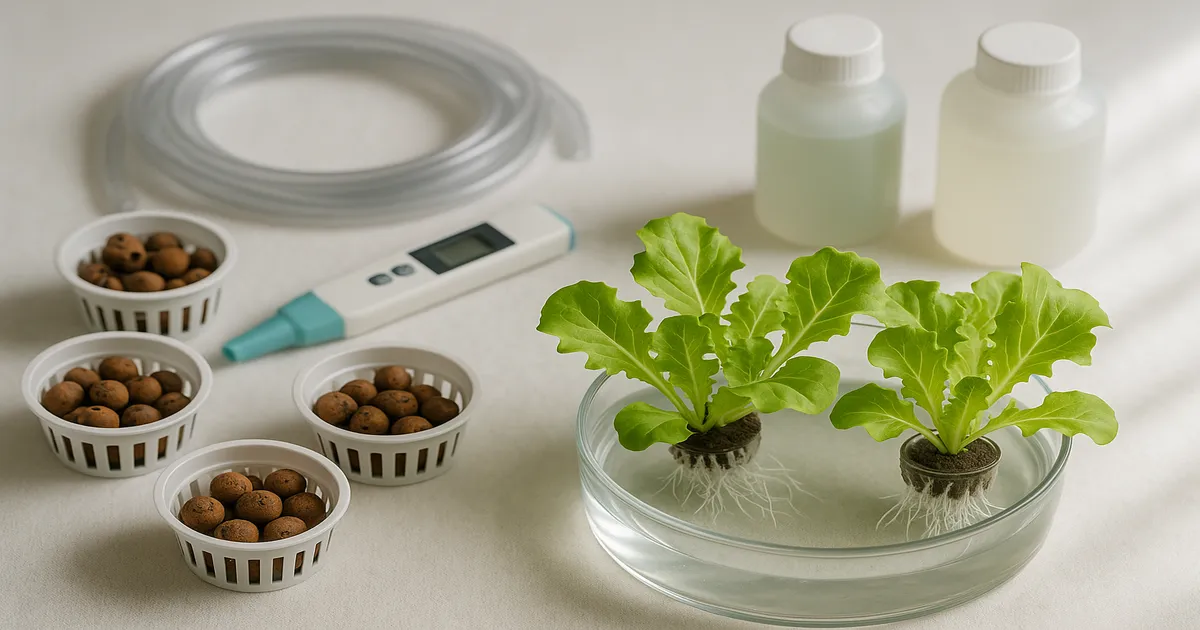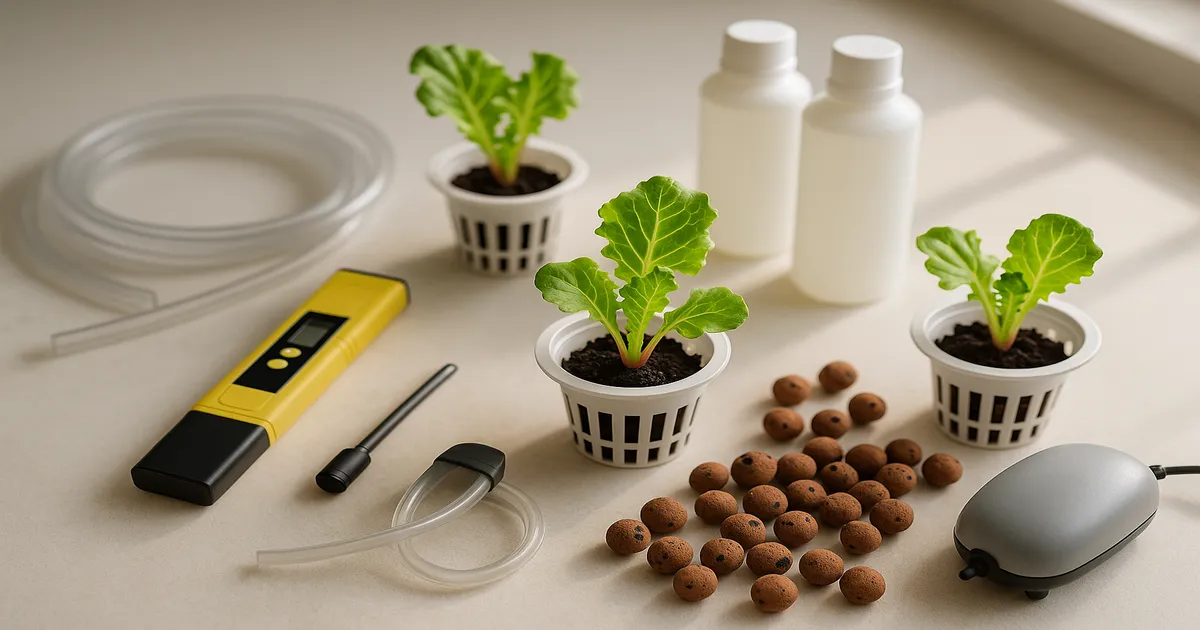
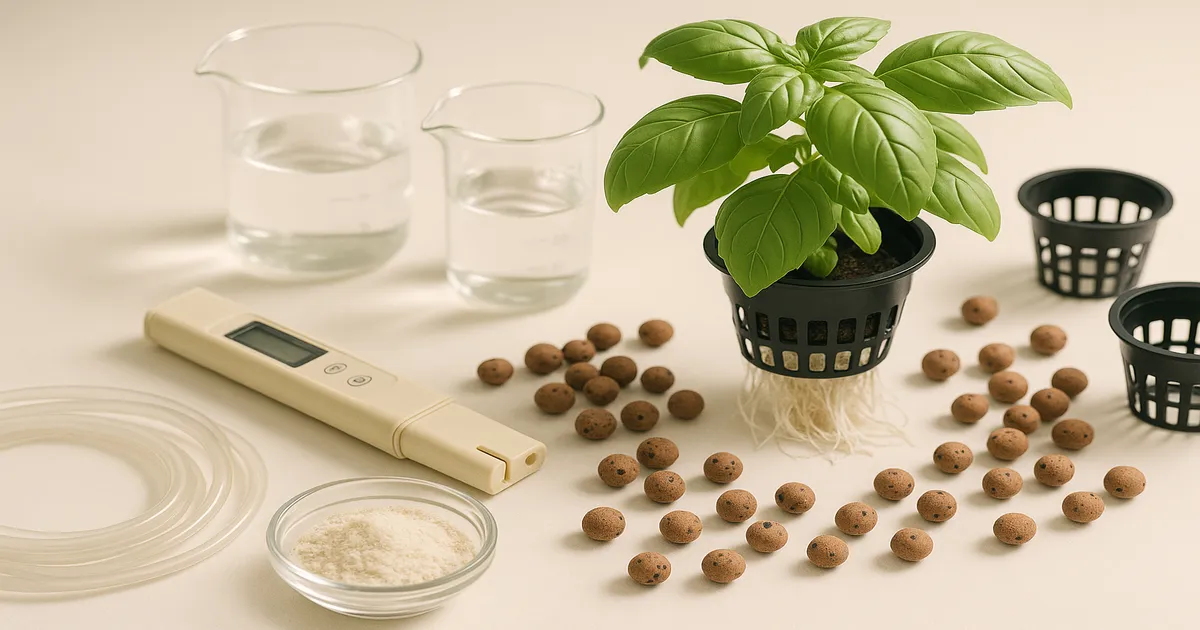
Quick Answer: The best homemade hydroponic fertilizer is the Masterblend 4-18-38 trio — 12g Masterblend + 12g Calcium Nitrate + 6g Epsom Salt per 5 gallons — yielding a precise, complete nutrient solution at 50–80% less than commercial blends. Organic alternatives like worm casting tea and fish emulsion are viable but require more hands-on management. This guide covers recipes, mixing order, pH management, and troubleshooting.
Making your own homemade hydroponic fertilizer isn’t just a money-saving hack — it gives you full control over exactly what goes into your reservoir. Commercial nutrient lines are formulated from the same mineral salts you can buy in bulk, so once you understand the ratios, you’re not missing anything. Whether you’re running a simple Kratky lettuce setup or a full DWC tomato garden, there’s a DIY recipe that fits.
What Your Hydroponic Plants Actually Need
The Essential Nutrients
Justus von Liebig’s Law of the Minimum, developed in the 1840s, still frames modern plant nutrition perfectly: a plant grows only as fast as its scarcest nutrient allows. Carbon, hydrogen, and oxygen come from air and water. The remaining 14 essential nutrients must come from your nutrient solution — which is why getting the formula right matters.
Primary macronutrients:
| Nutrient | Role | Target PPM |
|---|---|---|
| Nitrogen (N) | Vegetative growth, chlorophyll | 150–250 PPM |
| Phosphorus (P) | Root development, flowering | 30–80 PPM |
| Potassium (K) | Water regulation, fruiting | 150–300 PPM |
Secondary nutrients:
Calcium, magnesium, and sulfur are often called “secondary,” but that label is misleading. Deficiencies show up fast. Calcium keeps cell walls intact and prevents tip burn. Magnesium sits at the center of every chlorophyll molecule. Sulfur drives amino acid synthesis.
| Nutrient | Target PPM |
|---|---|
| Calcium (Ca) | 100–200 PPM |
| Magnesium (Mg) | 30–75 PPM |
| Sulfur (S) | 50–100 PPM |
Micronutrients:
Iron, manganese, zinc, boron, copper, molybdenum, and chlorine are needed in trace amounts — often less than 1 PPM — but omit any one and you’ll see it in your plants. Iron deficiency (interveinal chlorosis on new growth) is the most common micronutrient problem in DIY solutions that skip chelated iron.
Nutrient Demand by Growth Stage
| Growth Stage | Target PPM | EC |
|---|---|---|
| Seedling / Clone | 100–400 PPM | 0.2–0.8 |
| Early Vegetative | 400–800 PPM | 0.8–1.6 |
| Late Vegetative | 800–1,200 PPM | 1.6–2.4 |
| Early Flowering/Fruiting | 1,000–1,600 PPM | 2.0–3.2 |
| Late Flowering/Ripening | 800–1,200 PPM | 1.6–2.4 |
| Flush (final week) | 0–400 PPM | 0.0–0.8 |
Best Homemade Hydroponic Fertilizer: The Masterblend Trio
Ingredients for 5 Gallons
The Masterblend 4-18-38 trio is the most widely tested, reproducible homemade hydroponic fertilizer available. It’s simple, complete, and rivals anything off the shelf.
| Ingredient | Amount (per 5 gal) | Purpose |
|---|---|---|
| Masterblend 4-18-38 | 12 g | NPK base + micronutrients |
| Calcium Nitrate (15.5-0-0) | 12 g | Calcium + additional nitrogen |
| Magnesium Sulfate (Epsom Salt) | 6 g | Magnesium + sulfur |
This yields approximately 800–1,000 PPM (1.6–2.0 EC) — ideal for mid-vegetative growth. All three components are available on Amazon and from agricultural suppliers. Buying in bulk (5–25 lb bags) cuts the per-gallon cost dramatically. Calcium Nitrate is sometimes sold under greenhouse brand names like YaraLiva.
Critical Mixing Order
This is where most beginners go wrong. Calcium and sulfate ions react to form calcium sulfate (gypsum) — an insoluble precipitate that locks up nutrients and clouds your reservoir. Follow this sequence every time:
- Fill your reservoir with most of your water first.
- Dissolve Calcium Nitrate completely in a separate cup, then add it to the reservoir.
- Add and dissolve the Masterblend 4-18-38.
- Finally, add the Magnesium Sulfate (Epsom Salt).
Keeping calcium and sulfate separated during mixing prevents precipitation entirely.
Scaling for Seedlings and Fruiting Crops
- Seedlings and clones: Half dose — 6g / 6g / 3g per 5 gallons → ~400–500 PPM (0.8–1.0 EC)
- Fruiting crops at peak: 1.5× dose — 18g / 18g / 9g per 5 gallons → ~1,200–1,500 PPM (2.4–3.0 EC)
Always scale all three components proportionally. Changing just one throws off the nutrient balance.
Alternative Homemade Hydroponic Fertilizer Recipes
Budget Raw Mineral Salt Blend
If Masterblend isn’t available locally — or you want even more granular control — you can build a solution from individual salts:
| Ingredient | Amount per 10 gal | Role |
|---|---|---|
| Potassium Nitrate (KNO₃) | 14 g | K + N |
| Calcium Nitrate Ca(NO₃)₂ | 20 g | Ca + N |
| Monopotassium Phosphate (MKP) | 5 g | P + K |
| Magnesium Sulfate (MgSO₄) | 10 g | Mg + S |
| Chelated Iron (Fe-DTPA or Fe-EDTA) | 0.5 g | Iron micronutrient |
| Micronutrient mix (e.g., Solubor boron) | 0.1–0.2 g | Trace elements |
This yields roughly 700–900 PPM (1.4–1.8 EC). The learning curve is steeper, but the per-gallon cost is lower than the Masterblend trio. Note that this blend requires you to source a separate complete micronutrient package — Solubor covers boron but not manganese, zinc, copper, or molybdenum. Use a dedicated hydroponic micronutrient mix (such as a Hoagland-based trace element blend) to cover all bases.
Organic Options
Organic inputs can work in hydroponic systems, but they need more active management than mineral salts.
- Worm casting tea: Steep 1 cup of castings in 1 gallon of water for 24–48 hours with aeration. Dilute 1:10 before use. Gentle, microbially rich, and well-suited for seedlings.
- Fish emulsion: Use 1–2 tablespoons per gallon. High in nitrogen, low in P and K — supplement with kelp meal tea for potassium.
- Aerated compost tea: Brew 24–48 hours with an air stone. Nutrient content varies widely, so always test EC before adding to your reservoir.
- Banana peel tea: Steep 3–5 peels per gallon for 48 hours for a modest potassium boost during flowering. Potassium content is real but inconsistent — treat it as a supplement, not a primary K source.
Mineral salts win on precision. You know exactly what’s in solution, EC readings are reliable, and plants get immediate access to nutrients. Organic inputs bring microbial diversity and can support root health, but EC readings are less meaningful because organic molecules must be mineralized before plants can absorb them. Organic solutions also carry a higher risk of pathogen growth and reservoir fouling in recirculating systems.
Matching Your Homemade Fertilizer to Your Hydroponic System
DWC and Kratky are the best starting points for homemade nutrients. Large reservoirs buffer minor fluctuations, and Kratky’s passive nature means fewer moving parts to clog.
NFT and drip systems demand fully dissolved, well-filtered solutions. Any undissolved particles can clog channels or emitters. Organic teas are not recommended unless filtered through 200+ micron mesh and the system is cleaned frequently.
Ebb and flow handles mineral salt solutions well. Rinse grow trays regularly to prevent salt crust buildup.
Aeroponics requires the highest purity. Nozzle orifices are tiny — even small amounts of undissolved material will clog them. Use only fully dissolved, filtered mineral solutions, ideally with RO water as your base.
Wicking systems are one of the few setups where diluted organic solutions work reliably. The wick filters larger particles naturally, and the slower uptake rate is forgiving of less precise concentrations.
pH and EC Management for Homemade Nutrient Solutions
Target pH Ranges
- Most vegetables and herbs: 5.8–6.2
- Leafy greens: 5.5–6.5 (more tolerant)
- Tomatoes and peppers: 5.8–6.3
- Strawberries: 5.5–6.0
- Blueberries: 4.5–5.5
A reliable digital pH meter is non-negotiable. The Apera PC60 and Bluelab pH Pen are both solid choices in the $50–$80 range. Calibrate weekly using pH 4.0 and 7.0 buffer solutions, and replace the probe every 12–18 months. For EC, the HM Digital COM-80 or Bluelab Truncheon will serve you well.
Check pH and EC daily in active recirculating systems, and every 2–3 days for passive setups like Kratky.
Adjusting pH
To lower pH: Use phosphoric acid (pH Down) — it’s stable and adds a trace of phosphorus. Add 1–2 mL per 5 gallons, stir, wait 5 minutes, then retest. Avoid vinegar in recirculating systems — it breaks down within 24–48 hours and pH will rebound.
To raise pH: Potassium hydroxide (KOH) is the standard choice. It adds potassium, so monitor K levels if you’re adjusting up frequently. Baking soda is emergency-only — sodium accumulates and harms plants over time.
Why Homemade Solutions Drift More
Commercial nutrients often include buffering agents. Homemade mineral salt solutions have less inherent buffering capacity, so pH swings more noticeably as plants feed. Plants consuming cations (Ca²⁺, Mg²⁺, K⁺) release H⁺ ions that acidify the solution; consuming anions (NO₃⁻) releases OH⁻, pushing pH up. Expect to adjust more frequently during rapid growth.
Reservoir Management
When water level drops, top off with plain pH-adjusted water — not nutrient solution. Plants consume water faster than nutrients, so EC naturally rises between changes. Adding more nutrient solution on top of that risks pushing into toxicity territory.
- Partial reservoir change (25–30%): Every 5–7 days to prevent salt buildup
- Full reservoir change: Every 7–14 days for most crops; every 14–21 days for slow growers
- EC drift tolerance: No more than ±0.3 EC from your target before correcting
Troubleshooting Common Problems
Nutrient Deficiency Symptoms
- Yellowing older leaves (bottom-up): Nitrogen deficiency — increase N or bump overall PPM
- Purple stems and leaf undersides: Phosphorus deficiency — check pH first; P locks out above 6.5
- Tip burn on lettuce or basil: Calcium deficiency or poor airflow — ensure adequate Ca and increase air circulation
- Interveinal chlorosis on new growth: Iron deficiency — confirm you’re using chelated iron and pH is below 6.5
- Yellowing between veins on older leaves: Magnesium deficiency — add Epsom salt as a foliar spray or increase Mg in solution
Over-Fertilization
Leaf edges that brown and curl under, unusually dark green leaves, and stunted growth are classic signs. If EC is above your target, dilute immediately. A full reservoir change with fresh solution at the correct PPM is often the fastest fix.
Cloudy or Precipitated Solution
Cloudiness almost always means precipitation — usually calcium sulfate from adding Epsom salt before Calcium Nitrate is fully dissolved. Drain the reservoir, rinse it, and start fresh following the correct mixing order. Prevention is far easier than remediation.
Algae Growth
Algae need light to grow. Cover every surface of your reservoir — use black buckets, black tubing, and opaque net pot covers. (AC Infinity Mesh Net Cups with opaque lids) If algae is already established, drain, scrub with a 3% hydrogen peroxide solution, rinse thoroughly, and block all light sources before refilling.
pH Instability Despite Frequent Adjustment
If you’re adjusting pH multiple times per day and it keeps swinging, the most common causes are: insufficient buffering in your water source (very low alkalinity), a failing or uncalibrated pH probe, or organic matter in the reservoir fermenting and releasing acids. Test your source water’s alkalinity, recalibrate your meter with fresh buffer solutions, and do a full reservoir clean if organic debris is present.
Frequently Asked Questions
Can I use tap water for homemade hydroponic fertilizer? Yes, but test it first. Tap water above 200 PPM (0.4 EC) already contains minerals that will affect your final nutrient balance. High calcium or bicarbonate levels can push pH up and interfere with your formula. If your tap water is hard, consider blending it 50/50 with RO water, or using RO water exclusively for the most consistent results.
How long does a mixed nutrient solution stay good? A properly mixed mineral salt solution stays stable for 7–14 days in a covered, temperature-controlled reservoir. Organic solutions (worm tea, fish emulsion) degrade faster — use within 3–5 days and watch for foul odors, which signal bacterial overgrowth.
Is the Masterblend trio safe for edible crops? Yes. Masterblend 4-18-38, Calcium Nitrate, and Epsom Salt are all food-safe mineral fertilizers widely used in commercial greenhouse vegetable production. Rinse produce before eating, as you would with any garden crop.
Do I need a separate micronutrient supplement with the Masterblend trio? No. Masterblend 4-18-38 already contains a full chelated micronutrient package — iron, manganese, zinc, boron, copper, and molybdenum are all included. This is one of the main advantages of the trio over building a formula from scratch.
What’s the shelf life of dry nutrient salts? Stored in airtight containers away from moisture and direct sunlight, Masterblend, Calcium Nitrate, and Epsom Salt will last 2–5 years. Calcium Nitrate is the most hygroscopic (moisture-absorbing) of the three — keep it especially well sealed to prevent clumping.