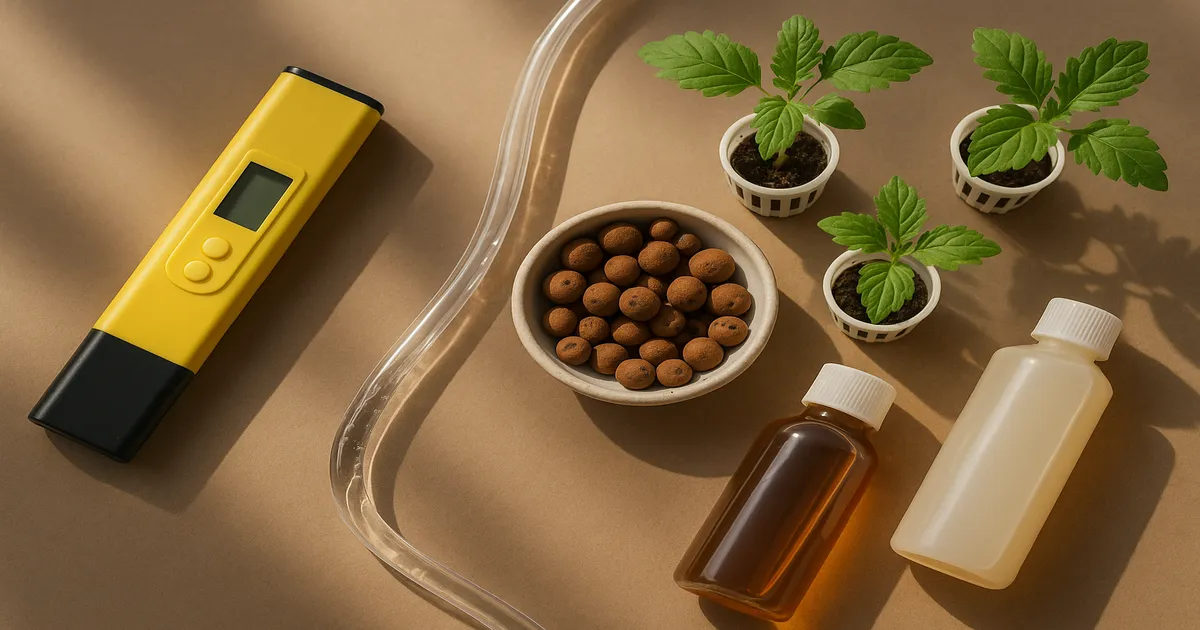
Quick Answer: To fix hydroponic root rot, immediately remove affected plants, prune dead roots with sterilized scissors, and treat with 3% hydrogen peroxide (3 ml per gallon). Lower your reservoir temperature to 65–68°F (18–20°C), boost dissolved oxygen with air stones, and reduce your nutrient solution to 400–600 PPM (0.8–1.2 EC) while roots recover. Mild cases can bounce back in 3–7 days; severe infections may take 2+ weeks.
Root rot is the nightmare every hydroponic grower fears — and for good reason. Knowing how to fix hydroponic root rot quickly can mean the difference between a full recovery and losing your entire crop. The good news: if you catch it early and act decisively, most plants can be saved.
How to Fix Hydroponic Root Rot: What You’re Actually Dealing With
What Root Rot Looks Like
Healthy roots are white to cream-colored, firm, and slightly fuzzy with visible root hairs. Infected roots tell a completely different story. They turn brown, gray, or black, feel slimy to the touch, and smell genuinely awful — like rotting vegetation or sewage.
Above the waterline, you’ll notice wilting that doesn’t make sense given how much water is available, along with yellowing leaves and stunted growth. These symptoms are often mistaken for nutrient deficiencies, but the real culprit is root damage preventing uptake.
What Actually Causes It
Most growers assume root rot is simply caused by “too much water,” but that’s not the whole picture. The primary culprit is Pythium spp. — an oomycete (water mold), not a true fungus. This distinction matters because traditional antifungal treatments often fail against it. Phytophthora, Fusarium, and Rhizoctonia can also contribute, but Pythium is the main offender in most hydroponic systems.
The real environmental trigger is low dissolved oxygen (DO). When DO drops below 6 mg/L — usually because water temperature climbs too high — Pythium gets its opening and takes it fast. Pythium produces motile zoospores that swim through your nutrient solution. In a recirculating system, a single infected plant can spread the pathogen to every root zone within hours, which is why a crop can go from “looking a little off” to completely dead in 48–72 hours.
Which Systems Are Most at Risk
- DWC / RDWC — roots continuously submerged; any DO drop is immediately dangerous
- NFT — shared recirculating stream; thin film can stagnate in channels
- Ebb & Flow — flood/drain cycles help, but standing water in media harbors pathogens
- Kratky — no active aeration; relies entirely on the air gap above the waterline
- Drip systems — risk depends heavily on drainage and media choice
- Aeroponics — excellent oxygenation, but clogged nozzles create wet stagnant zones
- Wicking — lowest risk due to slow passive water movement
Identifying Root Rot Before It Kills Your Plants
Visual and Smell Checks
Start by lifting a plant out of the system and inspecting the roots directly. Early-stage infection shows light brown discoloration and slight sliminess. Advanced infection is unmistakable — roots are dark brown to black, completely slimy, and may be falling apart.
Your nose is a powerful diagnostic tool. Healthy nutrient solution has a faint mineral or earthy smell. Root rot produces a distinctly foul, sulfurous odor the moment you open the reservoir lid. Also check the water itself — a brown or murky tint, foam on the surface, or visible slime on reservoir walls are all warning signs.
Early Warning vs. Advanced Infection
Early warning signs are subtle: roots with a slightly tan tint instead of bright white, minor wilting during the hottest part of the day, or EC readings creeping up despite plants appearing hungry. At this stage, intervention is straightforward and recovery is fast.
Advanced infection is a different situation entirely — black slimy roots, severe wilting that doesn’t recover overnight, and leaves showing multiple deficiency symptoms at once. At this point you’re in triage mode.
Root Rot vs. Nutrient Deficiencies
Root rot causes nutrient lockout despite adequate EC — your meter reads a normal concentration, but the plant looks starved because damaged roots can’t absorb anything. Magnesium deficiency causes interveinal yellowing on older leaves that looks similar to root rot stress. Iron deficiency from pH drift above 6.5 causes yellowing on new growth. The key tell: if pH and EC are both in range but the plant still looks sick, inspect the roots immediately.
Step-by-Step: How to Fix Hydroponic Root Rot Right Now
Step 1 — Isolate and Assess
Pull affected plants out of the system immediately. Every minute an infected plant stays in a shared reservoir, zoospores are spreading. In RDWC systems, disconnect infected buckets from the recirculating loop. Assess each plant individually — plants with mostly white roots and only minor browning are good recovery candidates. Plants where the majority of roots are black and slimy may not be worth saving.
Step 2 — Prune Dead Roots
Using sterilized scissors (wipe with isopropyl alcohol first), trim away all brown, black, and slimy root tissue. Cut back to where the root material is still white and firm. Dead roots are food for pathogens and will continue fueling the infection if left attached. Dispose of trimmed material away from your grow area and wash your hands before touching other plants.
Step 3 — Treat with Hydrogen Peroxide
Mix 3% hydrogen peroxide at 3 ml per gallon of reservoir water. H₂O₂ breaks down into water and oxygen, killing pathogens while temporarily spiking dissolved oxygen — a two-for-one benefit when fighting root rot.
One important caveat: hydrogen peroxide kills everything, including beneficial microbes. Use it as your initial kill step, then wait 24–48 hours before introducing any biological treatments.
Step 4 — Introduce Beneficial Microbes
After the H₂O₂ has dissipated (24–48 hours), introduce products containing Trichoderma and Bacillus species. Botanicare Hydroguard and Plant Revolution Great White both colonize the root zone and actively compete against Pythium, providing ongoing protection rather than a one-time kill. Re-apply at every reservoir change going forward.
Step 5 — Flush and Sanitize the Reservoir
Completely drain the reservoir — don’t just top it off with treated water. Scrub all interior surfaces with a 10% bleach solution or 3% H₂O₂, paying close attention to corners, seams, tubing, and fittings. Rinse thoroughly with clean water at least twice before refilling. Any pathogen residue left behind will reinfect your recovered plants immediately.
Step 6 — Mix a Recovery Nutrient Solution
Fill with fresh water and mix a recovery solution at 400–600 PPM (0.8–1.2 EC) — roughly half your normal strength. Use a balanced 2:1:2 N:P:K ratio, target calcium at 150–200 PPM, and add silica at 50–100 PPM. Always add silica to the reservoir first, before any other nutrients — it reacts with calcium if they’re combined in concentrate form. Set pH to 5.8–6.0 and maintain it there throughout recovery.
pH, EC, and Dissolved Oxygen During Recovery
pH: Passive Pathogen Suppression
pH directly affects Pythium activity. Zoospore germination is inhibited at pH 5.5–6.0, so keeping your reservoir in this range is a passive suppression tool running around the clock. Let pH drift above 6.5 and you’re rolling out the welcome mat. Target pH 5.8–6.0 during active recovery — slightly tighter than the normal 5.8–6.2 range, but worth the extra monitoring effort.
A reliable digital pH and EC meter is non-negotiable here. The Apera PC60 offers accuracy to ±0.01 pH and handles both readings in one unit. For RDWC systems, an inline monitor like the Bluelab Guardian Monitor provides continuous readings with alerts — invaluable when you can’t check manually every few hours. Calibrate weekly under normal conditions and daily during an active outbreak. Always store pH probes in KCl storage solution, never distilled water.
EC: Keep It Low Until Roots Recover
Damaged roots cannot uptake nutrients efficiently. Running high EC doesn’t feed your plants — it accumulates salt around already-stressed root tissue and makes things worse. Keep EC at 400–600 PPM (0.8–1.2 EC) until you see clear signs of recovery, then progress in phases:
- Recovery formula — 400–600 PPM until new white roots appear
- Transition — 600–900 PPM (1.2–1.8 EC) for 5–7 days
- Full strength — return to normal feeding based on growth stage
Don’t rush this progression. Pushing EC too early can set recovery back significantly.
Reading Your Meters as Diagnostic Clues
| Reading Pattern | What It Likely Means |
|---|---|
| pH dropping rapidly | Active Pythium producing organic acids |
| pH crashing below 5.0 | Emergency — flush immediately |
| EC rising despite deficiency symptoms | Root damage preventing uptake — classic root rot sign |
| pH rising overnight | Plants consuming acidic nutrients faster than alkaline ones |
| pH unstable despite correction | Low EC buffering or dying roots releasing organic acids |
Dissolved Oxygen: The Number That Matters Most
Target 8–12 mg/L dissolved oxygen in your reservoir. Once DO drops below 6 mg/L, Pythium has the conditions it needs. Water temperature is the primary lever:
| Water Temperature | Maximum Dissolved Oxygen |
|---|---|
| 60°F (15.5°C) | ~11.3 mg/L |
| 65°F (18.3°C) | ~10.1 mg/L |
| 68°F (20°C) | ~9.4 mg/L |
| 72°F (22.2°C) | ~8.7 mg/L |
| 75°F (23.9°C) | ~8.3 mg/L |
| 80°F (26.7°C) | ~7.6 mg/L |
| 85°F (29.4°C) | ~7.1 mg/L |
Keep reservoir temperature at 65–68°F (18–20°C). Above 72°F, root rot risk climbs sharply. Above 75°F, Pythium becomes nearly inevitable without active intervention.
To raise DO: run quality air stones continuously (at least one 4-inch stone per 5 gallons in DWC), add a recirculating pump to keep water moving, and avoid overcrowding your reservoir. A dedicated water chiller is the most reliable long-term solution for warm grow rooms. In a pinch, frozen water bottles can buy you a few hours — just monitor closely and swap them out as they thaw.
Preventing Root Rot From Coming Back
Sanitation Between Grows
Between every grow cycle, fully drain the system, scrub all surfaces with a 10% bleach or 3% H₂O₂ solution, and rinse at least twice. Pay special attention to tubing, net pots, and reservoir lids where biofilm accumulates. Allow everything to dry completely before the next fill — most pathogens can’t survive desiccation.
Ongoing DO and Temperature Management
Adequate DO isn’t something you set up once and forget. Check water temperature daily and keep it below 72°F. Run air pumps continuously — never on timers. Replace air stones every 3–6 months as they lose efficiency. These aren’t optional maintenance tasks; they’re your primary defense against Pythium.
Beneficial Microbes as a Preventative
Adding Trichoderma and Bacillus products like Botanicare Hydroguard at every reservoir change is one of the highest-value preventative steps you can take. These microbes establish a competitive environment in the root zone that makes it much harder for Pythium to gain a foothold. Think of it as probiotics for your plants.
Light-Proof Your Reservoir
Algae competes directly with plant roots for dissolved oxygen, and algae blooms can crash DO levels fast. The fix is simple: ensure zero light reaches your nutrient solution. Cover all reservoir openings, wrap exposed tubing, and use opaque containers. If you can see light through your reservoir lid, so can algae.
Frequently Asked Questions
Can plants fully recover from hydroponic root rot? Yes, if caught early. Plants with mostly white roots and only minor browning can recover fully within 3–7 days with proper treatment. Plants where the majority of roots are black and slimy have a much lower survival rate, but it’s still worth attempting the treatment steps — some will surprise you.
How long does it take to fix hydroponic root rot? Mild cases typically show new white root growth within 3–7 days. Severe infections can take 2–4 weeks for meaningful recovery. The speed depends on how much healthy root tissue remains, how quickly you lower reservoir temperature, and whether you introduce beneficial microbes after the H₂O₂ treatment.
Can I use hydrogen peroxide and beneficial microbes at the same time? No. Hydrogen peroxide kills beneficial microbes along with pathogens. Treat with H₂O₂ first, wait 24–48 hours for it to fully dissipate, then introduce your Trichoderma and Bacillus products.
What’s the ideal reservoir temperature to prevent root rot? Keep your reservoir between 65–68°F (18–20°C). Above 72°F (22.2°C), dissolved oxygen drops to levels that favor Pythium growth. Above 75°F (23.9°C), root rot becomes very difficult to prevent without active cooling.
Does root rot spread from plant to plant in hydroponics? Yes, rapidly. Pythium zoospores swim freely through shared nutrient solution. In a recirculating system, one infected plant can spread the pathogen to every root zone within hours. Isolate affected plants immediately and, in RDWC systems, disconnect infected buckets from the loop right away.